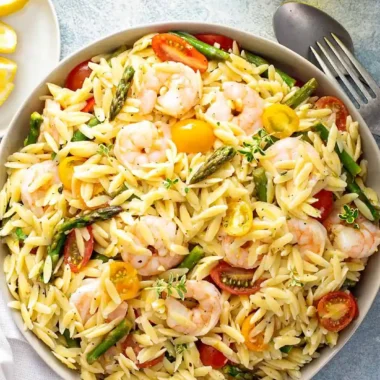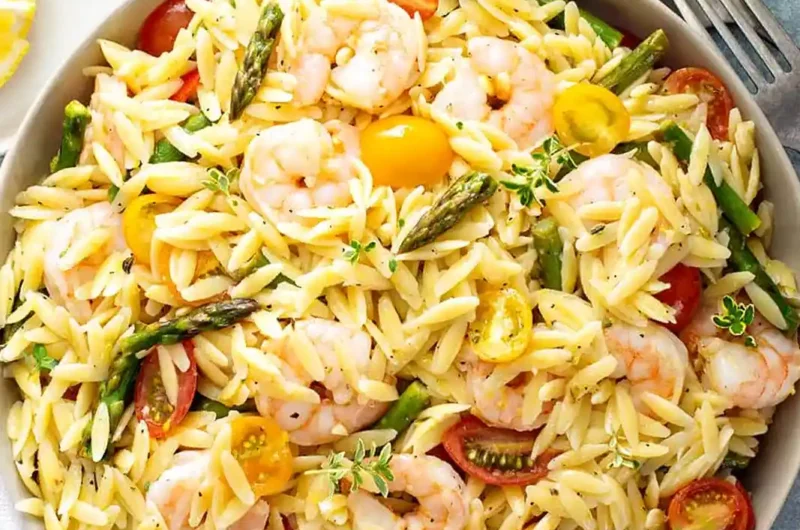
This vibrant orzo salad is a perfect marriage of delicate pasta, succulent shrimp, and crisp garden vegetables. The zesty lemon vinaigrette ties the components together, offering a refreshing dish that works beautifully as a light main course or an elegant side. Its balance of textures and bright, herbaceous flavors makes it a standout choice for gatherings or quick weeknight dinners.
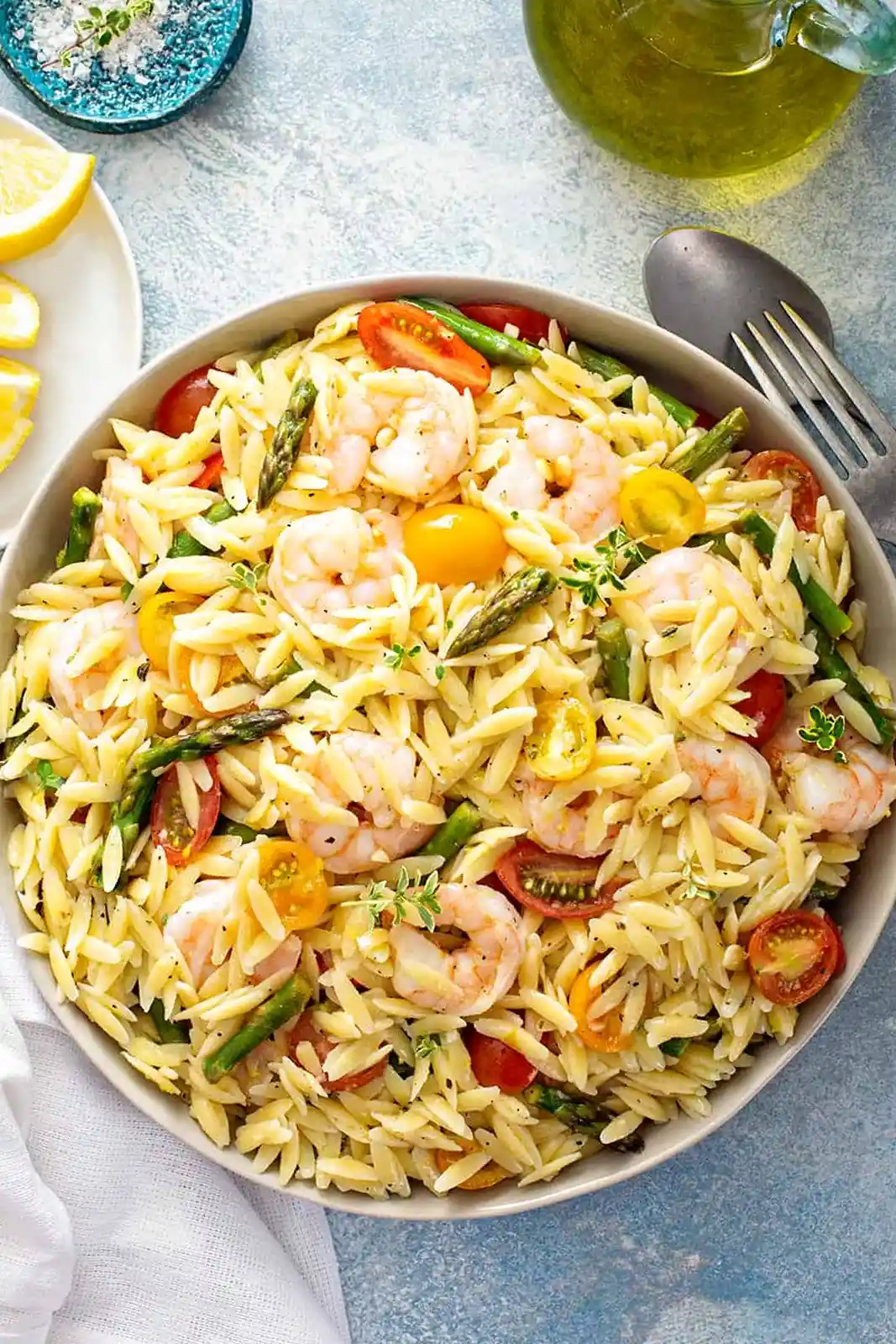
List of ingredients
- 2 cups uncooked orzo pasta
- 1/3 cup fresh lemon juice
- 2 teaspoons lemon zest
- 2 teaspoons grainy mustard
- 1 1/2 tablespoons fresh thyme, chopped
- 1/4 teaspoon salt
- 1/4 teaspoon ground black pepper
- 1/2 cup plus 1 tablespoon extra virgin olive oil
- 1 bunch asparagus, sliced into 1 1/2-inch pieces
- 1 pound shrimp, peeled and deveined
- salt, pepper, and cayenne, to taste
- 2 cloves garlic, minced
- 1 cup cherry tomatoes, halved
step-by-step instructions
- Step: Cook orzo according to package directions, al dente.
- Step: In the meantime, in a large mixing bowl, combine lemon juice, lemon zest, mustard, thyme, salt, and pepper; whisk. While whisking, slowly add the 1/2 cup olive oil. Whisk until combined and smooth. (Reserve 2 tablespoons.)
- Step: Drain orzo completely and toss in the large bowl with the most of the vinaigrette. Set aside.
- Step: In a large nonstick skillet, heat the remaining tablespoon of olive oil over medium-high heat. Add asparagus and reserved 2 tablespoons vinaigrette; cook for about 2 minutes, stirring frequently.
- Step: Sprinkle the shrimp with salt, pepper, and cayenne to taste; add to the pan. Cook for another 3 minutes until shrimp are pink and opaque, and asparagus is tender. Add in the garlic and cook until fragrant, about 20 seconds. Remove from the heat and toss in the cherry tomatoes.
- Step: Add mixture to the bowl of orzo and toss to combine. Taste and adjust seasoning, if necessary.
- Step: Serve warm or cold and enjoy!
Refining the Preparation
Maintaining Pasta Texture
When cooking orzo, it is crucial to monitor the clock closely. Since orzo is smaller than standard pasta shapes, it can go from al dente to overcooked in a matter of seconds, which leads to a mushy salad. Testing a piece one minute before the package instructions suggest is a reliable way to ensure you capture that perfect, toothsome consistency.
Achieving Emulsification
The key to a long-lasting dressing is the slow addition of oil. By whisking the olive oil in a thin, steady stream into your lemon and mustard base, you force the fat to suspend in the citrus liquid rather than separating. A well-emulsified dressing will coat the pasta evenly rather than pooling at the bottom of your serving bowl.
Customizing Your Bowl
Incorporating Creamy Elements
While this recipe remains light and bright, adding a creamy contrast can be a wonderful variation for those who prefer a richer mouthfeel. Crumbled feta or small cubes of goat cheese added right before serving provide a tangy creaminess that pairs perfectly with the lemon dressing. Ensure you add the cheese gently so it does not completely dissolve into the warm pasta.
Adding Plant-Based Protein
For those who wish to increase the heartiness without using more shrimp, canned chickpeas or cannellini beans work exceptionally well. These legumes absorb the lemon vinaigrette beautifully and add a lovely nutty texture to every bite. Rinse the beans thoroughly and pat them dry before adding them to ensure the vinaigrette remains vibrant and fresh.
Storage and Planning
Temperature Considerations for Serving
This dish is remarkably versatile, functioning well at room temperature, slightly warm, or chilled. If serving from the refrigerator, bring the salad out about twenty minutes before eating to let the flavors bloom and the olive oil base loosen from its chilled state. This transition to room temperature dramatically improves the taste profile compared to eating it straight from the fridge.
Maximizing Freshness Over Time
To store leftovers, keep the salad in an airtight container for up to three days. Because pasta tends to absorb liquids over time, you may find that the salad appears a bit dry on the second day. A simple fix is to keep a small amount of extra olive oil or fresh lemon juice on hand to toss into the leftovers, which will instantly refresh the salad and restore its original zest.
FAQs
Can I use pre-cooked shrimp for this recipe?
If you prefer to use pre-cooked shrimp to save time, avoid cooking them in the pan with the asparagus, as they will turn rubbery quickly. Instead, toss the cold, thawed shrimp directly into the salad at the very end when you fold in the cherry tomatoes. This ensures they stay succulent rather than becoming tough from additional heat exposure.
Is it possible to make this using a different grain?
If you do not have orzo, pearl couscous is an excellent substitute that mimics the size and texture of orzo pasta perfectly. The cooking time will be quite similar, and it will hold the vinaigrette just as effectively. Avoid using standard long-grain rice, as it will likely result in a much softer, more clumping texture that lacks the chewiness expected in a salad.
How do I prevent the asparagus from becoming soggy?
The secret to perfect asparagus is a quick sear over medium-high heat. By limiting the cooking time to just two or three minutes, you allow the asparagus to soften while retaining its vibrant green color and a distinct snap. Always remove the pan from the heat immediately before adding the garlic, as this prevents the garlic from browning and turning bitter.
Are there any specific greens that pair well?
Adding baby arugula is a fantastic way to introduce a peppery contrast to the bright, acidic notes of the lemon dressing. Add the arugula at the very last second before serving; this ensures the leaves retain their structural integrity rather than wilting into the warm pasta. Spinach is another option, though it requires a slightly longer wilt time in the residual heat.
Print
Orzo Salad with Shrimp and Asparagus
- Total Time: 30 minutes
- Yield: 6 servings 1x
- Diet: Pescatarian
Description
This Orzo Salad screams springtime with orzo pasta, juicy shrimp, sweet cherry tomatoes, beautiful ripe asparagus, all tossed in a bright lemon dressing.
Ingredients
- 2 cups uncooked orzo pasta
- 1/3 cup fresh lemon juice
- 2 teaspoons lemon zest
- 2 teaspoons grainy mustard
- 1 1/2 tablespoons fresh thyme, chopped
- 1/4 teaspoon salt
- 1/4 teaspoon ground black pepper
- 1/2 cup plus 1 tablespoon extra virgin olive oil
- 1 bunch asparagus, sliced into 1 1/2-inch pieces
- 1 pound shrimp, peeled and deveined
- salt, pepper, and cayenne, to taste
- 2 cloves garlic, minced
- 1 cup cherry tomatoes, halved
Instructions
- Step: Cook orzo according to package directions, al dente.
- Step: In the meantime, in a large mixing bowl, combine lemon juice, lemon zest, mustard, thyme, salt, and pepper; whisk. While whisking, slowly add the 1/2 cup olive oil. Whisk until combined and smooth. (Reserve 2 tablespoons.)
- Step: Drain orzo completely and toss in the large bowl with the most of the vinaigrette. Set aside.
- Step: In a large nonstick skillet, heat the remaining tablespoon of olive oil over medium-high heat. Add asparagus and reserved 2 tablespoons vinaigrette; cook for about 2 minutes, stirring frequently.
- Step: Sprinkle the shrimp with salt, pepper, and cayenne to taste; add to the pan. Cook for another 3 minutes until shrimp are pink and opaque, and asparagus is tender. Add in the garlic and cook until fragrant, about 20 seconds. Remove from the heat and toss in the cherry tomatoes.
- Step: Add mixture to the bowl of orzo and toss to combine. Taste and adjust seasoning, if necessary.
- Step: Serve warm or cold and enjoy!
Notes
This salad is delicious served warm or cold. Leftovers should be stored in a tightly covered container in the refrigerator and will keep for up to 3 days.
- Prep Time: 15 minutes
- Cook Time: 15 minutes
- Category: Salad
- Method: Stovetop
- Cuisine: Italian
Nutrition
- Serving Size: 1 serving
- Calories: 448 kcal
- Sugar: 4 g
- Sodium: 611 mg
- Fat: 20 g
- Saturated Fat: 3 g
- Unsaturated Fat: 15 g
- Trans Fat: 0 g
- Carbohydrates: 43 g
- Fiber: 4 g
- Protein: 24 g
- Cholesterol: 191 mg
Keywords: orzo salad, shrimp, asparagus, pasta salad, lemon dressing, spring salad