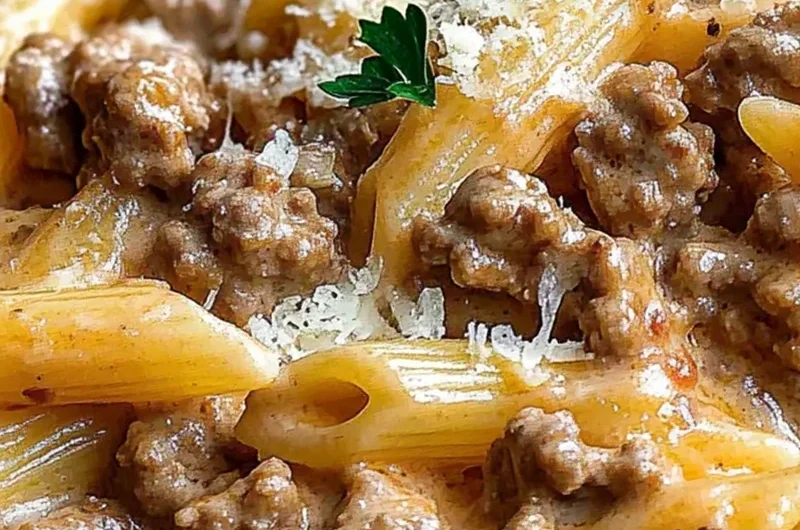
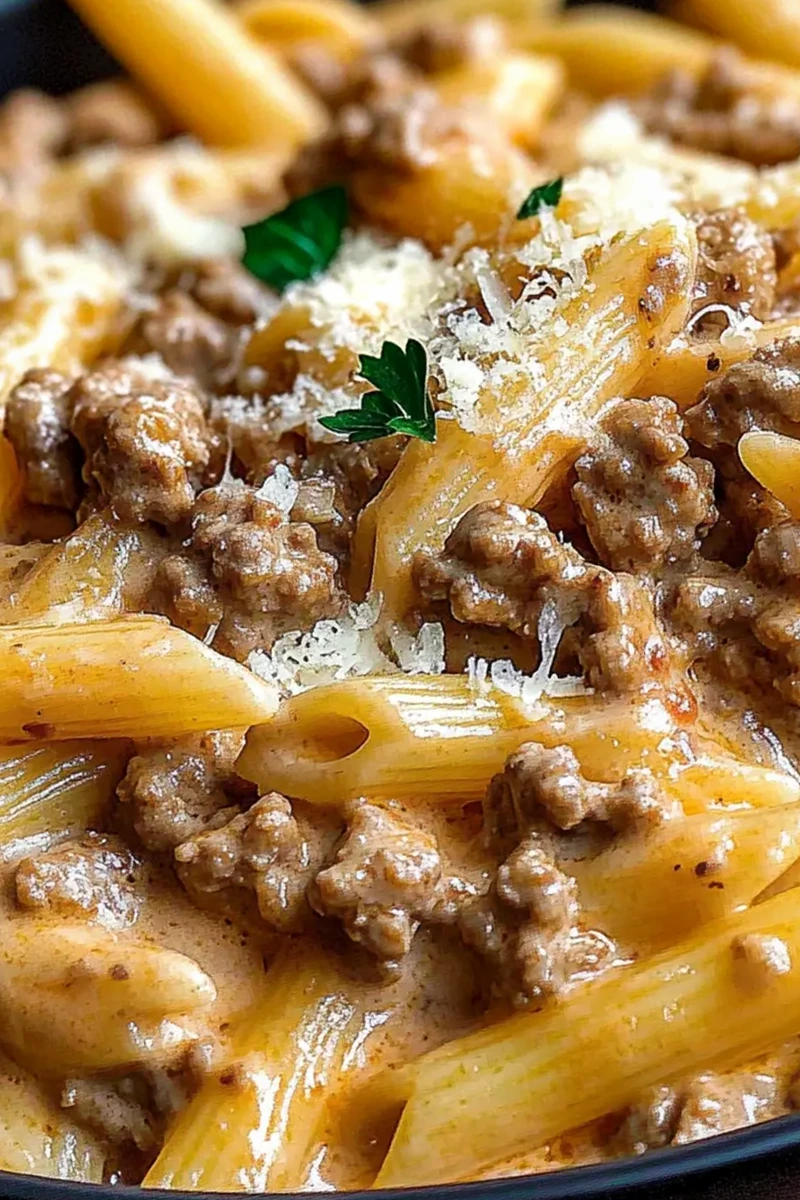
This rich beef pasta dish combines seasoned ground beef with a velvety cheese sauce for a satisfying family meal. It is designed for quick preparation and requires minimal cleanup, making it an ideal option for busy weeknights.
List of ingredients
- 12 oz Penne Pasta – any pasta shape can be used.
- 1 lb Ground Beef – choose lean ground beef.
- 1 cup Heavy Cream – can substitute with half-and-half.
- 1 cup Parmesan Cheese – freshly grated for best flavor.
- 3 cloves Garlic – fresh minced.
- 1 medium Onion – diced yellow onion.
- 1 tbsp Italian Seasoning – adjust to taste.
- Salt – to taste.
- Pepper – to taste.
- 2 tbsp Olive Oil – for sautéing.
step-by-step instructions
- Cook the Pasta: Bring a large pot of salted water to a boil over high heat. Add the penne pasta and cook until al dente, typically 10-12 minutes. Reserve 1 cup of the starchy pasta water before draining the pasta in a colander.
- Sauté the Aromatics: Heat 2 tablespoons of olive oil in a large skillet over medium heat. Add the diced yellow onion and minced garlic, sautéing for approximately 5 minutes until the onion is translucent and fragrant.
- Brown the Beef: Add 1 pound of lean ground beef to the skillet, breaking it apart with a wooden spoon. Cook for about 7 minutes, stirring occasionally, until the beef is fully browned. Season the meat with salt, pepper, and Italian seasoning during this process.
- Prepare the Cream Sauce: Lower the heat and stir in 1 cup of heavy cream. Gradually pour in the reserved pasta water a little at a time until the sauce reaches your preferred thickness. Stir in 1 cup of grated Parmesan cheese until completely melted and smooth.
- Combine and Simmer: Add the drained pasta to the skillet and toss gently to ensure every piece is coated in the sauce. Allow the mixture to simmer for 2-3 minutes so the pasta absorbs the flavors of the sauce.
- Serve: Spoon the pasta into bowls and garnish with additional Parmesan cheese and freshly chopped parsley. Serve immediately while hot.
Advanced Cooking Techniques for Better Results
Optimizing the Emulsion with Pasta Water
The reserved pasta water contains starch released from the wheat during boiling. When added to the cream and cheese, this starch acts as an emulsifier that binds the fats to the liquid. This prevents the sauce from separating and creates a glossy, professional texture.
Controlling Temperature to Prevent Curdling
Heavy cream can separate or curdle if exposed to excessive heat for too long. By lowering the burner to a simmer before adding the dairy, you maintain a stable temperature. This ensures the sauce remains velvety and smooth rather than breaking into oily pockets.
Developing Deep Flavor through Sautéing
Cooking the onions and garlic until translucent ensures that the raw pungent flavor is removed. This process creates a sweet, savory base that supports the richness of the beef. Sautéing them in olive oil first allows the aromatic compounds to bloom before the meat is added.
Selecting the Best Beef Fat Ratio
Using lean ground beef prevents the final dish from having an overly greasy film on top. If you use a higher-fat beef, be sure to drain the rendered fat from the skillet after browning. This keeps the sauce creamy rather than oily.
Choosing Pasta Shapes for Maximum Sauce Adhesion
Penne is ideal because its hollow center and ridges hold onto thick cream sauces effectively. Alternatively, fusilli or rotini provide more surface area for the cheese to cling to. Short pasta shapes are generally better for beef bakes than long noodles like spaghetti.
Protein and Dairy Substitutions
Using Ground Turkey for a Leaner Option
Ground turkey can replace ground beef for a lower-calorie version of this dish. Because turkey is leaner, you may need to add an extra tablespoon of olive oil to prevent the meat from sticking. The flavor remains neutral, allowing the Italian seasoning and Parmesan to dominate.
Dairy-Free Cream Alternatives
For a dairy-free version, replace the heavy cream with full-fat coconut milk or a cashew-based cream. Coconut milk adds a slight sweetness, while cashew cream provides a more neutral, savory profile. Ensure the substitute is unsweetened to avoid altering the savory nature of the beef.
Alternative Cheese Profiles
While Parmesan provides a salty, sharp finish, mozzarella can be used for a stretchier, milder cheese pull. Using a mix of Parmesan and Pecorino Romano increases the saltiness and depth. Feta can be crumbled on top at the end for a tangy contrast.
Gluten-Free Pasta Alternatives
Corn-based or brown rice pasta works well for those avoiding gluten. Be cautious with cooking times, as gluten-free pasta often reaches the al dente stage faster than wheat pasta. To avoid mushiness, drain these varieties immediately once they are tender.
Adding Nutritional Variety
Incorporating Leafy Greens
Fresh baby spinach or chopped kale can be stirred in during the final simmering stage. The residual heat from the pasta will wilt the greens without overcooking them. This adds iron and a fresh color contrast to the rich brown and white tones of the dish.
Adding Earthy Mushroom Components
Slicing button or cremini mushrooms and sautéing them with the onions adds a savory, umami depth. Mushrooms complement the beef and the cream sauce perfectly. Sauté them until they release their moisture and turn golden brown for the best flavor.
Integrating Bell Peppers for Sweetness
Diced red or yellow bell peppers add a natural sweetness and a crunch to the texture. Sauté them along with the onion and garlic at the beginning of the process. This ensures they are tender and well-integrated into the meat mixture.
Enhancing Heat with Chili Flakes
Adding a pinch of crushed red pepper flakes during the beef browning stage introduces a subtle heat. This cuts through the richness of the heavy cream and Parmesan. Adjust the amount based on your heat tolerance to balance the creamy profile.
Strategic Side Dish Pairings
Complementary Garlic Bread Options
Toasted baguette slices with garlic butter are the traditional accompaniment for creamy pasta. The crispiness of the bread provides a textural contrast to the soft pasta. Use unsalted butter and fresh minced garlic for the most authentic taste.
Fresh Green Vegetable Sides
Steamed broccoli or sautéed asparagus provides a necessary brightness to the meal. A light drizzle of lemon juice on the vegetables helps cleanse the palate between bites of the rich beef sauce. This balances the overall meal’s nutritional profile.
Crisp Salad Pairings
A Caesar salad with romaine lettuce and crunchy croutons offers a refreshing acidic balance. The vinegar in the dressing cuts through the heavy cream in the pasta. Using a chilled salad prevents the meal from feeling too heavy.
Roasted Root Vegetables
Carrots and zucchini roasted with thyme and olive oil bring a natural sweetness to the table. These vegetables provide a hearty side that complements the beef. Roast them at 400 degrees Fahrenheit until the edges are caramelized.
Non-Alcoholic Beverage Suggestions
A chilled sparkling grape juice or a rich pomegranate juice pairs well with beef dishes. The tartness of these drinks mimics the acidity of a red wine without the alcohol. These options enhance the savoriness of the Italian seasoning.
Light Dessert Finishes
A light chocolate mousse or a fruit tart serves as an excellent conclusion to the meal. Since the main course is very filling, a dessert with a lighter, airier texture is preferable. Fresh berries can also be served for a simple, clean finish.
Storage, Reheating, and Meal Prep
Safe Refrigeration Practices
Store leftovers in a food-grade airtight container in the refrigerator for up to three days. Allow the pasta to cool slightly before sealing the lid to prevent excessive condensation. Condensation can cause the pasta to become soggy during storage.
Freezing and Long-Term Storage
This dish can be frozen for up to three months in freezer-safe containers. Portion the pasta into individual servings for easier reheating later. Ensure there is a small amount of space at the top of the container to allow for expansion during freezing.
Reheating to Restore Creaminess
When reheating on a stovetop, add a splash of milk, cream, or water to the pan. This loosens the sauce, which naturally thickens as it cools. Heat gently over low to medium heat to avoid scorching the dairy.
Component Preparation for Efficiency
You can prepare the beef and onion mixture up to three days in advance. Store the cooked meat in the fridge and combine it with the cream and cheese only when you are ready to serve. This prevents the pasta from absorbing all the sauce during storage.
Common Troubleshooting and FAQs
What kind of pasta should I use for creamy beef pasta?
Penne is recommended due to its ability to trap sauce inside the tube. However, rotini, rigatoni, or bow-tie pasta also work well because of their ridges. Avoid very thin noodles like angel hair, as they may break under the weight of the beef.
How should I store leftover creamy beef pasta?
Place the leftovers in an airtight container and keep them in the refrigerator for no more than three days. Make sure the container is sealed tightly to prevent the pasta from drying out. Let it reach room temperature before sealing.
Can I freeze creamy beef pasta?
Yes, it can be frozen for up to three months. Thaw the pasta overnight in the refrigerator before reheating it on the stove. Adding a small amount of liquid during reheating will restore the original creamy consistency.
What can I do if the sauce is too thick?
If the sauce becomes too thick, stir in additional reserved pasta water or a tablespoon of heavy cream. Do this gradually while stirring over low heat. This will thin the sauce without compromising the flavor.
Are there any dietary considerations with creamy beef pasta?
You can make this dish gluten-free by using certified gluten-free pasta. For those avoiding beef, ground turkey or chicken are suitable replacements. The recipe can also be modified for dairy-free diets using plant-based cream substitutes.
What if I want to add veggies to my creamy beef pasta?
Vegetables should be added during the sautéing phase with the onions and garlic. This ensures they are cooked through and their flavors are well-integrated. Spinach is an exception and should be stirred in at the very end.
Print
Creamy Beef and Penne Pasta Bake
- Total Time: 30 minutes
- Yield: 4 servings 1x
- Diet: General
Description
This creamy beef pasta is a comforting dish that brings warmth on busy weeknights, perfect for family dinners.
Ingredients
- 12 oz Penne Pasta
- 1 lb Ground Beef
- 1 cup Heavy Cream
- 1 cup Parmesan Cheese
- 3 cloves Garlic
- 1 medium Onion
- 1 tbsp Italian Seasoning
- Salt to taste
- Pepper to taste
- 2 tbsp Olive Oil
Instructions
- Step: Bring a large pot of salted water to a boil, add penne pasta and cook until al dente, about 10-12 minutes. Reserve 1 cup of pasta water, then drain.
- Step: In a large skillet, heat olive oil over medium heat. Sauté diced onion and minced garlic for about 5 minutes until fragrant.
- Step: Add ground beef, breaking it up with a spoon. Cook for 7 minutes until browned. Season with salt, pepper, and Italian seasoning.
- Step: Stir in heavy cream and reserved pasta water gradually until desired consistency is reached. Mix in grated Parmesan until melted.
- Step: Add drained pasta to the skillet, tossing until coated. Simmer for an additional 2-3 minutes.
- Step: Serve immediately, garnished with Parmesan cheese and parsley.
Notes
Reserve pasta water before draining to achieve the perfect creamy sauce consistency. Fresh ingredients enhance the flavor significantly.
- Prep Time: 10 minutes
- Cook Time: 20 minutes
- Category: Dinner
- Method: Stovetop
- Cuisine: Italian
Nutrition
- Serving Size: 1 bowl
- Calories: 600 kcal
- Sugar: 4 g
- Sodium: 800 mg
- Fat: 30 g
- Saturated Fat: 15 g
- Unsaturated Fat: 12 g
- Trans Fat: 1 g
- Carbohydrates: 60 g
- Fiber: 3 g
- Protein: 30 g
- Cholesterol: 100 mg
Keywords: creamy beef pasta, cozy family dinner, comfort food, Italian dinner, pasta bake