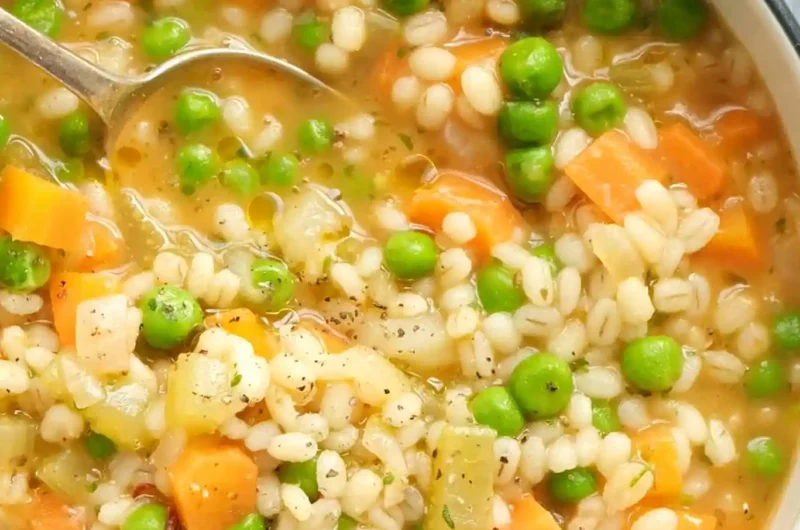
This nourishing vegetable barley soup provides a perfect blend of earthy whole grains and fresh produce, making it an ideal choice for a comforting meal. It is straightforward to prepare, budget-friendly, and offers a robust flavor profile that improves as the ingredients simmer together. Whether you are looking for a satisfying lunch or a warming dinner, this recipe delivers consistent results using simple pantry staples.
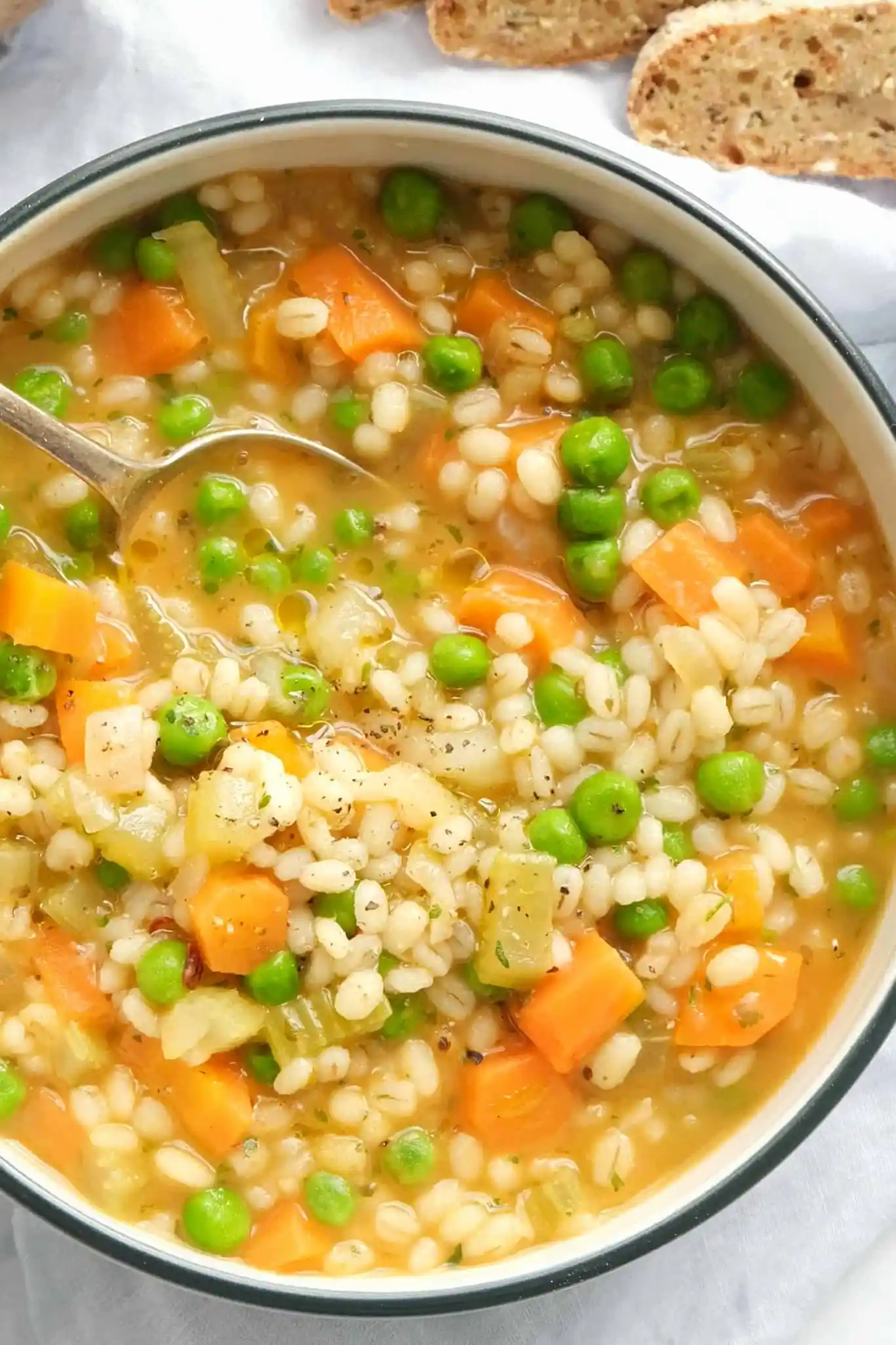
List of ingredients
- 3/4 cup (130 grams) pearled barley, rinsed and drained
- 1 cup (130 grams) frozen peas
- 4 ½ cups vegetable broth
- 1 Tbsp tomato paste
- 1 Tbsp olive oil
- 1 garlic clove, minced
- 1 medium-sized onion, diced
- 1 large celery rib, sliced
- 2 large carrots, diced
- 1 medium-sized potato, cut into cubes
- 1 tsp oregano
- 2 bay leaves
- 3 thyme sprigs
- salt and pepper, to taste
step-by-step instructions
- Step: Warm the olive oil in a large pot over medium heat. Once the oil is shimmering, add the diced onion, carrot, celery. Cook, stirring often, until the onion has softened and is turning translucent, about 7 minutes.
- Step: Add garlic, thyme, oregano, bay leaves, and stir for about 1 minute.
- Step: Add the barley, cubed potatoes, tomato paste, and give a good stir.
- Step: Then add the vegetable broth, a good pinch of salt and pepper. Raise the heat and bring the mixture to a boil, then cover the pot, reduce heat and cook gently for 25-30 minutes or until the barley is tender.
- Step: When the barley is cooked, add the peas and cook for a further 5 minutes.
- Step: Turn off the heat, then remove the thyme sprigs and the bay leaves. Taste and season with salt and pepper.
- Step: Divide into bowls, drizzle with olive oil and more freshly ground black pepper if you like.
Practical cooking methods
Achieving the perfect barley texture
Pearled barley is excellent for soups because it softens without turning into mush, yet it still provides a pleasant, slightly chewy bite. Rinsing the grains under cold water before adding them to the pot is important to remove surface starch, which keeps the broth clear rather than cloudy. If you prefer a very soft grain, you can extend the simmering time by another five to ten minutes, but keep an eye on the liquid levels.
Developing depth through the aromatic base
The secret to a flavorful soup lies in the slow sautéing of your vegetables, often called the soffritto base. By cooking the onions, carrots, and celery until they are soft and golden, you draw out their natural sugars, which creates a more complex foundation than simply boiling them. Do not rush this stage, as it creates the essential savory structure that carries the rest of the ingredients.
Substitutions and adjustments
Choosing alternative grains
If you find yourself without barley, you can swap it for other grains like farro, spelt, or even brown rice. Keep in mind that different grains have varying cook times; brown rice may take longer to soften than pearled barley, while quick-cooking varieties might need less time. Always check the package directions for your substitute to ensure the liquid ratio remains appropriate for a hearty, scoopable texture.
Maximizing vegetable variety
This recipe is highly adaptable, allowing you to use whatever produce is currently in your refrigerator crisper drawer. Diced zucchini, chopped kale, or even small florets of broccoli work well when added during the final stages of cooking to retain their bright colors. If using hardy vegetables like root vegetables or squash, add them at the same time as the potatoes so they have enough time to tenderize properly.
Serving and storage recommendations
Enhancing the final presentation
When serving the soup, a light drizzle of extra virgin olive oil over the top of each bowl adds a fresh, fruity brightness that cuts through the earthiness of the grain. If you are not strictly avoiding dairy, a small sprinkle of finely grated hard cheese provides a salty kick that balances the sweet carrots and peas. Freshly cracked black pepper adds a final touch of heat that elevates the entire dish.
Managing leftovers effectively
Barley soup is famously delicious the next day because the flavors continue to marry while resting in the refrigerator. Store any leftovers in an airtight container for up to three days, though keep in mind that the barley will continue to absorb liquid over time. If the soup appears too thick after chilling, simply whisk in a splash of water or additional vegetable broth while reheating on the stove.
Freezing for future meals
This soup is a fantastic candidate for freezer storage, making it perfect for quick weekday meals. Allow the soup to cool completely before portioning it into freezer-safe containers, leaving about an inch of headspace to allow for expansion. It will maintain its quality for up to one month in the freezer, making it a reliable staple to keep on hand during busy weeks.
Common kitchen questions
Does the type of broth affect the result?
The type of broth you choose will significantly influence the final sodium and flavor profile of the soup. Vegetable broth provides a neutral, savory base, but since many store-bought options are quite salty, it is best to use a low-sodium version. This gives you better control over the final seasoning, allowing you to adjust the salt levels precisely at the end of the cooking process.
Can I add protein to this dish?
While this recipe is naturally hearty, adding beans like chickpeas or white cannellini beans can increase the protein content and provide a satisfying, creamy texture. Add canned beans, rinsed and drained, during the last few minutes of simmering so they heat through without disintegrating. This simple addition turns the soup into a more substantial, protein-forward meal while keeping the preparation process fast and simple.
Why is the barley sometimes crunchy?
If your barley is still firm after thirty minutes, it is likely that the heat was too low or the pot was not tightly covered during the simmer. Ensure the liquid is kept at a steady, gentle simmer rather than a dormant state, and keep the lid on to prevent steam from escaping. If you prefer your barley very tender, simply add a small amount of extra liquid and simmer for another ten minutes until the desired texture is reached.
How can I make the soup thinner?
If you prefer a brothier consistency, feel free to add extra water or vegetable broth just before serving. Because barley is an absorbent grain, it acts like a sponge and will naturally thicken the soup as it sits. Adjusting the ratio of liquid to solids is entirely a matter of personal preference, so feel free to experiment until you reach your favorite consistency.
Should the herbs be removed?
Removing the woody stems of the thyme and the bay leaves is recommended because they do not soften during the cooking process and can be unpleasant to encounter while eating. The leaves themselves provide the aromatic oils that flavor the broth, so their job is complete by the time you are ready to serve. If you use dried thyme, it will disappear into the soup naturally, so you do not need to worry about removing anything other than the bay leaves.
Print
Hearty Vegetable Barley Soup
- Total Time: 40 minutes
- Yield: 4 servings 1x
- Diet: Vegan, Vegetarian
Description
Let the homey flavors speak for themselves with this hearty and simply delicious barley soup. It’s easy to make, cheap, packed with vegetables, filling, and you can’t stop eating it!
Ingredients
- 3/4 cup (130 grams) pearled barley, rinsed and drained
- 1 cup (130 grams) frozen peas
- 4 ½ cups vegetable broth
- 1 Tbsp tomato paste
- 1 Tbsp olive oil
- 1 garlic clove, minced
- 1 medium-sized onion, diced
- 1 large celery rib, sliced
- 2 large carrots, diced
- 1 medium-sized potato, cut into cubes
- 1 tsp oregano
- 2 bay leaves
- 3 thyme sprigs
- salt and pepper, to taste
Instructions
- Step: Warm the olive oil in a large pot over medium heat. Once the oil is shimmering, add the diced onion, carrot, celery. Cook, stirring often, until the onion has softened and is turning translucent, about 7 minutes.
- Step: Add garlic, thyme, oregano, bay leaves, and stir for about 1 minute.
- Step: Add the barley, cubed potatoes, tomato paste, and give a good stir.
- Step: Then add the vegetable broth, a good pinch of salt and pepper. Raise the heat and bring the mixture to a boil, then cover the pot, reduce heat and cook gently for 25-30 minutes or until the barley is tender.
- Step: When the barley is cooked, add the peas and cook for a further 5 minutes.
- Step: Turn off the heat, then remove the thyme sprigs and the bay leaves. Taste and season with salt and pepper.
- Step: Divide into bowls, drizzle with olive oil and more freshly ground black pepper if you like.
Notes
Seasoning: If you use a broth that tastes quite salty on its own, adjust the seasoning at the end. Leftovers: Keeps well in the fridge for up to 3 days and is freezable for up to 1 month.
- Prep Time: 5 minutes
- Cook Time: 35 minutes
- Category: Soup
- Method: Stovetop
- Cuisine: Mediterranean
Nutrition
- Serving Size: 1 bowl
- Calories: 249 kcal
- Sugar: 8 g
- Sodium: 946 mg
- Fat: 4 g
- Saturated Fat: 1 g
- Unsaturated Fat: 3 g
- Trans Fat: 0 g
- Carbohydrates: 48 g
- Fiber: 10 g
- Protein: 7 g
- Cholesterol: 0 mg
Keywords: Barley Soup, Vegan, Vegetarian