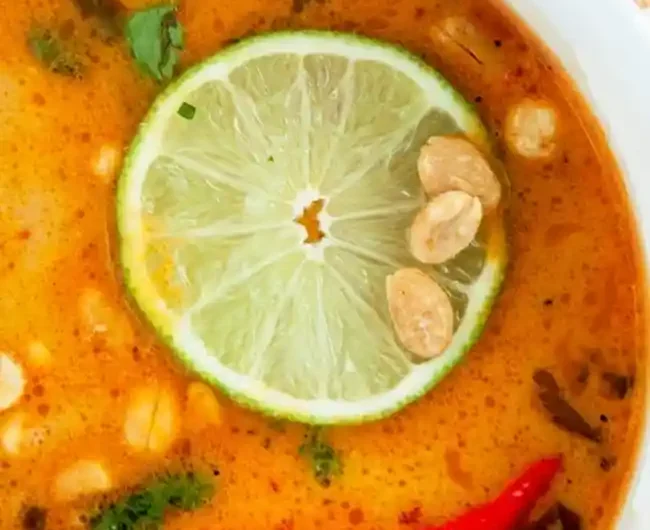
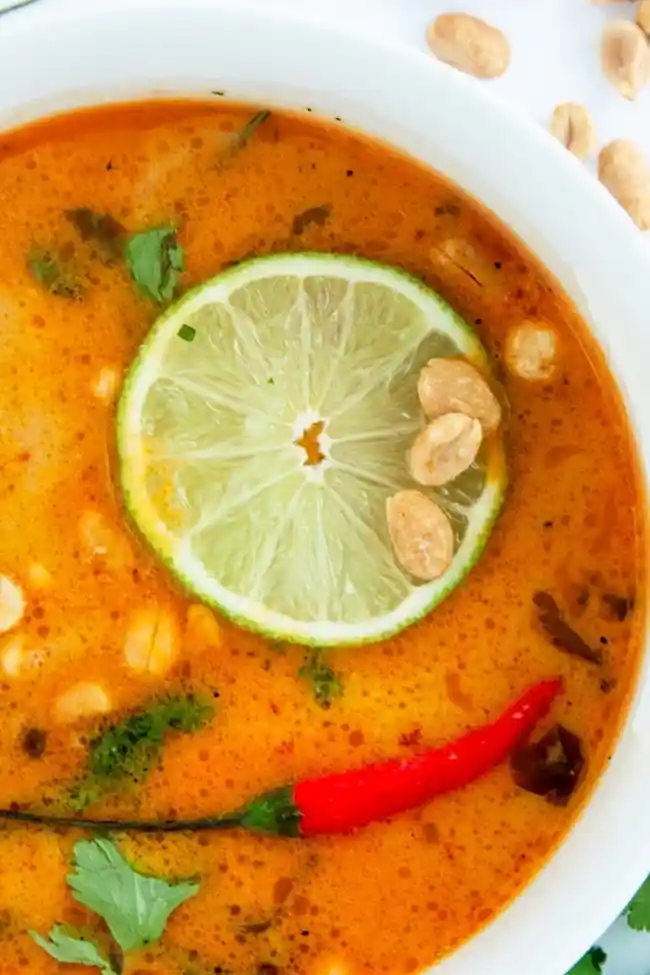
This hearty Thai-inspired chicken soup blends the richness of peanut butter and coconut milk for a satisfying meal. It is an easy-to-prepare dinner that brings complex, aromatic flavors to your table in just 35 minutes.
List of ingredients
- 1 tbsp coconut oil – used for sautéing aromatics.
- 2 lb chicken breast, cubed – the primary protein source.
- 5 cloves garlic, minced – adds a pungent base.
- 2 shallots, diced – provides a delicate onion flavor.
- 1 red pepper, chopped – adds sweetness and color.
- 1/2 cup cilantro, fresh and chopped – for bright, herbal notes.
- 1/3 cup liquid aminos or soy sauce – for savory saltiness.
- Zest of 1 lime – concentrates the citrus aroma.
- 1/3 cup peanut butter – creates a creamy, nutty texture.
- 1/4 cup lime juice – balances the richness with acidity.
- 3 tbsp chili paste – provides the signature Thai heat.
- 2 tbsp soy sauce or liquid aminos – additional seasoning for the broth.
- 2 tsp dried cilantro flakes – deepens the herbal profile.
- 1 tsp cumin – adds an earthy undertone.
- 1 pinch salt – to enhance overall flavors.
- 1 pinch black pepper – for a subtle spicy kick.
- 6 cups chicken broth – the liquid base of the soup.
- 2 14oz cans coconut milk – full-fat for a creamy consistency.
- 1/2 cup raw peanuts, chopped – used for a crunchy topping.
- Optional: bird’s eye pepper, sliced – for those who want extra spice.
step-by-step instructions
- Sauté Aromatics: Heat the coconut oil in a large pot over medium heat. Add the minced garlic, diced shallots, and chopped red pepper, cooking until they become soft and fragrant.
- Combine Main Flavors: Stir in the cubed chicken, fresh cilantro, liquid aminos, lime zest, lime juice, peanut butter, chili paste, dried cilantro, cumin, salt, and black pepper. Cook for 4 to 5 minutes, stirring constantly to ensure the chicken is coated and flavors are merged.
- Add Liquids: Pour in the chicken broth, coconut milk, and the remaining 2 tablespoons of soy sauce. Bring the entire mixture to a boil over medium-high heat.
- Simmer: Reduce the heat to low and let the soup simmer gently for about 15 minutes. This allows the chicken to cook through and the flavors to meld.
- Garnish and Serve: Ladle the soup into bowls and top with fresh cilantro, chopped peanuts, and sliced bird’s eye pepper for added texture and heat.
Optimal Cooking Techniques
Prepare All Components in Advance
Practicing mise en place is essential for this recipe because the cooking process moves quickly. By cubing the chicken and chopping the vegetables beforehand, you avoid burning the garlic while searching for the next ingredient. This ensures a smooth transition between sautéing and simmering.
Prioritize Full-Fat Coconut Milk
Using full-fat canned coconut milk is critical for achieving the signature velvety texture of Thai soups. Light coconut milk or carton-based versions lack the necessary fat content, resulting in a thin, watery broth. The richness of the full-fat version balances the spice of the chili paste.
Utilize a Heavy-Bottomed Pot
A heavy-bottomed pot or a Dutch oven distributes heat more evenly across the base. This prevents the peanut butter and spices from scorching during the initial combination phase. A pot with at least a 4-quart capacity allows for easy stirring without splashing liquid over the sides.
Zest Citrus Before Juicing
Always zest your lime before cutting it for juicing to make the process much easier. The zest contains concentrated aromatic oils that provide a deeper citrus flavor than the juice alone. Use a fine grater to avoid hitting the bitter white pith of the fruit.
Ingredient Modifications
Substitute Chicken Breast with Thighs
For a richer flavor and more tender meat, you can replace the chicken breast with an equal weight of boneless, skinless chicken thighs. Be sure to trim any excess fat before cubing the meat to keep the broth from becoming too greasy. Thighs are less likely to overcook during the simmering process.
Use Tamari for Gluten-Free Needs
If you require a gluten-free version of this soup, substitute the soy sauce with tamari or liquid aminos. These options provide the same salty, umami depth without the wheat found in traditional soy sauce. Liquid aminos are particularly useful for a slightly sweeter, nutrient-dense profile.
Exchange Peanut Butter for Almond Butter
Those who prefer a different nutty profile can use creamy almond butter as a direct substitute for peanut butter. While the flavor is slightly more subtle, it maintains the same creamy consistency and thickening power. Ensure the nut butter is well-stirred before adding it to the pot.
Adjust Chili Paste for Heat Preference
The level of spice can be easily modified by adjusting the amount of chili paste. For a milder soup, start with one tablespoon and taste before adding more. Conversely, increase the amount or add more bird’s eye peppers to create a more pungent, spicy experience.
Custom Flavor Enhancements
Incorporate Freshly Grated Ginger
Adding a tablespoon of freshly grated ginger during the sauté step introduces a sharp, zingy brightness to the soup. Ginger complements the coconut and peanut flavors perfectly. It also adds a subtle warmth that enhances the overall complexity of the broth.
Add Sliced Mushrooms for Texture
To add more earthiness and bulk to the soup, stir in sliced shiitake or button mushrooms. Add these during the first sauté step along with the shallots and red peppers. Mushrooms absorb the savory broth, providing a satisfying, meaty bite to every spoonful.
Stir in Fresh Baby Spinach
For a boost of color and nutrition, stir in a few handfuls of fresh baby spinach just before serving. The residual heat of the soup will wilt the leaves in a matter of seconds. This adds a fresh, slightly bitter contrast to the creamy peanut base.
Include Canned Bamboo Shoots
Slices of canned bamboo shoots provide an authentic Thai texture and a mild, woody flavor. Rinse the shoots thoroughly before adding them during the simmering phase. They offer a distinct crunch that contrasts well with the tender chicken.
Suggested Serving Methods
Serve Over Steamed Jasmine Rice
Ladle the soup over a scoop of fluffy steamed jasmine rice for a more filling meal. The rice absorbs the creamy coconut broth, making the dish feel like a hearty stew. This is a traditional way to enjoy Thai soups in a home setting.
Pair with Rice Noodles
For a different texture, serve the soup with pre-soaked thin rice noodles. Place the noodles in the bottom of the bowl and pour the hot soup over them. The noodles provide a slippery, satisfying element that complements the peanut butter thickness.
Garnish with Thai Basil Leaves
In addition to cilantro, adding fresh Thai basil leaves as a garnish introduces an anise-like aroma. This herb is a staple in Thai cuisine and elevates the scent of the dish. Tear the leaves by hand to release their essential oils just before serving.
Add a Fresh Lime Squeeze
Even though lime juice is in the recipe, a final squeeze of fresh lime over the individual bowl can brighten the dish. The fresh acidity cuts through the richness of the coconut milk and peanut butter. This wakes up the other spices and enhances the overall taste.
Storage and Preservation
Refrigerate in Airtight Containers
Store any leftover soup in airtight glass containers to keep the flavors fresh. This soup can be safely refrigerated for three to four days. Ensure the soup has cooled slightly before sealing the container to prevent excessive condensation.
Avoid Freezing the Soup
It is not recommended to freeze coconut-based soups because the coconut milk tends to separate upon thawing. This results in a grainy texture and a broken emulsion in the broth. For the best quality, consume the soup within a few days of cooking.
Reheat Slowly on the Stove
To reheat, place the soup in a small pot over low to medium heat. Stir frequently to ensure the peanut butter and coconut milk reintegrate smoothly. Avoid boiling the soup vigorously during reheating, as this can cause the fats to separate.
Thin the Soup During Reheating
Because the peanut butter continues to thicken the liquid as it cools, you may find the soup too thick when reheating. Add a splash of chicken broth or water to return it to the desired consistency. Stir well until the broth is smooth and creamy again.
Advance Preparation Strategies
Pre-Cut Proteins and Vegetables
You can save significant time by prepping your chicken, shallots, and red peppers a day in advance. Store them in separate airtight bags or containers in the refrigerator. This allows you to move straight to the sautéing step when you are ready to cook dinner.
Pre-Mix the Flavor Paste
Combine the peanut butter, lime juice, chili paste, and soy sauce into a thick paste before you start heating the oil. This prevents the peanut butter from clumping when added to the hot pot. It also ensures that all the concentrated flavors are evenly distributed.
Store Fresh Herbs Separately
Keep your chopped cilantro and any garnish peppers in a separate container from the soup base. Adding fresh herbs only at the time of serving prevents them from wilting or losing their bright flavor. This keeps the presentation professional and appetizing.
Common Troubleshooting Fixes
Correcting a Thick Consistency
If the soup becomes too thick due to the peanut butter, simply whisk in additional chicken broth. Add the liquid one-quarter cup at a time until the consistency is creamy but pourable. This is common if you use a very thick, natural peanut butter.
Balancing Excessive Saltiness
If the soy sauce or liquid aminos make the soup too salty, add more lime juice or a splash of extra coconut milk. The acidity of the lime and the sweetness of the coconut help neutralize the sodium. This balances the flavor profile without diluting the richness.
Taming High Spice Levels
If the chili paste makes the soup too spicy for some guests, stir in an extra half-can of coconut milk. The fats in the coconut milk bind to the capsaicin in the chili, effectively mellowing the heat. This allows you to maintain the flavor while reducing the burn.
Preventing Coconut Milk Separation
To prevent the coconut milk from separating, keep the soup at a gentle simmer rather than a rolling boil. High heat can cause the emulsion to break, leaving oil droplets on the surface. Constant stirring during the final simmer phase also helps maintain a smooth texture.
Frequently Asked Questions
What is the best type of peanut butter to use?
A creamy, no-stir variety of peanut butter works best for this recipe as it incorporates into the broth more easily. Natural peanut butters can be used, but you must stir them thoroughly first to avoid clumps of oil in the soup.
Can I make this recipe mild?
Yes, you can make this recipe mild by reducing the chili paste to one tablespoon and omitting the bird’s eye peppers. You will still get the nutty, creamy flavor without the intense heat, making it suitable for children or those sensitive to spice.
How long does this soup last in the fridge?
When stored in an airtight container, this Thai chicken soup stays fresh for about three to four days. Always reheat it gently on the stovetop to ensure the coconut milk and peanut butter remain properly emulsified.
Is this soup different from Tom Kha Gai?
Yes, this version differs from traditional Tom Kha Gai because it includes peanut butter and chili paste for a creamier, spicier profile. Tom Kha Gai typically relies on galangal, lemongrass, and mushrooms for a more sour and aromatic taste.
Print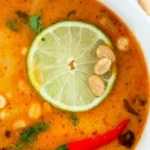
Creamy Thai Coconut Peanut Chicken Soup
- Total Time: 35 minutes
- Yield: 10 cups 1x
- Diet: Gluten Free
Description
This Thai Chicken Soup recipe makes a delicious and easy dinner. Made with chicken, chili paste, peanut butter, coconut milk, and spices.
Ingredients
- 1 tbsp coconut oil
- 2 lb chicken breast, cubed
- 5 cloves garlic, minced
- 2 shallots, diced
- 1 red pepper, chopped
- 1/2 cup fresh cilantro, chopped
- 1/3 cup liquid aminos or soy sauce
- Zest of 1 lime
- 1/3 cup peanut butter
- 1/4 cup lime juice
- 3 tbsp chili paste
- 2 tbsp soy sauce or liquid aminos
- 2 tsp dried cilantro flakes
- 1 tsp cumin
- 1 pinch salt
- 1 pinch black pepper
- 6 cups chicken broth
- 2 14oz cans coconut milk
- 1/2 cup raw peanuts, chopped
- bird’s eye pepper, sliced (optional)
Instructions
- Step: In a large pot, heat the coconut oil over medium heat and saute the garlic, shallots, and red pepper until soft.
- Step: Add the chicken, cilantro, liquid aminos/soy sauce, lime zest and juice, peanut butter, chili paste, dried cilantro, cumin, salt, and pepper. Combine over the heat for about 4-5 minutes, stirring constantly.
- Step: Add the chicken broth, coconut milk, and 2 tbsp of soy sauce and bring to a boil.
- Step: Reduce heat and simmer for 15 minutes.
- Step: Top with cilantro, peanuts and birds eye pepper.
Notes
Use creamy no-stir peanut butter for best results. For a gluten-free version, ensure you use liquid aminos instead of soy sauce.
- Prep Time: 10 minutes
- Cook Time: 25 minutes
- Category: Soup
- Method: Simmering
- Cuisine: Thai
Nutrition
- Serving Size: 1 cup
- Calories: 333 kcal
- Sugar: 4.1 g
- Sodium: 892.5 mg
- Fat: 25.6 g
- Saturated Fat: 18.9 g
- Unsaturated Fat: 6.7 g
- Trans Fat: 0 g
- Carbohydrates: 12.3 g
- Fiber: 0.9 g
- Protein: 16.4 g
- Cholesterol: 33.3 mg
Keywords: thai coconut peanut soup, thai coconut soup, thai soup