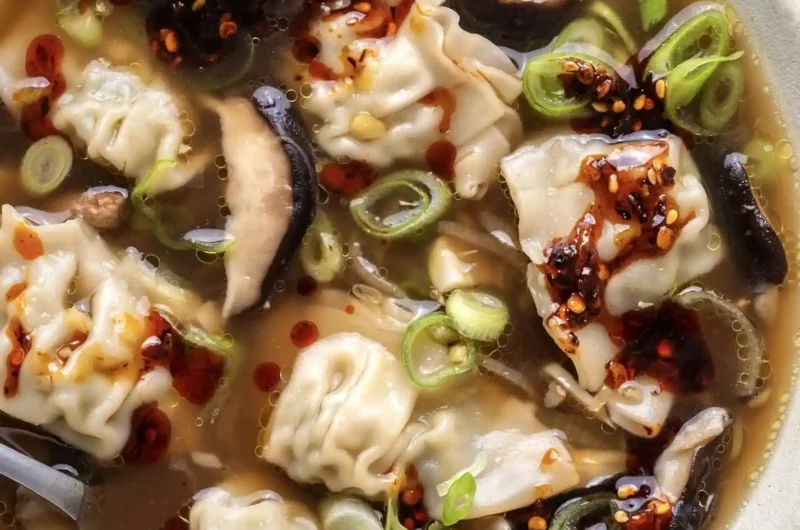
A quick, one-pot meal featuring savory broth and frozen dumplings. This recipe takes less than 20 minutes to prepare, making it ideal for busy evenings.
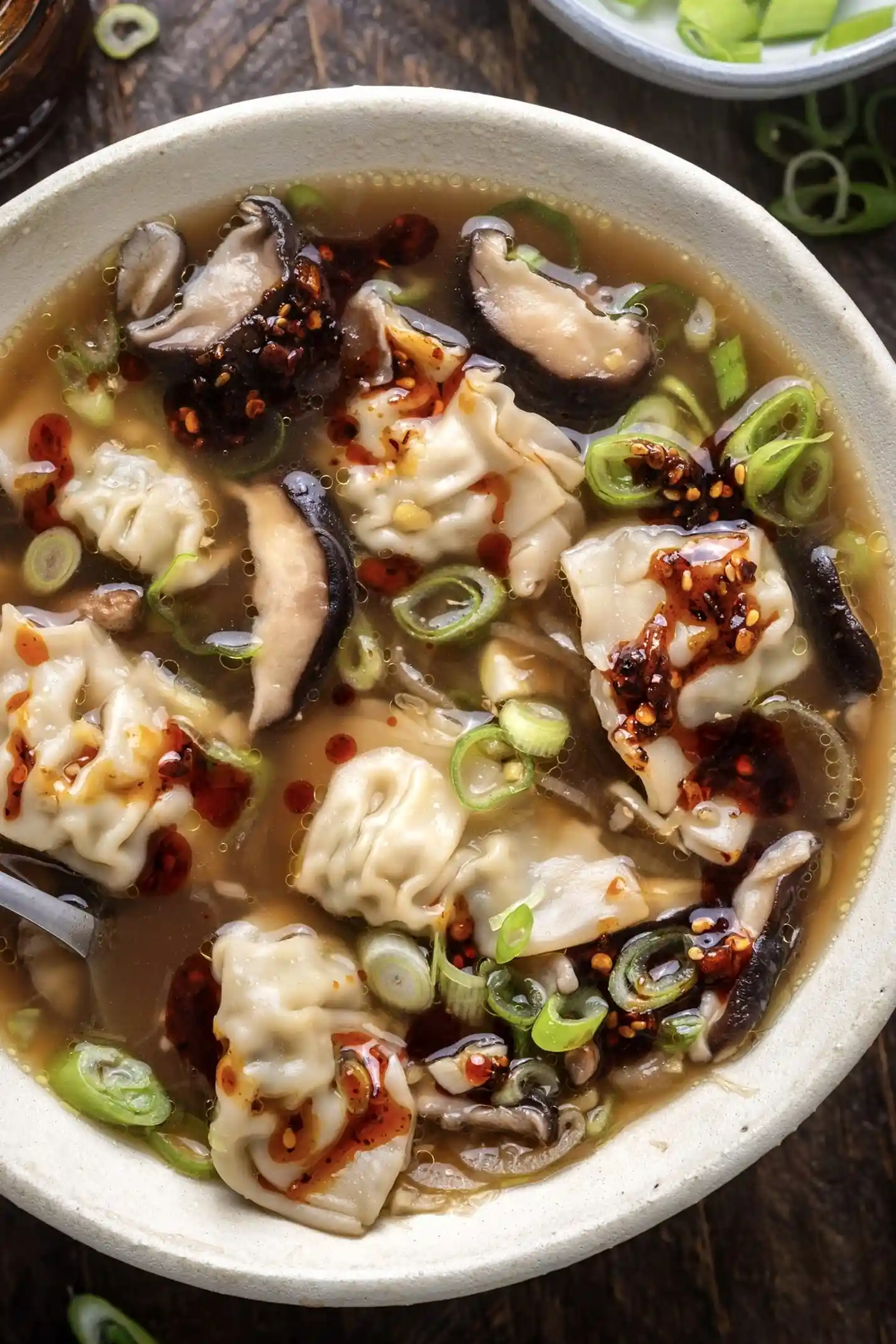
List of ingredients
- 2 tbsp sesame oil or olive oil – used for sautéing the aromatic base.
- 1 large shallot, thinly sliced – provides a mild, sweet onion flavor.
- 2 garlic cloves, thinly sliced – adds depth and sharp aromatic notes.
- 1 1/2 tbsp fresh ginger, peeled and grated – provides warmth and a zingy taste.
- 1 tsp brown sugar – balances the salty soy sauce and enhances richness.
- 5 oz shiitake mushrooms, sliced – adds a meaty texture and umami flavor.
- 1 1/2 tbsp soy sauce, plus more to taste – the primary seasoning for salt and color.
- 2 cups low-sodium chicken stock, preferably bone broth – creates a nutrient-dense base.
- 1 cup water – helps adjust the salt concentration and volume.
- 8 oz frozen wontons or potstickers (chicken or veggie) – the main hearty component.
- 1/4 cup scallions, chopped – used for freshness and as a final garnish.
- Chili crisp for serving (optional) – adds spicy heat and a textured oil finish.
step-by-step instructions
- Sauté Aromatics: Heat the oil in a large pot over medium heat. When shimmering, add the shallot and sauté for 4-6 minutes or until softened.
- Build Flavor Base: Stir in the garlic, ginger, brown sugar and mushrooms. Cook for another 2-3 minutes, until fragrant.
- Simmer Wontons: Deglaze the pan with soy sauce before pouring in the broth and water. Bring to a boil and add the frozen wontons. Boil for 2-3 minutes or until heated through.
- Finish and Serve: Remove from the heat and stir in the scallions. Serve in bowls with chili crisp if desired.
Broth Enhancement and Flavor Control
Selecting the Best Chicken Bone Broth
Using a high-quality bone broth instead of standard chicken stock increases the protein content and adds a richer mouthfeel due to the gelatin. Look for low-sodium versions to maintain control over the salt levels. If you cannot find bone broth, a standard low-sodium chicken stock works well.
Balancing Salt with Low-Sodium Options
Soy sauce is naturally high in sodium, which can easily overpower a soup. By using low-sodium broth and adding soy sauce incrementally, you can find the perfect balance. Taste the broth after adding the water and stock before adding any extra soy sauce at the end.
The Role of Fresh Ginger in Asian Soups
Freshly grated ginger provides a sharp, peppery heat that differs significantly from dried ginger powder. Grating the ginger allows the juices to integrate fully into the oil during the sauté process. This creates a consistent flavor throughout the entire batch of soup.
Using Brown Sugar for Balance
A small amount of brown sugar acts as a flavor balancer against the salty soy sauce and the earthy mushrooms. It does not make the soup sweet but rather rounds out the savory edges. This technique is common in many Asian-inspired broths to achieve a professional taste.
Vegetable and Protein Additions
Integrating Shredded Carrots for Color
Adding julienned or shredded carrots provides a pop of color and a slight sweetness. Add the carrots at the same time as the mushrooms to ensure they soften while keeping a slight bite. This increases the nutritional value without altering the cooking time significantly.
Adding Baby Bok Choy for Crunch
Baby bok choy adds a fresh, crisp texture and a mild cabbage flavor. Slice the bok choy into quarters and add it during the last two minutes of boiling with the wontons. This prevents the leaves from becoming overcooked and mushy.
Incorporating Napa Cabbage
Shredded napa cabbage is an excellent addition that absorbs the savory broth. Sauté the cabbage with the shallots to let it caramelize slightly before adding the liquids. This adds a layer of sweetness and depth to the overall profile.
Using Extra-Firm Tofu for Protein
For those seeking extra protein or a meatless option, cubed extra-firm tofu is ideal. Press the tofu to remove excess water, cube it into small pieces, and add it along with the wontons. The tofu will soak up the broth and provide a satisfying contrast in texture.
Cooking Shrimp as a Protein Addition
Peeled and deveined shrimp can be added for a seafood twist. Add the shrimp during the final 2-3 minutes of the boil, as they cook very quickly. Overcooking shrimp results in a rubbery texture, so remove the pot from heat immediately once they turn opaque.
Professional Storage and Reheating
Storing Broth and Dumplings Separately
The biggest challenge with wonton soup is that dumplings continue to absorb liquid over time. If stored together, the wontons will become bloated and mushy. Store the cooked broth in one container and the cooked wontons in a separate airtight container.
Fridge Life and Container Selection
The broth can be kept in the refrigerator for 4-5 days when stored in a glass, airtight container. Ensure the broth has cooled completely before sealing it to prevent condensation. Glass containers are preferred over plastic to avoid flavor transfer and stains from the soy sauce.
The Best Way to Reheat for Texture
Reheat the broth on the stovetop over medium heat until it reaches a simmer. Once the broth is hot, add only the number of wontons needed for that serving. Simmer for 1-2 minutes just to heat the dumplings through without overcooking the wrappers.
Freezing the Broth Base
The aromatic broth base can be frozen for up to three months. Pour the cooled broth into freezer-safe bags or containers, leaving room for expansion. Thaw overnight in the refrigerator before reheating on the stove.
Common Troubleshooting and Solutions
Preventing Wontons From Breaking
Wonton wrappers are delicate, especially when frozen. Avoid stirring the pot vigorously once the dumplings have been added. Instead, gently push them down with a spoon to ensure they are fully submerged in the boiling liquid.
Fixing Overly Salty Broth
If the broth tastes too salty, do not add more salt or soy sauce. Instead, stir in an extra half-cup of water or unsalted chicken stock to dilute the concentration. A small squeeze of fresh lime juice can also help cut through the saltiness.
Handling Burnt Aromatics
If the garlic or ginger burns during the sauté process, they will develop a bitter taste. If this happens, it is best to discard the base and start over. To prevent this, ensure the heat is at a steady medium and stir constantly during the final minutes of sautéing.
Adjusting Broth Thickness
If you prefer a thicker, more syrupy broth, you can simmer the broth for a few extra minutes before adding the wontons. This reduces the water content and concentrates the flavors. Conversely, if it is too thick, simply add a splash of water.
Frequently Asked Questions
Can I use different types of frozen dumplings?
Yes, you can use potstickers, gyoza, or any other frozen filled dumpling. Just check the package instructions, as some may require a longer boiling time than the 2-3 minutes suggested for wontons.
What is a substitute for sesame oil?
Olive oil or any neutral oil like canola or grapeseed oil can be used. While you will lose the distinct toasted nuttiness of sesame oil, the overall flavor of the broth will still be savory and satisfying.
How do I make this soup vegan?
Replace the chicken stock with a high-quality vegetable broth and ensure the frozen wontons are plant-based. You can also substitute the brown sugar with maple syrup if desired for a completely vegan version.
Can I make this in a slow cooker?
This recipe is designed for the stovetop because wontons cook very quickly. Cooking them in a slow cooker for hours would result in the wrappers disintegrating. However, you can slow-cook the broth base and add the wontons on the stove at the end.
Is it possible to freeze the finished soup?
It is not recommended to freeze the soup with the wontons already inside. The freezing and thawing process damages the starch in the wrappers, leading to a mushy consistency. Freeze the broth and the dumplings in separate packages instead.
What is the best way to slice scallions?
Use a bias-cut technique by holding the scallions at a 45-degree angle while slicing. This creates oval-shaped pieces that look more professional and provide a better distribution of flavor in every spoonful.
Can I add other mushrooms to this recipe?
Yes, oyster mushrooms, shiitake, or even sliced cremini mushrooms work well. Shiitakes are preferred for their deep umami flavor, but any mushroom that holds its shape during boiling is a good alternative.
What can I use instead of shallots?
If shallots are unavailable, finely diced red onion or white onion can be used. Red onion provides a slightly sharper taste, while white onion is more neutral. Use roughly the same quantity as the shallot called for in the recipe.
} Print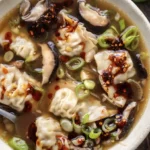
Quick One-Pot Wonton Soup
- Total Time: 20 minutes
- Yield: 2–3 servings 1x
- Diet: Dairy-free
Description
This easy Wonton Soup recipe is made in one pot with your favorite frozen wontons or potstickers. Ready in less than 20 minutes and perfect for a comforting weeknight meal!
Ingredients
- 2 tbsp sesame oil or olive oil
- 1 large shallot, thinly sliced
- 2 garlic cloves, thinly sliced
- 1 1/2 tbsp fresh ginger, peeled and grated
- 1 tsp brown sugar
- 5 oz shiitake mushrooms, sliced
- 1 1/2 tbsp soy sauce (plus more to taste)
- 2 cups low-sodium chicken stock
- 1 cup water
- 8 oz frozen chicken or vegetable wontons or potstickers
- 1/4 cup scallions, chopped
- Chili crisp for serving (optional)
Instructions
- Sauté: Heat the oil in a large pot over medium heat. When shimmering, add the shallot and sauté for 4-6 minutes or until softened.
- Aromatics: Stir in the garlic, ginger, brown sugar and mushrooms. Cook for another 2-3 minutes, until fragrant.
- Simmer: Deglaze the pan with soy sauce before pouring in the broth and water. Bring to a boil and add the frozen wontons. Boil for 2-3 minutes or until heated through.
- Finish: Remove from the heat and stir in the scallions. Serve in bowls with chili crisp if desired.
Notes
Store leftovers by refrigerating the broth base separately. Reheat only the desired number of wontons to prevent them from becoming mushy. The broth keeps for 4-5 days in an airtight container. Optional additions: shredded carrots, cabbage, spinach, or cubed tofu.
- Prep Time: 10 minutes
- Cook Time: 10 minutes
- Category: Soup
- Method: Stovetop
- Cuisine: Asian-inspired
Nutrition
- Serving Size: 1 serving
- Calories: 617 kcal
- Sugar: 7 g
- Sodium: 2112 mg
- Fat: 34 g
- Saturated Fat: 7 g
- Unsaturated Fat: 27 g
- Trans Fat: 0 g
- Carbohydrates: 51 g
- Fiber: 4 g
- Protein: 28 g
- Cholesterol: 76 mg
Keywords: wonton soup, one pot meal, quick dinner, chicken wonton soup, comforting soup