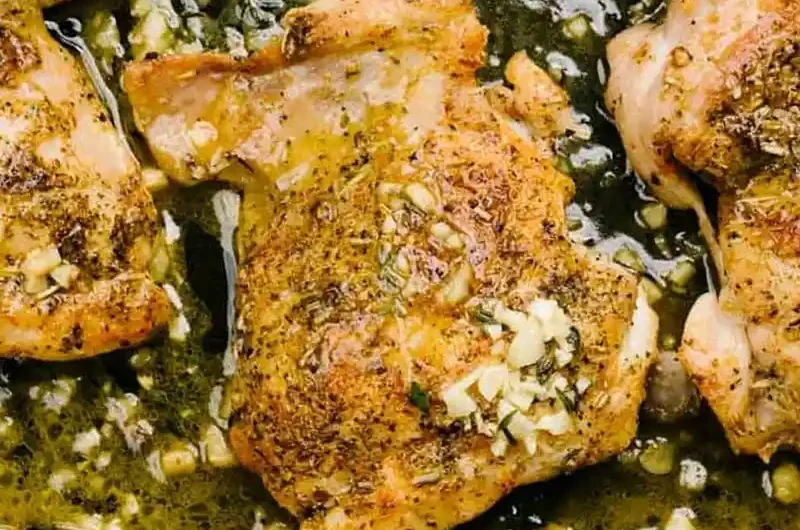
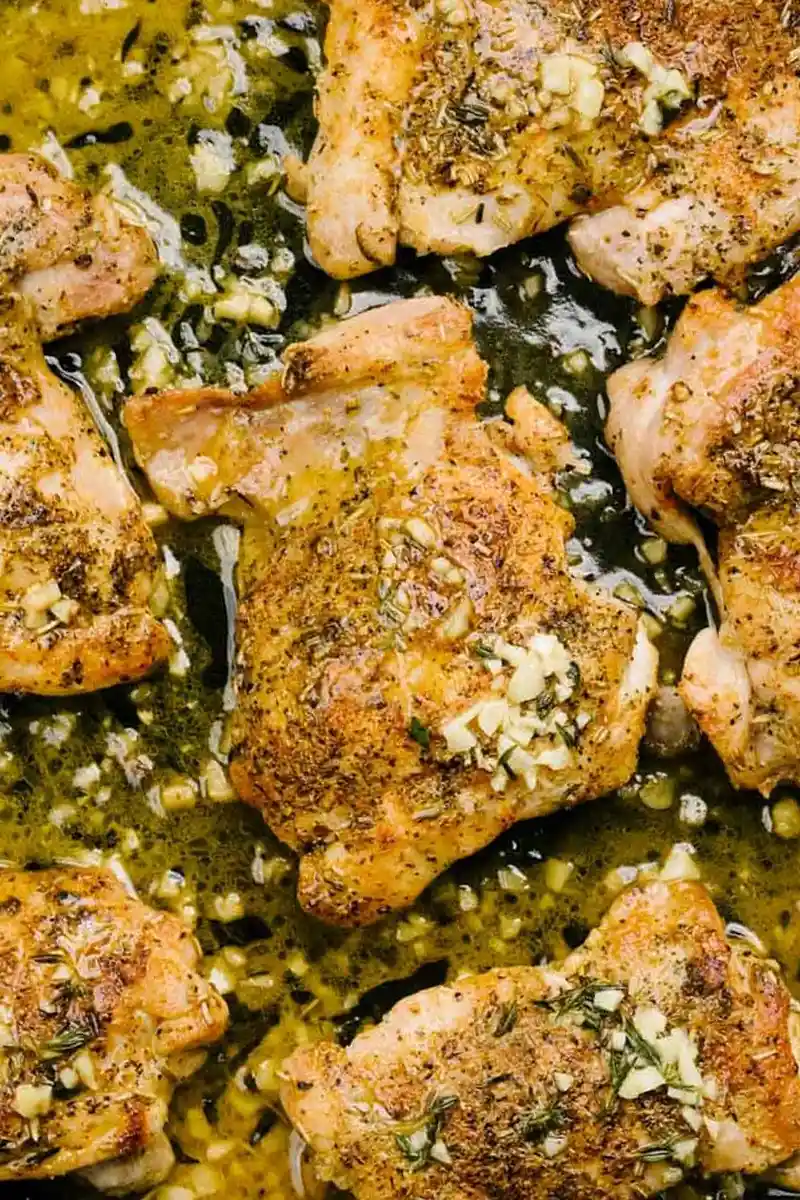
These garlic butter chicken thighs offer a quick, restaurant-quality meal prepared entirely in a single skillet. By searing the meat to achieve a deep golden crust and finishing it in a velvety, aromatic pan sauce, you can transform simple pantry staples into a comforting main course. This recipe is designed to minimize cleanup while delivering maximum flavor in under half an hour of active kitchen time.
List of ingredients
- 2 lb boneless skinless chicken thighs (6 chicken thighs)
- 1 tsp Italian seasoning
- 1 tsp kosher salt
- ½ tsp garlic powder
- ½ tsp paprika
- ½ tsp ground pepper
- 1 tbsp olive oil
- 4 cloves garlic, minced
- 1 tbsp fresh thyme leaves (or finely chopped fresh parsley)
- ½ c chicken broth
- ¾ c chicken broth
- 1.5 tbsp lemon juice
- 4 tbsp cold butter
step-by-step instructions
- Step: Pat chicken dry, then trim any large fat deposits. Season liberally with Italian seasoning, salt, garlic powder, paprika, and pepper on both sides.
- Step: Heat the olive oil over medium high heat in a large 12” skillet. Once hot, place the chicken into the skillet in an even layer. Sear, undisturbed, for 4-5 minutes until a deep golden brown crust forms. Flip the chicken and saute on the other side until equally golden brown, an additional 4-5 minutes. Using tongs, remove the chicken and place on a plate.
- Step: Add the garlic and fresh thyme and cook, stirring constantly, for 1 minute, until very fragrant.
- Step: Reduce the heat to medium, then pour in the extra chicken broth to deglaze the pan, scraping up any browned bits from the bottom of the skillet. Continue simmering until the liquid is reduced by half.
- Step: Pour in the remaining chicken broth and lemon juice, stir well, and bring the liquid to a simmer.
- Step: Add the butter one tablespoon at a time, whisking until fully melted after each addition.
- Step: Nestle the seared chicken into the pan sauce and simmer 2-3 minutes longer, or until the internal temperature reaches 165°F using an instant read thermometer. Spoon a bit of sauce over each piece of chicken, then garnish with more fresh thyme leaves or parsley and serve right away. Enjoy!
Refining the Sear and Crust Development
Achieving a Deep Caramelized Crust
The secret to the perfect sear lies in managing moisture levels before the chicken hits the pan. Always pat the surface of the meat completely dry with paper towels to ensure the high heat creates a crust rather than steaming the protein. If the pan temperature drops, the meat will release juices and boil, which prevents the development of that deep, savory golden brown color.
Selecting the Right Skillet Material
A stainless steel or cast-iron skillet is superior for this task because these materials hold and radiate heat more efficiently than non-stick surfaces. When searing meat, you want the skillet to act as a heat reservoir so the temperature remains consistent even after the cold chicken is added. Ensure your pan is large enough to avoid overcrowding, as steam trapped between closely packed pieces will ruin the crust formation.
Mastering the Pan Sauce Emulsification
Why Temperature Control Matters for Sauces
The technique of using cold butter to finish a sauce is known in classic cooking as mounting. By incorporating cold butter into a reduced liquid base, you create an emulsion where the fat remains suspended in the liquid rather than separating into oily pools. If the butter is too warm, it will melt into liquid fat instantly, causing the sauce to break and lose its silky, thickened texture.
Balancing Salt and Acid Levels
Because the pan sauce relies on a reduction of broth, the saltiness will concentrate as the liquid evaporates. Taste your reduction before adding the final dollop of butter to ensure the intensity of the broth hasn’t become overwhelming. If the sauce feels too salty, a slight splash of water or a tiny extra squeeze of lemon juice can help reset the flavor balance.
Practical Serving and Meal Integration
Pairing with Whole Grains and Starches
This sauce is intentionally rich, making it a perfect candidate for absorption into hearty bases. Steamed jasmine rice, quinoa, or roasted root vegetables like carrots and parsnips work well because they can soak up the excess garlic butter. For a more indulgent meal, consider serving the chicken over creamy polenta or mashed potatoes prepared with extra chives.
Incorporating Fresh Seasonal Vegetables
Because the main dish is quite savory, it benefits from the contrast of crisp-tender green vegetables. Blanched snap peas, steamed asparagus, or quick-sautéed kale provides a refreshing crunch that cuts through the buttery notes of the sauce. Aim to season your side vegetables minimally with just salt and lemon zest to let the garlic butter sauce remain the star of the plate.
Preparation and Storage Considerations
Advanced Prep for Faster Weeknights
To reduce your weeknight workload, you can trim and season the chicken up to four hours in advance. Keep the seasoned meat refrigerated in an airtight container until you are ready to sear. While you shouldn’t prepare the full sauce ahead of time, you can have your garlic minced, herbs picked, and broth measured out so the actual cook time stays strictly within the 30-minute window.
Managing Leftovers and Reheating
If you have leftovers, store them in a glass container with as much of the sauce as possible to prevent the chicken from drying out. When reheating, it is best to use a low-heat setting on the stove rather than a microwave, which can toughen the protein fibers. Adding a tablespoon of water to the pan while reheating will help reconstitute the sauce without causing the butter to split.
Common Questions Regarding Execution
How do I know if the skillet is hot enough?
The olive oil will begin to shimmer and show small, rapid ripples when it reaches the appropriate searing temperature. If the oil starts smoking, it is too hot; remove the pan from the heat briefly before adding the chicken to avoid burnt seasoning. Consistent heat ensures that the crust forms at the same rate the interior cooks.
Can I swap the chicken thighs for other proteins?
This recipe is highly adaptable, though chicken breast cutlets will require slightly less time in the pan to avoid overcooking. If you choose to use breast meat, ensure you pound it to a uniform thickness of roughly three-quarters of an inch to guarantee the centers are cooked without the edges becoming rubbery. The technique for the pan sauce remains identical regardless of the chicken cut chosen.
What is the benefit of deglazing the pan?
Deglazing is the most important step for building depth of flavor in a pan sauce. Those brown bits left in the skillet are known as fond, which consists of caramelized proteins that carry intense, savory concentrated taste. Adding liquid allows you to scrape these bits into the sauce, essentially turning the entire skillet surface into an extension of your seasoning.
Is it necessary to use fresh herbs?
While dried herbs can be used in a pinch, fresh thyme provides a clean, aromatic quality that dried herbs cannot replicate. Because this is a short-cook recipe, dried herbs often remain gritty and fail to bloom their essential oils effectively. If you must use dried herbs, use only half the quantity specified to avoid an overpowering, dusty texture in the final emulsion.
Print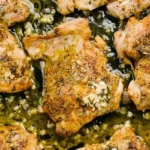
30-Minute Garlic Butter Chicken Thighs
- Total Time: 30 minutes
- Yield: 4 servings 1x
- Diet: Gluten-Free
Description
Seared boneless, skinless thighs are the perfect canvas for a decadent garlic butter pan sauce. This flavorful chicken dish pairs with an endless combination of sides to make a perfectly pleasing meal that’s ready in just half an hour!
Ingredients
- 2 lb boneless skinless chicken thighs (6 chicken thighs)
- 1 tsp Italian seasoning
- 1 tsp kosher salt
- ½ tsp garlic powder
- ½ tsp paprika
- ½ tsp ground pepper
- 1 tbsp olive oil
- 4 cloves garlic, minced
- 1 tbsp fresh thyme leaves (or finely chopped fresh parsley)
- ½ c chicken broth
- ¾ c chicken broth
- 1.5 tbsp lemon juice
- 4 tbsp cold butter
Instructions
- Step: Pat chicken dry, then trim any large fat deposits. Season liberally with Italian seasoning, salt, garlic powder, paprika, and pepper on both sides.
- Step: Heat the olive oil over medium high heat in a large 12” skillet. Once hot, place the chicken into the skillet in an even layer. Sear, undisturbed, for 4-5 minutes until a deep golden brown crust forms. Flip the chicken and saute on the other side until equally golden brown, an additional 4-5 minutes. Using tongs, remove the chicken and place on a plate.
- Step: Add the garlic and fresh thyme and cook, stirring constantly, for 1 minute, until very fragrant.
- Step: Reduce the heat to medium, then pour in the extra chicken broth to deglaze the pan, scraping up any browned bits from the bottom of the skillet. Continue simmering until the liquid is reduced by half.
- Step: Pour in the remaining chicken broth and lemon juice, stir well, and bring the liquid to a simmer.
- Step: Add the butter one tablespoon at a time, whisking until fully melted after each addition.
- Step: Nestle the seared chicken into the pan sauce and simmer 2-3 minutes longer, or until the internal temperature reaches 165°F using an instant read thermometer. Spoon a bit of sauce over each piece of chicken, then garnish with more fresh thyme leaves or parsley and serve right away. Enjoy!
Notes
Substitute an equivalent amount of boneless skinless chicken breasts if preferred. Ensure butter is kept cold until the moment of incorporation to ensure a smooth sauce. Use an instant-read thermometer to guarantee the chicken reaches the safe internal temperature.
- Prep Time: 5 minutes
- Cook Time: 25 minutes
- Category: Main Course
- Method: Stovetop
- Cuisine: American
Nutrition
- Serving Size: 1.5 chicken thighs
- Calories: 431 kcal
- Sugar: 0 g
- Sodium: 778 mg
- Fat: 24 g
- Saturated Fat: 9 g
- Unsaturated Fat: 13 g
- Trans Fat: 0 g
- Carbohydrates: 2 g
- Fiber: 1 g
- Protein: 45 g
- Cholesterol: 222 mg
Keywords: chicken thighs, garlic butter, easy dinner, 30 minute meal