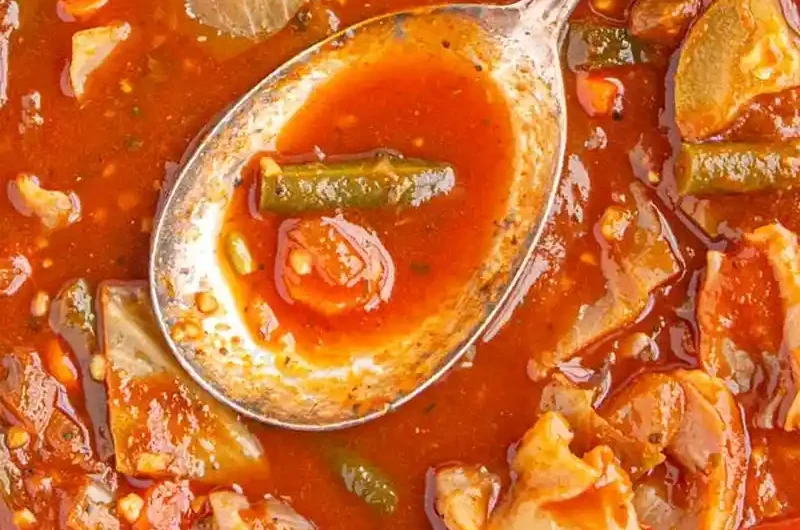
This nutrient-dense cabbage soup is a simple, low-calorie meal perfect for weight management. Using a slow cooker makes preparation effortless while maximizing the vegetable flavors.
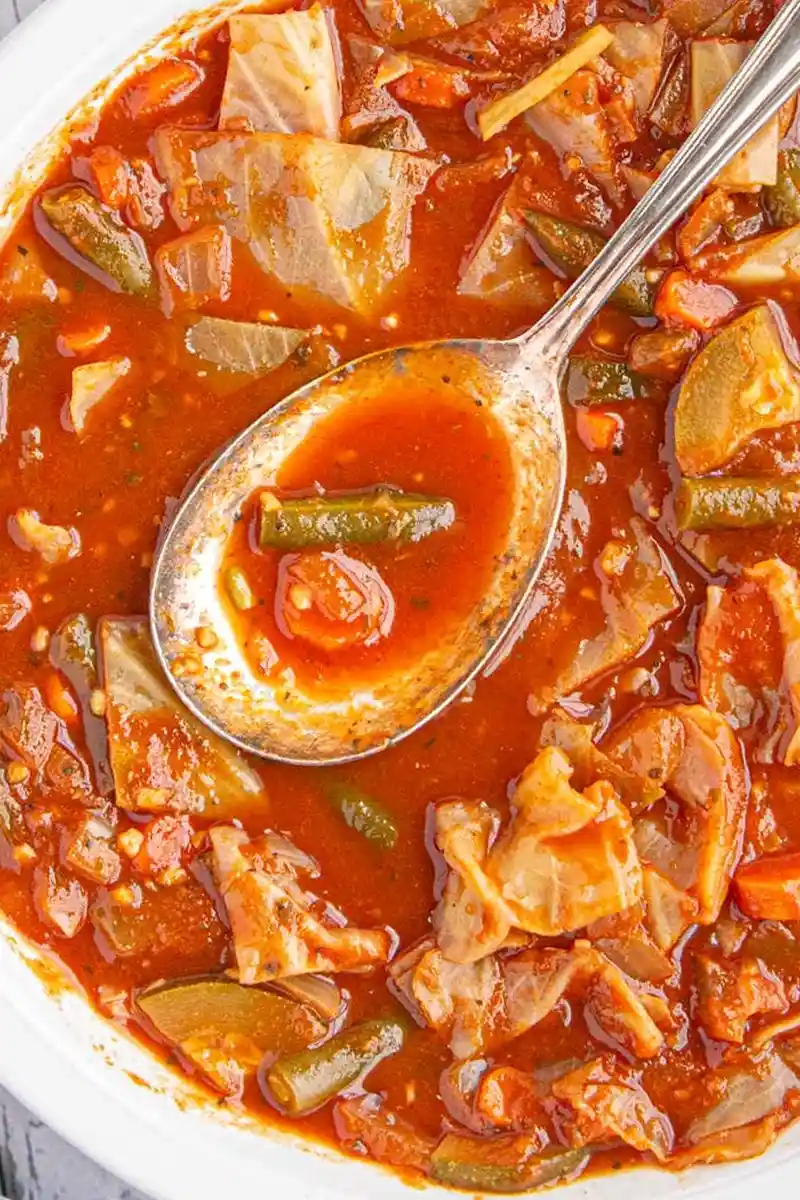
List of ingredients
- 32 ounces V-8 juice (regular or spicy) – provides the flavorful base.
- 3 garlic cloves (minced) – adds aromatic depth.
- 3 cups green cabbage (chopped) – the main hearty vegetable.
- 1 cup yellow onion (diced) – adds a sweet, savory foundation.
- 1 cup green beans (cut in bite sized pieces) – provides texture and nutrients.
- 1 cup zucchini (sliced) – adds softness and volume.
- 1/2 cup carrot (sliced) – introduces a hint of sweetness.
- 1 teaspoon basil – provides a sweet, peppery herb note.
- 1 teaspoon oregano – adds a pungent, earthy aroma.
- salt & pepper (to taste) – for final seasoning adjustments.
step-by-step instructions
- Combine: Add all the listed ingredients into a slow cooker.
- Cook: Set the appliance to low and cook for 6 hours, or until all vegetables are tender.
- Finish: Serve the soup in bowls and sprinkle with a little grated parmesan if desired.
Alternative Cooking Methods
Stovetop Preparation
To make this soup on the stove, spray a large pot with non-stick cooking spray or use a tablespoon of olive oil. Saute the minced garlic, diced onions, and sliced carrots on medium heat for about 5 minutes. Stir in the V-8 juice and seasonings, then bring the mixture to a light boil.
Next, stir in the chopped cabbage, zucchini, and green beans. Cover the pot and simmer on medium-low heat for 15 to 20 minutes. This method is significantly faster than the slow cooker but may result in slightly different flavor development.
Fast-Track Slow Cooking
If you are short on time, you can switch the slow cooker setting from low to high. Cooking on high typically takes about 3 hours to reach the same level of vegetable tenderness. Monitor the cabbage closely to ensure it does not become overly mushy.
Pressure Cooker Adaptation
For an even faster result, use a pressure cooker or Instant Pot. Combine all ingredients and cook on high pressure for approximately 10 to 15 minutes. Allow the pressure to release naturally for 5 minutes before venting the remaining steam.
Customizing Your Vegetable Mix
Adding Bell Peppers
Adding diced bell peppers provides a bright flavor and extra vitamin C. Green, red, or yellow peppers all work well depending on the sweetness you prefer. Add them at the start of the slow cooking process.
Incorporating Butternut Squash
Butternut squash adds a creamy texture and a mild sweetness to the broth. Peel and cube the squash into small pieces to ensure they cook at the same rate as the carrots. This variation makes the soup feel more like a hearty autumn meal.
Using Celery Stalks
Celery is a classic soup base ingredient that adds a salty, herbal quality. Dice two to three stalks and add them with the onions and carrots. This helps round out the savory profile of the V-8 base.
Adding Cauliflower Rice
Cauliflower rice is an excellent way to add volume without adding many calories. Stir it in during the last hour of slow cooking to prevent the grains from dissolving. It adds a subtle nuttiness to the overall dish.
Substituting Red Cabbage
You can replace the green cabbage with red cabbage for a different nutritional profile. Red cabbage has a slightly more peppery taste and will change the color of the soup. This is a great way to vary the antioxidants in your diet.
Ways to Boost Flavor
Increasing Heat with Pepper Flakes
If you prefer a spicier soup, add a dash of red pepper flakes or a pinch of cayenne pepper. These ingredients provide a sharp heat that cuts through the sweetness of the carrots and onions. Adjust the amount based on your personal spice tolerance.
Using Tomato Paste for Depth
A tablespoon of tomato paste can give the broth a richer, more concentrated flavor. Stir the paste into the V-8 juice before adding it to the slow cooker. This creates a thicker consistency and a more intense tomato taste.
Swapping Herbs for Italian Seasoning
If you do not have individual basil and oregano, a pre-mixed Italian seasoning blend is a perfect substitute. Use two teaspoons of the blend to replace the individual herbs. This often adds extra flavors like rosemary or thyme.
Enhancing with Extra Garlic
For those who love bold flavors, increasing the garlic to five or six cloves is recommended. Garlic becomes mellow and sweet during the long slow cooking process. This adds a professional, savory quality to the broth.
Hearty Add-ins for More Substance
Incorporating Brown Rice
Adding brown rice transforms this from a light soup into a filling meal. To avoid the rice absorbing all the liquid and becoming mushy, cook the rice separately. Stir the pre-cooked brown rice into the soup just before serving.
Adding Diced Potatoes
Small cubes of gold or red potatoes add a satisfying starchiness to the dish. Add them at the beginning of the cooking process so they have time to soften. Keep the cubes small, about half an inch, for consistent cooking.
Adding Beans for Protein
Canned cannellini beans or chickpeas are great additions for extra protein and fiber. Rinse the beans thoroughly before stirring them into the pot. They hold their shape well during the slow cooking process.
Liquid Substitutions
Using Low-Sodium Vegetable Broth
If you prefer a lighter taste than V-8, vegetable broth is a suitable alternative. Use a low-sodium version to keep the health benefits intact. You may need to add a tablespoon of tomato paste to mimic the richness of the original recipe.
Homemade Chicken Stock
Homemade chicken stock adds a rich, savory depth that pairs well with cabbage. Ensure the stock is skimmed of excess fat to keep the calorie count low. This is a great option for those wanting a more traditional soup base.
Beef Broth Options
For a deeper, meatier flavor, low-sodium beef broth can be used. This pairs exceptionally well with the earthiness of the cabbage and carrots. Use a high-quality broth to avoid an artificial aftertaste.
Proper Storage Techniques
Refrigeration Guidelines
Store any leftover soup in an airtight container in the refrigerator. It will remain fresh and safe to eat for up to four days. Ensure the soup has cooled slightly before sealing the lid to prevent condensation.
Why Glass Containers are Preferred
It is highly recommended to use glass containers for this specific recipe. The tomato-based V-8 sauce contains pigments that can permanently stain plastic containers. Glass is non-porous and keeps the flavors cleaner.
Freezing for Long Term
This soup freezes well for up to three months. Use freezer-safe Ziploc bags or airtight glass jars, leaving a small amount of headspace for expansion. Freeze individual portions for easy meal prep throughout the week.
Best Reheating Practices
Microwave Reheating
Place a serving of soup in a microwave-safe bowl and cover it with a lid. Heat on high in short intervals, stirring in between to ensure even warming. This is the quickest method for a single serving.
Stovetop Reheating
For larger quantities, reheat the soup in a saucepan over medium heat. Stir occasionally to prevent the vegetables from sticking to the bottom. Warm the soup until it reaches a gentle simmer.
Adjusting Consistency After Reheating
If you added rice or potatoes to your soup, you may notice the broth has thickened during storage. Add a small splash of water or vegetable broth while reheating. This restores the original soup consistency.
Common Troubleshooting
Managing Vegetable Texture
If your vegetables are too soft, reduce the cooking time by 30 to 60 minutes. Slow cookers vary in temperature, and some run hotter than others. Check the cabbage at the 5-hour mark to determine if it is tender enough.
Reducing Excessive Saltiness
If the soup tastes too salty due to the V-8 juice, add a splash of water or unsalted broth. You can also add a small amount of diced unsalted potato to absorb some of the salt. Avoid adding extra salt until the very end of the process.
Fixing a Thin Broth
If the broth feels too watery, you can simmer it uncovered on the stovetop for 15 minutes. This allows some of the liquid to evaporate, concentrating the flavors. Alternatively, stirring in a teaspoon of cornstarch slurry can thicken the liquid.
Frequently Asked Questions
Can I use frozen vegetables?
Yes, you can use frozen chopped onions, carrots, zucchini, and green beans. Toss them directly into the slow cooker without thawing them first. However, it is best to use fresh cabbage as frozen cabbage can lose its structure and become too soft.
Is Weight Watchers cabbage soup a low-carb recipe?
Yes, this recipe is very low in carbohydrates and fits well into keto diets. While the vegetables contain some natural sugars and carbs, the overall net carb count remains low. It is an excellent option for those tracking macros.
Can I add protein like chicken or beef?
Adding lean diced chicken breast or lean beef cubes is possible. Add the meat at the beginning of the slow cooking process to ensure it is cooked through. Be aware that adding meat will increase the total calories and point value of the soup.
What is the best way to serve this soup?
This soup is most traditionally served hot in a bowl. A sprinkle of grated parmesan cheese adds a salty finish. For a more complete meal, serve it alongside a slice of toasted whole-grain bread.
Print
Slow Cooker Low Calorie Cabbage Soup
- Total Time: 6 hours 10 minutes
- Yield: 8 servings 1x
- Diet: Low Carb
Description
The old 0-point Weight Watchers Cabbage Soup recipe is made with V-8 and has just 46 calories per serving! It’s easy to make in the slow cooker and is packed with flavor for a guilt-free, satisfying meal.
Ingredients
- 32 ounces V-8 juice (regular or spicy)
- 3 garlic cloves (minced)
- 3 cups green cabbage (chopped)
- 1 cup yellow onion (diced)
- 1 cup green beans (cut in bite sized pieces)
- 1 cup zucchini (sliced)
- 1/2 cup carrot (sliced)
- 1 teaspoon basil
- 1 teaspoon oregano
- salt & pepper (to taste)
Instructions
- Step 1: Add everything to a slow cooker.
- Step 2: Cook on low for 6 hours, or until vegetables are tender.
- Step 3: Serve sprinkled with a little grated parmesan if desired.
Notes
Storage: Refrigerate in an airtight container for up to four days. You can also freeze individual portions in an airtight container or Ziploc freezer bags for up to three months. Alternatively, you can simmer this in a large pot over low heat for an hour if you prefer not to use a slow cooker.
- Prep Time: 10 minutes
- Cook Time: 6 hours
- Category: Main Dish
- Method: Slow Cooker
- Cuisine: American
Nutrition
- Serving Size: 1 cup
- Calories: 46 kcal
- Sugar: 7 g
- Sodium: 25 mg
- Fat: 0.2 g
- Saturated Fat: 0.1 g
- Unsaturated Fat: 0.12 g
- Trans Fat: 0 g
- Carbohydrates: 11 g
- Fiber: 2 g
- Protein: 2 g
- Cholesterol: 0 mg
Keywords: Weight Watchers, cabbage soup, 0-point, slow cooker, low calorie, low carb