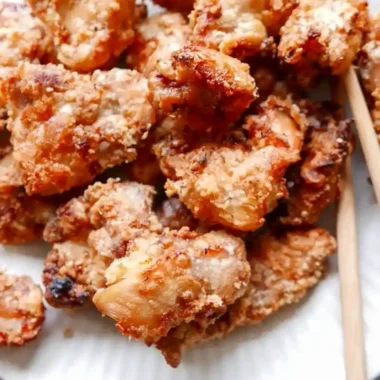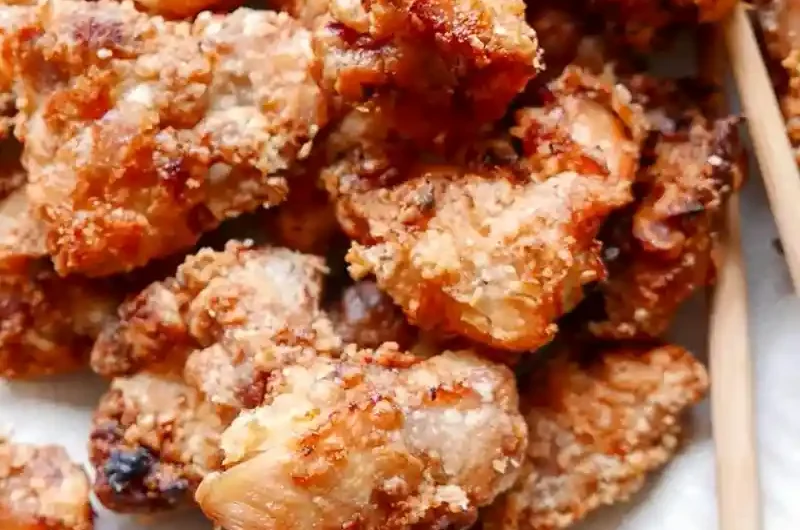
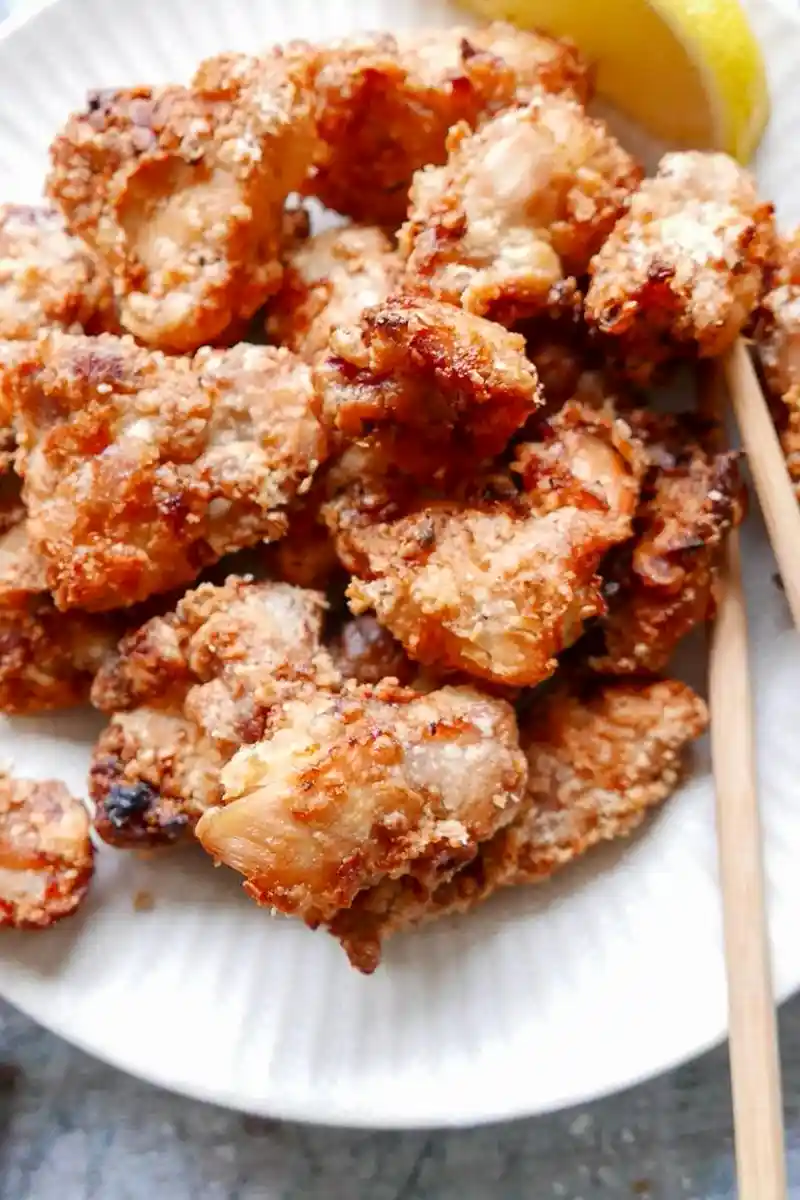
Prepare a delicious batch of Japanese fried chicken using your air fryer for a healthier, low-oil alternative. These bite-sized pieces are marinated in a savory blend of soy and ginger, then cooked to golden perfection.
List of ingredients
- 1 kg skinless boneless chicken thighs – cut into bite-sized pieces for even cooking.
- 3 tablespoons light soy sauce – provides the essential salty and savory base.
- 1 tablespoon rice wine vinegar – adds a subtle tang; can be swapped with apple cider vinegar.
- 3 cloves of garlic – minced finely to distribute flavor.
- 2 teaspoons of ginger paste – adds a warm, aromatic punch.
- 1 teaspoon sesame oil – contributes a toasted, nutty aroma.
- 100 g of cornflour or cornstarch – creates the signature light and crispy crust.
- Vegetable oil spray – or 2 tablespoons of oil with a brush for browning.
step-by-step instructions
- Prep the meat: Using a sharp knife, slice the chicken thighs into bite-sized pieces and place them in a large mixing bowl.
- Create the marinade: Add the minced garlic, ginger paste, soy sauce, sesame oil, and rice wine vinegar to the chicken pieces.
- Marinate: Combine everything thoroughly to ensure every piece of meat is coated. Let the chicken marinate for at least 30 minutes, or up to 24 hours in the fridge for maximum flavor.
- Coat the chicken: Once marinated, dip the chicken pieces directly into the cornflour or cornstarch, ensuring they are coated generously on all sides.
- Preheat: Set your air fryer to 200°C (390°F) and preheat for five minutes.
- Arrange in basket: Place the coated chicken pieces in the air fryer basket in a single layer, cooking in batches if necessary to avoid overcrowding.
- Apply oil: Mist the chicken pieces with vegetable oil spray or use a brush to lightly coat the top surface.
- Cook: Air fry at 200°C (390°F) for 20-25 minutes. Flip the pieces a few times during the process and apply oil to the other side after flipping.
- Keep warm: Transfer cooked batches to a wire rack or board and cover loosely with foil to maintain temperature.
- Serve: Present the karaage hot with lemon wedges and a side of mayonnaise.
Optimizing the Air Frying Process
Maintaining Single Layer Spacing
To ensure every piece of chicken gets the same level of crispiness, avoid stacking the meat. Air fryers rely on the rapid circulation of hot air; if the basket is overcrowded, the air cannot reach the surfaces, resulting in steamed rather than fried chicken.
Importance of Preheating
Preheating the air fryer for five minutes is a critical step for achieving a golden exterior. When the chicken hits a hot surface and is surrounded by hot air immediately, it triggers the Maillard reaction faster, sealing in juices and creating a better crust.
Precision Oil Misting
While air frying uses significantly less oil, a small amount of fat is necessary to hydrate the cornstarch coating. Misting the chicken ensures the flour doesn’t remain powdery and white, instead turning it into a crisp, golden-brown shell.
Managing Cooking Batches
Because most air fryer baskets are small, you will likely need to cook in 2 or 3 batches. Use a wire cooling rack rather than a plate to store finished pieces, as a plate can trap steam and make the bottom of the chicken soggy.
Ingredient Selection and Alternatives
Chicken Thighs vs Breast
Boneless chicken thighs are recommended because they have a higher fat content, which keeps the meat juicy during the high-heat air frying process. If you prefer a leaner option, chicken breasts work well, though they may dry out faster if overcooked by even a few minutes.
Cornstarch vs Potato Starch
Cornstarch provides a very light, crisp texture that is traditional for karaage. For an even crunchier, more glass-like coating, you can substitute cornstarch with potato starch or tapioca flour, which absorb less moisture from the meat.
Soy Sauce Varieties
Light soy sauce is ideal for this recipe as it provides a clean, salty flavor without overpowering the ginger and garlic. If using dark soy sauce, reduce the quantity slightly to avoid the chicken becoming too dark or overly salty.
Vinegar Substitutes
Rice wine vinegar offers a mild acidity that balances the richness of the fried chicken. If you do not have it, apple cider vinegar is the best alternative. Avoid using strong white distilled vinegar, as its harsh acidity can overpower the delicate Asian flavors.
Advanced Marination Techniques
Optimal Marinating Duration
A minimum of 30 minutes allows the salt in the soy sauce to begin breaking down the proteins, but 24 hours is ideal. Longer marination allows the aromatics to penetrate deep into the center of the thigh meat, ensuring flavor in every bite.
Enhancing Flavor Penetration
For the best results, massage the marinade into the meat with your hands or a spoon. This ensures there are no dry spots and that the ginger and garlic are evenly distributed across all the bite-sized pieces.
The Role of Aromatics
Using ginger paste and minced garlic provides a more consistent flavor than sliced aromatics. The paste blends into the cornstarch coating during the dredging process, meaning the flavor is integrated into the crust as well as the meat.
Serving and Pairing Suggestions
Classic Lemon Pairing
Squeezing fresh lemon juice over karaage immediately before eating is a traditional Japanese practice. The citric acid cuts through the richness of the fried coating and the savory soy marinade, brightening the overall taste.
Creating Japanese-Style Mayo
For an authentic dipping sauce, mix high-quality mayonnaise with a small splash of rice wine vinegar or lemon juice. This creates a slightly tangier, thinner sauce that complements the salty crunch of the chicken.
Pairing with Grains
Serve these chicken pieces alongside a bowl of steamed short-grain Japanese rice. The neutral flavor of the rice provides a perfect balance to the intense savory and aromatic flavors of the karaage.
Fresh Vegetable Accompaniments
Pair your karaage with a side of thinly shredded cabbage or a quick pickled cucumber salad. The freshness and crunch of raw vegetables provide a necessary contrast to the fried nature of the dish.
Storage and Long-term Preservation
Proper Refrigeration Methods
Store leftover karaage in an airtight container once the chicken has cooled completely. Keep them in the refrigerator for up to three days, ensuring the lid is sealed tight to prevent the chicken from absorbing other fridge odors.
Flash Freezing Techniques
To freeze karaage, place the cooked pieces on a baking sheet in a single layer and freeze until solid. Once frozen, transfer them to a freezer bag; this prevents the pieces from sticking together in one large clump.
Thawing Process
While you can air fry from frozen, thawing the chicken in the refrigerator overnight results in a more consistent texture. Avoid thawing in the microwave, as this can make the coating rubbery and the meat unevenly warmed.
Reheating for Maximum Crunch
Air Fryer Reheating
The best way to revive leftover karaage is to place them back in the air fryer at 180°C (350°F) for about 10 minutes. This evaporates any moisture that accumulated in the fridge and restores the original crispiness.
Avoiding the Microwave
Never use a microwave to reheat karaage, as the steam generated inside the meat will migrate outward into the coating. This turns the once-crispy cornstarch shell into a soft, soggy layer in a matter of seconds.
Oven Reheating Method
If an air fryer is unavailable, use a conventional oven set to 200°C (390°F) on a wire rack. Heat for 10-15 minutes, flipping halfway through, to ensure the bottom of the chicken doesn’t sit in its own oil.
Common Cooking Challenges
Fixing Soggy Coating
If the coating feels soggy, it is usually due to overcrowding the basket or skipping the oil misting step. Ensure there is plenty of space between pieces and that you have lightly coated the flour with oil before cooking.
Preventing Burnt Edges
Since karaage pieces are small and irregular, some edges may brown faster than others. Flip the pieces frequently and check them starting at the 15-minute mark to prevent the thinner edges from burning.
Managing Cornstarch Clumps
To avoid thick clumps of flour, shake the chicken pieces in a sealed container or bag with the cornstarch. This ensures a thin, even layer of coating rather than heavy patches of uncooked flour.
Frequently Asked Questions
Can I use all-purpose flour instead of cornstarch?
Plain flour can be used, but it results in a heavier, bread-like crust. Cornstarch is preferred for karaage because it creates a thinner, crispier, and more translucent coating that is characteristic of the dish.
How long can I marinate the chicken?
You can marinate the chicken for anywhere from 30 minutes to 24 hours. Beyond 24 hours, the acid in the vinegar and the salt in the soy sauce may begin to break down the meat texture too much, making it mushy.
Do I need to peel the ginger before making the paste?
Yes, the skin of the ginger should be removed using a spoon or peeler before grating or blending it into a paste. The skin can be bitter and fibrous, which would detract from the smooth flavor of the marinade.
Print
Crispy Air Fryer Japanese Karaage
- Total Time: 35 minutes
- Yield: 4 servings 1x
- Diet: General
Description
Enjoy karaage Japanese fried chicken that has been marinated in soy, ginger, garlic and apple cider vinegar, cooked to crispy perfection in an air fryer
Ingredients
- 1 kg skinless boneless chicken thighs cut into bite-sized pieces
- 3 tablespoons light soy sauce
- 1 tablespoon apple cider vinegar
- 3 cloves of garlic (minced)
- 2 teaspoons of ginger paste
- 1 teaspoon sesame oil
- 100 g of cornflour or cornstarch
- Vegetable oil spray or 2 tablespoons of oil
Instructions
- Slice: Using a sharp knife, slice the chicken thighs into bite-sized pieces and put them in a large bowl.
- Marinate: Gather your marinade ingredients – the minced garlic, ginger paste, soy sauce, sesame oil, and apple cider vinegar – and add them to the boneless chicken pieces.
- Combine: Combine thoroughly, making sure all the meat is coated in the marinade. Allow the chicken to marinate for at least 30 minutes to let the flavours penetrate the meat. You can leave to marinate for 24 hours.
- Coat: Once the chicken has marinated, it’s time to coat the chicken with corn flour/cornstarch.
- Preheat: Preheat your air fryer to 200°c (390F) for five minutes while you coat the chicken.
- Dip: Dip the chicken pieces straight into the cornflour, making sure every part of it is coated generously.
- Arrange: Place the coated chicken pieces in the air fryer basket in a single layer. You’ll need to cook in batches depending on the size of your air fryer.
- Oil: Using your cooking spray, mist vegetable oil over the chicken pieces, or use a brush to lightly coat the chicken in oil.
- Air Fry: Air fry the karaage chicken in the air fryer for 20-25 minutes at 200°c (390F), flipping the pieces a few times throughout the cooking time, and coating them with oil on the other side. You’ll need to do this in batches.
- Rest: Once cooked, place the karaage on a wire rack or board, and cover it with foil to keep it warm, while you continue to air fry the other batches.
- Serve: Serve with lemon wedges and mayonnaise.
Notes
Opt for boneless chicken thighs for a juicier result. Avoid overcrowding the air fryer basket to ensure a crispier texture.
- Prep Time: 10 minutes
- Cook Time: 25 minutes
- Category: Appetizer
- Method: Air Frying
- Cuisine: Japanese
Nutrition
- Serving Size: 1 serving
- Calories: 386 kcal
- Sugar: 3 g
- Sodium: 820 mg
- Fat: 17 g
- Saturated Fat: 4 g
- Unsaturated Fat: 13 g
- Trans Fat: 0 g
- Carbohydrates: 13 g
- Fiber: 1 g
- Protein: 45 g
- Cholesterol: 110 mg
Keywords: karaage, japanese fried chicken, air fryer, crispy chicken