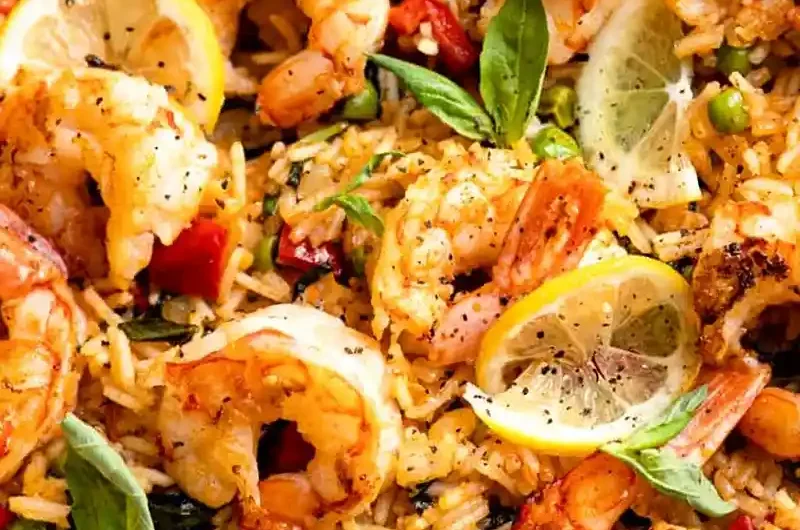
This one-pot meal combines succulent prawns with aromatic rice in a savory tomato base. It is a fast, healthy dinner option that minimizes cleanup while maximizing flavor for the whole family.
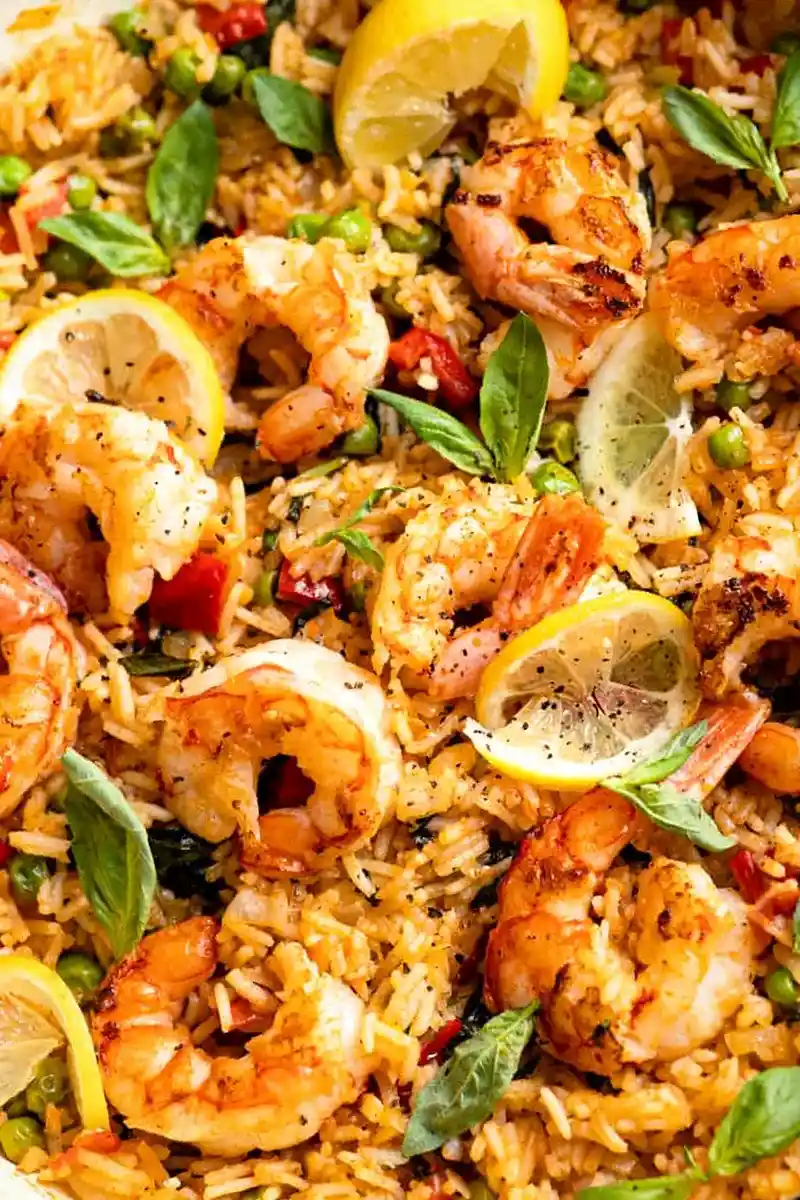
List of ingredients
- 2 teaspoons olive oil – used for sautéing the aromatic base.
- 3 cloves garlic – finely minced for a pungent flavor.
- 1 yellow or brown onion – finely diced to provide sweetness.
- 1 red pepper – chopped into small, even pieces.
- 8 medium vine-ripened tomatoes – chopped to create a fresh sauce.
- 200 g frozen peas – added for color and sweetness.
- 275 g frozen prawns – peeled and defrosted before cooking.
- 1/4 teaspoon paprika – adds a warm, earthy tone.
- 1/4 teaspoon chilli powder – provides a mild heat.
- 245 g rice – basmati or long-grain white rice works best.
- 500 ml vegetable stock – made with a stock cube for savory depth.
step-by-step instructions
- Prepare the stock: Mix your vegetable stock cube with boiling water and set it aside. While the stock is ready, ensure your prawns are fully defrosted and peeled.
- Sauté aromatics: Heat the olive oil in a high-sided skillet or a cast-iron pan over medium heat. Add the diced onion and minced garlic, cooking for 5-6 minutes until they are soft and fragrant.
- Create the tomato base: Stir in the chopped fresh tomatoes and red pepper. Cook these until the tomatoes break down into a thick sauce and the peppers soften. If the pan seems too dry, stir in 2-3 tablespoons of water to help the vegetables release their juices.
- Toast the rice: Pour the rice into the pan and stir well. Ensure every grain is coated in the tomato sauce to infuse the rice with flavor before adding liquid.
- Simmer the dish: Pour in the vegetable stock and stir in the paprika and chilli powder. Gently fold in the defrosted prawns and frozen peas. Bring the mixture to a simmer, then cover the pan with a tight-fitting lid.
- Cook until tender: Keep the heat on low and simmer for 12-15 minutes. The dish is done when the stock is fully absorbed and the rice is tender. The prawns will steam perfectly within the rice during this time.
- Final touch: Remove from heat and garnish with fresh basil leaves and lemon slices. Serve directly from the pan for a rustic presentation.
Optimizing Your Ingredient Selection
Choosing the Best Rice Variety
Basmati rice is highly recommended for this dish due to its long grains and nutty aroma. If you prefer a different texture, long-grain white rice is a suitable alternative that holds its shape well. Brown rice can also be used, but be aware that it requires a longer simmering time and potentially slightly more stock to reach the desired tenderness.
Selecting and Preparing Prawns
Frozen prawns are a convenient choice, but ensure they are completely defrosted to avoid uneven cooking. You can use prawns with the tails on for a more professional look or buy pre-peeled options for faster preparation. Regardless of the size, ensure the prawns are patted dry after defrosting so they don’t add excess water to the sauce.
Working with Vine-Ripened Tomatoes
Vine-ripened tomatoes provide the necessary acidity and moisture to create a natural sauce without needing canned additives. Chopping them into small pieces allows them to break down faster under medium heat. If your tomatoes are not very juicy, adding a small amount of water or a teaspoon of tomato paste can help maintain the sauce’s consistency.
Flavor Customization and Variations
Adjusting the Spice Levels
The current recipe uses a mild amount of chilli powder and paprika. For those who prefer a spicier kick, increase the chilli powder to a half teaspoon or add a pinch of crushed red pepper flakes during the sautéing stage. Cayenne pepper is another excellent option for adding a sharper heat that cuts through the sweetness of the peas.
Incorporating Additional Vegetables
This dish is very forgiving and can be used to clear out the vegetable drawer. Diced zucchini, baby spinach, or sliced carrots can be added alongside the red peppers. If adding harder vegetables like carrots, stir them in with the onions to ensure they have enough time to soften completely before the rice is added.
Using Smoked Paprika for Depth
While standard paprika adds color and warmth, swapping it for smoked paprika introduces a woody, charred flavor reminiscent of traditional Spanish paella. This small change significantly alters the profile of the dish, giving it a more complex, rustic taste that pairs exceptionally well with the seafood.
Professional Cooking Techniques
Preventing Rice from Sticking
To avoid the rice sticking to the bottom of the pan, use a heavy-bottomed skillet or a cast-iron pot that distributes heat evenly. Avoid stirring the rice too frequently once the stock has been added and the lid is on. Excessive stirring releases starches that can make the rice gummy and more likely to cling to the pan.
Searing Prawns for Enhanced Texture
If you prefer prawns with a golden-brown exterior, sauté them in the olive oil for 1-2 minutes per side before cooking the onions. Remove the prawns to a plate and set them aside. Stir them back into the rice during the final 5 minutes of simmering to ensure they remain juicy and tender.
Managing the Simmer Process
Maintaining a low, steady simmer is crucial for the rice to absorb the stock without burning. If you notice the liquid evaporating too quickly before the rice is tender, add an extra 50ml of warm water. Always keep the lid tightly sealed to trap the steam, which is what actually cooks the prawns and the top layer of rice.
Serving and Presentation Ideas
Fresh Garnishing Techniques
Fresh basil leaves add a bright, peppery contrast to the rich tomato and paprika flavors. For a more citrusy finish, squeeze the lemon slices directly over the rice just before serving. This acidity brightens the seafood and balances the starchiness of the rice, making the dish feel lighter.
Complementary Side Dishes
This prawn rice is a complete meal, but it pairs beautifully with a side of garlic bread or toasted ciabatta to soak up the remaining sauce. A simple side salad of arugula, cucumber, and a light vinaigrette provides a crisp, fresh contrast to the warm, savory notes of the one-pot dinner.
Plating for Special Occasions
For a casual family meal, serving the dish directly from the skillet creates a welcoming, communal atmosphere. For a date night or formal setting, scoop the rice into wide bowls and arrange the prawns on top. Garnish with a sprig of basil and a thin lemon wheel for a restaurant-quality presentation.
Storage and Reheating Guide
Proper Refrigeration Methods
Store any leftovers in an airtight container in the refrigerator for up to two days. Because prawns can become rubbery if left too long, it is best to consume the dish within 48 hours. Ensure the rice has cooled slightly before sealing the container to prevent excess condensation from making the rice mushy.
The Best Reheating Method
The microwave is the most efficient way to reheat this dish. Place a portion in a microwave-safe bowl and add a tablespoon of water or a small pat of butter to restore moisture. Heat on medium power in 1-minute intervals, stirring gently in between, until the prawns and rice are heated through.
Identifying Signs of Spoilage
Seafood-based dishes can spoil quickly if not stored correctly. Discard the rice if you notice a sour smell or if the texture of the prawns becomes excessively slimy. If the rice has developed an unusually dry or hard crust that doesn’t soften with reheating, it may be past its prime quality.
Troubleshooting Common Issues
What to do if the Rice is Still Hard
If the stock is gone but the rice grains are still firm, add another 100ml of warm vegetable stock or water. Return the lid to the pan and continue simmering on the lowest heat for another 5 minutes. The extra moisture and steam will help the grains finish cooking without burning the bottom.
Fixing a Too-Dry Dish
If the final result feels too dry or the sauce has completely vanished, stir in a small amount of butter or a drizzle of extra virgin olive oil. This adds a glossy finish and a rich mouthfeel that mimics the creamy texture of a well-reduced tomato sauce.
Avoiding Overcooked Prawns
Prawns cook very quickly and can become tough if overheated. If you are using very small prawns, wait until the rice has simmered for 10 minutes before stirring them in. This ensures they only spend the last few minutes in the pan, keeping them tender and juicy.
Frequently Asked Questions
Can I use brown rice instead of white rice?
Yes, you can use brown rice, but you will need to increase the simmering time from 15 minutes to approximately 35-45 minutes. You should also add about 100ml of extra vegetable stock to account for the higher absorption rate of whole grains.
Can I use shrimp instead of prawns?
Yes, shrimp and prawns are interchangeable in this recipe. Since shrimp are typically smaller, they may cook slightly faster, so keep a close eye on them during the final simmering stage to prevent overcooking.
What is the fastest way to defrost frozen prawns?
The quickest safe method is to place the frozen prawns in a sealed bag and run cold water over them for 10-15 minutes. Avoid using hot water, as this can start to cook the outside of the prawn and affect the final texture of the dish.
Can this dish be made in a slow cooker?
While designed for a skillet, you can adapt this for a slow cooker. Sauté the onions, garlic, and tomatoes on the stove first, then transfer everything to the crockpot. Cook on low for 4-6 hours, adding the prawns and peas only in the last 30 minutes of cooking.
Is there a substitute for vegetable stock?
If you don’t have stock cubes, you can use water with a pinch of extra salt and a teaspoon of nutritional yeast or a splash of soy sauce for depth. This provides a similar savory profile, although the flavor will be slightly less intense than traditional stock.
Print
Quick One-Pot Prawn and Rice
- Total Time: 30 minutes
- Yield: 4 servings 1x
- Diet: Seafood
Description
This One-pot prawn and rice recipe is a one-pot wonder full of flavorful prawns and rice with a Spanish style tomato sauce that the entire family will enjoy!
Ingredients
- 2 teaspoons olive oil
- 3 cloves garlic
- 1 yellow/ brown onion
- 1 red pepper, chopped
- 8 medium vine-ripened tomatoes, chopped
- 200 g frozen peas
- 275 g frozen prawns, peeled and defrosted
- 1/4 teaspoon paprika
- 1/4 teaspoon chilli powder
- 245 g rice
- 500 ml vegetable stock made with a stock cube
Instructions
- Step 1: Start by making your stock with boiling water and set it aside while you make the tomato sauce and peel the prawns.
- Step 2: Heat the oil in a high sided skillet or pan over medium heat. Saute the onions and garlic until they are soft and fragrant. Add in the chopped fresh tomatoes, and the chopped red pepper.
- Step 3: Add the rice to the pan and stir to coat it in the tomato sauce. Pour in the vegetable stock, paprika and chilli powder. Add in the prawn and peas.
- Step 4: Bring up to a simmer and cover with a lid. Continue to simmer on low heat for about 12-15 minutes until the stock has been absorbed and the rice is tender and cooked.
- Step 5: Top everything with fresh basil and some lemon slices.
Notes
If you want golden seared prawns, saute them in the pan at the start, transfer to a plate, and stir back in at the end. You can use already peeled prawns. Prawns and shrimp are interchangeable. Add extra chilli powder or chilli flakes for more spice.
- Prep Time: 10 minutes
- Cook Time: 20 minutes
- Category: Dinner
- Method: One-pot
- Cuisine: Spanish-inspired
Nutrition
- Serving Size: 1 serving
- Calories: 415 kcal
- Sugar: 13 g
- Sodium: 604 mg
- Fat: 4 g
- Saturated Fat: 1 g
- Unsaturated Fat: 3 g
- Trans Fat: 1 g
- Carbohydrates: 73 g
- Fiber: 7 g
- Protein: 24 g
- Cholesterol: 111 mg
Keywords: prawn rice, one pot meal, Spanish style, seafood rice, 30 minute dinner