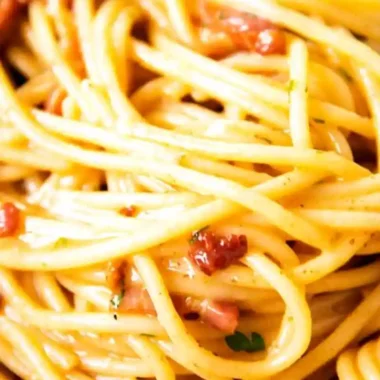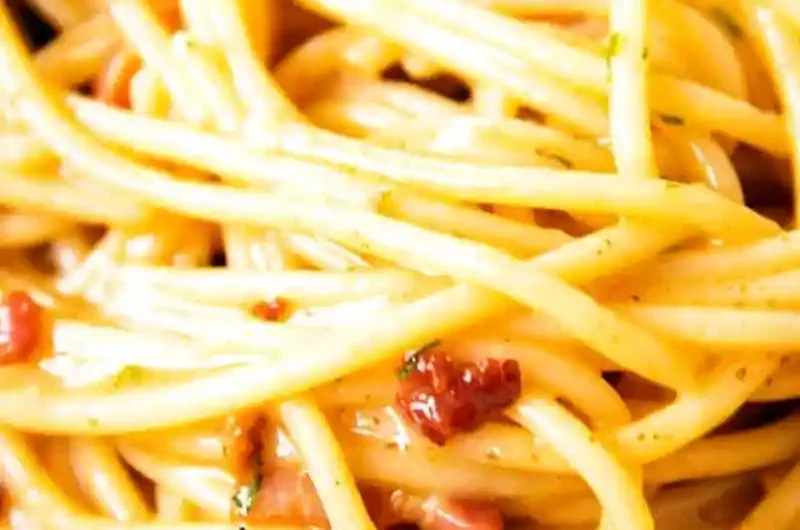
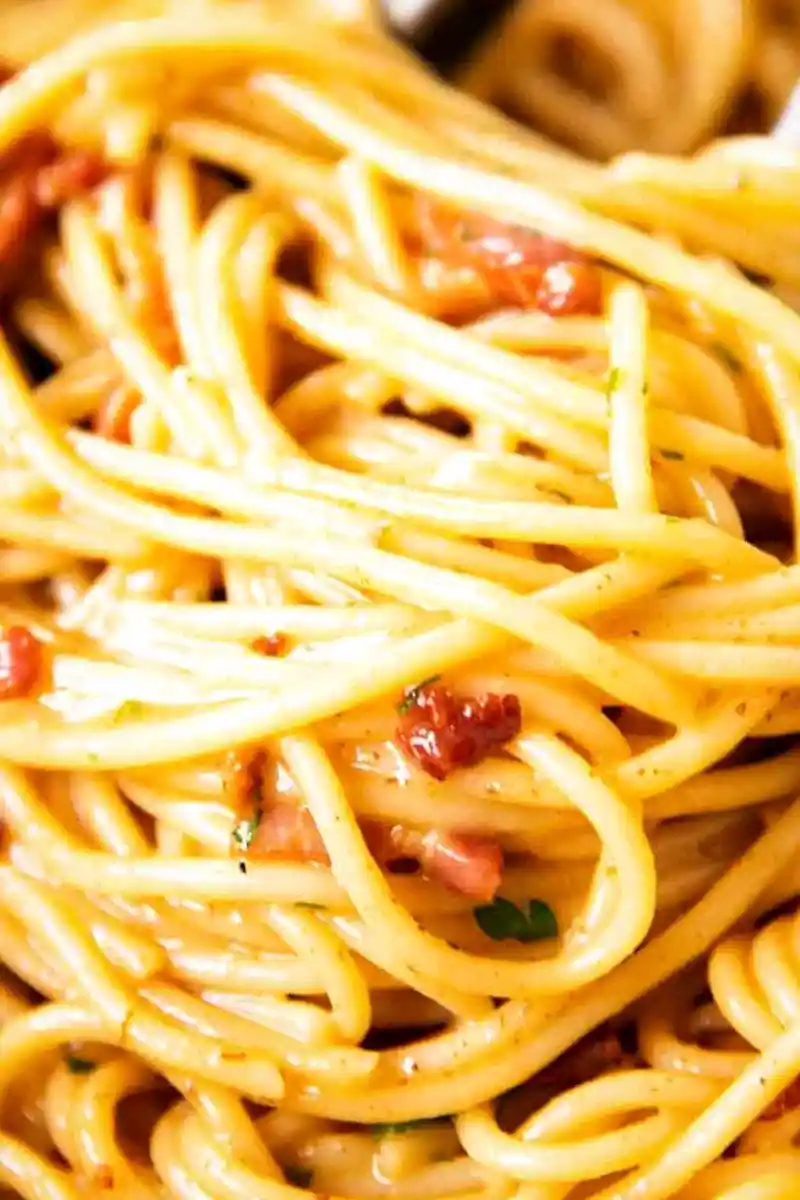
This classic pasta dish relies on a simple emulsion of eggs, aged cheese, and pasta water to create a remarkably silky sauce. By following a precise technique, you can master this restaurant-quality meal in your own kitchen in under twenty minutes. It is an ideal choice for busy evenings when you want something satisfying and elegant without excessive preparation.
List of ingredients
- 1 pound spaghetti
- 1 tablespoon salt
- 3 large eggs
- 1 cup grated Parmesan or Pecorino Romano cheese
- 2 tablespoons chopped parsley (optional)
- Ground black pepper
- ½ cup pasta cooking water
- 1 tablespoon olive oil
- 8 oz cured beef or plant-based savory protein strips (diced)
step-by-step instructions
- Step: Bring a large pot of water to a rolling boil and season it with 1 tablespoon salt. Add pasta and cook according to package directions until al dente.
- Step: In a mixing bowl, whisk together eggs, cheese, parsley, and ground black pepper.
- Step: Slowly trickle ½ cup of hot pasta cooking water into the egg and cheese mixture while whisking constantly to temper the sauce. Set aside.
- Step: Heat olive oil in a large skillet over medium-high heat. Add the diced protein strips and cook until crispy.
- Step: Add the cooked pasta to the skillet with the protein. Remove the pan from the heat.
- Step: Gradually stir the egg and cheese mixture into the pasta, tossing constantly until a silky, creamy sauce forms. Serve immediately.
Improving your sauce texture
Emulsifying the sauce correctly
The secret to a perfect, non-scrambled sauce is controlling the temperature of the eggs. By removing the skillet from the heat source completely before adding the egg mixture, you ensure the sauce thickens gently through residual heat rather than direct frying. If the sauce looks too thick, add an additional tablespoon of reserved pasta water and keep tossing until it regains its sheen.
Importance of pasta water
The starchy water you reserve from the boiling pot is a functional ingredient, not an afterthought. It contains dissolved starches that act as a stabilizer, helping the fats in the eggs and cheese bind to the pasta strands. Always remember to save this liquid before draining your noodles, as it is difficult to adjust the consistency of the sauce once the pasta is dry.
Selecting the best ingredients
Choosing the right cured protein
While traditional recipes call for cured cheek cuts, you can achieve excellent results with various salt-cured alternatives. Look for pieces that have a good balance of fat and lean meat to ensure the best flavor extraction during the searing step. If you use a denser variety, cutting it into small, uniform batons ensures that the fat renders out evenly, creating a base that seasons the entire dish.
Selecting your cheeses
Using high-quality, freshly grated cheese makes a significant difference in the meltability of the sauce. Pre-grated products often contain anti-caking agents that can interfere with the way the cheese incorporates into the egg mixture. A combination of Parmesan for nuttiness and Pecorino for salinity creates a complex, well-rounded flavor profile.
Preparation and storage
Serving suggestions
This dish is incredibly rich, so balancing it with crisp, acidic sides is highly recommended. A simple green salad dressed with a bright lemon vinaigrette or roasted asparagus with a squeeze of citrus helps cut through the creaminess of the pasta. You can also toss in fresh peas or wilted spinach at the last minute for added color and fiber.
Managing leftovers
Carbonara is best enjoyed immediately after it is prepared, as the egg-based sauce can lose its silky texture upon cooling. If you do have leftovers, keep them in an airtight container in the refrigerator for no more than one day. Avoid leaving it at room temperature for extended periods due to the egg content.
Safe reheating practices
Reheating this dish requires care to prevent the sauce from breaking or the eggs from turning rubbery. The most effective way is to place the pasta in a heat-safe bowl over a pot of simmering water, creating a gentle steam bath. Add a tiny splash of water or broth to the pasta and stir occasionally until heated through without direct high-heat exposure.
Commonly asked questions
Why did my eggs scramble?
Scrambling usually occurs because the pasta or the pan was too hot when the egg mixture was added. Always pull the skillet off the burner and let it sit for a few seconds before incorporating the sauce. Consistent, rapid tossing during the addition of the egg mixture is also necessary to distribute the heat evenly and form a smooth coating.
Can I make this dish ahead of time?
This recipe is designed for rapid assembly and does not hold well if prepared in advance. You can, however, prepare the ingredients by grating the cheese, chopping the protein, and whisking the eggs ahead of time. When you are ready to eat, the process of cooking the pasta and assembling the final dish will take only a few minutes.
How can I adjust the richness?
The ratio of whole eggs to yolks dictates the viscosity and richness of your finished sauce. If you prefer a lighter result, stick to using whole eggs. If you are looking for an indulgent, restaurant-style thickness, you can substitute one or two of the whole eggs with extra egg yolks for a deeper, more velvety consistency.
What is the purpose of the black pepper?
Black pepper is a fundamental flavor component of this dish, providing a necessary bite that balances the savory, fatty, and salty notes of the cured meat and cheese. Use freshly ground pepper rather than pre-ground dust to ensure the aromatics are vibrant and potent. You can adjust the amount based on your preference for heat.
Is it necessary to use salt in the pasta water?
Salting the pasta water is the only opportunity you have to season the pasta itself from the inside out. Since the sauce is salty, be mindful of how much salt you add to the water, but do not skip it entirely. Properly seasoned pasta provides the necessary foundation for the flavor profile of the final dish.
What if I do not have a large skillet?
If your skillet is not large enough to hold the pasta, you can perform the final tossing step directly in the warm pasta pot. Simply drain the pasta, return it to the pot, add the crispy protein and the egg mixture, and toss vigorously away from the heat. This method works just as well and provides plenty of room for thorough mixing.
Print
Velvety Spaghetti Carbonara
- Total Time: 20 minutes
- Yield: 5 servings 1x
- Diet: Vegetarian-friendly options
Description
The creamy richness of an authentic pasta carbonara comes together in just 20 minutes with a few ingredients.
Ingredients
- 1 pound spaghetti
- 1 tablespoon salt
- 3 large eggs
- 1 cup grated Parmesan or Pecorino Romano cheese
- 2 tablespoons chopped parsley (optional)
- Ground black pepper
- ½ cup pasta cooking water
- 1 tablespoon olive oil
- 8 oz cured beef or plant-based savory protein strips (diced)
Instructions
- Step: Bring a large pot of water to a rolling boil and season it with 1 tablespoon salt. Add pasta and cook according to package directions until al dente.
- Step: In a mixing bowl, whisk together eggs, cheese, parsley, and ground black pepper.
- Step: Slowly trickle ½ cup of hot pasta cooking water into the egg and cheese mixture while whisking constantly to temper the sauce. Set aside.
- Step: Heat olive oil in a large skillet over medium-high heat. Add the diced protein strips and cook until crispy.
- Step: Add the cooked pasta to the skillet with the protein. Remove the pan from the heat.
- Step: Gradually stir the egg and cheese mixture into the pasta, tossing constantly until a silky, creamy sauce forms. Serve immediately.
Notes
Ensure you remove the pan from the heat before adding the egg mixture to prevent scrambling. If the sauce is too thick, add an extra splash of reserved pasta water. You can adjust the richness by using a mix of whole eggs and egg yolks as desired.
- Prep Time: 5 minutes
- Cook Time: 15 minutes
- Category: Main Course
- Method: Boiling and Sautéing
- Cuisine: Italian
Nutrition
- Serving Size: 1 serving
- Calories: 675 kcal
- Sugar: 3 g
- Sodium: 850 mg
- Fat: 30 g
- Saturated Fat: 11 g
- Unsaturated Fat: 19 g
- Trans Fat: 0 g
- Carbohydrates: 69 g
- Fiber: 3 g
- Protein: 29 g
- Cholesterol: 146 mg
Keywords: spaghetti, carbonara, pasta, italian, quick dinner