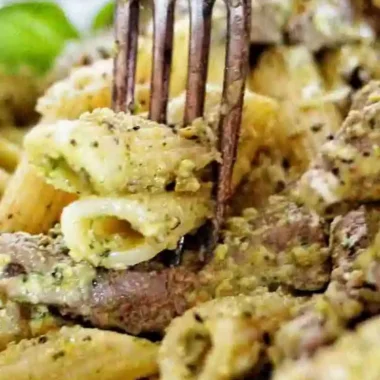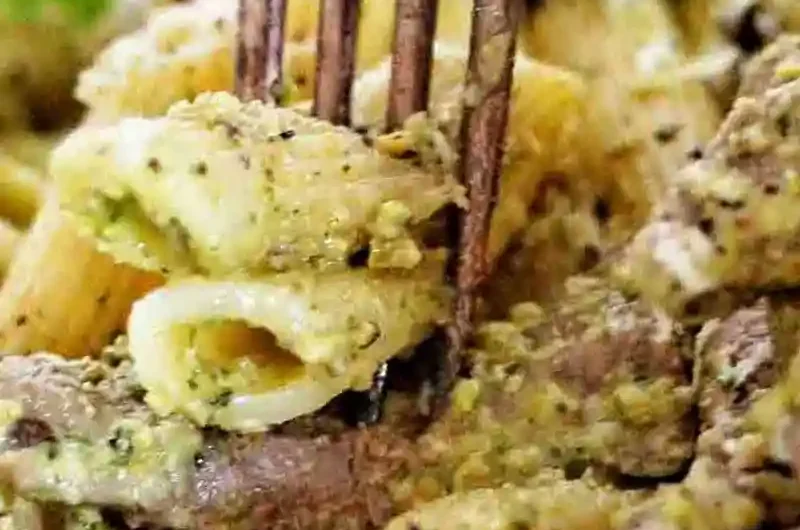
This beef pesto pasta delivers a robust, satisfying meal in under twenty minutes, making it an ideal choice for busy weeknights when you crave a homemade dinner without the lengthy preparation. By combining tender, pan-seared steak strips with a vibrant, freshly prepared basil and pistachio pesto, this dish achieves a perfect balance of earthy, herby flavors and creamy textures that coat every piece of pasta.
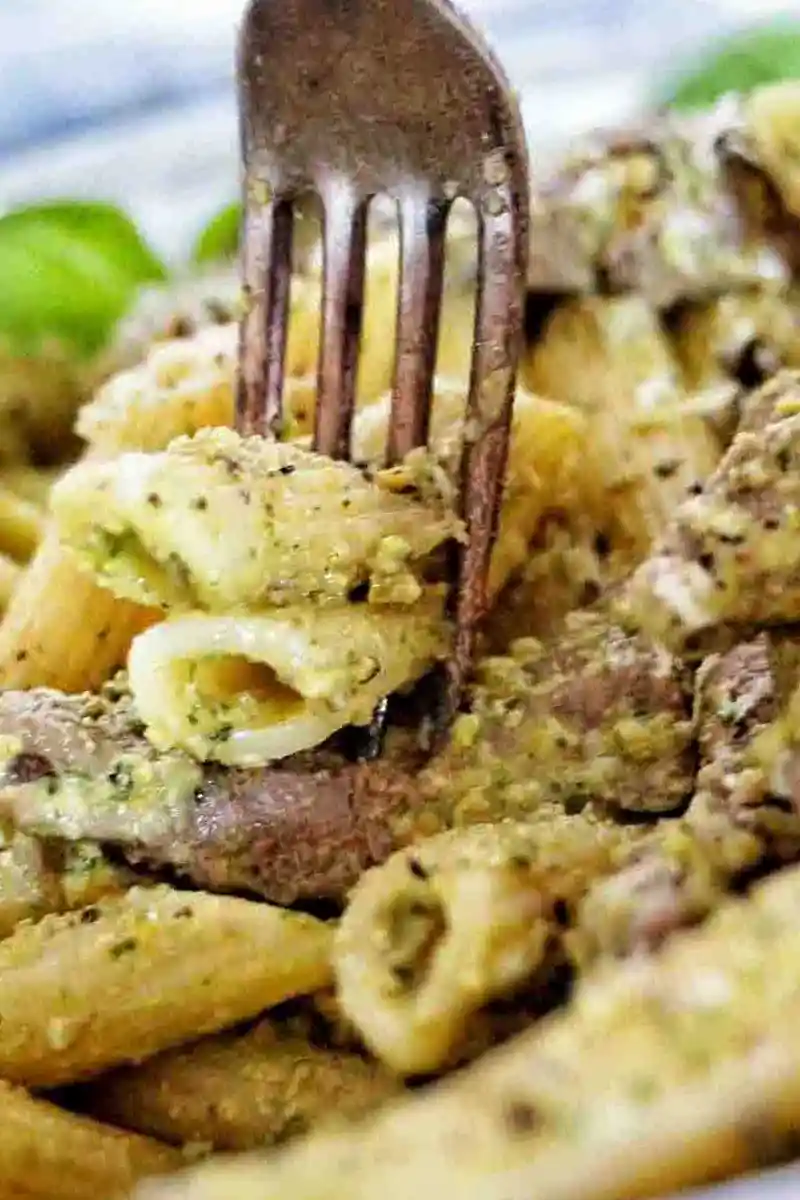
List of ingredients
- 3 cups basil leaves (loosely packed, leaves trimmed from stems)
- 1/2 cup pistachio nuts
- 2-3 cloves garlic
- 1/2 cup pecorino romano cheese
- 1/3 cup olive oil
- 2 tbsp lemon juice
- 1 tbsp olive oil
- 500 grams beef (cut into stir fry long thin strips)
- 1/4 tsp kosher salt
- 1/4 tsp cracked black pepper
- 500 grams penne pasta
- 1/2 cup reserved pasta water
- pecorino romano cheese (for garnish)
- basil leaves (for garnish)
step-by-step instructions
- Cook beef: add 1 tablespoon of olive oil to a large saute pan, turn heat to high, add beef strips, salt and pepper. Cook till the beef has browned on all sides, using a silicon turner to help move the meat around in the pan.
- Make pesto: add basil leaves, pistachio nuts, garlic, pecorino romano cheese to the bowl of a food processor. Blitz to combine for about 15 seconds and scrap the insides of the bowl down with a spatula once done. Pour in the olive oil and then continue to blitz. Taste the pesto, add 1 tablespoon of lemon juice and add the 2nd tablespoon as needed. Blitz till consistently combined then transfer combined pesto to a small bowl.
- Cook pasta: read and follow the instructions on the packet to cook the pasta in a medium saucepan of boiling salted water. Moments before it is done, use a heatproof jug to scoop out 1 to 2 cups of the water. Then drain the pasta into the sink using a colander and discard the remaining pasta water.
- Combine: add the cooked drained pasta to a large saute pan, add in the cooked beef and dollop in the pesto. Pour in 1/2 cup of reserved pasta water. Then use a wooden spoon to toss the pasta, pesto, pasta water and beef till it is consistently combined.
- Garnish: generously garnish the top of the combined steak and pesto pasta with grated pecorino romano, cracked black pepper and basil leaves. Provide utensils for serving.
Practical cooking strategies
Searing the beef for optimal flavor
When preparing the beef, ensure the pan is sufficiently hot before the meat makes contact. This heat is essential for developing a deep, brown crust on the outside of the strips, which adds significant flavor depth compared to steaming the meat in its own juices. Avoid crowding the pan; if necessary, cook the meat in two batches to ensure it browns perfectly rather than turning grey or releasing excessive moisture.
Selecting the right pasta shape
Penne is specifically chosen for this recipe because its tube structure functions like a conduit for the pesto. As you toss the ingredients together, the creamy, basil-rich sauce makes its way into the centers of the pasta tubes, ensuring every bite is flavorful. If you prefer to experiment, other shapes such as fusilli or rigatoni work equally well, as their ridges also provide excellent surface area for the sauce to cling to.
The importance of reserved pasta water
Never underestimate the value of the starchy water left behind in the pasta pot. This liquid contains gelatinized starch that acts as a natural emulsifier, helping the oil-based pesto bind seamlessly to the pasta rather than sitting on top of it. Always remember to reserve the water before pouring the pasta into a colander, as it is difficult to reconstruct that texture once the water is lost down the drain.
Pesto substitutions and flavor adjustments
Adapting the nut profile
While pistachios offer a wonderful, slightly sweet crunch, they are not your only option. If you have pine nuts on hand, they provide a more traditional, buttery flavor profile that is synonymous with authentic Italian pestos. Walnuts or toasted almonds are also excellent, budget-friendly alternatives that contribute a deeper, earthier tone to the sauce, making the recipe adaptable based on your current pantry stock.
Refining the cheese intensity
Pecorino romano is known for its sharp, salty, and bold character due to its sheep’s milk origin. If you prefer a milder, nuttier finish, feel free to use high-quality parmesan, which is slightly less intense. Some home cooks enjoy a fifty-fifty blend of both cheeses to capture the sharp complexity of the pecorino along with the subtle, rounded finish of the cow’s milk parmesan.
Adjusting the garlic punch
Fresh garlic intensity can vary significantly depending on the age and size of the cloves. Start by adding two cloves to your food processor, taste the pesto after the initial blitz, and add the third only if you prefer a sharper, more pungent garlic flavor. If you are serving individuals who are sensitive to raw garlic, you can lightly roast the cloves beforehand to mellow their profile into a savory, sweet paste.
Serving ideas for a complete meal
Choosing the perfect bread pairing
To round out a hearty plate of beef pesto pasta, serve it alongside crusty artisan breads. Garlic ciabatta is a natural partner, as its porous texture is perfect for soaking up any leftover pesto sauce from the bottom of your plate. Alternatively, a simple rosemary-infused focaccia provides a floral note that echoes the freshness of the basil and complements the savory, salty notes of the beef.
Selecting a garden-fresh salad
Since the pasta dish is rich and flavorful, contrast it with a crisp, acidic salad. A classic caprese salad featuring sliced heirloom tomatoes, fresh mozzarella, and a drizzle of balsamic glaze provides a refreshing counterpoint to the heavier elements. Alternatively, a simple arugula salad tossed with a light lemon vinaigrette adds a peppery brightness that cleanses the palate between bites of the beef and pesto.
Storing and reheating instructions
Safe refrigeration techniques
If you find yourself with leftovers, store the pasta in an airtight glass or BPA-free plastic container. It will remain fresh in the refrigerator for up to three days, but it is important to store it without the extra garnish to maintain the best quality. When you are ready to eat, the pesto may appear slightly stiffened; this is normal as the olive oil and cheese solidify when cold.
Revitalizing the pasta during reheating
To return the dish to its original creamy glory, add a small splash of plain water or broth to the container before reheating in the microwave. Cover the dish loosely to trap steam, which helps heat the beef through without overcooking it or making it rubbery. If reheating on the stove, add a teaspoon of water and stir constantly over low heat, allowing the residual heat to gently loosen the pesto back into a silky consistency.
Common questions addressed
What is the most effective way to prevent the basil from oxidizing?
Basil leaves will naturally turn dark when exposed to oxygen, so keep your leaves sealed until the very last minute. Once the pesto is made, you can place a thin layer of olive oil directly onto the surface of the sauce before covering the storage bowl to create an oxygen barrier. If you are not serving the dish immediately, store the pesto in the refrigerator and stir in the beef and pasta just before serving to keep the colors bright.
Can this recipe be prepared ahead of time?
You can certainly prepare the components in advance to save time on the evening of the meal. The pesto can be made up to 24 hours ahead, provided you keep it in a sealed container and cover the surface with a thin layer of oil. While the beef is best seared fresh, you can slice it into strips during your meal prep session so that it is ready to be tossed into the hot pan the moment you start cooking.
How can I make this dish lighter if I prefer?
To reduce the overall richness of the meal, you can increase the amount of basil and lemon juice while slightly reducing the amount of olive oil used in the pesto. Additionally, focusing on very lean cuts of beef, such as top sirloin, and trimming away any visible fat before slicing ensures the protein stays tender without adding unnecessary heaviness. You can also mix in blanched snap peas or baby spinach during the final toss to add volume and freshness to the plate.
Print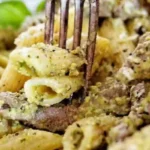
Savory Beef Pesto Pasta
- Total Time: PT20M
- Yield: 4 servings 1x
- Diet: High Protein
Description
Beef Pesto Pasta is a super quick recipe that will get dinner sorted in 20 minutes. Cheesy, creamy and beefy, this dish takes minimal effort.
Ingredients
- 3 cups basil leaves (loosely packed, leaves trimmed from stems)
- 1/2 cup pistachio nuts
- 2–3 cloves garlic
- 1/2 cup pecorino romano cheese
- 1/3 cup olive oil
- 2 tbsp lemon juice
- 1 tbsp olive oil
- 500 grams beef (cut into stir fry long thin strips)
- 1/4 tsp kosher salt
- 1/4 tsp cracked black pepper
- 500 grams penne pasta
- 1/2 cup reserved pasta water
- pecorino romano cheese (for garnish)
- basil leaves (for garnish)
Instructions
- Cook beef: add 1 tablespoon of olive oil to a large saute pan, turn heat to high, add beef strips, salt and pepper. Cook till the beef has browned on all sides, using a silicon turner to help move the meat around in the pan.
- Make pesto: add basil leaves, pistachio nuts, garlic, pecorino romano cheese to the bowl of a food processor. Blitz to combine for about 15 seconds and scrap the insides of the bowl down with a spatula once done. Pour in the olive oil and then continue to blitz. Taste the pesto, add 1 tablespoon of lemon juice and add the 2nd tablespoon as needed. Blitz till consistently combined then transfer combined pesto to a small bowl.
- Cook pasta: read and follow the instructions on the packet to cook the pasta in a medium saucepan of boiling salted water. Moments before it is done, use a heatproof jug to scoop out 1 to 2 cups of the water. Then drain the pasta into the sink using a colander and discard the remaining pasta water.
- Combine: add the cooked drained pasta to a large saute pan, add in the cooked beef and dollop in the pesto. Pour in 1/2 cup of reserved pasta water. Then use a wooden spoon to toss the pasta, pesto, pasta water and beef till it is consistently combined.
- Garnish: generously garnish the top of the combined steak and pesto pasta with grated pecorino romano, cracked black pepper and basil leaves. Provide utensils for serving.
Notes
Pecorino romano is a sweet cheese made from sheep’s milk. You can substitute parmesan cheese to the equivalent amount if you wish. Lemon juice can be freshly squeezed or bottled. Reserved pasta water: I usually take out 1 to 2 cups but for the recipe we only need to add 1/2 cup.
- Prep Time: PT5M
- Cook Time: PT15M
- Category: Dinner
- Method: Stovetop
- Cuisine: Italian, Western
Nutrition
- Serving Size: 1 serving
- Calories: 819 kcal
- Sugar: 8 g
- Sodium: 312 mg
- Fat: 34 g
- Saturated Fat: 6 g
- Unsaturated Fat: 21 g
- Trans Fat: 0 g
- Carbohydrates: 104 g
- Fiber: 7 g
- Protein: 25 g
- Cholesterol: 13 mg
Keywords: beef pesto pasta, steak pesto pasta, dinner, italian, quick meal