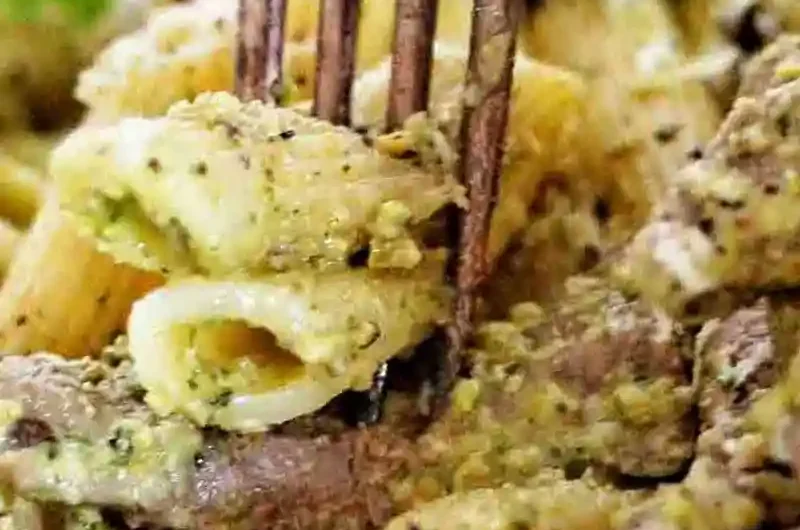
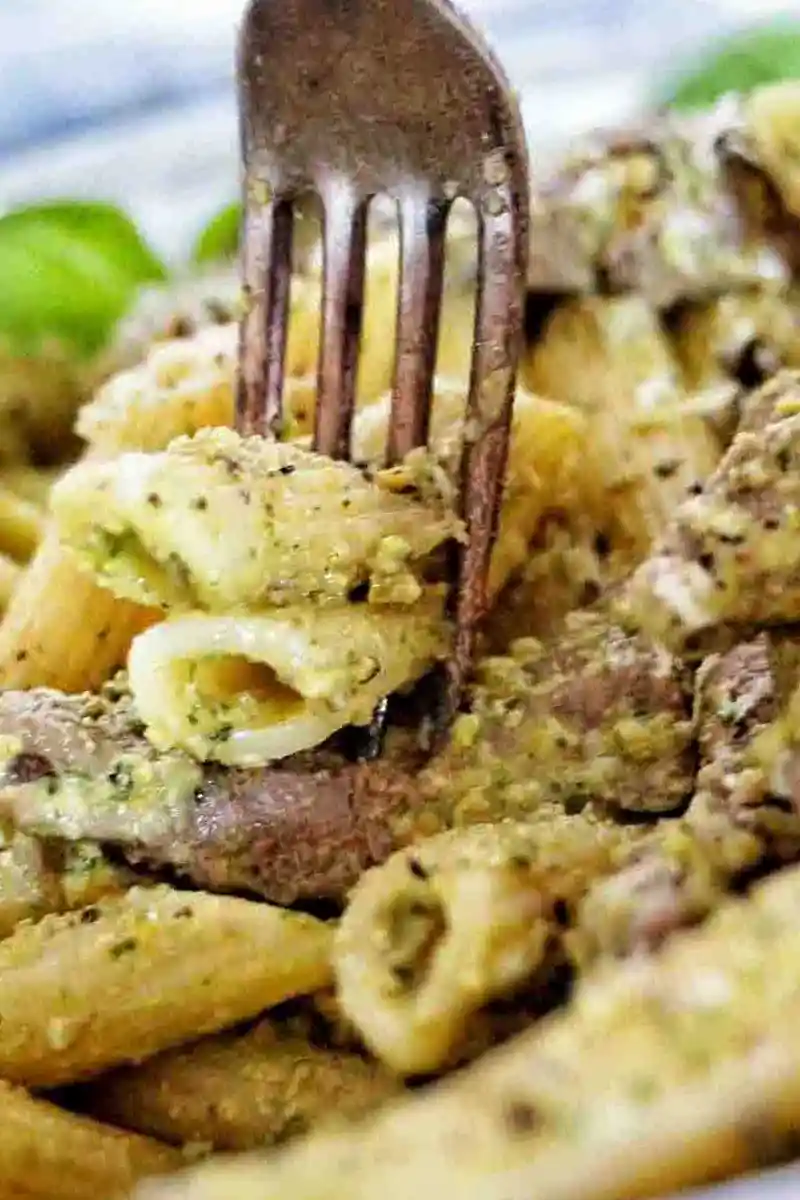
This Beef Pesto Pasta is a high-protein dinner that comes together in just 20 minutes. It combines seared beef strips with a vibrant, nutty basil pesto for a satisfying and fresh meal.
List of ingredients
- 3 cups basil leaves – loosely packed and trimmed from stems
- 1/2 cup pistachio nuts – provides a creamy, nutty base
- 2-3 cloves garlic – peeled and trimmed
- 1/2 cup pecorino romano cheese – use a microbial-rennet variety
- 1/3 cup (80 ml) olive oil – for the pesto emulsion
- 2 tbsp lemon juice – to balance the richness
- 1 tbsp olive oil – for searing the beef
- 500 grams (1 pound) beef – cut into long thin stir-fry strips
- 1/4 tsp kosher salt – for seasoning the meat
- 1/4 tsp cracked black pepper – for seasoning the meat
- 500 grams (1 pound) penne pasta – a sturdy shape for pesto
- 1/2 cup reserved pasta water – essential for sauce consistency
- Additional pecorino romano cheese – for garnishing
- Fresh basil leaves – for garnishing
- Extra cracked black pepper – for garnishing
step-by-step instructions
- Cook the beef: Heat one tablespoon of olive oil in a large saute pan over high heat. Add the beef strips, salt, and pepper, then cook until the meat has browned on all sides, moving it occasionally with a silicon turner.
- Prepare the pesto: Place basil leaves, pistachio nuts, garlic, and pecorino romano cheese in a food processor. Blitz for 15 seconds, then scrape the sides with a spatula. Pour in the olive oil and blitz again. Taste the mixture, adding one tablespoon of lemon juice and then a second if needed, blitzing until smooth. Transfer to a small bowl.
- Boil the pasta: Cook penne in a medium saucepan of boiling salted water according to the package directions. Just before draining, use a heatproof jug to scoop out 1 to 2 cups of the starchy water. Drain the pasta using a colander.
- Combine ingredients: Add the drained pasta to the saute pan used for the beef. Stir in the cooked beef and add dollops of the fresh pesto. Pour in 1/2 cup of the reserved pasta water and toss with a wooden spoon until every piece of pasta is evenly coated.
- Garnish and serve: Generously top the dish with grated pecorino romano, cracked black pepper, and fresh basil leaves. Serve immediately with clean utensils.
Protein Selection and Preparation
Choosing the Best Cut of Steak
For this recipe, lean cuts that cook quickly are ideal. Rump steak, sirloin, or fillet work best because they maintain tenderness when seared at high heat. Avoid cuts with too much connective tissue, as they require longer braising times.
Slicing Beef for Rapid Cooking
Cutting the beef into long, thin strips ensures the meat cooks evenly and quickly. Always slice against the grain of the meat to break up tough muscle fibers. This technique guarantees a tender bite regardless of the steak cut used.
Achieving a Perfect Sear
High heat is essential to get a brown crust on the beef without overcooking the interior. Ensure the pan is shimmering hot before adding the oil and meat. Avoid overcrowding the pan, as this releases moisture and causes the beef to steam rather than sear.
Managing Meat Juices in the Pan
After searing the beef, you may find excess browned bits and juices in the pan. Use a folded paper towel to mop up excess oil while leaving the flavorful browned bits. This prevents the final pasta sauce from becoming overly greasy.
Mastering the Homemade Pesto
Using Different Nuts for Texture
While pistachios provide a unique color and flavor, you can substitute them with pine nuts, walnuts, or cashews. Pine nuts offer the most traditional Italian flavor, while walnuts add a slightly bitter, earthy depth. Always use raw or lightly toasted nuts for the best consistency.
Selecting the Right Cheese
Pecorino romano is a sheep’s milk cheese that offers a sharper, saltier profile than parmesan. If you prefer a milder taste, substitute an equal amount of microbial-rennet parmesan. The cheese acts as a thickener and flavor enhancer for the basil.
Balancing Acidity with Lemon
Lemon juice is critical for cutting through the richness of the olive oil and cheese. Add the juice gradually and taste the pesto after each tablespoon. This ensures the brightness of the lemon complements the basil without overpowering it.
Preventing Pesto Oxidation
Fresh basil can turn brown when exposed to air or excessive heat. To keep the pesto vibrant green, blend the ingredients quickly and avoid overheating the sauce. The addition of lemon juice also helps preserve the bright green color.
Using Store-Bought Alternatives
If you are short on time, a high-quality store-bought pesto can be used. Look for refrigerated ‘dip-style’ pestos rather than shelf-stable jars, as they usually contain fresher ingredients. You will need approximately one cup of prepared pesto for this recipe.
Pasta Cooking Techniques
Optimal Pasta Shapes for Pesto
Penne is recommended because its hollow center and ridges trap the pesto and beef bits. Other great options include fusilli, rigatoni, or farfalle. These shapes provide more surface area for the sauce to cling to compared to smooth pasta.
Cooking to Al Dente
Cook the pasta for one to two minutes less than the package instructions. This ensures the pasta remains firm and ‘al dente’ after it is tossed in the pan with the beef and pesto. Overcooked pasta can become mushy when combined with other ingredients.
The Science of Reserved Pasta Water
Reserved pasta water contains starch that acts as an emulsifier. When added to the pesto and beef, it helps the sauce bind to the pasta rather than sliding off. It creates a creamy, cohesive texture without needing to add heavy cream.
Low-Carb Pasta Substitutions
For a lower-carb version, replace penne with zucchini noodles or spiralized carrots. Sauté the vegetable noodles briefly in the pan before adding the pesto and beef. Be careful not to overcook them, as they release more water than wheat pasta.
Salting the Pasta Water
Generously salt the boiling water to season the pasta from the inside out. This is the only opportunity to flavor the pasta dough itself. Use a salt concentration that tastes like seawater for the best results.
Serving and Pairing Suggestions
Complementary Bread Pairings
Serve this dish with toasted garlic ciabatta or a crusty baguette. The crunch of the bread provides a great contrast to the tender beef and soft pasta. Garlic-infused oils or melted butter can be added to the bread for extra richness.
Fresh Salad Accompaniments
A light, acidic salad balances the richness of the pecorino and olive oil. A cherry tomato caprese salad with fresh mozzarella and balsamic glaze is a classic pairing. Alternatively, a simple herb salad with a lemon vinaigrette works well.
Adding Extra Vegetables
To increase the nutritional value, stir in halved cherry tomatoes or fresh baby spinach during the final combination step. The residual heat from the pasta will wilt the spinach and soften the tomatoes. Roasted red peppers also add a sweet contrast to the salty cheese.
Presentation Tips
Garnish the pasta generously with freshly grated cheese and whole basil leaves. Using a wide, shallow bowl allows the pasta to spread, showcasing the colorful beef and green pesto. A final sprinkle of cracked black pepper adds visual contrast and a hint of spice.
Storage and Reheating
Refrigerating Leftovers
Store any remaining pasta in an airtight container in the refrigerator for up to three days. To prevent the pasta from drying out, drizzle a small amount of olive oil over the top before sealing. Ensure the food is cooled slightly before placing it in the fridge.
Freezing Guidelines
While fresh pesto is best, you can freeze portions of this dish for up to three months. Use freezer-safe bags and squeeze out as much air as possible to prevent freezer burn. Thaw the portions in the refrigerator overnight before reheating.
Best Reheating Methods
Reheating on the stove is the best way to maintain the texture. Add the pasta to a pan with a splash of reserved pasta water or water and heat over medium heat until warmed through. If using a microwave, cover the dish to trap steam and heat in short bursts.
Troubleshooting Common Issues
Fixing a Thick or Dry Sauce
If the pasta seems too dry after mixing, add more reserved pasta water one tablespoon at a time. The starch in the water will loosen the pesto and create a smoother coating. Stir constantly to ensure the sauce emulsifies properly.
Preventing Overcooked Beef
If the beef becomes tough, it is likely because the pan wasn’t hot enough or the meat was cooked too long. Stick to high heat and short cooking times. Remove the beef from the pan as soon as it is browned on all sides.
Adjusting Saltiness
Pecorino romano is naturally very salty, which can sometimes overpower the dish. If the final result is too salty, add a squeeze of fresh lemon juice or a pinch of sugar. These elements help neutralize the saltiness without changing the flavor profile.
Dealing with Clumpy Pasta
If the pasta sticks together after draining, quickly rinse it under warm water to separate the noodles. However, do this sparingly as it can remove some of the surface starch. Tossing the pasta immediately with the pesto and pasta water usually solves this issue.
Frequently Asked Questions
Can I use ground beef instead of steak?
Yes, you can use ground beef or beef mince. Brown the mince in the pan until fully cooked and drained of excess fat before combining it with the pasta and pesto.
Is pecorino romano too salty for children?
Pecorino is saltier than parmesan, but when mixed with pasta and beef, the flavor is balanced. For children sensitive to salt, you can reduce the amount of cheese in the pesto and use more parmesan instead.
Can I make the pesto in advance?
You can prepare the pesto up to two days in advance. Store it in a jar with a thin layer of olive oil on top to prevent oxidation and keep it in the refrigerator.
Do I need a food processor for the pesto?
A food processor is easiest, but you can use a blender or a mortar and pestle. If using a mortar and pestle, crush the garlic and nuts first, then incorporate the basil and cheese for a more rustic texture.
What is the best way to store reserved pasta water?
Keep reserved pasta water in a sealed glass jar in the refrigerator. It can be stored for up to a week and is excellent for loosening up any pasta dishes when reheating them.
Print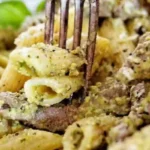
Beef Pesto Pasta
- Total Time: 20 minutes
- Yield: 4 servings 1x
- Diet: General
Description
Beef Pesto Pasta is a super quick recipe that will get dinner sorted in 20 minutes. Cheesy, creamy and beefy, this dish takes minimal effort.
Ingredients
- 3 cups basil leaves, loosely packed
- 1/2 cup pistachio nuts
- 2–3 cloves garlic
- 1/2 cup pecorino romano cheese
- 1/3 cup olive oil
- 2 tbsp lemon juice
- 1 tbsp olive oil
- 500 grams beef, cut into stir fry long thin strips
- 1/4 tsp kosher salt
- 1/4 tsp cracked black pepper
- 500 grams penne pasta
- 1/2 cup reserved pasta water
- pecorino romano cheese for garnish
- basil leaves for garnish
Instructions
- Cook beef: add 1 tablespoon of olive oil to a large saute pan, turn heat to high, add beef strips, salt and pepper. Cook till the beef has browned on all sides, using a silicon turner to help move the meat around in the pan.
- Make pesto: add basil leaves, pistachio nuts, garlic, pecorino romano cheese to the bowl of a food processor. Blitz to combine for about 15 seconds and scrap the insides of the bowl down with a spatula once done. Pour in the olive oil and then continue to blitz. Taste the pesto, add 1 tablespoon of lemon juice and add the 2nd tablespoon as needed. Blitz till consistently combined then transfer combined pesto to a small bowl.
- Cook pasta: read and follow the instructions on the packet to cook the pasta in a medium saucepan of boiling salted water. Moments before it is done, use a heatproof jug to scoop out 1 to 2 cups of the water. Then drain the pasta into the sink using a colander and discard the remaining pasta water.
- Combine: add the cooked drained pasta to a large saute pan, add in the cooked beef and dollop in the pesto. Pour in 1/2 cup of reserved pasta water. Then use a wooden spoon to toss the pasta, pesto, pasta water and beef till it is consistently combined.
- Garnish: generously garnish the top of the combined steak and pesto pasta with grated pecorino romano, cracked black pepper and basil leaves.
Notes
Pecorino romano can be substituted with parmesan cheese. Lemon juice can be freshly squeezed or bottled. Reserved pasta water can be stored in the fridge to juice up leftovers.
- Prep Time: 5 minutes
- Cook Time: 15 minutes
- Category: Dinner
- Method: Sautéing
- Cuisine: Italian
Nutrition
- Serving Size: 1 serving
- Calories: 819 kcal
- Sugar: 8 g
- Sodium: 312 mg
- Fat: 34 g
- Saturated Fat: 6 g
- Unsaturated Fat: 26 g
- Trans Fat: 0 g
- Carbohydrates: 104 g
- Fiber: 7 g
- Protein: 25 g
- Cholesterol: 13 mg
Keywords: beef pesto pasta, steak pesto pasta