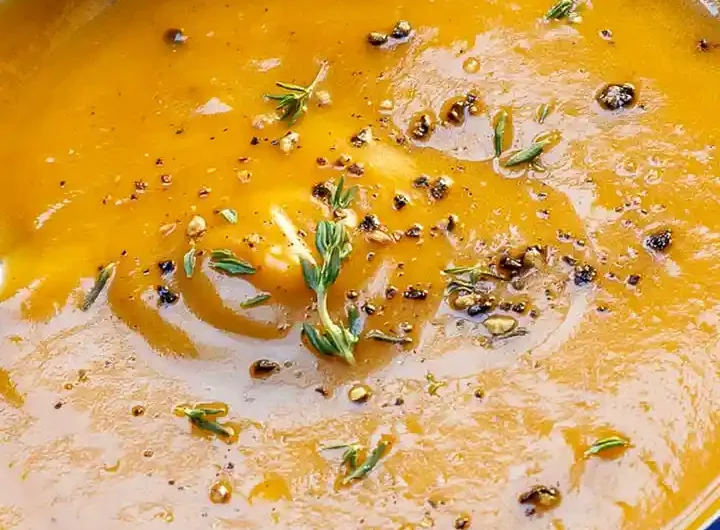
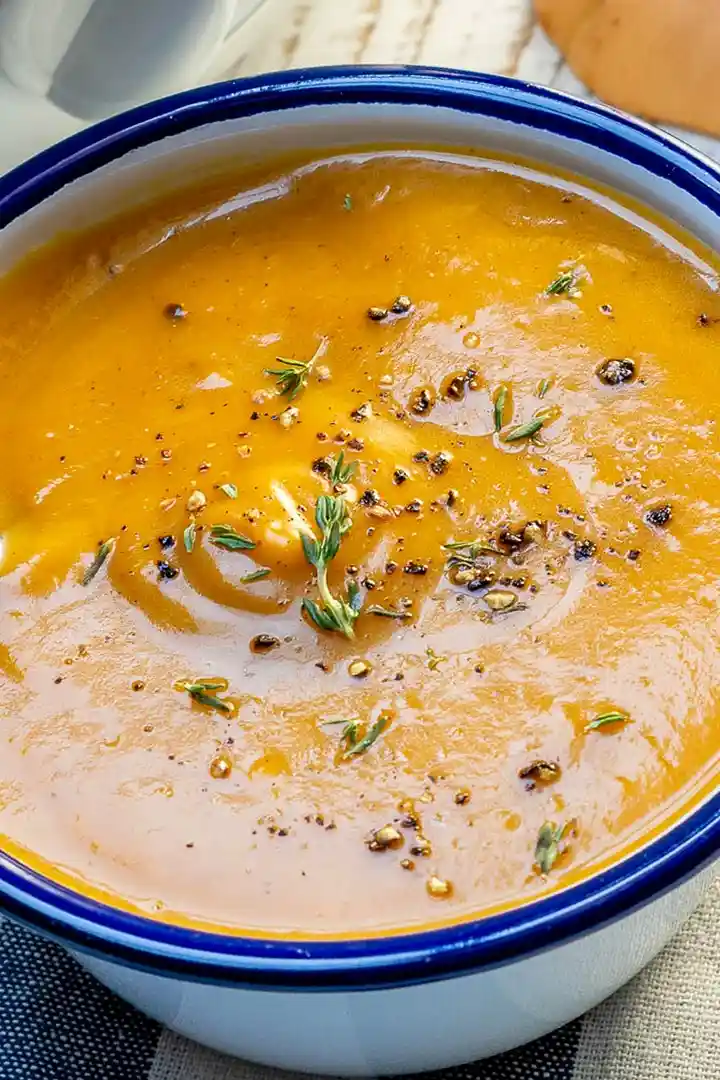
This slow-cooked butternut squash soup is a perfect autumn meal that balances earthy sweetness with a warming touch of ginger. It relies on the convenience of a crock-pot to break down tough squash into a velvety, nutrient-dense base that tastes even better after a slow simmer. By incorporating coconut milk, the final texture achieves a silky consistency that is both rich and satisfying for any mealtime.
List of ingredients
- 3 cups vegetable stock
- 2-3 cloves garlic, minced
- 1 medium apple, cored and quartered
- 1 medium (3-4 lbs) butternut squash, peeled, seeded and chopped
- 1 red or yellow onion, diced
- 2 inch nob of fresh ginger, peeled and sliced
- 1 bay leaf
- 1 tsp ground cinnamon
- 1/4 tsp cayenne pepper
- 1/4-1/2 tsp sea salt and pepper
- 1 15 oz can coconut milk
- fresh thyme for garnish
step-by-step instructions
- Step: Add all ingredients EXCEPT for the coconut milk and fresh thyme to a slow cooker.
- Step: Toss gently to combine ingredients well.
- Step: Cook on LOW for 6-8 hours or on HIGH for 3-4 hours.
- Step: Remove and discard the bay leaf then stir in the coconut milk.
- Step: Blend the soup until smooth using an immersion blender.
- Step: Garnish with fresh thyme and serve warm.
Selecting and Preparing Your Squash
Choosing the Perfect Squash
When selecting a butternut squash for soup, look for a heavy feel relative to its size, which indicates high moisture content and dense flesh. The skin should be matte rather than shiny and completely free of deep cuts or soft bruised areas. A tan or beige color indicates maturity, which translates to a sweeter, more intense flavor profile that serves as the base for this entire recipe.
Techniques for Safe Peeling
Butternut squash skins can be quite tough, so using a heavy-duty Y-peeler is usually safer and more efficient than using a standard paring knife. If the skin is particularly difficult to remove, you can carefully pierce the skin with a fork and microwave the entire squash for about 2 minutes to soften it slightly before peeling. Always ensure you are working on a stable cutting board to prevent the squash from slipping while you slice it into cubes.
Understanding the Role of Aromatics
Ginger and Garlic Infusion
Fresh ginger and garlic are the flavor pillars of this soup. Because the soup cooks for several hours, the ginger slices will soften and essentially melt into the liquid, releasing its essential oils deep into the broth. Keep the ginger slices thin to ensure they blend completely into the finished product, avoiding any stringy textures in the final bowl.
Balancing Spice Levels
The addition of cinnamon and cayenne creates a sophisticated flavor profile that avoids being overly sweet. If you find the soup too spicy, increase the amount of coconut milk or add a small splash of lime juice, which acts as a flavor brightener. Conversely, if you prefer more warmth, increase the cayenne by a pinch, but do so carefully as the heat intensifies over the long cooking period.
Optimizing the Blending Process
Achieving a Silky Texture
While an immersion blender is the most practical tool for blending soup directly in the pot, you can also use a standard high-speed blender if needed. When transferring hot soup to a standard blender, always fill the jar no more than halfway and leave the central cap of the lid slightly ajar with a towel over it to allow steam to escape. This prevents the pressure build-up that can cause the hot soup to spray out of the lid during the blending process.
Consistency Adjustments
Depending on the specific density of your squash, the soup may appear thicker than you prefer after blending. To thin it out, add a small amount of extra vegetable stock or warm water, one tablespoon at a time, until the desired consistency is reached. Stir thoroughly after each addition to ensure the texture remains uniform and emulsified with the coconut milk.
Practical Serving Suggestions
Enhancing the Texture
For added interest in every spoonful, consider topping the soup with toasted pumpkin seeds or pepitas. These provide a contrasting crunch that breaks up the smooth nature of the pureed squash. You could also lightly toast some coconut flakes or add a small drizzle of high-quality olive oil to give the soup a professional, restaurant-style presentation.
Pairing for a Complete Meal
Because this soup is nutritionally balanced, it pairs beautifully with a simple side salad featuring bitter greens like arugula or radicchio. The slight bitterness of these greens balances the inherent sweetness of the butternut squash and the coconut milk. Serving the soup with a side of warm crusty bread or toasted flatbread can also help soak up the last bit of the soup in the bowl.
Storage and Reheating Methods
Managing Leftovers
This soup stores exceptionally well because the flavors often deepen after sitting in the refrigerator overnight. Transfer any leftovers to an airtight glass container and store in the refrigerator for up to 4 days. If you intend to store it longer, freeze the soup in individual portions using freezer-safe bags or containers for up to 3 months.
Reviving the Texture
When reheating refrigerated soup, do so slowly on the stovetop over low heat. If the coconut milk has separated or the soup has thickened too much, a vigorous stir or a quick pulse with an immersion blender will restore the original creamy consistency. Avoid microwaving large batches of the soup, as it can heat unevenly and lead to splatter or broken textures near the edges of the container.
Frequently Asked Questions
Can I make this soup without a blender?
If you lack a blender, you can manually mash the cooked squash with a potato masher, though the result will be rustic and textured rather than smooth. If you desire a finer texture without a blender, you can push the cooked mixture through a fine-mesh sieve using a ladle, which will remove larger fibers and leave you with a smooth puree.
Is it necessary to remove the apple skin?
You do not need to peel the apple if you are using an immersion or standard blender, as the blade will liquefy the skin during the blending process. However, ensure you thoroughly remove the core and seeds, as these will not break down and can leave a gritty texture or bitter notes in your soup.
What is the best way to substitute fresh ginger?
If fresh ginger is unavailable, you can use ground ginger, but the flavor will be significantly less punchy and bright. Use 1/2 teaspoon of ground ginger to replace the 2-inch fresh nob. Add the ground ginger at the beginning of the cooking process just like you would with the cinnamon to allow it to integrate into the broth.
Can I add protein to this dish?
This soup works well as a base for additional protein such as shredded cooked lentils or chickpeas added during the blending stage. These plant-based proteins blend easily and contribute to a heartier soup profile without altering the flavor profile of the squash and coconut.
How do I fix an overly sweet soup?
If your squash and apple combination results in a sweetness level higher than you like, add more salt, a splash of lemon juice, or an extra pinch of cayenne pepper. Acidic ingredients are the most effective way to cut through sweetness, so a little lemon or lime juice can really help bring the flavors back into balance if the soup feels one-dimensional.
Print
Slow-Cooked Butternut Squash Soup with Coconut and Ginger
- Total Time: 375 minutes
- Yield: 6 servings 1x
- Diet: Vegan, Gluten Free, Dairy Free
Description
A wholesome and creamy Crock-pot Butternut Squash Soup that is naturally vegan, gluten-free, and perfect for autumn. Packed with nutrients and deep, comforting flavors.
Ingredients
- 3 cups vegetable stock
- 2–3 cloves garlic, minced
- 1 medium apple, cored and quartered
- 1 medium (3-4 lbs) butternut squash, peeled, seeded and chopped
- 1 red or yellow onion, diced
- 2 inch nob of fresh ginger, peeled and sliced
- 1 bay leaf
- 1 tsp ground cinnamon
- 1/4 tsp cayenne pepper
- 1/4–1/2 tsp sea salt and pepper
- 1 15 oz can coconut milk
- fresh thyme for garnish
Instructions
- Step: Add all ingredients EXCEPT for the coconut milk and fresh thyme to a slow cooker.
- Step: Toss gently to combine ingredients well.
- Step: Cook on LOW for 6-8 hours or on HIGH for 3-4 hours.
- Step: Remove and discard the bay leaf then stir in the coconut milk.
- Step: Blend the soup until smooth using an immersion blender.
- Step: Garnish with fresh thyme and serve warm.
Notes
Ensure the butternut squash is cubed into uniform pieces for even cooking. This soup can be stored in the refrigerator for up to 4 days or frozen for later.
- Prep Time: 15 minutes
- Cook Time: 360 minutes
- Category: Soup
- Method: Slow Cooker
- Cuisine: American
Nutrition
- Serving Size: 1.5 cups
- Calories: 185 kcal
- Sugar: 7 g
- Sodium: 450 mg
- Fat: 9 g
- Saturated Fat: 8 g
- Unsaturated Fat: 1 g
- Trans Fat: 0 g
- Carbohydrates: 26 g
- Fiber: 5 g
- Protein: 3 g
- Cholesterol: 0 mg
Keywords: butternut squash soup, crock-pot, vegan soup, autumn recipe, gluten-free, healthy soup