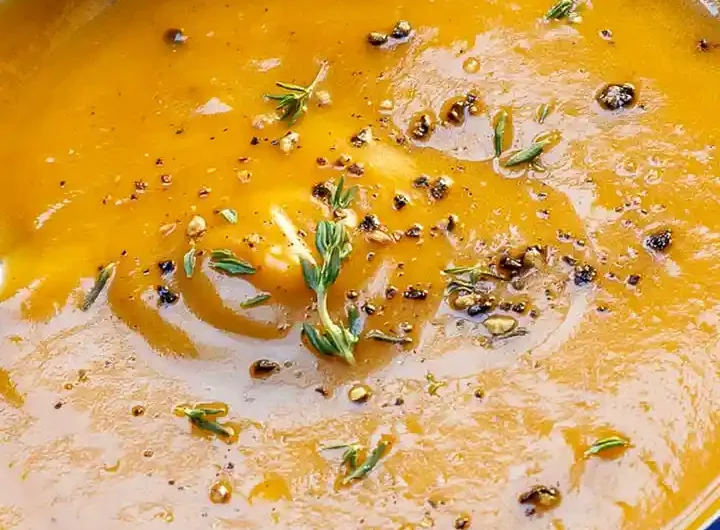
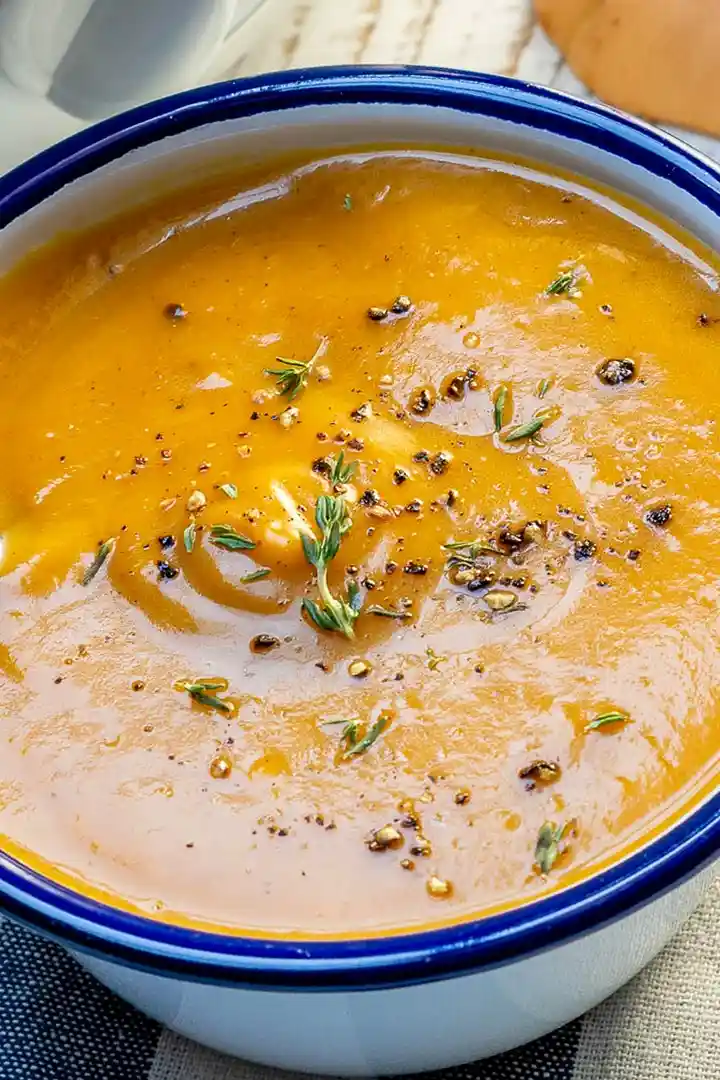
This creamy and nutrient-dense soup is prepared in a slow cooker for maximum flavor with minimal effort. It combines the natural sweetness of butternut squash and apple with a hint of warmth from ginger and cinnamon.
List of ingredients
- 3 cups vegetable stock – provides a savory liquid base.
- 2-3 cloves garlic, minced – adds a pungent, aromatic depth.
- 1 medium apple, cored and quartered – introduces a subtle sweetness and tartness.
- 1 medium (about 3-4 lbs) butternut squash, peeled, seeded and chopped – the primary creamy base.
- 1 red or yellow onion, diced – adds a fundamental savory layer.
- 2″ knob of fresh ginger, peeled and sliced – provides a zesty, warming kick.
- 1 bay leaf – imparts a subtle herbal undertone.
- 1 tsp ground cinnamon – enhances the autumn flavor profile.
- 1/4 tsp cayenne pepper – adds a very mild heat for balance.
- Sea salt and pepper, to taste (about 1/4-1/2 tsp each) – essential for seasoning.
- 1 (15 oz) can coconut milk – creates a rich, velvety texture.
- Fresh thyme – used for a fresh, earthy garnish.
step-by-step instructions
- Combine base ingredients: Add all ingredients except for the coconut milk and fresh thyme into your slow cooker. Ensure the squash is evenly distributed.
- Mix well: Toss the ingredients gently with a spoon to ensure the spices are well combined with the vegetables.
- Slow cook: Set the appliance to LOW for 6-8 hours or to HIGH for 3-4 hours. Cook until the squash and apples are completely tender.
- Prepare for blending: Remove and discard the bay leaf to prevent it from being blended into the soup. Stir in the can of coconut milk.
- Puree the soup: Use an immersion blender to blend the soup directly in the pot until completely smooth. Alternatively, transfer to a standard blender in small batches.
- Garnish and serve: Sprinkle with fresh thyme leaves and serve warm in bowls.
Essential Preparation Techniques
Using a Sharp Y-Peeler for Squash
Butternut squash has a thick, tough skin that can be difficult to remove. Use a sharp Y-peeler to strip the skin in long, vertical motions. Cutting the squash in half first provides a more stable base for peeling.
Efficient Seed Removal
Once the squash is halved, use a large metal spoon to scrape out the seeds and fibrous pulp. Ensure all the seeds are removed as they can create an unwanted texture. Save the seeds to roast for a healthy snack topper.
Choosing the Best Apple Variety
For the best balance of flavor, use a tart apple like Granny Smith or a crisp Honeycrisp. The acidity of the apple cuts through the richness of the coconut milk. Avoid using overly mealy apples which may not blend as smoothly.
Preparing Fresh Ginger
Fresh ginger is more potent than powdered ginger. Use the edge of a spoon to scrape the skin off the ginger root before slicing. Slicing the ginger into coins allows it to infuse the broth without leaving large chunks.
Flavor Customization and Variations
Increasing the Heat Level
If you prefer a spicier soup, increase the cayenne pepper to 1/2 teaspoon. You can also add a pinch of red pepper flakes during the slow cooking process. For a deeper heat, add a small piece of sliced fresh jalapeño.
Adding Natural Sweeteners
To enhance the autumn flavors, stir in one tablespoon of maple syrup at the end. This complements the cinnamon and apple notes perfectly. Be cautious with the amount to avoid making the soup taste like a dessert.
Substituting the Coconut Milk
While coconut milk provides the best creaminess, you can use cashew cream for a more neutral taste. Blend soaked cashews with water until smooth. Avoid using thin nut milks as they will not provide the same velvety consistency.
Incorporating Extra Vegetables
You can add diced carrots or parsnips to the slow cooker along with the squash. These root vegetables blend in seamlessly and add extra vitamins. Ensure they are chopped to a similar size as the squash for even cooking.
Blending and Texture Tips
Using an Immersion Blender
An immersion blender is the most efficient tool for this recipe. It allows you to blend directly in the crock-pot, reducing cleanup. Move the blender up and down slowly to ensure no large chunks remain.
Safe Standard Blender Methods
If using a traditional blender, work in small batches to avoid overfilling. Leave the center cap of the lid slightly open to allow steam to escape. This prevents pressure buildup that could cause the lid to pop off.
Achieving a Thicker Consistency
If the soup is too thin, let it simmer on high for an additional 30 minutes after blending. You can also blend in a small piece of cooked potato to add natural thickness. Avoid adding flour or cornstarch to keep the recipe vegan and gluten-free.
Filtering for Ultra-Smooth Results
For a restaurant-quality finish, pass the blended soup through a fine-mesh sieve. This removes any remaining fibers from the ginger or apple. This step is optional but recommended for a professional texture.
Serving and Pairing Ideas
Pairing with Crusty Breads
Serve this soup with toasted sourdough or a warm baguette. The crunch of the bread provides a great contrast to the smooth soup. Rub a clove of raw garlic on the toasted bread for extra flavor.
Adding Nutty Toppings
Toasted pumpkin seeds or sliced almonds add a necessary crunch and protein. Roast them in a dry pan over medium heat until fragrant. Sprinkle them on top just before serving to keep them crisp.
Using Coconut Cream Swirls
For a beautiful presentation, save the thick cream from the top of the coconut milk can. Spoon a small amount onto the surface of the soup and swirl it with a toothpick. This adds a visual element and extra richness.
Complementary Side Dishes
A simple side salad with a lemon vinaigrette pairs well with the richness of the squash. Alternatively, serve with a side of roasted Brussels sprouts. These options provide a fresh contrast to the creamy soup.
Storage and Preservation
Refrigeration Guidelines
Store the soup in an airtight glass container in the refrigerator. It will stay fresh and flavorful for up to 5 days. Ensure the soup is cooled slightly before sealing the container to prevent condensation.
Freezing for Future Use
This soup freezes exceptionally well for several months. Pour the cooled soup into freezer-safe bags or containers, leaving space for expansion. Avoid freezing the soup if you have added fresh garnishes like thyme.
Thawing Process
The safest way to thaw the soup is to move it from the freezer to the refrigerator 24 hours before use. Alternatively, you can thaw it in a pot of simmering water. Stir well as it thaws to redistribute the coconut milk.
Preventing Separation
Coconut milk can sometimes separate during freezing and thawing. This is normal and not a sign of spoilage. Simply whisk the soup vigorously while reheating to emulsify the fats and liquids again.
Reheating Instructions
Stovetop Reheating
Pour the soup into a pot and heat over medium-low heat. Stir frequently to prevent the bottom from scorching. Add a splash of water or vegetable broth if the soup has thickened too much in the fridge.
Microwave Reheating
Heat the soup in a microwave-safe bowl in 1-minute intervals. Stir between each interval to ensure the heat is distributed evenly. Cover the bowl with a paper towel to prevent splattering.
Adjusting Consistency After Reheating
Reheated soups often become thicker than they were originally. Stir in a tablespoon of hot water or coconut milk to return it to the desired creaminess. Taste and adjust salt levels if necessary.
Troubleshooting Common Issues
Solving a Too-Thin Texture
If the soup is too watery, you likely had too much vegetable stock. Simmer the soup without a lid for 30-60 minutes to reduce the liquid. This concentrates the flavor and thickens the body.
Balancing Excessive Sweetness
If the apple or squash made the soup too sweet, add a teaspoon of lemon juice or apple cider vinegar. The acidity cuts through the sugar and balances the palate. Add the acid in small increments and taste as you go.
Correcting Over-Salting
If the soup is too salty, stir in more coconut milk or a bit of unsalted vegetable broth. You can also add a small amount of unsweetened coconut cream. This dilutes the salt concentration without ruining the flavor.
Handling Grainy Texture
A grainy texture usually results from under-blending. Return the soup to the blender and process on high for an additional minute. Ensure the immersion blender is fully submerged to avoid incorporating too much air.
Frequently Asked Questions
Can I use pumpkin instead of butternut squash?
Yes, you can substitute pumpkin for butternut squash in a 1:1 ratio. Pumpkin is slightly sweeter and denser, so you may need a splash more stock. Ensure you use fresh pumpkin or plain puree without added sugar.
Do I need to peel the apple?
Peeling the apple is not necessary as the skin blends into the soup. Keeping the skin adds more fiber and nutrients to the final dish. Just make sure to remove the core and seeds.
Can I use a different type of milk?
You can use almond milk, cashew milk, or oat milk as alternatives. However, these are thinner than canned coconut milk and may result in a less creamy soup. Consider adding a teaspoon of cornstarch or blending in a potato for thickness.
Is it possible to make this without a slow cooker?
Yes, you can make this in a heavy-bottomed pot on the stove. Sauté the onions and garlic first, add the other ingredients, and simmer on low for 1-2 hours. The slow cooker is simply for convenience and depth of flavor.
Print
Slow Cooker Butternut Squash Soup with Coconut Milk
- Total Time: 6 hours 20 minutes
- Yield: 6 servings 1x
- Diet: Vegan
Description
A creamy, wholesome, and anti-inflammatory butternut squash soup perfect for autumn, made in a slow cooker for deep flavors.
Ingredients
- 3 cups vegetable stock
- 2–3 cloves garlic, minced
- 1 medium apple, cored and quartered
- 1 medium (about 3–4 lbs) butternut squash, peeled, seeded and chopped
- 1 red or yellow onion, diced
- 2” nob of fresh ginger, peeled and sliced
- 1 bay leaf
- 1 tsp ground cinnamon
- 1/4 tsp cayenne pepper
- 1/4–1/2 tsp sea salt
- 1/4–1/2 tsp pepper
- 1 (15 oz) can coconut milk
- fresh thyme, to garnish
Instructions
- Step 1: Add all ingredients EXCEPT for the coconut milk and fresh thyme to a slow cooker.
- Step 2: Toss gently to combine ingredients well.
- Step 3: Cook on LOW for 6-8 hours on low, or on HIGH for 3-4 hours.
- Step 4: Remove and discard the bayleaf then stir in the coconut milk.
- Step 5: Blend the soup until smooth.
- Step 6: Garnish with fresh thyme and serve warm.
Notes
An immersion blender is recommended for blending the soup directly in the slow cooker.
- Prep Time: 20 minutes
- Cook Time: 6 hours
- Category: Soup
- Method: Slow Cooker
- Cuisine: American
Nutrition
- Serving Size: 1 serving
- Calories: 306 kcal
- Sugar: 10 g
- Sodium: 600 mg
- Fat: 20 g
- Saturated Fat: 16 g
- Unsaturated Fat: 3 g
- Trans Fat: 0 g
- Carbohydrates: 30 g
- Fiber: 6 g
- Protein: 4 g
- Cholesterol: 0 mg
Keywords: butternut squash soup, crock-pot, vegan, anti-inflammatory, autumn comfort food, dairy-free