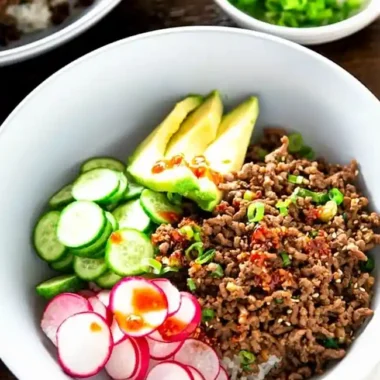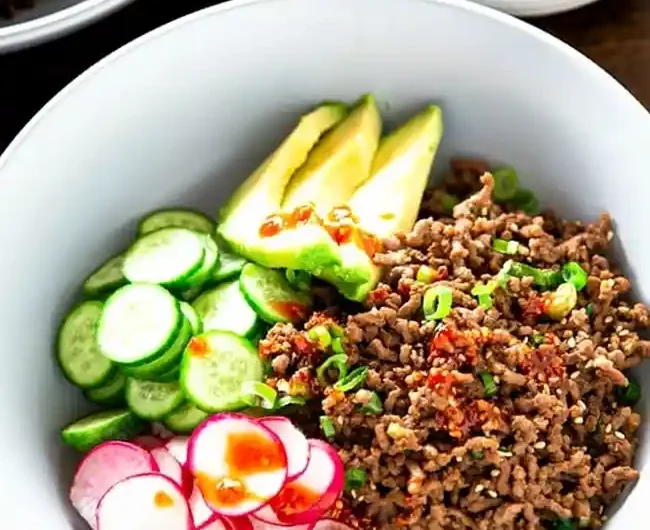
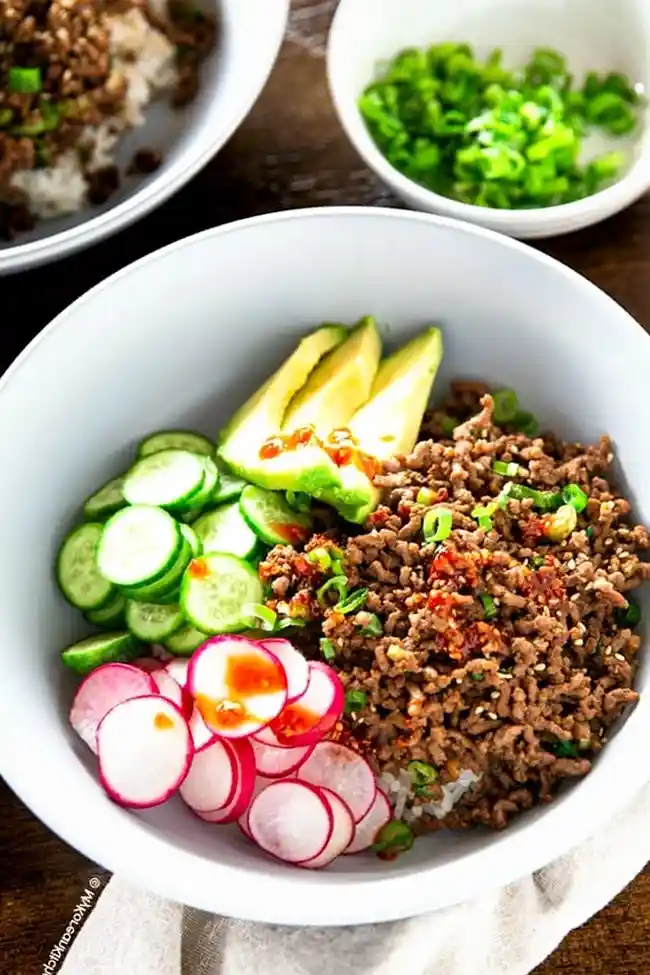
These Korean ground beef and rice bowls offer a savory and sweet flavor profile that mimics traditional bulgogi in a fraction of the time. This simple one-skillet meal is perfect for busy weeknights when you need a nutritious and satisfying dinner without spending hours in the kitchen. With minimal ingredients and rapid cooking time, it is an efficient way to enjoy bold flavors at home.
List of ingredients
- 1/4 cup soy sauce
- 2 Tbsp brown sugar
- 1.5 Tbsp apple cider vinegar
- 1/2 Tbsp minced garlic
- 1 tsp minced ginger
- 1/4 tsp ground black pepper
- 1/2 Tbsp toasted sesame oil
- 1 Tbsp cooking oil
- 500 g beef mince
- 1/2 Tbsp toasted sesame seeds
- 2 stalk green onions, thinly sliced
- 2 cups cooked rice
- 2 Tbsp gochujang
- 1 Tbsp toasted sesame oil
- 1 Tbsp sugar
- 1 Tbsp water
- 1 Tbsp toasted sesame seeds
- 1 tsp rice vinegar
- 1 tsp minced garlic
step-by-step instructions
- Step: Combine the ground beef sauce ingredients in a medium size bowl and whisk well. Set aside.
- Step: If using bibimbap sauce, combine all the sauce ingredients in a separate bowl and set aside.
- Step: In a well heated skillet, cook the ground beef over medium-high heat until the meat mostly turns brown, about 3-4 minutes, stirring often while breaking clumps.
- Step: Pour the ground beef sauce over the meat and simmer for 2-3 minutes while stirring occasionally.
- Step: Add the sesame seeds and green onions, stir quickly, and remove from the heat.
- Step: Serve the cooked beef over a bed of cooked rice, topping with desired sides and a drizzle of bibimbap sauce.
Practical cooking methods
Achieving the Perfect Beef Texture
To ensure your ground beef achieves a good sear rather than steaming in the pan, it is important to avoid overcrowding the skillet. If you are doubling this recipe, cook the meat in two separate batches to keep the heat high and the crust golden. Breaking the meat into small, uniform pieces early in the cooking process helps the sauce coat every morsel evenly.
Selecting the Right Rice
While any steamed white or brown rice works well, short-grain sushi rice provides the ideal stickiness to hold the beef and sauce together. For a healthier alternative, cauliflower rice can be used, though it should be sautéed quickly on its own to remove excess moisture before serving. Regardless of the type of grain, ensuring the rice is cooked until tender prevents a gritty mouthfeel in your finished bowl.
Customizing your bowl
Balancing Sweet and Savory Flavors
If you find the sauce is too sweet, add an extra splash of soy sauce or a dash of black pepper to neutralize the intensity. Conversely, if you prefer a deeper, more concentrated flavor, allow the sauce to simmer for an additional minute, which will reduce the liquid and make it stickier. Adjusting the amount of ginger or garlic allows you to emphasize the aromatic profile without changing the fundamental structure of the dish.
Refreshing Topping Combinations
The beauty of these bowls lies in the contrast between the hot, savory beef and cold, crisp vegetables. Thinly sliced cucumbers provide a refreshing crunch that cuts through the richness of the meat, while pickled radishes offer a tangy bite. Adding a sunny-side-up egg allows the warm, creamy yolk to act as a secondary sauce that enriches the entire bowl once broken.
Storage and reheating
Handling Leftovers Properly
Store any leftover beef in an airtight container in the refrigerator for up to three days. It is best to keep the rice and beef separate, as storing them mixed together can cause the rice to become overly soft or mushy. Reheating the beef in a small skillet with a teaspoon of water will help bring back the glaze’s consistency without drying out the meat.
Freezing the Cooked Beef
If you need to store this dish long-term, the cooked beef freezes exceptionally well. Once cooled to room temperature, place the meat in a freezer-safe bag, pressing out as much air as possible to prevent frost build-up. When ready to eat, thaw the beef in the refrigerator overnight and heat it thoroughly in a pan or microwave, serving it over freshly steamed rice.
Frequent queries answered
How can I make this dish spicier?
To increase the heat, you can add a teaspoon of chili flakes to the beef sauce during the cooking process. Alternatively, increasing the amount of gochujang in your bibimbap sauce will provide a more intense, layered heat that pairs perfectly with the savory soy glaze. You could also garnish the finished bowl with fresh bird’s eye chilies if you desire a sharp, immediate spice.
What should I do if the sauce is too thin?
If your sauce remains too thin after the simmer, simply continue to cook it over medium-high heat for an additional minute or two. This evaporation process will concentrate the sugars and soy, causing the sauce to thicken naturally into a glaze. You can also mix a tiny pinch of cornstarch with a teaspoon of water and stir it in to create a thicker, more syrupy coating if preferred.
Is this meal suitable for meal prepping?
This recipe is an excellent candidate for batch cooking at the start of the week. You can prepare a large quantity of the beef and store it in individual portions alongside cooked rice and pre-cut raw vegetables. By keeping the sauce separate until the final reheating phase, you ensure that the flavors remain bright and the textures stay crisp and appealing.
How can I replace the rice for a low-carb option?
Shredded cabbage or steamed zucchini noodles are fantastic low-carb substitutes that absorb the beef sauce beautifully. Using a blend of roasted broccoli and cauliflower florets also provides a hearty base that complements the beef flavor without relying on grains. Ensure you drain any excess water from these vegetables after steaming them to prevent your bowl from becoming overly damp.
Are there any tips for cleaner ginger prep?
For the smoothest ginger paste, use a microplane grater to process the ginger root while it is still frozen. This method produces a very fine consistency that melts easily into the sauce without leaving behind large, fibrous pieces. Peeling the ginger beforehand is not strictly necessary if using a fine grater, as the skin will be processed into such a small size that it goes unnoticed in the sauce.
Print
Korean Ground Beef and Rice Bowls
- Total Time: PT15M
- Yield: 4 1x
- Diet: Non-vegetarian
Description
Super flavorful Korean ground beef and rice bowl recipe. This dish is so easy and simple to make, it will become your favorite weeknight dinner!
Ingredients
- 1/4 cup soy sauce
- 2 Tbsp brown sugar
- 1.5 Tbsp apple cider vinegar
- 1/2 Tbsp minced garlic
- 1 tsp minced ginger
- 1/4 tsp ground black pepper
- 1/2 Tbsp toasted sesame oil
- 1 Tbsp cooking oil
- 500 g beef mince
- 1/2 Tbsp toasted sesame seeds
- 2 stalk green onions, thinly sliced
- 2 cups cooked rice
- 2 Tbsp gochujang
- 1 Tbsp toasted sesame oil
- 1 Tbsp sugar
- 1 Tbsp water
- 1 Tbsp toasted sesame seeds
- 1 tsp rice vinegar
- 1 tsp minced garlic
Instructions
- Step: Combine the ground beef sauce ingredients in a medium size bowl and whisk well. Set aside.
- Step: If using bibimbap sauce, combine all the sauce ingredients in a separate bowl and set aside.
- Step: In a well heated skillet, cook the ground beef over medium-high heat until the meat mostly turns brown, about 3-4 minutes, stirring often while breaking clumps.
- Step: Pour the ground beef sauce over the meat and simmer for 2-3 minutes while stirring occasionally.
- Step: Add the sesame seeds and green onions, stir quickly, and remove from the heat.
- Step: Serve the cooked beef over a bed of cooked rice, topping with desired sides and a drizzle of bibimbap sauce.
Notes
1 Tbsp = 15 ml, 1 Cup = 250 ml. Nutrition information is a rough estimate calculated with bibimbap sauce but excluding optional fresh vegetable sides.
- Prep Time: PT5M
- Cook Time: PT10M
- Category: Main
- Method: Stovetop
- Cuisine: Korean
Nutrition
- Serving Size: 1 bowl
- Calories: 551 kcal
- Sugar: 10 g
- Sodium: 900 mg
- Fat: 32 g
- Saturated Fat: 11 g
- Unsaturated Fat: 18 g
- Trans Fat: 0 g
- Carbohydrates: 37 g
- Fiber: 1 g
- Protein: 26 g
- Cholesterol: 89 mg
Keywords: ground beef and rice bowls, korean ground beef