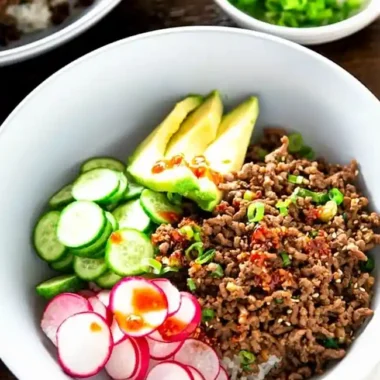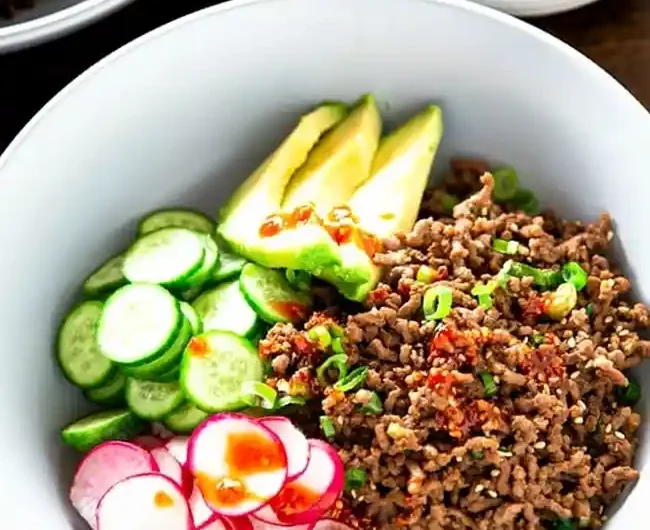
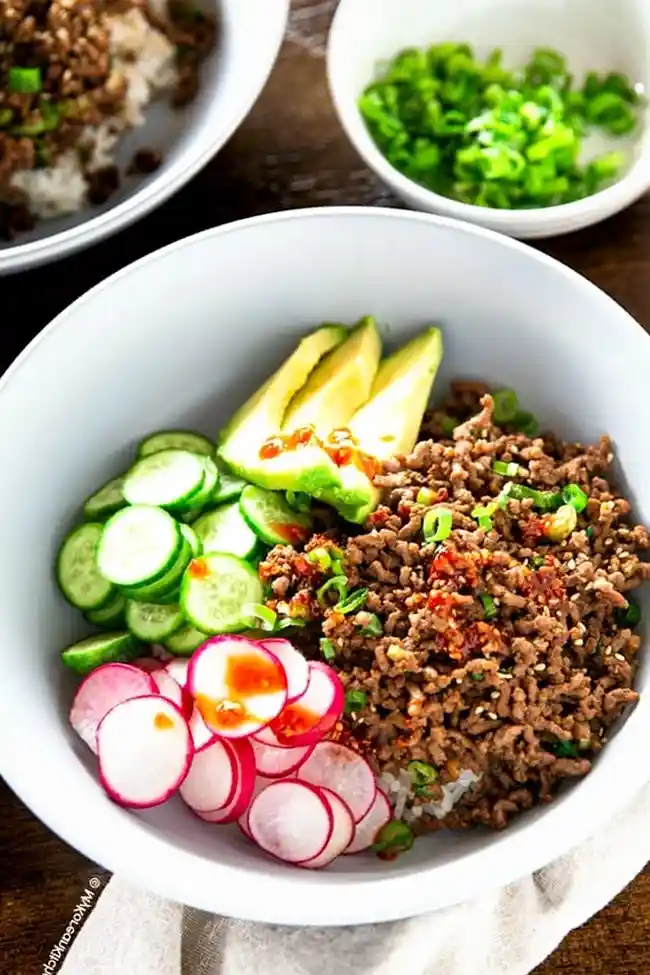
This quick Korean ground beef bowl is a budget-friendly alternative to traditional bulgogi. It uses simple pantry staples to create a savory, sweet, and satisfying meal in under 20 minutes.
List of ingredients
- 1/4 cup soy sauce (regular) – provides the primary salty base.
- 2 Tbsp brown sugar – adds a deep sweetness.
- 1.5 Tbsp apple cider vinegar or water – substitute for rice wine to balance flavors.
- 1/2 Tbsp minced garlic – adds aromatic pungency.
- 1 tsp minced ginger – provides a fresh, spicy zing.
- A few sprinkles ground black pepper – adds subtle heat.
- 1/2 Tbsp toasted sesame oil – gives a nutty aroma.
- Cooking oil (such as rice bran oil) – for searing the meat.
- 500 g beef mince (1.1 pound) – the main protein source.
- 1/2 Tbsp toasted sesame seeds – used for garnish.
- 2 stalk green onions (thinly sliced) – used for garnish.
- 2 cups cooked rice – use sushi, basmati, jasmine, brown, purple, or cauliflower rice.
- Avocado (thinly sliced) – optional topping.
- Cucumber (thinly sliced) – optional topping.
- Pink radish (thinly sliced) – optional topping.
- Broccoli (steamed or pan fried) – optional topping.
- Asparagus (pan fried) – optional topping.
- Bell peppers (pan fried) – optional topping.
- Egg (sunny side up) – optional topping.
- Kimchi (chopped) – optional topping.
- Roasted seasoned seaweed (crushed or shredded) – optional topping.
- 2 Tbsp gochujang (Korean chili paste) – for the optional bibimbap sauce.
- 1 Tbsp toasted sesame oil – for the optional bibimbap sauce.
- 1 Tbsp sugar – for the optional bibimbap sauce.
- 1 Tbsp water – for the optional bibimbap sauce.
- 1 Tbsp toasted sesame seeds – for the optional bibimbap sauce.
- 1 tsp rice vinegar – for the optional bibimbap sauce.
- 1 tsp minced garlic – for the optional bibimbap sauce.
step-by-step instructions
- Prepare the Sauces: Combine the ground beef sauce ingredients in a medium-sized bowl and whisk until the sugar is fully dissolved. If you are making the bibimbap sauce, combine its ingredients in a separate bowl and set aside.
- Brown the Beef: Heat a skillet over medium-high heat with a small amount of cooking oil. Add the ground beef and cook for 3-4 minutes, stirring frequently and breaking up any large clumps with a spatula until the meat is mostly brown.
- Simmer and Finish: Pour the prepared ground beef sauce over the browned meat. Simmer for 2-3 minutes while stirring occasionally to ensure the meat is evenly coated. Stir in the sesame seeds and sliced green onions quickly, then remove the skillet from the heat.
- Assemble the Bowls: Scoop a portion of cooked rice into a bowl. Top with the cooked Korean beef and add your chosen optional side vegetables or eggs. Drizzle with the bibimbap sauce if desired.
Optimizing Your Beef Selection
Choose an 80/20 Lean-to-Fat Ratio
For the best flavor and texture, select ground beef with an 80% lean and 20% fat ratio. The fat prevents the meat from drying out during the high-heat searing process and helps the sauce emulsify. If you use a leaner meat, you may need to add an extra teaspoon of oil to the pan.
Drain Excess Fat Before Saucing
If you notice a significant amount of rendered fat in the pan after browning the beef, use a spoon or paper towel to remove the excess. Leaving too much oil can prevent the sauce from clinging to the meat. This step ensures the final dish is flavorful rather than greasy.
Consistency of the Beef Mince
Ensure the beef is evenly minced to allow for consistent cooking. If the meat is frozen, thaw it completely in the refrigerator overnight. Cooking frozen ground beef can lead to excess water release, which steams the meat instead of searing it.
Rice Preparation and Variety
Use Short-Grain Sushi Rice for Authenticity
Short-grain white rice is traditional for Korean bowls because its sticky texture holds the beef and sauce well. Rinse the rice under cold water until the water runs clear to remove excess starch. This prevents the rice from becoming gummy and ensures distinct grains.
Opt for Basmati or Jasmine for Lighter Texture
If you prefer a fluffier, less sticky base, jasmine or basmati rice are excellent alternatives. These long-grain varieties provide a floral aroma that complements the savory soy and ginger notes. Use a 1:1.5 rice-to-water ratio for a firm yet tender consistency.
Cauliflower Rice for Low-Carb Needs
For a grain-free version, use cauliflower rice. Sauté the cauliflower rice in a pan with a touch of sesame oil for 3-5 minutes until tender-crisp. Avoid boiling it, as this can make the cauliflower mushy and waterlogged.
Vegetable Side Dish Preparation
Blanching Broccoli for Vibrant Color
To keep broccoli bright green and crisp, blanch it in boiling salted water for 2 minutes, then immediately plunge it into an ice bath. After cooling, you can either serve it as is or quickly toss it in a hot pan with garlic. This method preserves the nutrients and the snap of the vegetable.
Sautéing Asparagus and Bell Peppers
Cook asparagus and bell peppers in the same skillet used for the beef before starting the meat. Use medium-high heat and a small amount of oil to achieve a slight char. Cook them for only 2-3 minutes to ensure they remain tender-crisp rather than soft.
Fresh Slicing for Cucumber and Radish
Slice cucumbers and pink radishes into very thin rounds or matchsticks using a sharp knife or a mandoline. This increases the surface area, allowing them to provide a refreshing, crunchy contrast to the rich beef. Keeping them raw preserves their natural enzymes and freshness.
Customizing the Flavor Profile
Adjusting the Saltiness
If the sauce tastes too salty, add a small pinch of extra brown sugar or a teaspoon of water to mellow the soy sauce. For those monitoring sodium intake, replace the regular soy sauce with a low-sodium version. You may need to add a pinch of salt separately to maintain the depth of flavor.
Increasing the Heat Level
To make the dish spicier, increase the amount of gochujang in the bibimbap sauce or add a teaspoon of crushed red pepper flakes to the beef while simmering. Adding freshly sliced serrano or jalapeño peppers as a topping also provides a sharp, clean heat.
Balancing the Sweetness
If you prefer a less sweet dish, reduce the brown sugar in the beef sauce by half. You can substitute brown sugar with honey or maple syrup for a different kind of sweetness. Honey provides a thicker glaze, while maple syrup adds a subtle woody note.
Storage and Reheating Guidelines
Refrigeration and Shelf Life
Store the cooked beef and the cooked rice in separate airtight containers in the refrigerator. The beef will stay fresh for 3-4 days, while the rice is best used within 2 days. Keep the optional fresh vegetables separate to prevent them from wilting or absorbing beef flavors.
Reheating with a Microwave
When reheating rice in the microwave, sprinkle a tablespoon of water over the grains and cover the bowl with a damp paper towel. This creates steam that re-hydrates the rice, preventing it from becoming hard. Heat the beef separately or on top of the rice in 1-minute intervals.
Reheating in a Skillet
For the best texture, reheat the beef in a skillet over medium heat with a splash of water or beef broth. This prevents the meat from drying out and restores the glossiness of the sauce. Toss the beef gently until heated through before adding it back to the rice.
Make-Ahead Strategies
Advance Sauce Preparation
You can prepare both the beef sauce and the bibimbap sauce up to a week in advance. Store them in glass jars in the refrigerator to keep the flavors fresh. Whisk the sauces again before using them, as the sugar may settle at the bottom over time.
Pre-cooking the Protein
Cook the ground beef in a large batch and freeze portions in freezer-safe bags. To use, thaw the beef in the refrigerator overnight. This reduces the active cooking time to just a few minutes of reheating and assembly.
Prepping Vegetable Trays
Slice the carrots, radishes, and cucumbers and store them in containers with a damp paper towel. Avoid slicing the avocado until just before serving to prevent browning. This prep work allows you to assemble the bowls in minutes during a busy weeknight.
Common Troubleshooting
Managing Excess Oil
If the beef releases too much oil despite draining, blot the surface of the meat with a clean paper towel before adding the sauce. This prevents the sauce from separating and ensures a thick, glossy coating on the beef mince.
Preventing Beef Clumping
To avoid large clumps of meat, use a wooden spoon or a meat masher to break the beef apart as soon as it hits the hot pan. Constant stirring during the first 3 minutes of browning is key to achieving a fine, uniform texture.
Fixing a Bland Sauce
If the final dish lacks depth, add a small splash of soy sauce or a drop of toasted sesame oil right before serving. A squeeze of fresh lime juice can also brighten the flavors if the sauce feels too heavy or one-dimensional.
Frequently Asked Questions
Can I use ground turkey instead of beef?
Yes, ground turkey or ground chicken can be used as a leaner alternative. Since poultry is leaner, you will need to add an extra tablespoon of oil to the pan to prevent sticking and ensure the meat browns properly.
What is the best substitute for gochujang?
If you cannot find gochujang, you can mix a tablespoon of sriracha with a teaspoon of miso paste and a pinch of sugar. While it won’t have the exact fermented depth of Korean chili paste, it provides a similar balance of heat and salt.
How do I prevent the rice from sticking to the bowl?
Lightly rinse your serving bowl with warm water or add a small amount of sesame oil to the bottom of the bowl before adding the rice. This creates a slight barrier that makes the rice easier to scoop and serve.
Can this recipe be made in a slow cooker?
This recipe is designed for fast stovetop cooking to maintain the texture of the ground beef. Slow cooking ground beef can make it overly soft and mushy, so the skillet method is highly recommended for this specific dish.
Print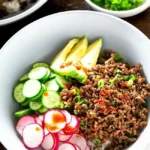
Savory Korean Ground Beef and Rice Bowls
- Total Time: 15 minutes
- Yield: 4 servings 1x
- Diet: General
Description
Super flavorful Korean ground beef and rice bowl recipe. This dish is so easy and simple to make, it will become your favorite weeknight dinner!
Ingredients
- 1/4 cup soy sauce
- 2 Tbsp brown sugar
- 1.5 Tbsp apple juice or water
- 1/2 Tbsp minced garlic
- 1 tsp minced ginger
- A few sprinkles ground black pepper
- 1/2 Tbsp toasted sesame oil
- Some cooking oil
- 500 g beef mince
- 1/2 Tbsp toasted sesame seeds
- 2 stalk green onions, thinly sliced
- 2 cups cooked rice
- avocado, thinly sliced (optional)
- cucumber, thinly sliced (optional)
- pink radish, thinly sliced (optional)
- broccoli, steamed or pan fried (optional)
- asparagus, pan fried (optional)
- bell peppers, pan fried (optional)
- egg, sunny side up (optional)
- kimchi, chopped (optional)
- roasted seasoned seaweed, crushed or shredded (optional)
- 2 Tbsp gochujang
- 1 Tbsp toasted sesame oil
- 1 Tbsp sugar
- 1 Tbsp water
- 1 Tbsp toasted sesame seeds
- 1 tsp rice vinegar
- 1 tsp minced garlic
Instructions
- Step: Combine the ground beef sauce in a medium size bowl and whisk well. Set aside. If using bibimbap sauce, combine all the sauce in a separate bowl and set aside.
- Step: In a well heated skillet, cook the ground beef over medium high heat until the meat mostly turns brown (about 3- 4 mins). Stir often while breaking clumps of the meat.
- Step: Pour the ground beef sauce over the meat and simmer for 2-3 mins, while stirring occasionally. Add the sesame seeds and green onions. Stir around quickly. Remove from the heat.
- Step: Serve the cooked beef over a bed of cooked rice. (Optional) Top up with your choice of sides and drizzle over the bibimbap sauce.
Notes
1 Tbsp = 15 ml, 1 Cup = 250 ml
- Prep Time: 5 minutes
- Cook Time: 10 minutes
- Category: Main
- Method: Stovetop
- Cuisine: Korean
Nutrition
- Serving Size: 1 bowl
- Calories: 551 kcal
- Sugar: 10 g
- Sodium: 900 mg
- Fat: 32 g
- Saturated Fat: 11 g
- Unsaturated Fat: 21 g
- Trans Fat: 0 g
- Carbohydrates: 37 g
- Fiber: 1 g
- Protein: 26 g
- Cholesterol: 89 mg
Keywords: ground beef and rice bowls, korean ground beef