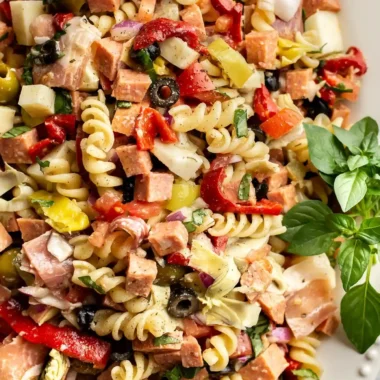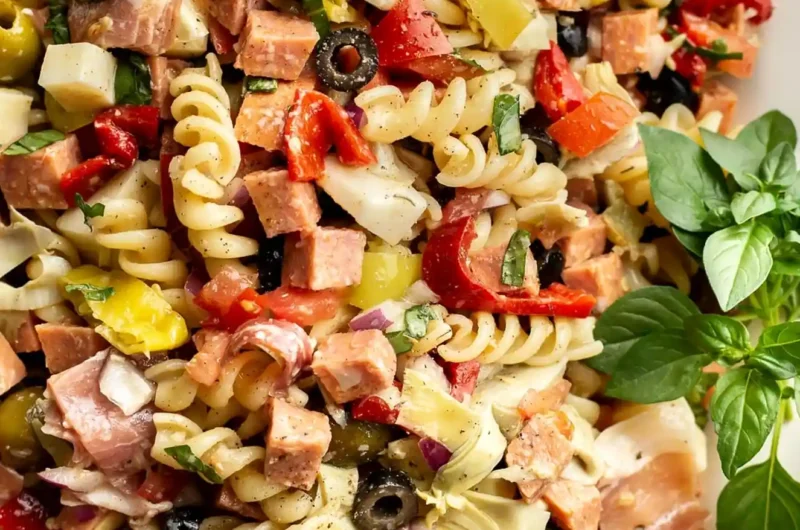
This vibrant antipasto pasta salad brings together a hearty medley of textures and savory notes, perfect for gatherings or a satisfying lunch. By combining perfectly cooked pasta with tangy marinated vegetables, cubes of provolone, and savory non-meat protein options, this dish offers a balanced bite in every spoonful. It is a reliable, crowd-pleasing choice that develops even deeper flavor as it sits, making it a fantastic candidate for advance preparation.
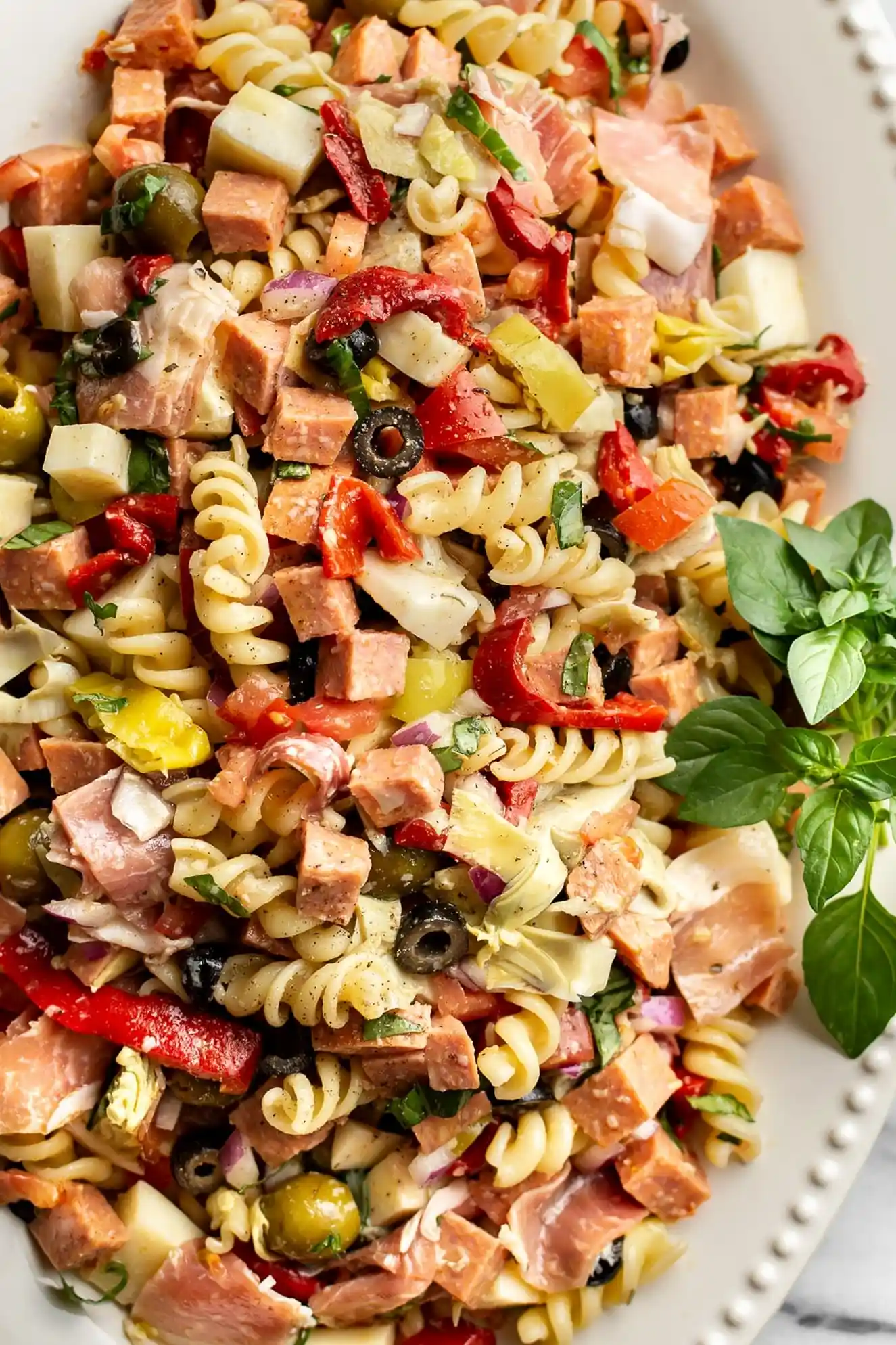
List of ingredients
- 1.5 cups uncooked fusilli pasta
- 8 ounces provolone cheese (diced, microbial-rennet)
- 1/2 to 3/4 cup assorted olives
- 1 (14 fluid ounce) can artichoke hearts (chopped)
- 8 ounces plant-based savory deli slices (diced)
- 1/3 cup pepperoncini peppers (chopped)
- 1/2 cup roasted red peppers (chopped)
- 3 ounces plant-based dry cured style slices (chopped)
- 2 tablespoons red onion (chopped)
- 2 tablespoons fresh basil (sliced thin)
- 1 medium tomato (chopped)
- 1/4 cup freshly grated parmesan cheese (microbial-rennet)
- Salt & pepper (to taste)
- 1/4 cup olive oil
- 2 tablespoons apple cider vinegar
- 1/2 teaspoon garlic powder
- 1/4 teaspoon Italian seasoning
- 1 teaspoon honey
- 1/2 teaspoon Dijon mustard
step-by-step instructions
- Boil Pasta: Boil the pasta, and once it’s done, rinse it under cold water and let it drain thoroughly.
- Prepare Dressing: Add the dressing ingredients to a small bowl and whisk together.
- Combine: Prep the remaining ingredients and add them to a large salad bowl.
- Toss: Toss everything together and season with salt & pepper as needed.
Practical Preparation Strategies
Achieving the right texture in a cold pasta salad relies on how you treat the noodles. Ensure you do not overcook the pasta, as it will continue to soften slightly once it sits in the dressing. Using a short, twisty pasta shape like fusilli creates small pockets for the vinaigrette to pool, ensuring that every bite is flavorful.
Cooling the Pasta Properly
After boiling, the pasta must be completely cooled before being combined with the cheese and vegetables. If the pasta is still warm, it will cause the provolone cubes to soften and lose their shape, turning the salad into a clumpy mess. A quick rinse under cold water is the most efficient way to lower the temperature quickly while removing excess starch.
Achieving Uniform Vegetable Texture
When chopping your ingredients, aim for a uniform size that matches the pasta twists. If the artichokes or peppers are left in large, uneven chunks, they will fall to the bottom of the bowl and make it difficult to get a balanced portion on your fork. Consistency in chopping ensures a more professional presentation and a better eating experience.
Customization and Flavor Profiles
This salad acts as a canvas for a variety of mediterranean-inspired flavors. Because it is highly adaptable, you can adjust the components based on what you have in your pantry or refrigerator without losing the fundamental structure of the dish.
Selecting Your Cheese Varieties
While provolone provides a distinct, mild flavor, you can swap it for fresh mozzarella pearls if you want a softer, creamier mouthfeel. For a more intense, salty kick, crumbled feta or goat cheese can be added at the very end, though be aware that softer cheeses may break down slightly more than the firmer cubes of provolone.
Boosting the Herb Profile
While basil is traditional, incorporating other fresh herbs can elevate the flavor profile significantly. Fresh parsley provides a clean, earthy finish, while chopped oregano adds a more pungent, classic Italian fragrance. Always add fresh herbs at the very last moment to prevent them from wilting or bruising under the weight of the heavier ingredients.
Serving Suggestions
This dish is robust enough to serve as a standalone lunch, but it also shines as a companion to heavier main courses. When planning a meal, consider the balance of textures and temperatures to ensure the salad is the highlight of the spread.
Pairing with Grilled Proteins
This salad provides a bright, acidic contrast to rich, grilled items. It is an excellent side dish for grilled vegetable skewers, marinated mushrooms, or toasted thick-cut crusty bread brushed with olive oil. Because the salad contains carbohydrates, proteins, and fats, it creates a well-rounded meal when served alongside simple roasted greens or sautéed garlic spinach.
Handling Large Gatherings
When serving this at a summer gathering or a buffet, keep the bowl in a larger container filled with ice. Since the salad relies on oil-based dressings and cheese, keeping it at a cool, consistent temperature prevents the ingredients from feeling heavy. Providing a large serving spoon and keeping the bowl in the shade ensures that the salad remains refreshing for the duration of the event.
Storage and Make-Ahead Advice
One of the primary benefits of this salad is that it actually benefits from a bit of time in the refrigerator. This allows the pasta to soak up the vinaigrette and the flavors of the vinegar, herbs, and garlic to permeate the other ingredients.
Managing Dressing Absorption
If you plan to store the salad for more than a few hours, consider reserving about one-third of the dressing. The pasta will naturally absorb liquid while it sits in the refrigerator, which can occasionally leave the salad feeling dry by the next day. A quick stir with the reserved dressing just before serving will bring the moisture levels back to their original state.
Optimal Refrigeration Duration
The salad is best consumed within three to four days of assembly. Keep it in a tightly sealed glass container to prevent it from picking up other odors from the refrigerator. Avoid freezing this salad, as the texture of the cheese, fresh tomatoes, and cooked pasta will degrade significantly once thawed, resulting in a watery and unappealing consistency.
Frequently Asked Questions
Can I use whole wheat pasta instead of white?
Yes, whole wheat pasta works perfectly well in this recipe and adds a nuttier flavor. Keep in mind that whole wheat pasta can sometimes be slightly denser, so monitor the boiling time closely to ensure it maintains a pleasant chewiness rather than becoming gritty.
Is there a way to make this salad spicy?
If you prefer a higher level of heat, you can increase the amount of pepperoncini peppers in the mix. Additionally, adding a pinch of crushed red pepper flakes directly into the vinaigrette will distribute a steady, underlying heat throughout the entire dish.
How do I prevent the pasta from sticking?
The most important step is the post-boil rinse under cold water, which washes away the excess surface starch that causes pasta to clump together. Additionally, tossing the cooled, drained pasta immediately with the olive oil from the dressing will coat the surface and create a barrier that prevents sticking even after hours in the bowl.
Print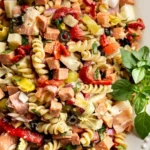
Classic Italian-Style Antipasto Pasta Salad
- Total Time: 30 minutes
- Yield: 6 servings 1x
- Diet: Vegetarian
Description
This antipasto salad recipe is loaded with plant-based deli slices, microbial-rennet cheese, pasta, and marinated veggies. It’s an Italian-inspired take on pasta salad that you can easily make ahead of time for stress-free summer entertaining!
Ingredients
- 1.5 cups uncooked fusilli pasta
- 8 ounces provolone cheese (diced, microbial-rennet)
- 1/2 to 3/4 cup assorted olives
- 1 (14 fluid ounce) can artichoke hearts (chopped)
- 8 ounces plant-based savory deli slices (diced)
- 1/3 cup pepperoncini peppers (chopped)
- 1/2 cup roasted red peppers (chopped)
- 3 ounces plant-based dry cured style slices (chopped)
- 2 tablespoons red onion (chopped)
- 2 tablespoons fresh basil (sliced thin)
- 1 medium tomato (chopped)
- 1/4 cup freshly grated parmesan cheese (microbial-rennet)
- Salt & pepper (to taste)
- 1/4 cup olive oil
- 2 tablespoons apple cider vinegar
- 1/2 teaspoon garlic powder
- 1/4 teaspoon Italian seasoning
- 1 teaspoon honey
- 1/2 teaspoon Dijon mustard
Instructions
- Boil Pasta: Boil the pasta, and once it’s done, rinse it under cold water and let it drain thoroughly.
- Prepare Dressing: Add the dressing ingredients to a small bowl and whisk together.
- Combine: Prep the remaining ingredients and add them to a large salad bowl.
- Toss: Toss everything together and season with salt & pepper as needed.
Notes
Serves 6-8 as a side dish or 4+ as a main course. Leftovers will keep in the fridge for 3-4 days in an airtight container. For best results, add the dressing just before serving.
- Prep Time: 15 minutes
- Cook Time: 15 minutes
- Category: Salad, Side Dish
- Method: Boiling
- Cuisine: Italian American
Nutrition
- Serving Size: 1 serving
- Calories: 480 kcal
- Sugar: 4 g
- Sodium: 1150 mg
- Fat: 28 g
- Saturated Fat: 9 g
- Unsaturated Fat: 16 g
- Trans Fat: 0 g
- Carbohydrates: 42 g
- Fiber: 4 g
- Protein: 16 g
- Cholesterol: 30 mg
Keywords: pasta salad, antipasto, vegetarian, summer salad, cold pasta