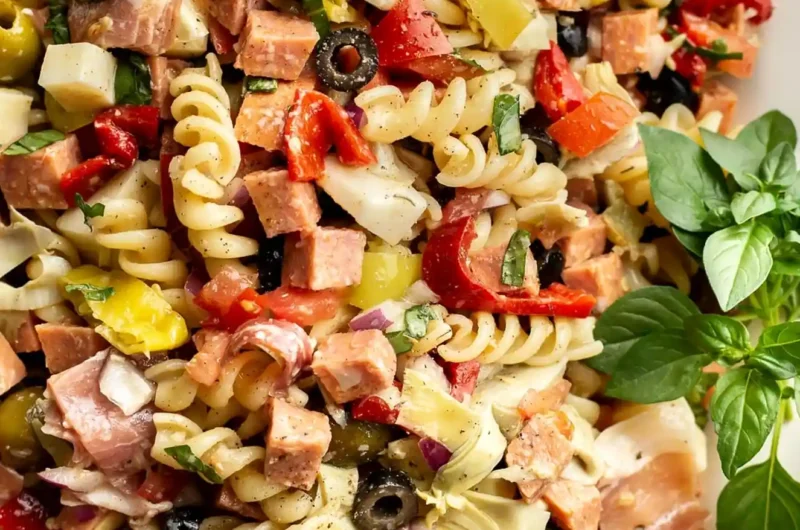
This protein-rich pasta salad combines cured beef, savory cheeses, and marinated vegetables for a satisfying meal. It is an ideal dish for meal prep or large gatherings due to its stability and flavor depth.
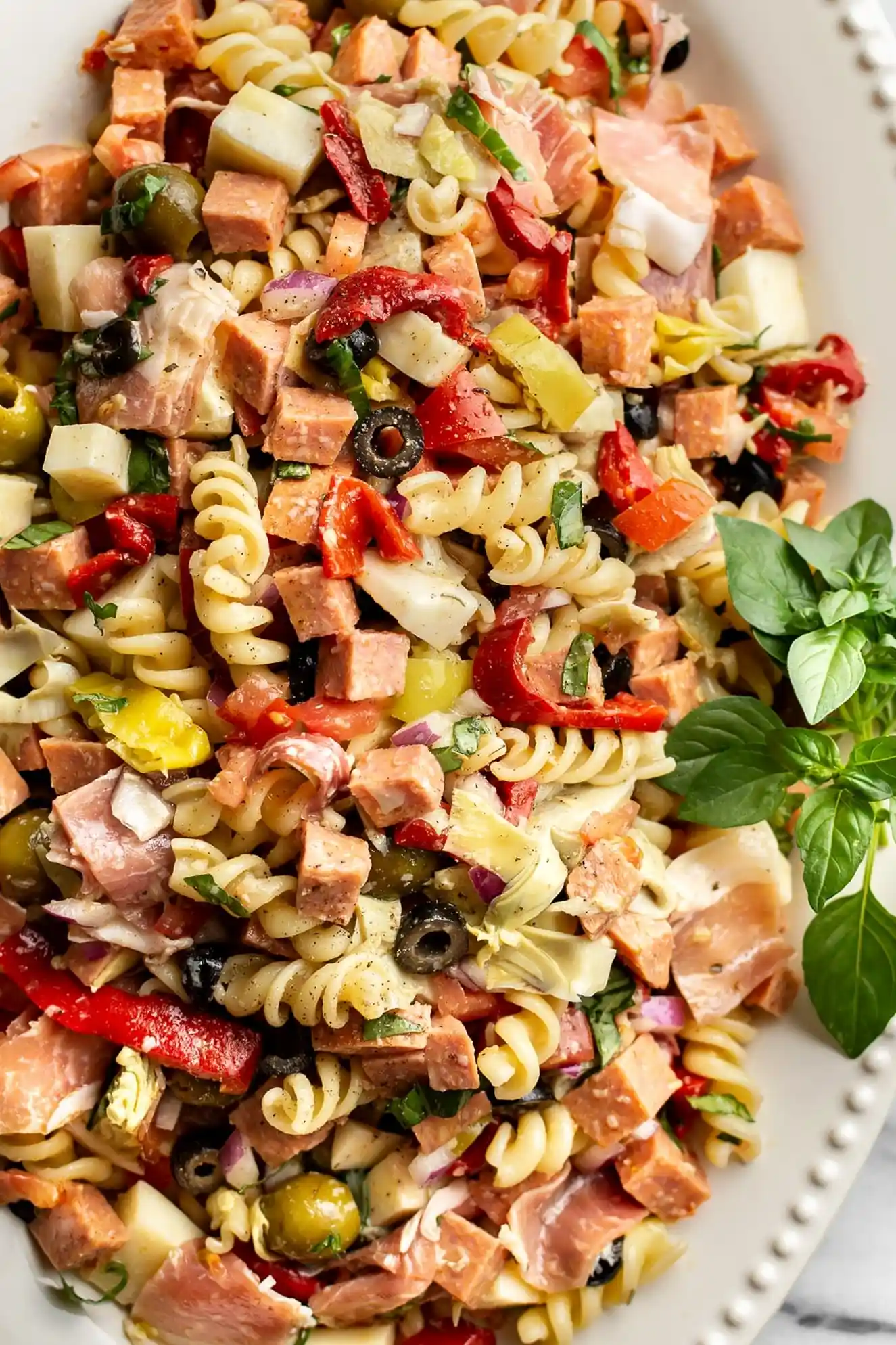
List of ingredients
- 1.5 cups uncooked fusilli pasta – spiral shapes effectively hold the dressing.
- 8 ounces microbial-rennet provolone cheese, diced – provides a mild, creamy base.
- 1/2 to 3/4 cup assorted olives – a mix of green and black olives adds salty variety.
- 1 (14 fluid ounce) can artichoke hearts, chopped – adds a tangy, hearty texture.
- 8 ounces beef salami or beef pepperoni, diced – provides a savory, cured saltiness.
- 1/3 cup pepperoncini peppers, chopped – adds a mild, vinegary heat.
- 1/2 cup roasted red peppers, chopped – brings a gentle sweetness and bright color.
- 3 ounces beef bresaola or turkey prosciutto, chopped – adds a rich, cured depth.
- 2 tablespoons red onion, chopped – offers a sharp, fresh contrast.
- 2 tablespoons fresh basil, sliced thin – adds a sweet, peppery herbal note.
- 1 medium tomato, chopped – adds juiciness and freshness.
- 1/4 cup freshly grated parmesan cheese – used for a salty, finishing touch.
- Salt and pepper – adjusted to taste.
- 1/4 cup olive oil – the primary fat for the vinaigrette.
- 2 tablespoons red wine vinegar – provides the necessary acidity.
- 1/2 teaspoon garlic powder – adds a concentrated savory flavor.
- 1/4 teaspoon Italian seasoning – a blend of classic Mediterranean herbs.
- 1 teaspoon honey – balances the vinegar’s acidity.
- 1/2 teaspoon Dijon mustard – acts as an emulsifier for the dressing.
step-by-step instructions
- Cook the Pasta: Boil the fusilli pasta according to the package directions. Once tender, rinse it under cold water and drain thoroughly to prevent the noodles from clumping.
- Prepare the Dressing: In a small mixing bowl, whisk together the olive oil, red wine vinegar, garlic powder, Italian seasoning, honey, and Dijon mustard until the mixture is smooth and emulsified.
- Chop the Add-ins: Dice the provolone cheese, beef salami, beef bresaola, tomato, and red onion into uniform, bite-sized pieces. Chop the olives, artichoke hearts, pepperoncini, and roasted red peppers.
- Assemble the Salad: Combine the cooked pasta and all the chopped ingredients in a large salad bowl.
- Mix and Season: Pour the prepared dressing over the ingredients and toss everything together until evenly coated. Season with salt and pepper to taste before serving.
Customizing Meat and Cheese Options
Use Beef Salami for a Savory Base
Beef salami provides a robust, salty profile that anchors the salad. Ensure it is diced into small cubes to allow the other ingredients to shine. High-quality beef salami often has a similar texture to traditional versions.
Swap for Turkey-Based Cured Meats
Turkey prosciutto or turkey pepperoni can be used for a leaner protein option. These alternatives maintain the salty, cured flavor while reducing the overall fat content. They pair exceptionally well with the tanginess of the olives.
Experiment with Mozzarella Pearls
If provolone is unavailable, small mozzarella pearls are an excellent substitute. They provide a soft, milky contrast to the sharp vinaigrette. These pearls maintain their shape well during the tossing process.
Incorporate Feta for Added Tang
For a sharper flavor profile, you can replace some of the provolone with crumbled feta. Feta adds a briny quality that complements the artichokes and olives. Use a mild feta to avoid overpowering the other ingredients.
Vegetable Variations and Enhancements
Add Fresh Baby Spinach or Arugula
Tossing in a handful of fresh baby spinach or arugula adds a peppery freshness to the dish. Add these greens just before serving to prevent them from wilting. This is a great way to increase the nutrient density of the salad.
Using Fresh Red Bell Peppers
If you prefer a crunchier texture, swap the jarred roasted red peppers for fresh red bell peppers. Fresh peppers provide a crisp bite and a cleaner sweetness. Dice them finely to match the size of the other vegetables.
Enhancing the Salad with Cucumbers
Adding diced English cucumbers introduces a cooling element to the salad. The high water content of the cucumber balances the saltiness of the cured meats. Ensure you seed the cucumber first to prevent the salad from becoming watery.
Incorporating Fresh Parsley or Oregano
While basil is the primary herb, adding fresh chopped parsley or oregano can deepen the herbal profile. These herbs add a bright, garden-fresh aroma. Chop them very finely so they distribute evenly throughout the pasta.
Refining the Vinaigrette
Balancing the Acidity with Extra Honey
If the red wine vinegar feels too sharp, add an extra half-teaspoon of honey. The sugar helps neutralize the acetic acid and rounds out the flavor. This creates a more balanced, crowd-pleasing dressing.
Using Balsamic Vinegar for Depth
You can replace the red wine vinegar with balsamic vinegar for a sweeter, richer taste. Balsamic vinegar changes the color of the pasta to a darker hue. It pairs particularly well with the beef bresaola and parmesan.
Adjusting the Garlic Intensity
For a more pungent flavor, replace the garlic powder with one clove of freshly minced garlic. Fresh garlic provides a sharper, more immediate bite. Be sure to whisk it thoroughly into the oil to avoid clumps.
Substituting Oil Varieties
While extra virgin olive oil is traditional, a neutral oil like avocado oil can be used. Avocado oil has a higher smoke point and a milder taste. This allows the herbs and vinegar to be the dominant flavors.
Pasta Selection and Preparation
Selecting the Best Pasta Shape
Fusilli and rotini are preferred because their twists trap the dressing and small ingredients. Farfalle, or bow-tie pasta, is another excellent choice for structure. Avoid using long pastas like spaghetti, as they are difficult to toss and eat in a salad.
Avoiding Overcooking the Noodles
Cook the pasta to al dente, which means it still has a slight bite. Overcooked pasta becomes mushy and breaks apart when tossed with heavy ingredients. This ensures the salad maintains a pleasant texture over time.
The Importance of Cold Rinsing
Rinsing the pasta under cold water immediately after draining stops the cooking process. This prevents the pasta from continuing to soften and removes excess starch. It also helps the pasta cool down quickly so it doesn’t wilt the fresh basil.
Preventing Pasta Sticking
If you are prepping the pasta well in advance, toss it with a teaspoon of olive oil after rinsing. This creates a light barrier that prevents the noodles from sticking together. It ensures the pasta remains separate when you add the dressing.
Storage and Freshness Guidelines
Choosing the Optimal Container
Store the salad in a glass airtight container to maintain the freshest taste. Glass does not absorb odors and provides a better seal than some plastic options. This prevents the salad from picking up other fridge smells.
Maximum Refrigeration Time
This salad typically stays fresh in the refrigerator for 3 to 4 days. After this point, the vegetables may lose their crunch and the pasta may soften. Keep it chilled at all times to ensure food safety.
Managing Dressing Absorption
Pasta tends to absorb dressing as it sits, which can leave the salad tasting dry. If this happens, whisk together a small amount of extra olive oil and vinegar. Toss the salad with this fresh mixture just before serving.
Limitations on Freezing
This pasta salad should not be frozen. Freezing alters the texture of the pasta, making it grainy, and causes the fresh vegetables to become mushy upon thawing. Always store this dish in the refrigerator.
Serving and Presentation Tips
Ideal Serving Temperature
Serve the salad chilled or at a cool room temperature. Chilling enhances the crispness of the vegetables and the saltiness of the meats. Let it sit for at least 30 minutes before serving to allow flavors to meld.
Plating for Large Gatherings
Present the salad in a wide, shallow bowl rather than a deep one. This prevents the heavier ingredients from sinking to the bottom and ensures a balanced scoop. Garnish with a few whole basil leaves for visual appeal.
Pairing with Side Breads
Pair this salad with toasted garlic bread or a crusty baguette. The crunch of the bread complements the softness of the pasta. A side of grilled focaccia also works well with the Italian flavor profile.
Garnishing for Impact
Add an extra sprinkle of freshly grated parmesan cheese right before the dish hits the table. A few cracks of fresh black pepper can also add a professional touch. This refreshes the aroma of the salad.
Troubleshooting Common Issues
Correcting a Bland Flavor
If the salad tastes bland, increase the acidity by adding a splash more red wine vinegar. Salt is also key, so taste a small portion and add salt in increments. A pinch of sugar can also help wake up the muted flavors.
Fixing a Watery Salad
Wateriness usually occurs if the tomatoes or artichokes weren’t drained properly. Use a slotted spoon to transfer the salad to a clean bowl, leaving the excess liquid behind. Adding a bit more parmesan can also help absorb surface moisture.
Reducing Excessive Saltiness
If the cured meats and olives make the salad too salty, add more fresh vegetables. Increasing the amount of diced cucumber or tomato dilutes the salt concentration. You can also add a squeeze of fresh lemon juice to brighten the taste.
Improving Texture Consistency
If some ingredients feel too large, use a sharper knife to dice them smaller. Uniformity in size ensures that every bite contains a bit of every ingredient. This creates a more professional and cohesive eating experience.
Frequently Asked Questions
Can I use a store-bought Italian dressing?
Yes, you can use a high-quality store-bought vinaigrette if you are short on time. Ensure the dressing is oil-and-vinegar based rather than creamy. Adjust the salt levels, as store-bought dressings are often very salty.
Can I make this salad without pasta?
You can easily turn this into a meat-and-cheese platter by omitting the pasta. Simply mix the remaining ingredients and serve them in a bowl or on a tray. This transforms the dish into a traditional antipasto appetizer.
How do I prevent the red onion from being too sharp?
Soak the diced red onion in cold water for about 10 minutes before adding it to the salad. Drain the onion and pat it dry with a paper towel. This removes the harsh sulfur compounds while keeping the crunch.
Which type of olive is best for this recipe?
A combination of pitted Kalamata and Castelvetrano olives is recommended. Kalamatas provide a sharp, salty punch, while Castelvetrano olives are buttery and mild. Together, they create a complex flavor profile.
Print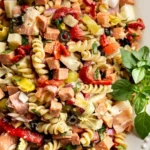
Hearty Italian Antipasto Pasta Salad
- Total Time: 30 minutes
- Yield: 6 servings 1x
- Diet: General
Description
This antipasto salad recipe is loaded with beef cured meats, cheese, pasta, and marinated veggies. It’s an Italian take on pasta salad that you can easily make ahead of time for stress-free summer entertaining!
Ingredients
- 1.5 cups uncooked fusilli pasta
- 8 ounces microbial-rennet provolone cheese (diced)
- 1/2 to 3/4 cup assorted olives
- 1 (14 fluid ounce) can artichoke hearts (chopped)
- 8 ounces beef salami or turkey pepperoni (diced)
- 1/3 cup pepperoncini peppers (chopped)
- 1/2 cup roasted red peppers (chopped)
- 3 ounces bresaola or beef prosciutto (chopped)
- 2 tablespoons red onion (chopped)
- 2 tablespoons fresh basil (sliced thin)
- 1 medium tomato (chopped)
- 1/4 cup freshly grated microbial-rennet parmesan cheese
- Salt & pepper (to taste)
- 1/4 cup olive oil
- 2 tablespoons red wine vinegar
- 1/2 teaspoon garlic powder
- 1/4 teaspoon Italian seasoning
- 1 teaspoon honey
- 1/2 teaspoon Dijon mustard
Instructions
- Step: Boil the pasta, and once it’s done, rinse it under cold water and let it drain thoroughly.
- Step: Meanwhile, add the dressing ingredients to a small bowl and whisk together.
- Step: Prep the remaining ingredients and add them to a large salad bowl.
- Step: Toss everything together and season with salt & pepper as needed.
Notes
Serves 6-8 as a side dish or 4+ as a main course depending on portion size.
- Prep Time: 15 minutes
- Cook Time: 15 minutes
- Category: Salad, Side Dish
- Method: Boiling and Mixing
- Cuisine: Italian American
Nutrition
- Serving Size: 1 serving
- Calories: 545 kcal
- Sugar: 3 g
- Sodium: 1930 mg
- Fat: 41 g
- Saturated Fat: 15 g
- Unsaturated Fat: 24 g
- Trans Fat: 1 g
- Carbohydrates: 19 g
- Fiber: 3 g
- Protein: 25 g
- Cholesterol: 69 mg
Keywords: antipasto pasta salad, Italian side dish, summer pasta salad, meal prep