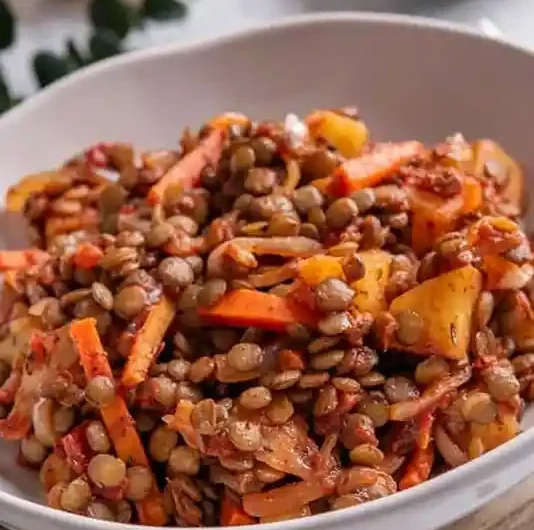
This vegan hash combines protein-rich green lentils with hearty root vegetables for a filling meal. It is a versatile one-pan dish that works well for breakfast, lunch, or dinner.
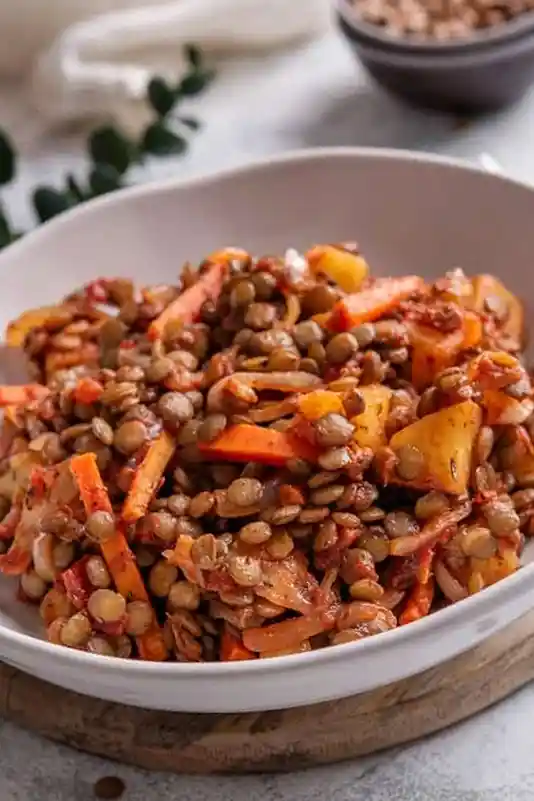
List of ingredients
- 8 ounces dried green lentils – provide a firm texture and plant-based protein.
- 16 ounces vegetable broth – used as the simmering liquid for the lentils.
- 8 ounces chopped onion – adds a sweet and savory aromatic base.
- 12 ounces large russet potato – creates a fluffy interior and crispy edges.
- 2 tablespoons olive oil – used for sautéing and achieving a golden brown sear.
- 8 ounces carrots, cut into 1/2 inch chunks – adds color and a natural sweetness.
- 15 ounces diced tomatoes – provides a rich, savory sauce base.
- 1 tablespoon tomato paste – thickens the mixture and intensifies the tomato flavor.
- 1/2 teaspoon dried oregano – contributes an earthy herbal note.
- 1/2 teaspoon dried basil – adds a subtle sweet aroma.
- 1/2 teaspoon dried thyme – provides a woody depth to the vegetable mix.
- 1 teaspoon salt – enhances all the individual savory flavors.
- 1/4 teaspoon ground black pepper – adds a mild spicy kick.
step-by-step instructions
- Cook the lentils: Combine the vegetable broth and 1 cup of dried green lentils in a medium saucepan. Bring the mixture to a boil, then reduce the heat and simmer for 20 minutes or according to the package directions. Drain the liquid thoroughly and set the lentils aside.
- Sauté the onion: Heat 1 tablespoon of olive oil in a large skillet over medium heat. Sauté the chopped onion for approximately 10 minutes until translucent, then remove the onions from the pan and set them aside to prevent burning.
- Brown the carrots: Add the remaining 1 tablespoon of olive oil to the same skillet. Sauté the carrot chunks for 5 minutes until they begin to soften.
- Sear the potatoes: Add the russet potato pieces to the skillet with the carrots. Cook over medium-high heat for about 15 minutes, stirring occasionally to ensure they brown on all sides.
- Integrate tomato paste: Stir the tomato paste into the vegetable mixture. Mix lightly to coat the vegetables without breaking the potato chunks.
- Simmer with tomatoes: Add the diced tomatoes, the cooked onions, and the dried oregano, basil, and thyme. Cook the mixture on medium heat for 10 minutes to allow the flavors to meld.
- Final combination: Fold in the cooked lentils and continue heating through for an additional 5 to 10 minutes before serving.
Optimizing Your Lentil Selection
Benefits of Green Lentils
Green lentils are the ideal choice for this recipe because they maintain their structural integrity after cooking. Unlike red lentils, they do not turn into a puree, ensuring the hash has a varied and chunky texture. They provide a satisfying bite and a robust nutritional profile.
Using Brown Lentils as an Alternative
Brown lentils are a suitable substitute if green lentils are unavailable. They cook slightly faster and have a softer texture, though they still hold their shape reasonably well. The final dish will be slightly softer but will retain the same overall flavor profile.
Avoid Using Red Lentils
Red lentils break down quickly during the simmering process and are better suited for soups or dals. Using them in this hash will result in a mushy consistency that blends into the sauce. If you use them, the dish will behave more like a thick stew than a hash.
The Role of Beluga Lentils
Beluga lentils, which are small and black, offer an elegant look and a very firm texture. They are excellent for this recipe if you prefer a smaller, caviar-like grain. They typically require a similar cooking time to green lentils.
Potato Variety and Preparation
Why Russet Potatoes Work Best
Russet potatoes are high in starch, which allows them to develop a crispy exterior when sautéed. This creates a necessary contrast with the softer lentils and carrots. They absorb the flavors of the tomato sauce while remaining fluffy on the inside.
Using Yukon Gold Potatoes
Yukon Gold potatoes provide a creamier texture and a naturally buttery flavor. They hold their shape better than russets and are less likely to break apart during the stirring process. This is a great choice for those who prefer a denser, smoother potato.
Integrating Sweet Potatoes
Replacing a portion of the russet potatoes with sweet potatoes adds a layer of natural sweetness. This variation also increases the vitamin A content of the dish. Be sure to cut them into the same size as the other vegetables to ensure even cooking.
Maintaining Uniform Cut Sizes
Cutting the potatoes and carrots into consistent sizes is crucial for even heat distribution. This prevents smaller pieces from overcooking while larger pieces remain raw. Aim for roughly 1/2 inch chunks for the best results.
Cookware and Heat Management
The Advantages of Cast Iron Skillets
A cast iron skillet is the best tool for this recipe due to its superior heat retention. It allows the potatoes and carrots to sear deeply, creating a rich crust. This enhances the overall flavor through the Maillard reaction.
Using Stainless Steel Pans
Stainless steel pans are effective for sautéing and allow for easy deglazing of the brown bits left by the vegetables. However, they require careful oil management to prevent the potatoes from sticking. Keep the heat consistent and avoid overcrowding the pan.
Non-Stick Options for Easy Cleanup
Non-stick skillets are a convenient option for those who want a faster cleanup process. While they may not produce as deep a sear as cast iron, they make it easier to stir the ingredients without breaking the potatoes. Use a silicone spatula to protect the coating.
Managing Medium-High Heat
Using medium-high heat is essential for browning the root vegetables without steaming them. If the pan is too crowded or the heat is too low, the vegetables will release moisture and boil rather than sear. Cook in batches if your skillet is small.
Enhancing the Flavor Profile
Adding Smoky Depth with Paprika
Adding a teaspoon of smoked paprika along with the dried herbs provides a wood-fired flavor. This mimics the taste of traditional smoked meats often found in hashes. It complements the sweetness of the carrots and the earthiness of the lentils.
Incorporating Fresh Garlic
Freshly minced garlic added during the last two minutes of the onion sauté adds a pungent, aromatic layer. Garlic burns quickly, so it should be added just before the onions are removed from the pan. This provides a fresh contrast to the dried herbs.
Introducing Spicy Elements
For those who prefer a kick, adding crushed red pepper flakes or a pinch of cayenne pepper is recommended. These spices pair well with the acidity of the diced tomatoes. Adjust the amount based on your heat tolerance.
Using Fresh Herbs for Finishing
While dried herbs provide the base flavor, stirring in fresh parsley or cilantro at the end adds brightness. Fresh herbs cut through the richness of the olive oil and potatoes. This creates a more balanced and vibrant final dish.
Practical Ingredient Substitutions
Vegetable Broth Alternatives
If vegetable broth is unavailable, you can use water combined with a small amount of salt or a bouillon cube. For a deeper flavor, a mushroom-based broth can be used. Ensure the liquid is unsalted if you are sensitive to sodium.
Swapping Tomato Paste
If you do not have tomato paste, you can use a small amount of concentrated tomato puree. Alternatively, simmer the diced tomatoes for a longer period to reduce the liquid. This will naturally thicken the sauce and concentrate the flavor.
Onion Substitutes
Shallots or leeks can be used instead of yellow onions for a milder, more sophisticated taste. Shallots provide a subtle sweetness, while leeks offer a buttery flavor. Chop them finely to ensure they sauté evenly.
Carrot Alternatives
Parsnips or celery root can be substituted for carrots if you prefer a more peppery or earthy taste. These root vegetables have a similar texture and cook at the same rate as carrots. They maintain the hearty nature of the hash.
Serving and Pairing Suggestions
Pairing with Crusty Bread
Serving this hash with a side of toasted sourdough or a baguette is highly recommended. The bread is perfect for soaking up the savory tomato and lentil sauce. A light brushing of olive oil and garlic on the bread enhances the pairing.
Adding a Fresh Green Salad
A side of arugula or baby spinach with a lemon vinaigrette provides a refreshing contrast to the cooked vegetables. The acidity of the lemon cuts through the starchiness of the potatoes. This makes the meal feel lighter and more balanced.
Topping with Creamy Avocado
Slices of ripe avocado or a dollop of guacamole add a rich, creamy element to the dish. The healthy fats in the avocado complement the protein in the lentils. This is particularly effective when serving the hash for breakfast.
Adding a Poached Egg Substitute
For a traditional breakfast hash experience, top the dish with a slice of seared tofu or a vegan egg substitute. This adds additional protein and a different texture to the top of the skillet. Season the topping with salt and pepper.
Storage and Freshness
Refrigeration Guidelines
Store any leftovers in an airtight glass container in the refrigerator. The dish will remain fresh and safe to eat for 3 to 4 days. Glass containers are preferred as they do not absorb the smells of the herbs and tomatoes.
Avoiding the Freezer
It is not recommended to freeze this particular recipe. Potatoes often change texture when frozen and thawed, becoming mealy or mushy. To maintain the quality of the sear, stick to refrigerated storage.
Preventing Oxidation
Ensure the hash is cooled slightly before sealing the container to prevent excess condensation. Too much moisture inside the container can make the potatoes soggy. Leaving the lid slightly ajar for a few minutes helps.
Reheating Methods
Stovetop Reheating for Texture
The best way to reheat this hash is in a skillet over medium heat. Adding a small splash of water or vegetable broth prevents the dish from drying out. This method helps restore some of the crispness to the potatoes.
Microwave Reheating for Speed
For a quick meal, heat the hash in the microwave in 1-minute intervals. Stir the mixture between intervals to ensure even heating. Cover the dish with a damp paper towel to keep the moisture in.
Oven Reheating for Bulk
If reheating a large portion, place the hash in an oven-safe dish and cover it with foil. Heat at 350 degrees Fahrenheit for 15 to 20 minutes. This method warms the dish evenly without overcooking the edges.
Make-Ahead Strategies
Pre-Cooking the Lentils
You can cook the lentils a day in advance and store them in the fridge. This reduces the active cooking time on the day you serve the meal. Simply fold the cold lentils into the skillet during the final heating step.
Pre-Chopping Root Vegetables
Chopping the onions, carrots, and potatoes ahead of time saves significant preparation time. Store the chopped potatoes in a bowl of water in the fridge to prevent them from turning brown. Drain and pat them dry before adding them to the oil.
Troubleshooting Common Issues
Preventing Mushy Potatoes
Avoid stirring the potatoes too frequently during the browning phase. Constant movement can break the edges of the potato chunks. Let them sit undisturbed for several minutes to develop a hard crust.
Fixing Underdone Lentils
If the lentils are still too firm after being added to the skillet, add a few tablespoons of water and cover the pan with a lid. The steam will help soften the lentils without overcooking the other vegetables. Simmer for another 5 minutes.
Correcting Bland Flavors
If the dish tastes flat, add a small squeeze of fresh lemon juice or a teaspoon of apple cider vinegar. The acidity brightens the earthy tones of the lentils and potatoes. Always taste and adjust the salt at the very end.
Managing Burnt Onions
If the onions brown too quickly, remove them from the pan immediately. If they have already burned, it is better to discard them and start over with a fresh batch. Burnt onions introduce a bitter taste that cannot be masked.
Frequently Asked Questions
Can this vegan hash be doubled?
Yes, the recipe can be doubled easily. Ensure you use a very large skillet, such as a 14-inch pan, to avoid overcrowding. Overcrowding the pan will lead to steaming instead of browning.
Is this dish suitable for meal prep?
This is an excellent meal prep option for 3-4 days. It holds its flavor well and is easy to reheat. Just remember to avoid freezing the portions to keep the potato texture intact.
How do I increase the protein content?
While lentils provide significant protein, you can increase the count by adding chickpeas or hemp seeds. Stirring in a handful of baby spinach at the end also adds a small amount of additional nutrients and protein.
Print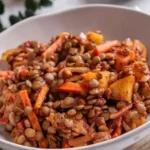
Hearty Lentil and Potato Skillet Hash
- Total Time: 60 minutes
- Yield: 4 servings 1x
- Diet: Vegan
Description
Hearty and satisfying main dish comfort.
Ingredients
- 8 ounces dried green lentils
- 16 ounces vegetable broth
- 8 ounces onion, chopped
- 12 ounces large russet potato
- 2 tablespoons olive oil
- 8 ounces carrot, cut into 1/2 inch chunks
- 15 ounces diced tomatoes
- 1 tablespoon tomato paste
- 1/2 teaspoon dried oregano
- 1/2 teaspoon dried basil
- 1/2 teaspoon dried thyme
- 1 teaspoon salt
- 1/4 teaspoon ground black pepper
Instructions
- Step: Put the vegetable broth and dried lentils in a medium saucepan, bring to a boil, cook for 20 minutes, then drain and set aside.
- Step: Heat 1 tablespoon of olive oil in a skillet and saute the onion until translucent (about 10 minutes), then remove and set aside.
- Step: In the same skillet, add the remaining olive oil and saute the carrot for 5 minutes.
- Step: Add the potato and cook on medium-high heat to brown on all sides (about 15 minutes).
- Step: Stir in the tomato paste.
- Step: Add the diced tomatoes, sauteed onion, and the three herbs, then cook on medium heat for 10 minutes.
- Step: Stir in the cooked lentils and heat through for 5 to 10 minutes.
Notes
Green lentils are recommended as they hold their shape better than red lentils. Russet potatoes work well, but you can substitute a portion with sweet potatoes for added vitamin A. Store leftovers in an airtight container in the refrigerator for 3-4 days; freezing is not recommended as potatoes may become mushy.
- Prep Time: 10 minutes
- Cook Time: 50 minutes
- Category: Main Dish
- Method: Skillet
- Cuisine: Vegan
Nutrition
- Serving Size: 12 ounces
- Calories: 384 kcal
- Sugar: 10 g
- Sodium: 1130 mg
- Fat: 8 g
- Saturated Fat: 6 g
- Unsaturated Fat: 2 g
- Trans Fat: 0 g
- Carbohydrates: 62 g
- Fiber: 23 g
- Protein: 19 g
- Cholesterol: 0 mg
Keywords: vegan hash, skillet potatoes, lentil recipe, vegan main dish, comfort food