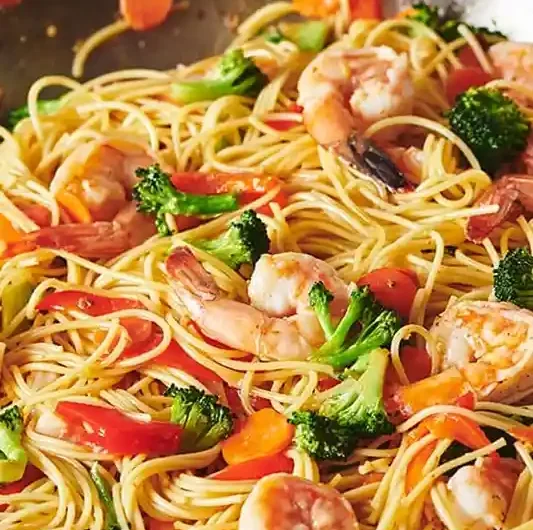
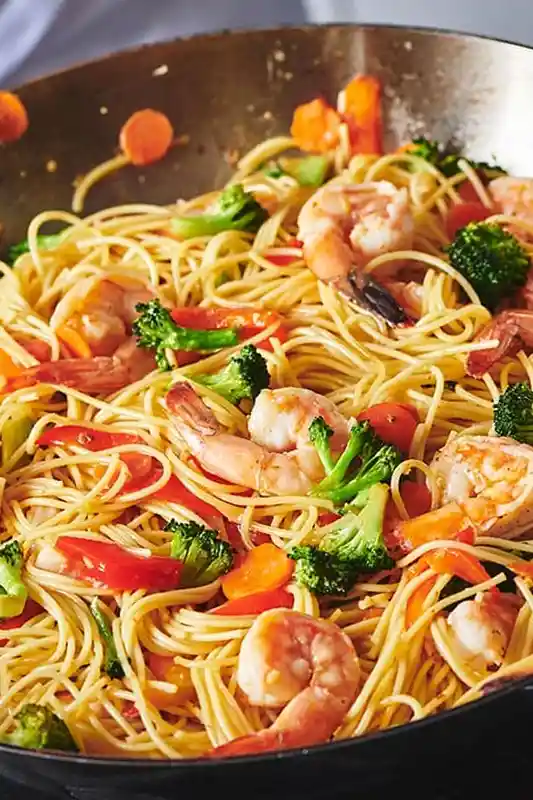
This vibrant stir-fry brings the classic experience of a restaurant-style noodle dish directly into your home kitchen with ease. Featuring succulent shrimp and a medley of crisp-tender vegetables tossed in a savory sauce, this meal is both quick to prepare and incredibly satisfying. It is an excellent choice for busy evenings when you want something fresh, colorful, and wholesome on the table in under thirty minutes.
List of ingredients
- 1/2 pound lo mein noodles or spaghetti
- 2 teaspoons salt
- 3/4 cup reduced sodium vegetable broth
- 2 tablespoons less-sodium soy sauce
- 1 teaspoon cornstarch
- 1/2 teaspoon sugar
- 1 teaspoon sesame oil
- freshly ground black pepper (to taste)
- 2 tablespoons vegetable or canola oil (divided)
- 1 teaspoon minced garlic
- 2 cups very small broccoli florets
- 3/4 cup thinly sliced carrots
- 3/4 cup thinly sliced red bell pepper
- 1 pound peeled and deveined extra large shrimp
step-by-step instructions
- Step: Bring a large pot of water to a boil. Add the salt to the water, return the water to a boil, and cook the noodles according to package directions, stopping 2 minutes or so before it is fully cooked. Drain the noodles.
- Step: Meanwhile, in a small bowl or container, combine the broth, soy sauce, cornstarch, sugar, sesame oil, and pepper.
- Step: In a large skillet or wok over high heat, heat 1 1/2 teaspoons of the oil, then add the shrimp and sauté until the shrimp are almost (but not quite!) cooked, about 2 minutes. Transfer them to a plate and set aside.
- Step: Add the remaining 1 1/2 teaspoons of oil to the skillet, add the garlic, broccoli, carrots, and red pepper, and sauté for 3 to 4 minutes until everything starts to soften.
- Step: Return the shrimp to the pan along with the drained pasta and the sauce. Toss over the high heat until the noodles absorb some of the sauce, everything is well mixed, and the rest of the sauce is slightly thickened, another 2 minutes or so. Serve hot.
Essential Cooking Techniques
Achieving the Perfect Noodle Texture
The secret to great lo mein lies in the pasta. By undercooking your noodles by two minutes, you ensure they possess a slight “al dente” bite that stands up to the final stir-frying stage. Since the noodles absorb the sauce and continue to cook in the hot pan, starting them early prevents them from becoming mushy or breaking apart.
The Role of High Heat
Maintaining high heat during the stir-frying process is critical for the best results. It allows the vegetables to char slightly rather than steam, which preserves their texture and flavor. It also helps the cornstarch-thickened sauce to reduce quickly, creating that signature silky coating that clings to every noodle.
Managing Shrimp Doneness
Shrimp can become rubbery if overcooked, which is why removing them from the pan after the initial sear is essential. By setting them aside while you cook the vegetables, you ensure they remain tender and juicy when they are folded back into the dish at the final moment. This two-step process allows for total control over the protein’s texture.
Customization and Add-ins
Expanding Your Vegetable Selection
This recipe is highly adaptable and acts as a wonderful vessel for whatever is in your crisper drawer. Thinly sliced snap peas, snow peas, or shredded napa cabbage are excellent additions that cook quickly. For an extra punch of flavor, adding water chestnuts or sliced mushrooms can introduce a new layer of crunch or umami.
Adjusting the Flavor Profile
If you prefer a spicy kick, consider adding a teaspoon of chili paste or red pepper flakes to the sauce mixture before pouring it over the noodles. Alternatively, a dash of ginger or a sprinkle of toasted sesame seeds added at the very end can enhance the overall aromatic appeal. You can also experiment with different types of noodles, such as udon or thin rice vermicelli, depending on what you have available.
Flavor Balancing Tactics
Managing Salt Levels
Because soy sauce and broth can vary in salt content, always taste the sauce before adding it to the skillet. If you find the flavor is too sharp, a tiny pinch of extra sugar can round it out. If it tastes flat, a drop more soy sauce or a dash of black pepper can help lift the profiles.
Achieving the Right Sauce Consistency
If the sauce seems too thin after tossing with the noodles, give it another thirty seconds on high heat. The starch from the noodles, combined with the cornstarch in the sauce, will naturally tighten as the liquid evaporates and coats the pasta. If it becomes too dry, a tablespoon of extra broth or water can help loosen it up again.
FAQ
Can I use frozen vegetables for this stir-fry?
Yes, frozen vegetables work well in a pinch. If using them, ensure they are thawed and patted completely dry before adding them to the hot pan to avoid creating excess water, which can prevent the sauce from thickening properly.
Is it possible to make this dish ahead of time?
While this dish is best served fresh, you can prep your ingredients by slicing the vegetables, peeling the shrimp, and mixing the sauce hours in advance. Keep the prepped ingredients separate in the refrigerator until you are ready to cook to ensure the vegetables remain crisp and the sauce ingredients do not settle.
What is the best way to store leftovers?
Leftovers should be stored in an airtight container in the refrigerator for up to three days. When storing, try to keep the noodles in a shallow container so they do not clump together, as this makes reheating much more even.
How should I reheat this without drying it out?
The microwave is a quick option, but adding a splash of water or broth to the noodles before heating helps prevent them from drying out. Alternatively, reheating in a non-stick skillet over medium heat with a tiny bit of oil will help restore the original texture of the vegetables and noodles.
Can I swap the shrimp for another protein?
Absolutely, chicken breast or thigh meat cut into thin strips works very well as a substitute. If using chicken, ensure it is fully cooked through during the initial searing step before removing it from the pan, just as you would with the shrimp.
Serving Recommendations
Pairing for a Balanced Meal
Since this dish is packed with protein, carbohydrates, and vegetables, it serves well as a complete one-bowl meal. However, if you are hosting a larger gathering, serving it alongside a fresh cucumber salad dressed in rice vinegar or some blanched bok choy with a light soy drizzle adds a refreshing contrast to the richness of the noodles. The key is to keep sides light and crisp to complement the textures in the main course.
Print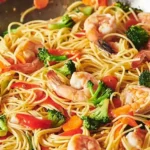
Shrimp Lo Mein
- Total Time: 30 minutes
- Yield: 4 servings 1x
- Diet: Pescatarian
Description
A healthy and quick shrimp lo mein recipe that’s colorful and so easy. It’s a perfect stir-fry recipe for a satisfying weeknight dinner.
Ingredients
- 1/2 pound lo mein noodles or spaghetti
- 2 teaspoons salt
- 3/4 cup reduced sodium vegetable broth
- 2 tablespoons less-sodium soy sauce
- 1 teaspoon cornstarch
- 1/2 teaspoon sugar
- 1 teaspoon sesame oil
- freshly ground black pepper (to taste)
- 2 tablespoons vegetable or canola oil (divided)
- 1 teaspoon minced garlic
- 2 cups very small broccoli florets
- 3/4 cup thinly sliced carrots
- 3/4 cup thinly sliced red bell pepper
- 1 pound peeled and deveined extra large shrimp
Instructions
- Step: Bring a large pot of water to a boil. Add the salt to the water, return the water to a boil, and cook the noodles according to package directions, stopping 2 minutes or so before it is fully cooked. Drain the noodles.
- Step: Meanwhile, in a small bowl or container, combine the broth, soy sauce, cornstarch, sugar, sesame oil, and pepper.
- Step: In a large skillet or wok over high heat, heat 1 1/2 teaspoons of the oil, then add the shrimp and sauté until the shrimp are almost (but not quite!) cooked, about 2 minutes. Transfer them to a plate and set aside.
- Step: Add the remaining 1 1/2 teaspoons of oil to the skillet, add the garlic, broccoli, carrots, and red pepper, and sauté for 3 to 4 minutes until everything starts to soften.
- Step: Return the shrimp to the pan along with the drained pasta and the sauce. Toss over the high heat until the noodles absorb some of the sauce, everything is well mixed, and the rest of the sauce is slightly thickened, another 2 minutes or so. Serve hot.
Notes
This is a nice opportunity to let kids pick the vegetables they like to include in this recipe. They can also help with prepping vegetables and measuring ingredients. You can use either long spaghetti-thickness Chinese noodles or standard spaghetti. Ensure noodles are cooked only to al dente as they will finish in the stir-fry pan.
- Prep Time: 15 minutes
- Cook Time: 15 minutes
- Category: Main Course
- Method: Stir-fry
- Cuisine: Chinese
Nutrition
- Serving Size: 1 serving
- Calories: 413 kcal
- Sugar: 5.3 g
- Sodium: 2360 mg
- Fat: 7.5 g
- Saturated Fat: 3.5 g
- Unsaturated Fat: 4 g
- Trans Fat: 0 g
- Carbohydrates: 52 g
- Fiber: 4.3 g
- Protein: 34 g
- Cholesterol: 286 mg
Keywords: shrimp, stir-fry, lo mein, noodles, quick dinner, chinese style