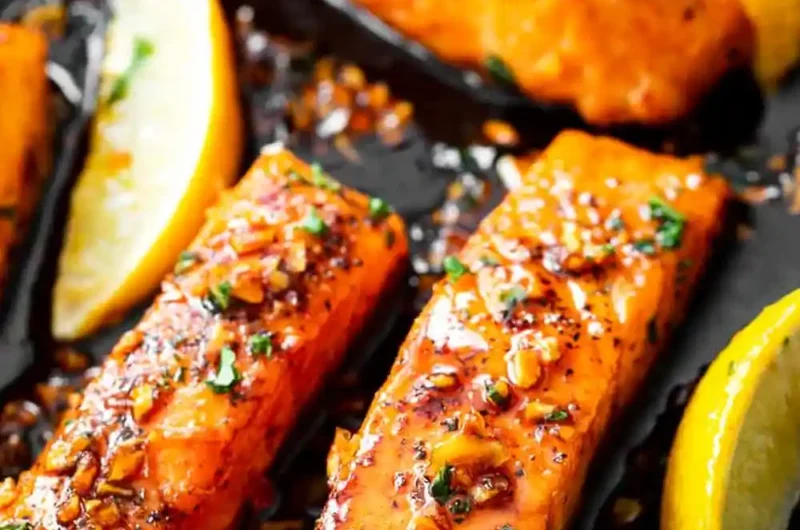
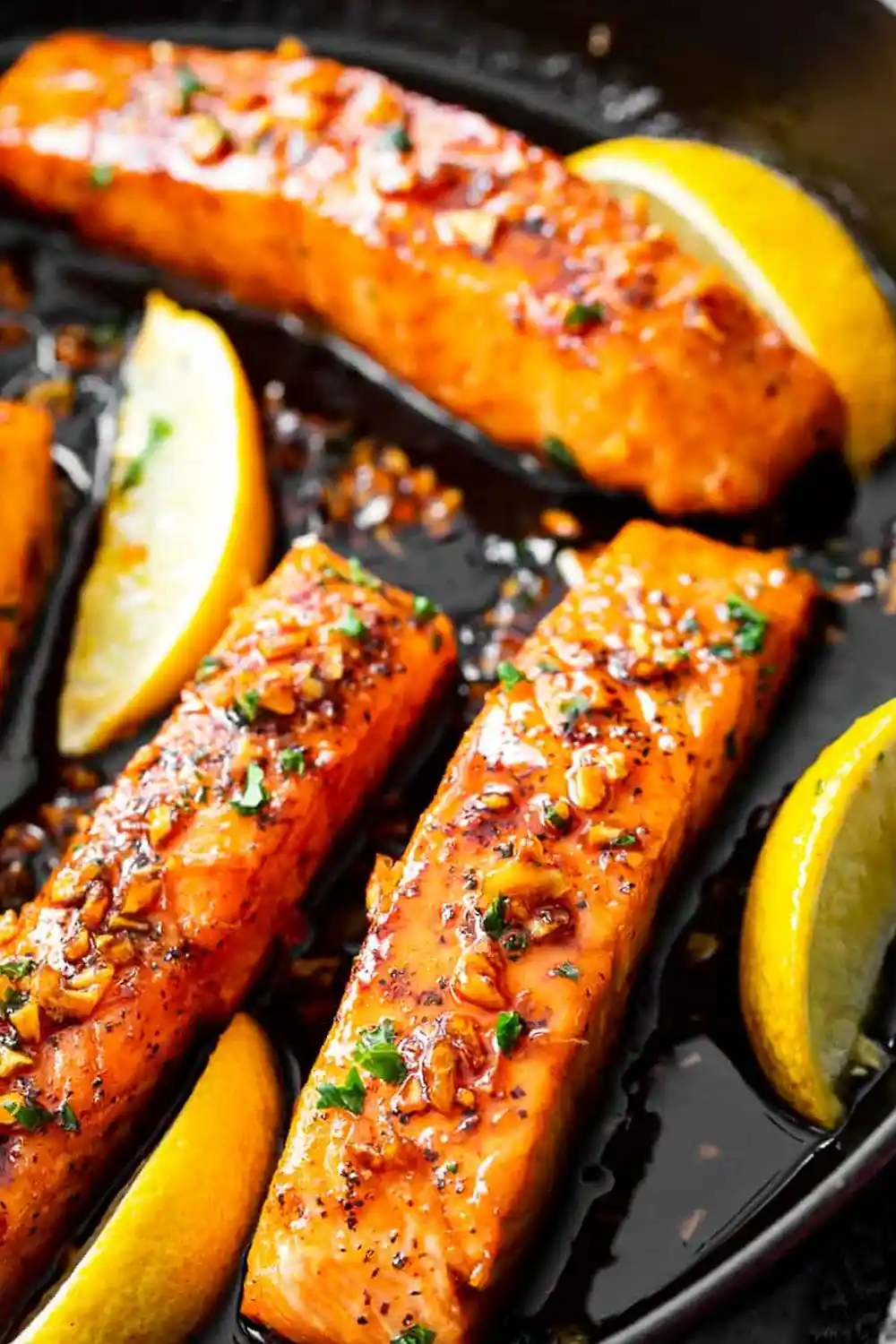
This vibrant honey garlic salmon dish brings a restaurant-quality meal into your home kitchen in under twenty minutes. By utilizing a single skillet for both searing and glazing, you minimize cleanup while maximizing the deep, caramelized flavors that define this healthy weeknight staple. The combination of sweet honey, savory coconut aminos, and fresh garlic creates a sticky, delicious coating that pairs perfectly with the rich texture of fresh salmon fillets.
List of ingredients
- 5-6 wild caught salmon fillets (about 1 1/2 lbs total)
- Sea salt and freshly ground black pepper
- 1/2 teaspoon smoked paprika
- 2 tablespoons ghee (avocado oil or olive oil)
- 5-6 cloves garlic, minced
- 2 tablespoons water
- 1/4 cup raw honey, melted if solid
- 3 tablespoons coconut aminos
- 2 tablespoons freshly squeezed lemon juice
- Lemon wedges and minced parsley to serve
step-by-step instructions
- Step: Pat the salmon fillets dry with paper towels and season them all over with sea salt and black pepper. Sprinkle the smoked paprika all over the tops of the fillets.
- Step: Heat your broiler to high heat.
- Step: Heat a large oven-proof skillet over medium-high heat and add the ghee. Place the salmon skin side down and sear for about 3 minutes to cook halfway through.
- Step: Meanwhile, in a small bowl, whisk together all the sauce ingredients until well combined.
- Step: Once the salmon is halfway done, pour the sauce into the skillet and spoon over the salmon.
- Step: Transfer the salmon to the oven to broil the tops for about 3-4 minutes, or until cooked through and caramelized. Check often to make sure it’s not burning.
- Step: Once done, spoon the sauce over the top of the salmon and garnish with parsley and lemon wedges as desired. Serve hot over sautéed cauliflower rice or with your favorite veggies.
Refining your pan-searing technique
The importance of surface moisture
Achieving a professional-level crust on your salmon starts long before the pan hits the heat. If the surface of your fish is damp, the moisture must evaporate into steam before any browning can occur, which often leads to soggy skin and overcooked flesh. Use a high-quality paper towel to press the surface of each fillet until no liquid remains, allowing the fish to make immediate contact with the hot fat for an instant, flavor-packed sear.
Selecting the right pan material
While cast iron is the traditional choice for high-heat searing due to its excellent heat retention, a stainless steel or heavy-bottomed non-stick pan works perfectly fine for this recipe. Ensure your pan is completely hot before adding the ghee, as a cold pan will result in the salmon protein sticking to the surface. If you are worried about sticking, perform a quick “dry run” by heating the empty pan for two minutes before adding your oil.
Understanding the sauce dynamics
Balancing sweet and savory profiles
The magic of this sauce lies in the ratio between the raw honey and the coconut aminos. The honey provides the viscous base that allows the sauce to cling to the salmon, while the coconut aminos provide a complex, fermented saltiness that prevents the dish from becoming one-dimensionally sweet. If you prefer a sharper edge to your glaze, add an extra teaspoon of lemon zest during the whisking stage to introduce aromatic oils that complement the garlic.
Managing garlic intensity
Garlic has a tendency to turn bitter if scorched, which is why it is added to the sauce rather than directly to the searing pan at the very beginning. By incorporating the garlic into the honey mixture, the sugars in the honey protect the garlic from direct contact with the high heat of the skillet bottom. This ensures the sauce remains fragrant and punchy without developing the harsh, burnt notes associated with overcooked alliums.
Variations and flavor adjustments
Enhancing the aromatic profile
If you want to experiment with the flavor base of this dish, consider adding freshly grated ginger to the sauce. The heat of the ginger pairs exceptionally well with honey and lemon, adding an extra layer of warmth that makes the dish feel even more comforting. You could also stir in a pinch of crushed red pepper flakes if you desire a spicy kick that cuts through the sweetness of the honey.
Exploring healthy fat substitutes
While ghee provides a wonderful nutty flavor profile, you can easily swap it for avocado oil if you are maintaining a stricter dairy-free or plant-focused diet. Avocado oil has an even higher smoke point than ghee, making it an excellent candidate for the initial sear. If using olive oil, ensure it is a high-quality extra virgin variety, though be mindful that it should be kept at a medium-high heat rather than full blast to avoid breaking down the oil’s structure.
Optimizing serving and presentation
Pairing with low-carbohydrate sides
Because the salmon is rich and glazed with a sweet sauce, it pairs beautifully with neutral, textured sides. Cauliflower rice is the most popular choice, as its porous nature absorbs the excess honey-garlic sauce that pools on the plate. Alternatively, roasted asparagus or steamed bok choy provides a crisp, bitter contrast that helps balance the sugar content of the honey glaze for a more rounded meal.
Adding fresh textures
The final plate benefits immensely from a crunch factor or a burst of freshness. Besides the recommended parsley, consider topping your salmon with sliced green onions or toasted sesame seeds. These additions not only make the meal look vibrant and inviting but also provide a subtle textural shift that makes each bite of soft, flaky salmon feel more dynamic.
Practical storage and reheating advice
Handling leftovers effectively
If you have extra salmon, store it in an airtight glass container in the refrigerator for up to two days. Because honey-based glazes can be delicate, store the extra sauce separately if possible. If you must store them together, ensure the container is tightly sealed to prevent the sauce from drying out or absorbing other scents in your refrigerator.
Reheating without sacrificing texture
The best way to reheat this salmon is in the oven at a low temperature, around 300 degrees Fahrenheit, for about 8 to 10 minutes. Avoid using the microwave, as it tends to heat the fats unevenly, resulting in rubbery, tough fish that has lost its delicate moisture. A quick splash of water in the pan before putting it in the oven can help create a little steam, keeping the salmon tender during the reheating process.
Common questions and troubleshooting
Why did my sauce burn during the broiling stage?
Honey is highly susceptible to high heat and will darken very quickly under a broiler. Always keep your oven light on and watch the skillet closely once it is under the broiler, as the transition from perfectly caramelized to burnt can happen in under 60 seconds. If your oven has a powerful broiler, consider positioning the rack one level lower than recommended to allow for a gentler, more even caramelization.
How can I tell if the salmon is cooked through properly?
The easiest way to check for doneness is to press the thickest part of the fillet with a fork or your finger; the fish should flake easily along the natural white lines of the muscle. If you prefer to be precise, an instant-read thermometer inserted into the center should read 145 degrees Fahrenheit. Remember that the salmon will continue to cook slightly from the residual heat of the skillet even after you pull it from the oven.
Can I use frozen salmon for this recipe?
Frozen salmon works perfectly, provided you thaw it completely in the refrigerator overnight before starting. If you attempt to sear frozen or semi-frozen salmon, the exterior will cook while the interior remains cold and raw, and the excess water released during the cooking process will ruin your honey glaze. Always ensure the fish is completely thawed and dried with towels before you begin the searing process.
What should I do if the sauce is too thin?
If your sauce remains runny after broiling, you can remove the salmon to a serving platter and return the skillet to the stovetop on medium heat for two minutes. This allows the water to evaporate and the honey sugars to concentrate into a syrupy glaze. Once thickened, simply drizzle it back over the fish before serving to ensure every bite is coated in the sticky, flavorful reduction.
Print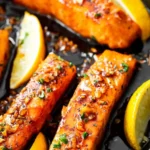
Honey Garlic Glazed Salmon Skillet
- Total Time: PT15M
- Yield: 6 servings 1x
- Diet: Paleo, Gluten-free
Description
This simple 20 minute honey garlic salmon is made in one skillet and the sauce is addicting! It’s paleo, gluten free and a family favorite. Serve it over cauliflower rice and with your favorite veggies for a healthy weeknight meal.
Ingredients
- 5–6 wild caught salmon fillets (about 1 1/2 lbs total)
- Sea salt and freshly ground black pepper
- 1/2 teaspoon smoked paprika
- 2 tablespoons ghee (avocado oil or olive oil)
- 5–6 cloves garlic, minced
- 2 tablespoons water
- 1/4 cup raw honey, melted if solid
- 3 tablespoons coconut aminos
- 2 tablespoons freshly squeezed lemon juice
- Lemon wedges and minced parsley to serve
Instructions
- Step: Pat the salmon fillets dry with paper towels and season them all over with sea salt and black pepper. Sprinkle the smoked paprika all over the tops of the fillets.
- Step: Heat your broiler to high heat.
- Step: Heat a large oven-proof skillet over medium-high heat and add the ghee. Place the salmon skin side down and sear for about 3 minutes to cook halfway through.
- Step: Meanwhile, in a small bowl, whisk together all the sauce ingredients until well combined.
- Step: Once the salmon is halfway done, pour the sauce into the skillet and spoon over the salmon.
- Step: Transfer the salmon to the oven to broil the tops for about 3-4 minutes, or until cooked through and caramelized. Check often to make sure it’s not burning.
- Step: Once done, spoon the sauce over the top of the salmon and garnish with parsley and lemon wedges as desired. Serve hot over sautéed cauliflower rice or with your favorite veggies.
Notes
Alternatively, to avoid the broiler, you can sear the salmon on both sides in the skillet to cook through, remove from the skillet, and cook the sauce for about one minute in the skillet to thicken. Return the salmon to the skillet and spoon the sauce over the salmon to heat through.
- Prep Time: PT5M
- Cook Time: PT10M
- Category: Dinner
- Method: Stovetop/Broil
- Cuisine: Gluten-free, Paleo
Nutrition
- Serving Size: 1 fillet
- Calories: 259 kcal
- Sugar: 12 g
- Sodium: 221 mg
- Fat: 12 g
- Saturated Fat: 4 g
- Unsaturated Fat: 8 g
- Trans Fat: 0 g
- Carbohydrates: 14 g
- Fiber: 1 g
- Protein: 23 g
- Cholesterol: 75 mg
Keywords: fish, gluten free, paleo, salmon