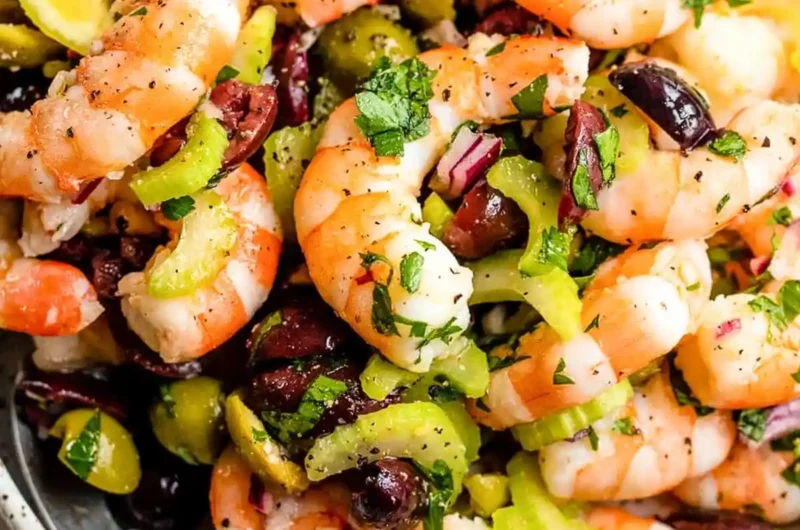
This vibrant Italian shrimp salad is a masterclass in Mediterranean simplicity, combining tender seafood with crisp vegetables and punchy brined olives. It is the perfect refreshing option for a quick lunch, a sophisticated party appetizer, or a stress-free meal prep staple that actually improves in taste the longer it rests. By using a bright, citrus-forward dressing, every bite offers a balanced harmony of garlic, salt, and zest that keeps the dish light yet incredibly satisfying.
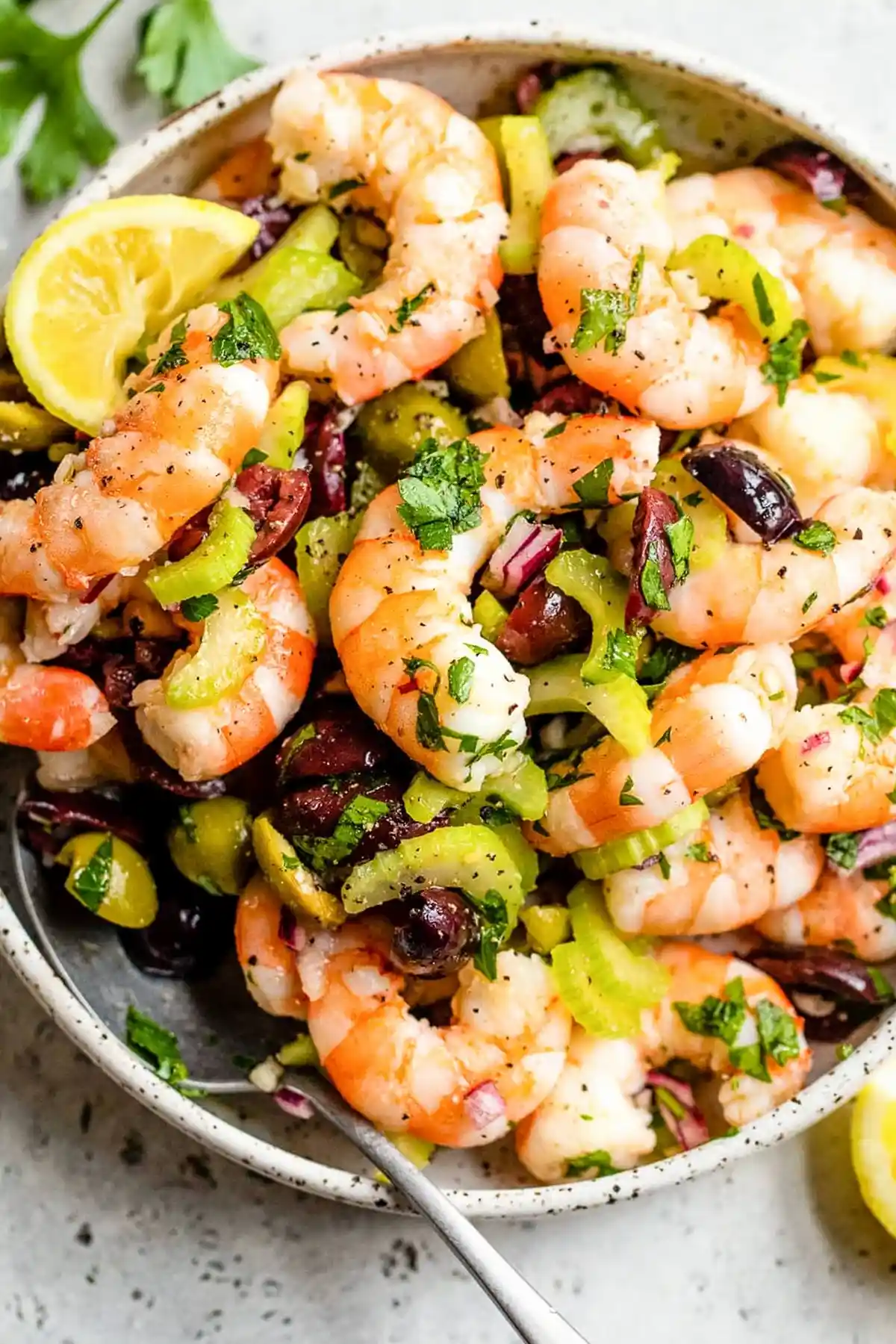
List of ingredients
- 1 1/4 lbs cooked, peeled and deveined jumbo (16-20 count) shrimp, tails-off, halved
- 1 cup sliced celery
- 1 1/3 cups mixed Italian pitted olives (such as Castelvetrano and Kalamata), halved lengthwise
- 1/4 cup chopped red onion
- 5 cloves garlic, minced
- 1/4 cup chopped parsley
- 1/4 cup extra virgin olive oil
- Juice of 2 small lemons
- 1/2 teaspoon kosher salt
- Black pepper to taste
step-by-step instructions
- Step: Combine all the ingredients in a large bowl and mix.
- Step: Refrigerate a few hours or overnight to let the flavors meld.
Practical Preparation Strategies
Achieving the Perfect Shrimp Texture
The texture of your shrimp defines the quality of this salad. If you choose to cook your own shrimp rather than purchasing them pre-cooked, take care not to overcook them, as they become rubbery when cold. Boil them briefly in water or sauté them in a pan until just opaque, then immediately submerge them in an ice-water bath to stop the cooking process and lock in a snappy, tender texture.
The Role of Olive Selection
Choosing the right olives is essential to the success of this salad because they provide the primary salt element. Castelvetrano olives offer a buttery, mild flavor, while Kalamata olives bring a deeper, more robust brine that complements the shrimp perfectly. Combining both varieties creates a layered flavor experience that is far superior to using a single type of olive.
Optimizing Garlic Infusion
When you mince the garlic, aim for a very fine texture so it blends seamlessly into the dressing. Using a microplane or a heavy chef’s knife to paste the garlic ensures that you do not encounter large, raw-tasting chunks of garlic while eating. Allowing the garlic to sit in the acidic lemon juice for a few minutes before mixing it into the salad can also take the sharpest edge off the raw garlic flavor.
Substitutions and Flavor Adaptations
Swapping Fresh Aromatics
If you find that red onion is too sharp for your preference, you can substitute it with finely minced shallots, which provide a sweeter and more delicate onion flavor. If you lack fresh parsley, fresh dill or even chives can work well, though they will change the overall profile of the dish to be slightly more garden-fresh and less classically Mediterranean.
Replacing or Adding Vegetables
For extra crunch and hydration, you can incorporate thinly sliced English cucumbers. If you want to increase the volume of the salad without adding too many calories, blanched snap peas or finely diced bell peppers work as excellent structural additions. These vegetables hold up well in the vinaigrette, even after several hours of marination in the refrigerator.
Serving and Presentation Ideas
Creating a Balanced Appetizer Platter
To serve this salad as part of a larger appetizer spread, consider placing it in a shallow glass bowl surrounded by sturdy crackers or toasted baguette slices. The acidity of the lemon dressing makes the shrimp act almost like a ceviche, which pairs beautifully with the crunch of a plain crostini. You can also spoon the salad into individual endive leaves for a sophisticated, finger-food style serving presentation.
Complementing the Main Course
When serving this as a side salad for dinner, pair it with simple roasted proteins or a light pasta dish. Its brightness is especially effective at cutting through heavier, creamy, or oil-rich dishes. A light sprinkling of extra lemon zest or a few extra fresh parsley leaves right before serving can help the salad look as fresh as it tastes.
Storage and Meal Prep Procedures
Maximizing Refrigerator Life
This salad is designed to be a meal-prep favorite because the shrimp absorb the flavors of the vinaigrette over time. You can store the salad in an airtight glass container in the refrigerator for up to three days. Glass is preferred over plastic, as it does not retain the strong odors of the garlic and olives, ensuring your fridge stays neutral-smelling.
Preventing Soggy Textures
To ensure the salad remains fresh for the duration of its storage, avoid adding leafy greens like arugula or spinach until the very moment you are ready to serve. If you decide to add them, keep them in a separate container and combine only the amount you intend to eat immediately. This prevents the delicate leaves from wilting under the weight of the dressing and the salt from the olives.
Common Queries and Clarifications
Can I freeze the leftovers?
Freezing is not recommended for this dish as the texture of the shrimp will significantly degrade upon thawing. The celery and olives will also release excess water, resulting in a mushy salad that loses the crisp, clean experience this recipe is intended to provide.
How do I make the salad less acidic?
If you find the flavor too tart due to the lemon juice, you can balance it by adding a small drizzle of honey or by increasing the amount of olive oil. Increasing the amount of chopped celery or even adding a diced, non-acidic vegetable like sweet bell pepper can also help dilute the intensity of the lemon juice without sacrificing the overall flavor profile.
What is the benefit of letting it sit overnight?
Resting the salad allows the salt from the olives and the acidity of the lemon juice to draw out the excess moisture from the celery and aromatics, which then infuses the shrimp with seasoning. This process essentially marinates the shrimp, turning a simple mix of ingredients into a cohesive dish where every bite tastes perfectly seasoned and uniform.
How do I handle the shrimp if they are too large?
While the recipe calls for jumbo shrimp, if you find them too large for bite-sized consumption, feel free to quarter them rather than halving them. The goal is to have the shrimp be roughly the same size as your pieces of olive and celery, which creates the perfect mouthfeel for a salad, allowing you to get a little bit of everything in a single forkful.
Print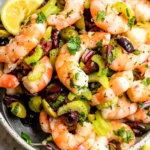
Italian Shrimp Salad
- Total Time: PT200M
- Yield: 6 servings 1x
- Diet: Gluten-free, Dairy-free, Mediterranean, Anti-inflammatory
Description
This garlicky Italian Shrimp Salad recipe is loaded with shrimp, celery, and a mix of bold Italian olives, all brightened with a lemony dressing.
Ingredients
- 1 1/4 lbs cooked, peeled and deveined jumbo (16–20 count) shrimp, tails-off, halved
- 1 cup sliced celery
- 1 1/3 cups mixed Italian pitted olives (such as Castelvetrano and Kalamata), halved lengthwise
- 1/4 cup chopped red onion
- 5 cloves garlic, minced
- 1/4 cup chopped parsley
- 1/4 cup extra virgin olive oil
- Juice of 2 small lemons
- 1/2 teaspoon kosher salt
- Black pepper to taste
Instructions
- Step: Combine all the ingredients in a large bowl and mix.
- Step: Refrigerate a few hours or overnight to let the flavors meld.
Notes
Makes about 7 cups. The flavors improve significantly after sitting in the refrigerator.
- Prep Time: PT20M
- Cook Time: PT0M
- Category: Appetizer, Lunch, Salad
- Method: No-cook
- Cuisine: Italian-American
Nutrition
- Serving Size: 1 generous cup
- Calories: 198 kcal
- Sugar: 1 g
- Sodium: 442.5 mg
- Fat: 11.5 g
- Saturated Fat: 1.5 g
- Unsaturated Fat: 9.5 g
- Trans Fat: 0 g
- Carbohydrates: 5 g
- Fiber: 1.5 g
- Protein: 20 g
- Cholesterol: 152 mg
Keywords: shrimp salad, italian salad, mediterranean diet, healthy appetizer, seafood salad