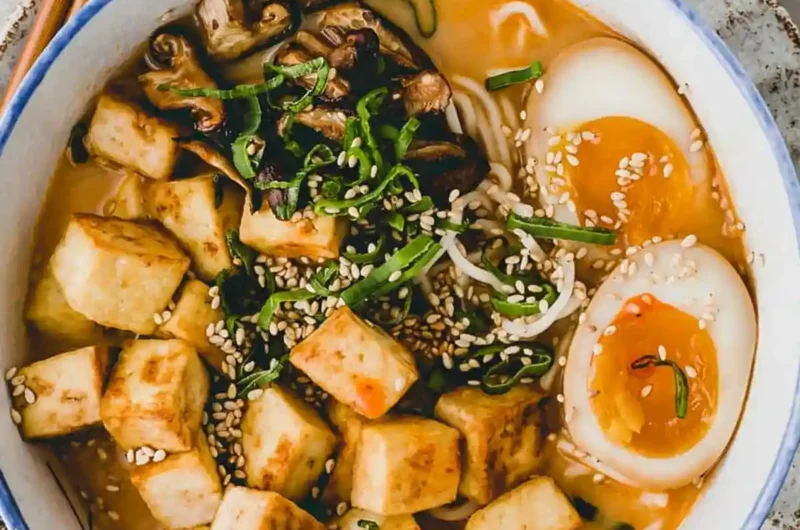
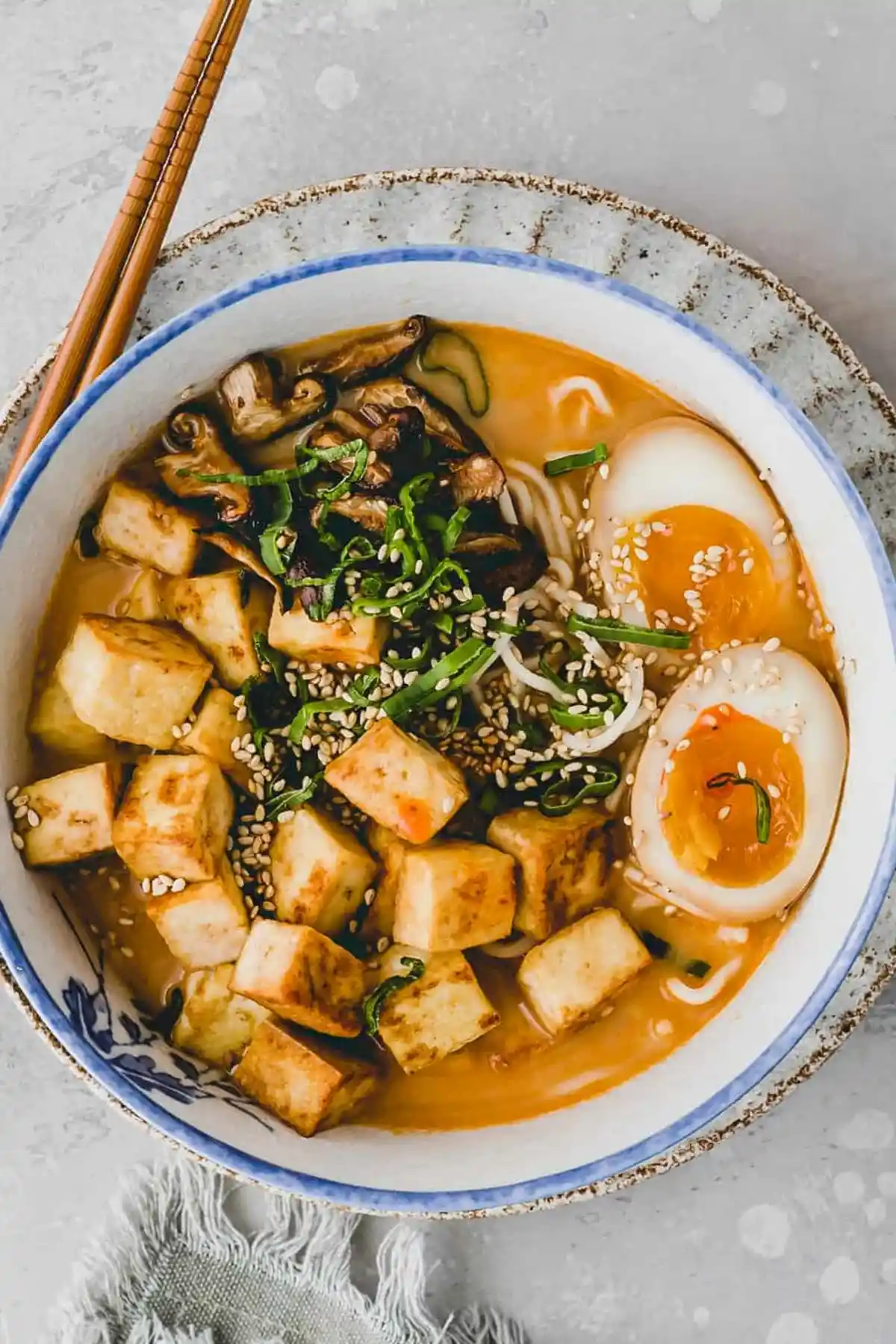
Tofu Miso Ramen is a satisfying Japanese noodle soup featuring a rich, creamy broth enhanced by fermented bean paste. It balances savory depth with fresh toppings like sautéed mushrooms and protein-packed tofu for a complete, nourishing meal.
List of ingredients
- 1 tbsp oil
- 7 oz firm tofu, in cubes
- 4 shiitake mushrooms, sliced
- 1 tbsp soy sauce
- 3.5 oz ramen noodles
- 2 ramen eggs, halved (omit for a vegan version)
- 1 scallion, finely sliced
- 1 tbsp sesame oil
- 1 clove garlic, grated
- 1 tsp ginger, grated
- 1 shallot, finely minced
- 3 tbsp miso paste
- 1 tsp gochujang
- 2 cups water
- 1 cup soy milk, unsweetened
- 1 tbsp mirin
- Toasted sesame seeds (optional)
step-by-step instructions
- Step: Prepare Ramen eggs or soft-boiled eggs according to preference.
- Step: Heat a skillet with ½ tbsp oil, fry tofu cubes for 5-10 minutes until golden, season with ½ tbsp soy sauce, and set aside.
- Step: In the same skillet, heat ½ tbsp oil, fry shiitake mushrooms for 5 minutes, season with ½ tbsp soy sauce, and set aside.
- Step: Heat sesame oil in a pot, add garlic, ginger, and shallot, and sauté for 3 minutes until translucent.
- Step: Stir in miso paste and gochujang for one minute, then add water, soy milk, and mirin, simmering gently for 5 minutes.
- Step: Boil ramen noodles according to package directions, drain, and rinse with cold water.
- Step: Divide noodles into bowls, pour over hot broth, and garnish with fried tofu, mushrooms, halved eggs, scallions, and optional sesame seeds.
Refining Your Miso Broth
Achieving the Ideal Consistency
To ensure a professional texture, always whisk your miso paste into a small amount of warm water before adding it to the full volume of liquid in your pot. This technique prevents lumps from forming and ensures the fermented paste dissolves uniformly into the soy milk and water mixture. Avoid boiling the broth aggressively once the soy milk is added, as this can cause the liquid to separate or lose its smooth, creamy appearance.
Selecting the Right Miso Variety
For this recipe, red miso is highly recommended because it offers a bold, intense umami character that stands up well to the richness of the soy milk. If you prefer a milder, sweeter flavor profile, feel free to use white miso, which undergoes a shorter fermentation period and has a much gentler impact on the soup. Mixing both red and white pastes can also create a balanced flavor profile that caters to a wide range of palates.
Perfecting Topping Texture
Creating Crispy Tofu Surfaces
For the best results with your tofu, press the block between paper towels for at least fifteen minutes before cutting it into cubes to remove excess moisture. A drier tofu surface will brown much faster in the skillet, allowing you to achieve a golden, crisp exterior while keeping the center soft. Always ensure the skillet is adequately hot before adding the cubes to prevent them from sticking or becoming soggy.
Enhancing Mushroom Umami
Shiitake mushrooms possess a natural woodsy flavor that intensifies significantly when they are caramelized during the frying process. If you find them difficult to source, you can use cremini or button mushrooms as a reliable substitute, though they may require an extra minute in the pan to release their water content. Slicing them thinly ensures they cook through quickly and provide the perfect bite-sized contrast to the slippery noodles.
Component Management Strategies
Maintaining Noodle Texture
Ramen noodles are prone to overcooking quickly due to their residual heat and high starch content. To maintain the best texture, cook them slightly al dente, especially if you are preparing them a few minutes before the rest of the meal is ready. Rinsing the noodles under cold water immediately after draining removes excess starch, preventing them from clumping together while they wait to be portioned into bowls.
Storing Individual Ingredients
If you intend to prepare this dish in advance, store the broth, noodles, and toppings in separate airtight containers in the refrigerator. The broth can be kept for up to three days, though the flavor of the miso may deepen over time. When ready to serve, bring the broth to a gentle simmer in a small saucepan, then pour it over the noodles and toppings to warm everything through simultaneously without overcooking the delicate ingredients.
Adjusting for Dietary Needs
Vegan Adaptations
To convert this recipe for a vegan diet, simply omit the eggs or replace them with marinated plant-based alternatives like tofu-based proteins or sliced avocado. Since the miso paste and other flavorings are naturally plant-based, the core of the soup remains entirely compatible with a vegan lifestyle. Ensure your specific brand of ramen noodles is egg-free, as some commercial varieties incorporate egg powder in the dough.
Spice Level Variations
If you prefer a milder experience, you can reduce the amount of gochujang or substitute it with a small amount of sweet miso mixed with a touch of agave syrup. Conversely, for those who enjoy significant heat, increase the amount of chili-based paste or add a garnish of fresh chili slices or drops of high-quality chili oil. These adjustments allow you to control the exact balance of warmth and comfort in every bowl.
Frequently Asked Questions
Can I use dried shiitake mushrooms instead of fresh ones?
Yes, dried mushrooms are an excellent alternative but must be rehydrated in warm water for at least fifteen to twenty minutes. Once they are soft, squeeze out the excess liquid and slice them as you would fresh mushrooms before frying them in the pan.
How do I prevent the noodles from getting mushy?
The best strategy is to keep the noodles separate from the broth until the very moment you are ready to serve. If you know you will have leftovers, serve the broth in a separate container and store the cooked noodles in a sealed bag with a tiny amount of oil to prevent sticking.
What should I do if the broth is too salty?
If the broth tastes overly salty, try adding a small splash of additional water or unsweetened soy milk to dilute the intensity. You can also add a pinch of sugar or a small amount of extra mirin, as these sweeteners effectively counteract high salt levels and round out the fermented notes of the miso.
Is it necessary to use soy milk in the broth?
Soy milk is the key ingredient that provides the creamy, opaque appearance and rich texture characteristic of this style of ramen. While you could technically omit it, the resulting soup would be thinner and lack the specific mouthfeel and mild sweetness that balances the saltiness of the miso paste.
Can I add more vegetables to the soup?
Absolutely, adding vegetables is a great way to personalize this dish and increase the nutrient content. Lightly steamed bok choy, blanched bean sprouts, or canned sweet corn are traditional additions that provide a fresh crunch and work beautifully with the savory profile of the miso broth.
Print
Tofu Miso Ramen Soup
- Total Time: PT30M
- Yield: 2 servings 1x
- Diet: Vegetarian
Description
Tofu Miso Ramen is a Japanese noodle soup with an incredibly delicious and creamy broth flavored with miso paste. It’s served with ramen noodles, tofu, shiitake mushrooms, and a ramen egg!
Ingredients
- 1 tbsp oil
- 7 oz firm tofu, in cubes
- 4 shiitake mushrooms, sliced
- 1 tbsp soy sauce
- 3.5 oz ramen noodles
- 2 ramen eggs, halved (omit for a vegan version)
- 1 scallion, finely sliced
- 1 tbsp sesame oil
- 1 clove garlic, grated
- 1 tsp ginger, grated
- 1 shallot, finely minced
- 3 tbsp miso paste
- 1 tsp gochujang
- 2 cups water
- 1 cup soy milk, unsweetened
- 1 tbsp mirin
- Toasted sesame seeds (optional)
Instructions
- Step: Prepare Ramen eggs or soft-boiled eggs according to preference.
- Step: Heat a skillet with ½ tbsp oil, fry tofu cubes for 5-10 minutes until golden, season with ½ tbsp soy sauce, and set aside.
- Step: In the same skillet, heat ½ tbsp oil, fry shiitake mushrooms for 5 minutes, season with ½ tbsp soy sauce, and set aside.
- Step: Heat sesame oil in a pot, add garlic, ginger, and shallot, and sauté for 3 minutes until translucent.
- Step: Stir in miso paste and gochujang for one minute, then add water, soy milk, and mirin, simmering gently for 5 minutes.
- Step: Boil ramen noodles according to package directions, drain, and rinse with cold water.
- Step: Divide noodles into bowls, pour over hot broth, and garnish with fried tofu, mushrooms, halved eggs, scallions, and optional sesame seeds.
Notes
For a vegan version, simply omit the ramen eggs. If you don’t have mirin, you can use 1 tablespoon of rice vinegar mixed with 1 teaspoon of sugar. If using dried shiitake mushrooms, soak them in hot water for 15 minutes before using.
- Prep Time: PT10M
- Cook Time: PT20M
- Category: Main Course
- Method: Stovetop
- Cuisine: Japanese
Nutrition
- Serving Size: 1 bowl
- Calories: 688 kcal
- Sugar: 12 g
- Sodium: 1450 mg
- Fat: 15 g
- Saturated Fat: 2.5 g
- Unsaturated Fat: 11 g
- Trans Fat: 0 g
- Carbohydrates: 103 g
- Fiber: 9 g
- Protein: 36 g
- Cholesterol: 185 mg
Keywords: miso ramen, tofu ramen, vegetarian ramen, japanese soup, miso noodle soup