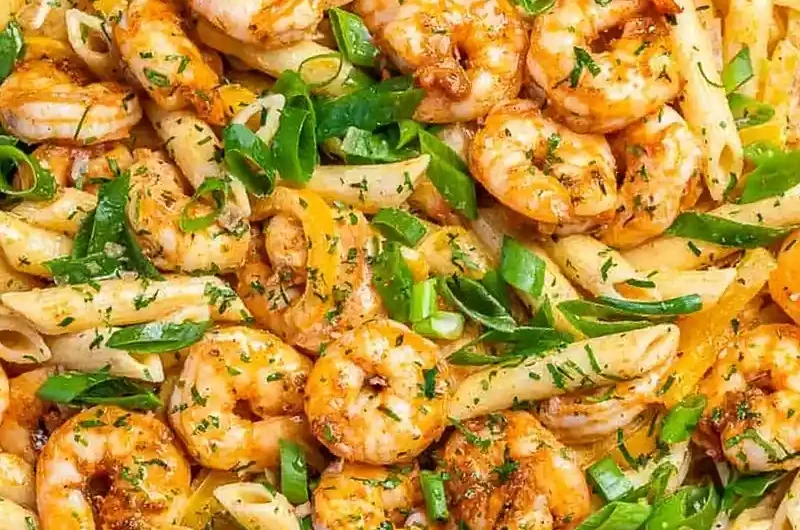
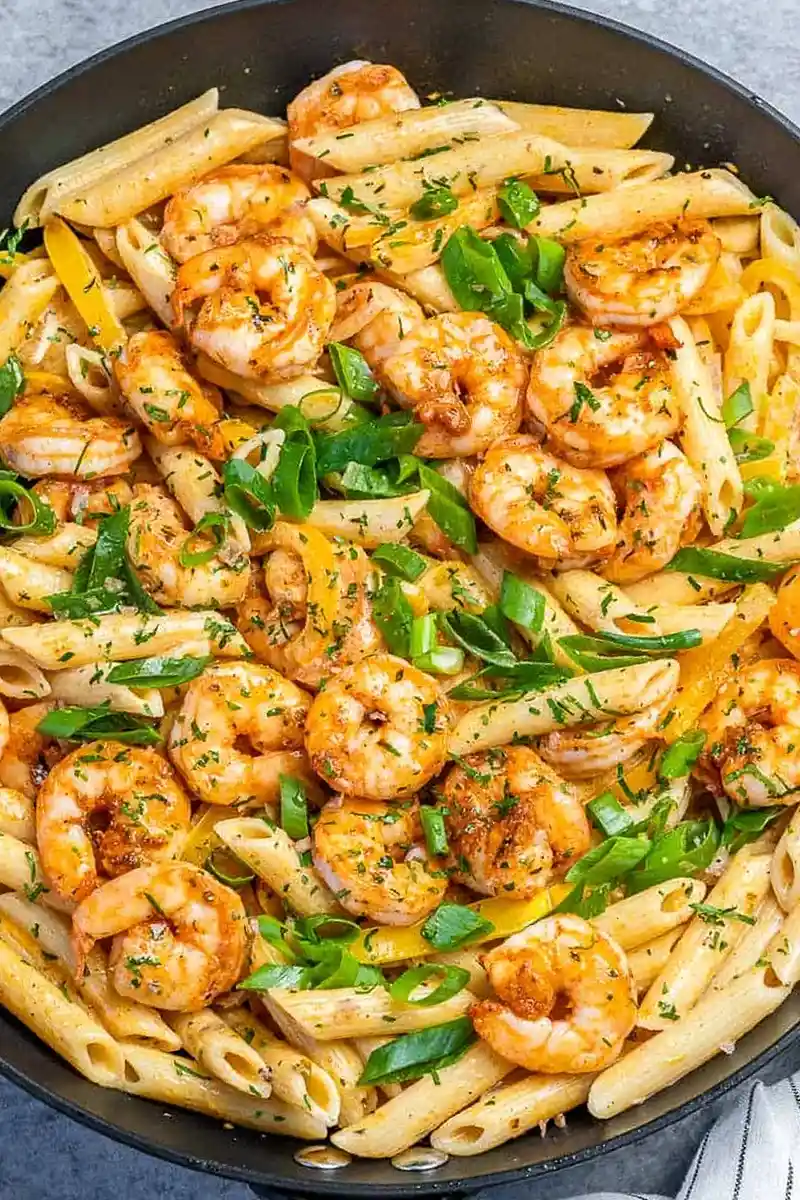
This vibrant Jamaican-inspired Shrimp Rasta Pasta combines succulent, spice-rubbed shrimp with a luxuriously creamy sauce and colorful, crisp-tender vegetables. It is a hearty, restaurant-quality meal that comes together in less than an hour, making it an excellent choice for a satisfying weeknight dinner. With its bold flavors and beautiful presentation, this dish is sure to become a repeat favorite in your home kitchen.
List of ingredients
- 12 oz penne pasta
- 1 lb jumbo shrimp, peeled and deveined
- 2 tbsp jerk seasoning, divided
- Kosher salt and pepper, to taste
- 2 tbsp olive oil, divided
- 1 medium onion, diced
- 2 bell peppers, different colors
- 4-6 garlic cloves, minced
- 4 green onions, sliced
- 2 tsp smoked paprika
- 1/2 cup chicken stock
- 15 oz full-fat coconut cream
- 1/2 cup shredded Parmesan cheese
step-by-step instructions
- Step: Cook the pasta in salted water to al-dente according to package directions, drain, and set aside.
- Step: In a medium bowl, combine the shrimp with half of the jerk seasoning.
- Step: Heat 1 tbsp of the oil in a large skillet over medium heat and saute the jerk shrimp for 3-4 minutes, then set aside.
- Step: To the same skillet, add the remaining 1 tbsp oil and saute the veggies for 6-7 minutes.
- Step: Stir in the green onions, remaining jerk seasoning, and paprika, and continue to saute for 1 minute.
- Step: Add the stock and coconut milk and bring to a simmer for 10 minutes to thicken.
- Step: Add the parmesan cheese and stir until melted.
- Step: Add the drained pasta to the sauce, stir to combine, heat through, and serve.
Refining Your Cooking Technique
Achieving the Perfect Al Dente Texture
When preparing the pasta, it is critical to aim for al dente, which means “to the tooth.” Since the pasta will be tossed into the hot sauce and heated further, it will absorb moisture and continue to soften. If the pasta is boiled until it is completely soft initially, it will likely become mushy and lose its structure once combined with the creamy coconut sauce.
Selecting the Best Shrimp for the Skillet
Always use raw, fresh or properly thawed frozen jumbo shrimp for the best texture. Pre-cooked shrimp will turn rubbery when exposed to the high heat of the skillet. Ensure that your shrimp are patted very dry with paper towels before seasoning, as excess moisture will cause the shrimp to steam in the pan instead of developing a beautiful, golden-brown sear.
Maximizing the Depth of Flavor
The secret to a complex sauce lies in the deglazing process. After sauteing your vegetables and spices, the bottom of the skillet will have flavorful browned bits, known as fond. Adding the chicken stock while the pan is still hot allows you to scrape these bits into the sauce, which adds a significant layer of savory depth that you cannot achieve otherwise.
Customizing Your Pasta Experience
Swapping Out Proteins
While shrimp is the traditional protein for this dish, it is incredibly versatile. If you prefer poultry, you can substitute the shrimp with bite-sized pieces of boneless, skinless chicken breast or chicken thighs. Ensure you cook the chicken pieces thoroughly through before setting them aside, as they will take slightly longer to cook than the shrimp.
Managing Sauce Richness
If you prefer a lighter sauce or do not have coconut cream on hand, you can substitute it with heavy whipping cream or a mixture of whole milk and softened cream cheese. Keep in mind that coconut cream contributes a specific tropical flavor profile that is essential to the authentic taste of this recipe. If using a dairy-based alternative, you might need to simmer the sauce a bit longer to reach the desired thickness.
Enhancing Nutritional Value
To increase the fiber and protein content of your meal, consider using pasta alternatives like lentil or chickpea flour pasta. These options are particularly effective at soaking up the jerk-spiced sauce while offering a heartier bite. You can also easily add more vegetables to the mix, such as thinly sliced zucchini or chopped spinach, which wilt beautifully into the sauce at the very end of the cooking process.
Serving and Storage Advice
Maintaining the Creamy Consistency
This dish is best served immediately upon completion while the sauce is at its creamiest. If the sauce thickens too much as it sits, simply stir in a splash of warm chicken stock or a teaspoon of water before serving to restore the desired consistency. The residual heat from the pasta will continue to soak up the sauce, so quick service is recommended.
Handling Leftovers Properly
Store any leftover pasta in an airtight container in the refrigerator for up to 4 days. Because of the coconut cream and Parmesan base, the sauce may firm up significantly when cold. When you move leftovers to a storage container, try to portion them into individual serving sizes so you do not have to reheat the entire batch repeatedly.
Reheating for Best Results
To reheat, it is best to use a skillet over low heat with an extra splash of liquid to help thin out the sauce. If you must use a microwave, reheat the pasta in 30-second increments, stirring between each interval to ensure even heating. Avoid overheating, which can cause the coconut fat and the Parmesan to separate, leading to a greasy sauce texture.
Answers to Common Questions
Can I make this dish without it being overly spicy?
Most commercial jerk seasonings have a significant amount of heat. If you are sensitive to spice, look for a mild jerk seasoning blend, or try making your own blend using less cayenne pepper and chili flakes. You can also increase the amount of coconut cream slightly to help mellow out the heat from the spices.
Is it possible to freeze the leftover pasta?
You can freeze the pasta for up to 2 months in a freezer-safe bag or container. Note that cream-based sauces can sometimes break or turn grainy upon thawing and reheating. If you plan to freeze it, slightly undercook your pasta initially to compensate for the breakdown that happens during the long freeze and thaw cycle.
Why is it called Rasta Pasta?
The name is inspired by the vibrant colors used in the dish, which typically reflect the colors of the Rastafarian flag: red, gold, and green. By using various colors of bell peppers and green onions, the dish achieves these traditional colors, creating a visually appealing meal that is as bright to look at as it is flavorful to eat.
Print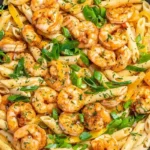
Vibrant Jamaican Style Shrimp Rasta Pasta
- Total Time: 40 minutes
- Yield: 6 servings 1x
- Diet: Pescatarian
Description
Tender and juicy shrimp cooked with Jerk Seasoning, penne pasta, and colorful bell peppers, then tossed in a creamy seasoned sauce.
Ingredients
- 12 oz penne pasta
- 1 lb jumbo shrimp, peeled and deveined
- 2 tbsp jerk seasoning, divided
- Kosher salt and pepper, to taste
- 2 tbsp olive oil, divided
- 1 medium onion, diced
- 2 bell peppers, different colors
- 4–6 garlic cloves, minced
- 4 green onions, sliced
- 2 tsp smoked paprika
- 1/2 cup chicken stock
- 15 oz full-fat coconut cream
- 1/2 cup shredded Parmesan cheese
Instructions
- Step: Cook the pasta in salted water to al-dente according to package directions, drain, and set aside.
- Step: In a medium bowl, combine the shrimp with half of the jerk seasoning.
- Step: Heat 1 tbsp of the oil in a large skillet over medium heat and saute the jerk shrimp for 3-4 minutes, then set aside.
- Step: To the same skillet, add the remaining 1 tbsp oil and saute the veggies for 6-7 minutes.
- Step: Stir in the green onions, remaining jerk seasoning, and paprika, and continue to saute for 1 minute.
- Step: Add the stock and coconut milk and bring to a simmer for 10 minutes to thicken.
- Step: Add the parmesan cheese and stir until melted.
- Step: Add the drained pasta to the sauce, stir to combine, heat through, and serve.
Notes
Any pasta can be used. Lentil or chickpea pasta can be used to lower carbs. Chicken may be used as a protein alternative. Store leftovers in the fridge for up to 4 days.
- Prep Time: 10 minutes
- Cook Time: 30 minutes
- Category: Main Course
- Method: Stovetop
- Cuisine: Jamaican
Nutrition
- Serving Size: 1 serving
- Calories: 601 kcal
- Sugar: 5 g
- Sodium: 1026 mg
- Fat: 33 g
- Saturated Fat: 24 g
- Unsaturated Fat: 7 g
- Trans Fat: 0 g
- Carbohydrates: 56 g
- Fiber: 6 g
- Protein: 24 g
- Cholesterol: 103 mg
Keywords: Shrimp Rasta Pasta, Jamaican Pasta, Jerk Shrimp Pasta, Creamy Pasta