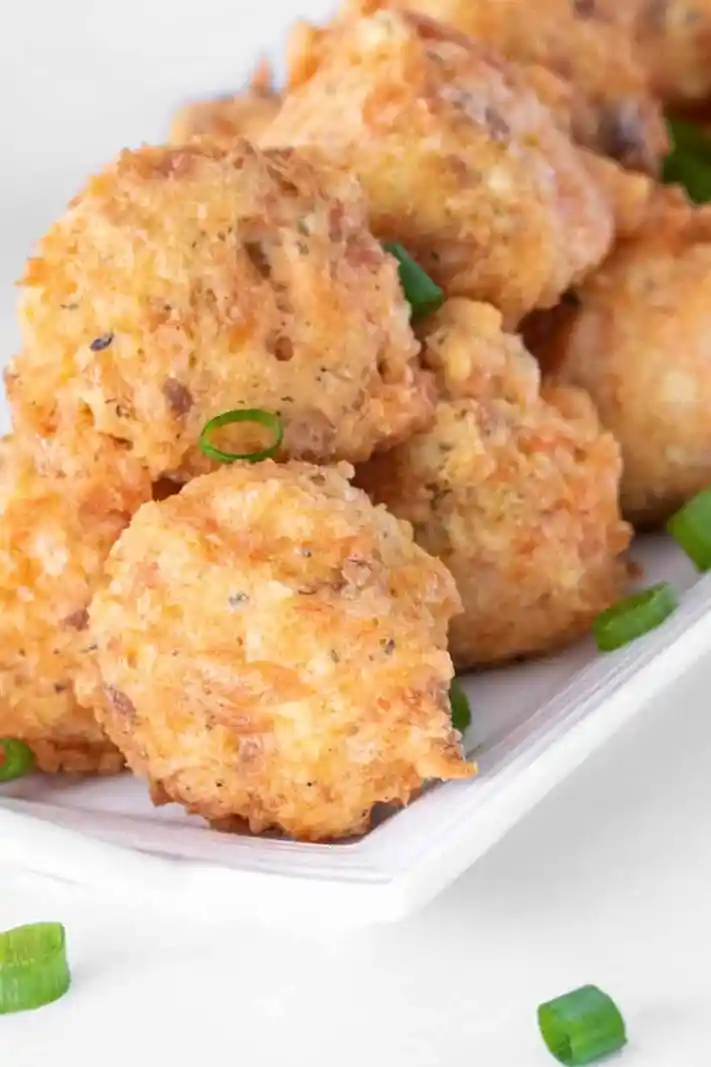
These savory salmon fritters offer a satisfying contrast between a crisp outer shell and a light, tender interior. They are an efficient way to prepare canned or fresh salmon for a family meal or an appetizer platter.
List of ingredients
- 2 cups flaked salmon – well-drained if using canned salmon.
- 4 eggs, separated – yolks provide richness and whites provide lift.
- 3 tablespoons all purpose flour – used as the primary binding agent.
- 1/2 teaspoon salt – enhances the natural flavor of the fish.
- 1/2 teaspoon ground black pepper – adds a subtle, warm spice.
- 1/2 teaspoon onion powder – provides a savory, aromatic depth.
- 1/2 teaspoon garlic powder – adds a pungent, savory note.
- 1/2 teaspoon dill weed – a traditional herb pairing for salmon.
- 1 teaspoon parsley, dried or fresh chopped – adds a touch of brightness.
- Canola oil – enough to fill a pan to a depth of 1 1/2 inches.
step-by-step instructions
- Heat the Oil: Pour oil into a heavy-bottomed pan and heat it to 370-375 degrees Fahrenheit. Ensure the oil is at this temperature before adding the batter to prevent the fritters from absorbing excess grease.
- Mix Base Ingredients: In a medium-sized mixing bowl, combine the flaked salmon, egg yolks, all-purpose flour, and all the listed spices. Stir the mixture thoroughly until all ingredients are evenly distributed.
- Prepare Egg Whites: In a separate, clean bowl, beat the egg whites until they form stiff peaks. This aeration is the secret to achieving a light and fluffy interior.
- Fold the Mixture: Gently fold the beaten egg whites into the salmon base using a spatula. Use a slow folding motion to avoid deflating the air bubbles in the egg whites.
- Fry the Fritters: Carefully drop spoonfuls of the batter into the hot oil. Fry them, turning occasionally, until they reach a consistent golden brown color on all sides.
- Drain and Serve: Remove the fritters from the oil using a slotted spoon. Place them immediately on a plate lined with paper towels to absorb any remaining surface oil.
Guide to Salmon Selection
Using Canned Salmon for Convenience
Canned salmon is a practical and cost-effective option for this recipe. It is essential to drain the liquid thoroughly to ensure the batter maintains the correct consistency. Look for wild-caught canned salmon for a cleaner, more natural taste.
Preparing Fresh Salmon Fillets
To use fresh fillets, season them with salt and pepper and bake at 425 degrees Fahrenheit for approximately 10 minutes. Let the cooked fish cool completely before flaking it with a fork. Using chilled salmon makes it easier to achieve uniform flakes for the batter.
Choosing Coho Salmon for Flavor
Coho salmon, also known as silver salmon, is often preferred for its higher fat content. This extra fat contributes to a moister fritter and a richer overall flavor. It provides a balanced taste that pairs well with the dried herbs in the recipe.
Sockeye and King Salmon Options
Sockeye salmon offers a bold, intense flavor and a deep red color. King salmon is milder with a buttery texture that melts during the frying process. Both are excellent alternatives to canned salmon for those who prefer a fresh-caught profile.
The Science of Frying
Managing Oil Temperature for Crispness
Use a digital kitchen thermometer to maintain the oil between 370 and 375 degrees Fahrenheit. If the oil is too cool, the batter will soak up the grease, resulting in a heavy, oily fritter. If the oil is too hot, the exterior will burn before the interior is fully set.
Selecting High-Smoke Point Oils
Canola oil is recommended due to its high smoke point and neutral flavor. Other options include peanut oil or grapeseed oil, which can withstand the high temperatures required for frying. Avoid using extra virgin olive oil, as it can smoke and burn at these temperatures.
Controlling Oil Absorption
Maintaining a high heat ensures that the exterior of the fritter sears instantly. This creates a barrier that prevents oil from penetrating deep into the salmon mixture. Frying in small batches prevents the oil temperature from dropping too sharply.
Achieving Uniform Shapes with Scoops
Using a medium-sized cookie scoop ensures that every fritter is the same size. Uniformity is key to ensuring that all pieces cook at the same rate and finish at the same time. This prevents some fritters from being undercooked while others over-brown.
Mastering the Batter Texture
The Importance of Separating Eggs
Separating the eggs allows you to treat the yolks and whites differently. The yolks act as an emulsifier, binding the salmon and flour together. The whites provide the structural lift and lightness that distinguish these fritters from dense fish cakes.
Beating Egg Whites to Stiff Peaks
Whisk the egg whites until they no longer move when the bowl is tilted. This process traps air within the protein structure of the egg. These air pockets expand during frying, creating a light, airy crumb inside the fritter.
The Gentle Folding Technique
Use a silicone spatula to cut through the center of the salmon mixture and lift it over the egg whites. Avoid stirring or whisking, as this will pop the air bubbles and lead to a denser fritter. Stop folding as soon as no large streaks of egg white remain.
Preventing Batter Deflation
Fry the batter immediately after folding in the egg whites. Allowing the batter to sit for too long can cause the air bubbles to collapse. This will result in a loss of volume and a less crispy exterior.
Flavor Enhancements and Variations
Incorporating Fresh Citrus Zest
Adding one teaspoon of lemon or lime zest to the batter provides a bright, acidic contrast to the rich salmon. The citrus oils cut through the oiliness of the fried coating. This is a simple way to elevate the flavor profile without changing the texture.
Adding Finely Diced Scallions
Freshly chopped scallions or chives add a mild onion flavor and a pop of color. Ensure they are diced very finely so they do not disrupt the binding of the batter. Stir them in during the same step as the flour and seasonings.
Substituting Fresh Herbs
While dried dill and parsley are used in the base recipe, fresh versions offer a more potent aroma. Replace dried herbs with a triple quantity of fresh, finely chopped herbs. Fresh dill is particularly effective in enhancing the salmon’s natural taste.
Incorporating Spicy Elements
For a spicy version, add a pinch of cayenne pepper or a teaspoon of crushed red pepper flakes. Finely diced jalapeños can also be added for a fresh heat. These additions pair exceptionally well with a cooling dip like sour cream.
Serving Suggestions and Pairings
Creating a Tartar Sauce Pairing
A classic tartar sauce made with mayonnaise, capers, lemon juice, and minced pickles complements the fried nature of the fritters. The acidity of the sauce balances the richness of the oil. Serve the sauce chilled on the side for dipping.
Serving with a Cabbage Slaw
A vinegar-based coleslaw provides a crunchy and tangy accompaniment. The raw vegetables and acidic dressing cleanse the palate between bites of the rich fish. Use a mix of red and green cabbage for visual appeal.
Pairing with Roasted Root Vegetables
For a full dinner, serve the fritters alongside roasted carrots or parsnips. The sweetness of the roasted vegetables complements the savory salmon. A light drizzle of olive oil and salt is all that is needed for the vegetables.
Adding a Lemon Wedge Garnish
Squeeze fresh lemon juice over the fritters immediately before serving. The citric acid reacts with the fried surface to brighten the overall flavor. This simple addition is a traditional way to serve any fried seafood dish.
Storage and Preservation
Proper Refrigeration Techniques
Place cooled fritters in a single layer in an airtight container. Avoid stacking them too deeply to prevent them from becoming soggy. They can be stored in the refrigerator for up to three days.
Freezing for Long-Term Storage
Flash-freeze the fritters on a baking sheet for one hour before transferring them to a freezer-safe bag. This prevents them from sticking together. They will remain high quality in the freezer for up to two months.
Thawing Guidelines for Fritters
Thaw frozen fritters in the refrigerator overnight before reheating. This ensures the interior thaws evenly. Avoid thawing them at room temperature to maintain food safety standards.
Effective Reheating Methods
Using an Oven for Best Results
Preheat the oven to 350 degrees Fahrenheit and place the fritters on a wire rack. Bake for 5 to 8 minutes until they are heated through. The wire rack allows air to circulate, which helps restore the original crispness.
Utilizing an Air Fryer
Place the fritters in an air fryer basket at 375 degrees Fahrenheit for 3 to 5 minutes. This is the fastest way to achieve a professional, crispy texture. Avoid overcrowding the basket to ensure even airflow.
Why Microwave Reheating Fails
Microwaving salmon fritters traps steam inside the batter, making the exterior soft and rubbery. It also heats the interior unevenly. For the best experience, always use a dry-heat method like the oven or air fryer.
Troubleshooting Common Issues
Fixing Fritters that Break Apart
If the fritters fall apart in the oil, the batter may be too wet or the oil too cool. Ensure canned salmon is drained completely and the egg whites are beaten to stiff peaks. If this happens, add one more tablespoon of flour to the remaining batter.
Resolving Greasy Texture
A greasy texture usually indicates that the oil temperature dropped too low. Fry fewer fritters at a time to keep the heat consistent. Always drain the finished products on paper towels to remove excess surface oil.
Correcting Over-Browning
If the fritters turn dark brown too quickly, the oil is likely too hot. Lower the heat slightly and wait a minute for the temperature to stabilize. Use a thermometer to ensure the oil stays below 375 degrees.
Adjusting Batter Consistency
If the batter feels too runny to scoop, stir in a small amount of additional all-purpose flour. Add the flour one teaspoon at a time to avoid making the fritters dense. The goal is a thick batter that holds its shape on a spoon.
Frequently Asked Questions
Can these be baked instead of fried?
Baking is not recommended for this recipe because it removes the characteristic crispness. The aeration from the egg whites requires the high heat of frying to set the structure quickly and create a light texture.
Which type of salmon is most suitable?
Canned salmon is the most convenient and budget-friendly option. However, Coho or Sockeye salmon provide a richer flavor and a superior texture when using fresh fillets.
Can I use a different flour?
A 1:1 gluten-free all-purpose flour blend can be used as a substitute. Ensure the blend contains a binder like xanthan gum to prevent the fritters from falling apart during frying.
How long do they last in the fridge?
Stored in an airtight container, these fritters will last up to three days. To restore the crisp exterior, reheat them in the oven or an air fryer rather than the microwave.
Print
Crispy Golden Salmon Fritters
- Total Time: 25 minutes
- Yield: 16 pieces 1x
- Diet: General
Description
These delicious salmon fritters are perfect way to prepare salmon. They are crispy, delicious and a food your family and friends will love!
Ingredients
- 2 cups flaked salmon
- 4 eggs, separated
- 3 tablespoons all purpose flour
- 1/2 teaspoon salt
- 1/2 teaspoon ground black pepper
- 1/2 teaspoon onion powder
- 1/2 teaspoon garlic powder
- 1/2 teaspoon dill weed
- 1 teaspoon parsley, fried or fresh chopped
- canola oil for frying
Instructions
- Heat Oil: Start heating oil in heavy bottom pan to about 370-375 degrees.
- Mix Base: Add salmon, egg yolks, flour and spices to medium sized bowl. Mix well.
- Beat Whites: In another bowl, beat egg whites to stiff peaks.
- Fold: Gently fold the egg whites into the salmon mixture.
- Fry: Drop carefully by spoonfuls into the hot oil. Fry, turning occasionally until the salmon fritters are golden brown. Remove with a slotted spoon, draining. Place on a paper towel lined plate to absorb the rest of the oil.
Notes
To minimize oil absorption, ensure the oil is hot (370-375°F) before frying. For uniform shapes, a medium-sized portion scoop is recommended.
- Prep Time: 15 minutes
- Cook Time: 10 minutes
- Category: Main Course
- Method: Frying
- Cuisine: American
Nutrition
- Serving Size: 1 piece
- Calories: 155 kcal
- Sugar: 1 g
- Sodium: 210 mg
- Fat: 9 g
- Saturated Fat: 2 g
- Unsaturated Fat: 7 g
- Trans Fat: 0 g
- Carbohydrates: 4 g
- Fiber: 0.5 g
- Protein: 7 g
- Cholesterol: 65 mg
Keywords: alaska salmon recipe, fried salmon recipe, salmon fritter recipe, salmon fritters