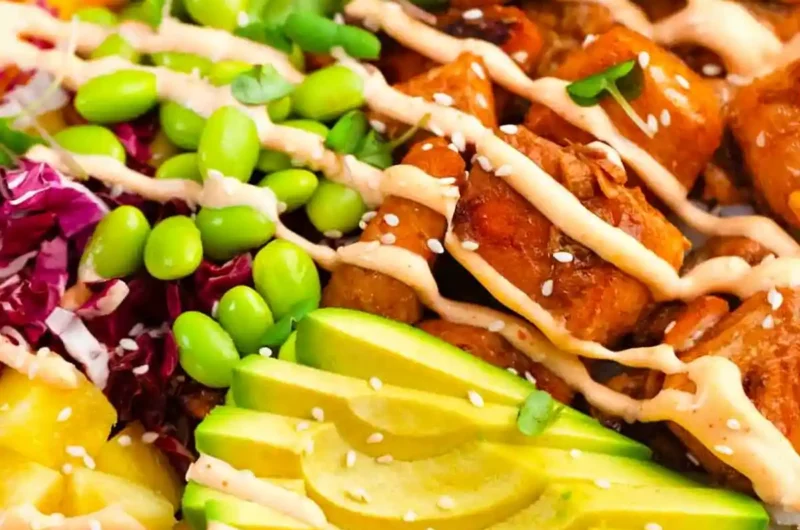
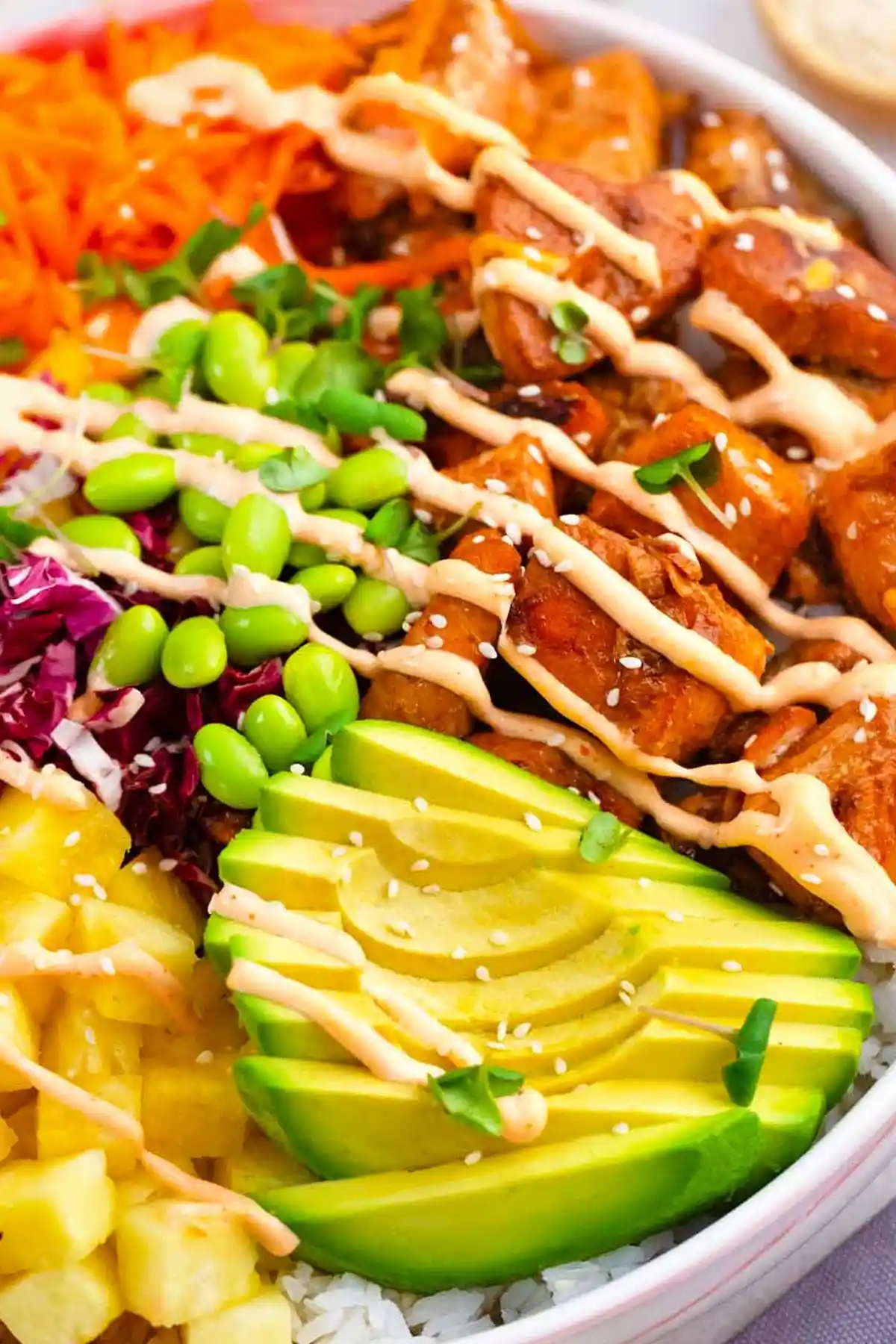
Enjoy a vibrant and flavorful poke bowl experience right at home with this cooked salmon variation. By searing the salmon in a sweet and savory garlic-ginger glaze, you create a satisfying meal that avoids the need for raw fish while maintaining the classic, colorful presentation of a traditional poke bowl. It is a perfect balance of textures and tastes, featuring fresh fruits, crunchy vegetables, and a creamy, spicy finish.
List of ingredients
- 2 cups Japanese short-grain rice (sushi rice)
- 2 1/4 cups water
- 1/4 cup rice vinegar (unseasoned)
- 4 teaspoons granulated sugar
- 1 teaspoon fine sea salt
- 2 lbs. salmon (skinless, cut into 1″ cubes)
- 2 cloves minced garlic
- 1 teaspoon grated ginger
- 1 tablespoon toasted sesame oil
- 2 tablespoons soy sauce
- 2 tablespoons honey
- 1 tablespoon canola oil
- 2 teaspoons sriracha
- Shredded purple cabbage
- Cubed pineapple
- Cubed mango
- Edamame
- Shredded carrot
- Avocado
- Sliced cucumber
- Spicy mayo
- Sesame seeds
- Microgreens
- Pickled ginger
- Seaweed
step-by-step instructions
- Sushi Rice: Rinse rice until water runs clear. Combine with water in a saucepan, simmer for 16-18 minutes covered, then steam for 10 minutes off heat.
- Vinegar Mix: Heat vinegar, sugar, and salt until dissolved. Fold into cooked rice, cover with a damp towel, and cool.
- Marinate: Mix soy sauce, sesame oil, honey, and sriracha. Toss with salmon cubes; marinate for 30 minutes.
- Sear: Heat canola oil in a skillet over medium-high. Sear salmon for 2-3 minutes per side until browned and cooked through.
- Sauce: Add remaining marinade to the skillet and cook for 1 minute to coat.
- Assemble: Divide rice into bowls, top with salmon, vegetables, fruits, and garnishes. Drizzle with spicy mayo.
Practical Cooking Advice
Maintaining the Perfect Salmon Texture
To ensure your salmon remains succulent, keep the searing time precise. Overcooked salmon can become dry, so look for the transition from opaque pink to a firm, flakey texture as the primary visual indicator. Using a pan that is sufficiently hot before adding the fish ensures a quick sear on the outside while keeping the inside tender.
Achieving Evenly Cut Ingredients
For the best poke bowl experience, uniformity in your vegetable and fruit cutting is key. Aim for similar bite-sized dimensions for the mango, pineapple, and cucumber. This ensures that every forkful contains a balanced mix of ingredients rather than one overwhelming component, which greatly enhances the overall eating experience.
Refining the Rice Consistency
Rinsing the rice thoroughly is the most important step for achieving the correct texture. Removing excess surface starch prevents the grains from becoming gummy or mushy during the steaming process. Always allow the rice to steam off the heat for the full 10 minutes, as this trapped steam finishes the cooking process gently and ensures every grain is perfectly tender.
Customizing Your Bowl
Selecting Alternative Proteins
While salmon is the traditional choice for this recipe, you can easily adapt the bowl to include other proteins. Firm white fish, such as cod or mahi-mahi, works exceptionally well when marinated in the honey-garlic glaze. If you prefer a plant-forward option, firm tofu cubes pressed and seared using the same method offer a wonderful, protein-rich alternative.
Enhancing the Flavor Profile
For a brighter, tangier bowl, consider adding a squeeze of fresh lime juice just before serving. The acidity of the lime cuts through the richness of the honey and sesame oil, lifting the flavors of the fresh mango and pineapple. Adding toasted sesame seeds at the final stage provides a subtle crunch that contrasts beautifully with the soft texture of the avocado and rice.
Adjusting the Heat Levels
The amount of sriracha used in the marinade can be adjusted based on individual heat tolerance. If you prefer a milder bowl, you can omit the sriracha entirely and rely on the ginger and garlic for aromatics. Conversely, those who enjoy intense heat can double the sriracha or add a sprinkle of crushed chili flakes to the finished bowl for an additional punch.
FAQ
How should I store leftover poke bowl components?
It is best to store the cooked salmon, the rice, and the fresh vegetables in separate airtight containers in the refrigerator. The salmon will stay fresh for up to two days, while the rice can be kept for up to three. Keeping the ingredients separate prevents the vegetables from wilting and the rice from becoming too soggy from the moisture in the fruit or sauce.
Can I prepare the components in advance?
Yes, you can streamline the process by preparing the rice and chopping the vegetables earlier in the day. Store the prepared vegetables in the refrigerator and keep the rice covered with a damp towel to prevent it from hardening. The salmon is best marinated and cooked just before serving to maintain the best quality of the fish and the integrity of the sticky glaze.
Is there a way to make this dish gluten-free?
To adapt this recipe for a gluten-free diet, simply swap the soy sauce for coconut aminos or a certified gluten-free tamari. Both options provide the deep, savory saltiness required for the marinade without the presence of wheat. Always check the labels on your sriracha or other bottled sauces to ensure they do not contain hidden gluten thickeners.
What if I do not have a sushi-grade fish?
Because this recipe calls for fully cooking the salmon, you do not need to seek out sushi-grade fish. Standard, high-quality salmon fillets from your local grocer are perfectly appropriate for this preparation. The high-heat searing process ensures that the fish reaches a safe internal temperature throughout, allowing you to use regular fillets with confidence.
How can I reheat the salmon effectively?
If you have leftover glazed salmon, it is best reheated in a skillet over low heat with a tiny splash of water to loosen the glaze. Avoid using the microwave if possible, as it can cause the salmon to become rubbery very quickly. If you must use the microwave, heat it in short 30-second bursts and check the texture frequently to prevent overcooking the delicate protein.
Print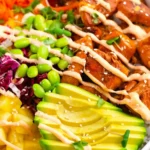
Cooked Salmon Poke Bowl
- Total Time: PT40M
- Yield: 4 servings 1x
- Diet: Pescatarian
Description
Cooked Salmon Poke Bowl is made with honey garlic salmon, served on top of sushi rice, crunchy veggies, fruits, and a drizzle of spicy mayo. A delicious way to enjoy salmon without raw fish.
Ingredients
- 2 cups Japanese short-grain rice (sushi rice)
- 2 1/4 cups water
- 1/4 cup rice vinegar (unseasoned)
- 4 teaspoons granulated sugar
- 1 teaspoon fine sea salt
- 2 lbs. salmon (skinless, cut into 1″ cubes)
- 2 cloves minced garlic
- 1 teaspoon grated ginger
- 1 tablespoon toasted sesame oil
- 2 tablespoons soy sauce
- 2 tablespoons honey
- 1 tablespoon canola oil
- 2 teaspoons sriracha
- Shredded purple cabbage
- Cubed pineapple
- Cubed mango
- Edamame
- Shredded carrot
- Avocado
- Sliced cucumber
- Spicy mayo
- Sesame seeds
- Microgreens
- Pickled ginger
- Seaweed
Instructions
- Sushi Rice: Rinse rice until water runs clear. Combine with water in a saucepan, simmer for 16-18 minutes covered, then steam for 10 minutes off heat.
- Vinegar Mix: Heat vinegar, sugar, and salt until dissolved. Fold into cooked rice, cover with a damp towel, and cool.
- Marinate: Mix soy sauce, sesame oil, honey, and sriracha. Toss with salmon cubes; marinate for 30 minutes.
- Sear: Heat canola oil in a skillet over medium-high. Sear salmon for 2-3 minutes per side until browned and cooked through.
- Sauce: Add remaining marinade to the skillet and cook for 1 minute to coat.
- Assemble: Divide rice into bowls, top with salmon, vegetables, fruits, and garnishes. Drizzle with spicy mayo.
Notes
Leftovers can be stored in an airtight container in the fridge for several days. Reheat in the microwave or air fryer. Freezing is not recommended.
- Prep Time: PT20M
- Cook Time: PT20M
- Category: Main Course
- Method: Stovetop
- Cuisine: Asian
Nutrition
- Serving Size: 1 bowl
- Calories: 680 kcal
- Sugar: 13 g
- Sodium: 1249 mg
- Fat: 22 g
- Saturated Fat: 3 g
- Unsaturated Fat: 17 g
- Trans Fat: 0 g
- Carbohydrates: 88 g
- Fiber: 1 g
- Protein: 53 g
- Cholesterol: 125 mg
Keywords: Cooked Salmon Poke Bowl, Salmon Bowl, Healthy Dinner, Honey Garlic Salmon