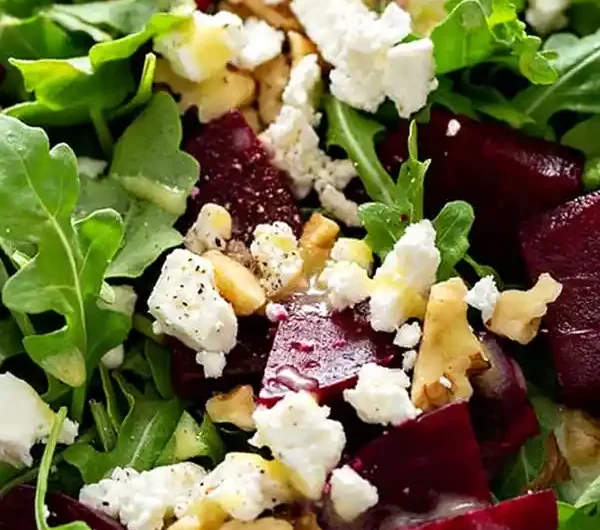
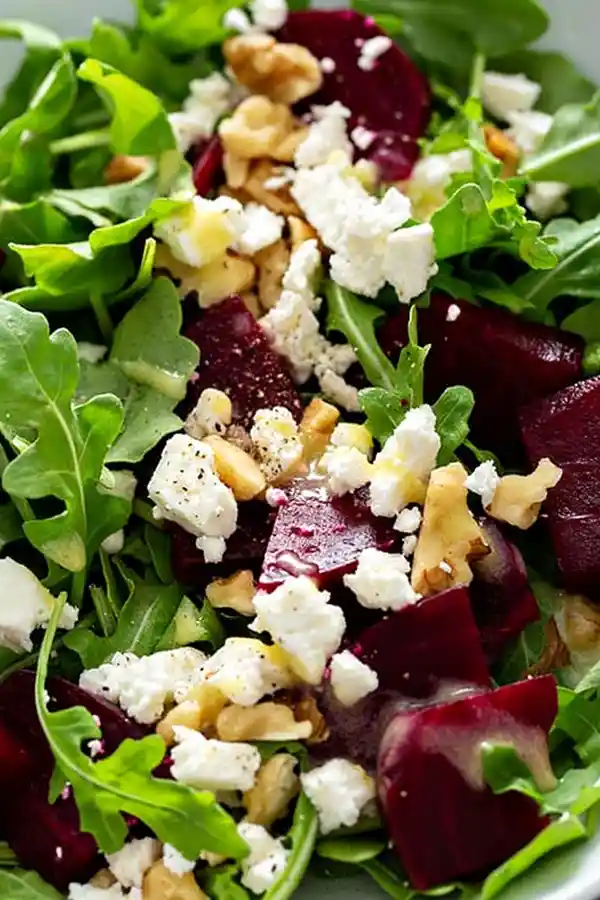
This fresh Arugula Beet Salad combines the earthiness of roasted beets with the peppery bite of baby arugula. It is a visually stunning dish that provides a perfect balance of salty, sweet, and tangy flavors. This recipe is ideal for a light lunch or as a sophisticated side dish for dinner guests.
List of ingredients
- 3 tablespoons extra-virgin olive oil – serves as the rich base for the citrus vinaigrette.
- 1 1/2 tablespoons lemon juice – provides a bright, acidic contrast to the sweet beets.
- 1/2 teaspoon Dijon mustard – acts as an emulsifier to keep the dressing blended.
- 1/4 teaspoon honey – adds a touch of sweetness to balance the peppery greens.
- Salt and pepper – used to season the dressing according to your preference.
- 3 ounces baby arugula – a tender, peppery green that forms the salad base.
- 2 medium beets – roasted, peeled, and diced into bite-sized pieces.
- 1/4 cup crumbled feta cheese – adds a creamy, salty element to the dish.
- 1/4 cup roughly chopped toasted walnuts – provides a necessary crunch and nutty flavor.
step-by-step instructions
- Prepare the dressing: Place all of the ingredients for the dressing in a lidded jar and shake vigorously to emulsify.
- Coat the greens: In a large bowl, pour half of the dressing. Add the arugula and toss well to ensure every leaf is coated.
- Assemble the plates: Divide the coated arugula into individual bowls and top them with the diced beets, feta, and walnuts.
- Add final seasoning: Drizzle the remaining dressing over the top of the assembled bowls.
- Serve: Eat and enjoy immediately for the best texture.
Mastering the Roasted Beets
Selecting High Quality Roots
Choose beets that feel firm to the touch and have smooth, unblemished skins. Avoid roots that appear shriveled or have soft spots, as these may be past their prime. Medium-sized beets usually offer the most consistent sweetness and texture.
Cleaning and Prepping Beets
Rinse the beets under cold running water to remove any clinging soil from the skin. Scrub them gently with a vegetable brush if they are particularly dirty. Leave a small portion of the stem and root intact to prevent the beets from bleeding too much during the initial roasting phase.
The Foil Wrapping Technique
Wrap each cleaned beet individually in aluminum foil with a small drizzle of oil. This method traps the steam inside, ensuring the beets become tender throughout without drying out. It also makes the peeling process much easier once they have finished cooking.
Oven Temperature and Timing
Roast your beets at 400 degrees Fahrenheit until a knife slides easily into the center. Depending on the size of the roots, this typically takes between 45 to 60 minutes. Overcooking can lead to a mushy texture, so check them frequently toward the end.
Efficient Peeling Methods
Allow the roasted beets to cool for a few minutes before handling them. Once slightly cooled, use your fingers or a paper towel to rub the skins off the roots. The skins should slip away easily if the beets were roasted and steamed properly in foil.
Dicing for Uniformity
Cut the peeled beets into bite-sized cubes, roughly half an inch in size. Consistent dicing ensures that you get a bit of beet in every forkful along with the other ingredients. This also creates a more professional and polished presentation on the plate.
Cooling Before Assembly
Ensure the diced beets are completely cooled to room temperature before adding them to the arugula. Adding hot beets will cause the baby arugula to wilt instantly, ruining the crisp texture of the salad. If you are in a rush, place the diced beets in the refrigerator for ten minutes.
Optimal Vinaigrette Preparation
Choosing the Right Olive Oil
Use a high-quality extra-virgin olive oil for the best flavor profile. A mild, buttery oil works well here, but a robust, peppery oil can enhance the natural flavor of the arugula. Store your olive oil in a cool, dark place to prevent it from becoming rancid.
The Role of Dijon Mustard
Dijon mustard is essential for the stability of the dressing. It acts as a bridge between the oil and the lemon juice, preventing the mixture from separating. This results in a creamy, cohesive sauce that clings better to the salad leaves.
Balancing Sweetness with Honey
Honey provides a subtle sweetness that cuts through the acidity of the lemon and the bitterness of the greens. If you prefer a different flavor, maple syrup is an excellent alternative. Adjust the amount slightly if your beets are exceptionally sweet.
Achieving a Perfect Emulsion
Shaking the dressing in a jar is the most efficient way to emulsify the ingredients. The vigorous motion breaks the oil into tiny droplets that are suspended in the lemon juice. If you do not have a jar, a small whisk and a bowl will also work.
Adjusting Acidity Levels
The amount of lemon juice may need slight adjustment depending on the ripeness of the fruit. Taste your dressing before adding it to the salad. If it is too sharp, add a tiny bit more honey or olive oil to mellow it out.
Ingredient Substitutions and Variations
Alternative Cheese Options
While feta is traditional, goat cheese is a fantastic alternative due to its creamy texture and tanginess. Ricotta salata can be used for a firmer, saltier bite. For a vegan option, omit the cheese or use a marinated almond-based feta.
Nut and Seed Alternatives
If you do not have walnuts, pecans or hazelnuts provide a similar depth of flavor. For a seed-based crunch, toasted pumpkin seeds or sunflower seeds are great choices. Always toast your nuts to release their aromatic oils and improve the crunch.
Switching the Base Greens
Baby spinach is a milder alternative if the peppery taste of arugula is too strong for some guests. A mixture of spring greens also works well to add variety in texture. Ensure the greens are thoroughly dried after washing to prevent the dressing from becoming watery.
Using Different Citrus Juices
Freshly squeezed orange juice can replace some of the lemon juice for a sweeter, more floral vinaigrette. Lime juice offers a zippier, more tropical note that pairs well with the earthy beets. Always use fresh citrus rather than bottled concentrates for the best taste.
Adding Dried Fruit for Complexity
Tossing in a handful of dried cranberries or tart cherries adds a chewy texture and a burst of sweetness. Dried apricots, thinly sliced, also complement the roasted beets beautifully. Use these sparingly so they do not overpower the other flavors.
Incorporating Fresh Herbs
Finely chopped mint or flat-leaf parsley can be tossed with the arugula for extra freshness. Basil also pairs well with the feta and beets, providing a peppery, sweet aroma. Herbs should be added at the very end to keep them from bruising.
Serving and Presentation Tips
Layering for Visual Impact
To create a restaurant-style presentation, place the dressed arugula as a base and arrange the beets on top. Sprinkle the feta and walnuts over the beets to create a colorful contrast. This prevents the beet juice from staining all the greens immediately.
Plating for Large Groups
When serving a crowd, use a wide platter instead of individual bowls. Arrange the ingredients in sections or a loose pile, then drizzle the dressing over the top in a zig-zag pattern. This allows guests to scoop their own proportions of toppings.
Protein Pairings for a Full Meal
To turn this side salad into a main course, add a grilled protein on top. Slices of grilled salmon or roasted chicken breast complement the beet and arugula flavors perfectly. For a vegetarian protein, add a scoop of seasoned quinoa or chickpeas.
Ideal Beverage Pairings
Since this salad is bright and acidic, it pairs well with crisp, non-alcoholic sparkling waters infused with cucumber or lime. A chilled iced tea with a hint of lemon also complements the vinaigrette. Avoid overly sweet drinks that might clash with the earthy beets.
Using Appropriate Serving Ware
Serve this salad in white or light-colored bowls to make the deep red of the beets pop. Glass bowls are also a great choice as they showcase the different layers of the salad. Avoid dark plates that might hide the vibrant colors of the ingredients.
Storage and Make-Ahead Advice
Prepping Beets in Advance
Roasted beets can be prepared up to three days before you plan to serve the salad. Once cooled and diced, store them in an airtight container in the refrigerator. This significantly reduces the assembly time on the day of the event.
Storing the Vinaigrette
The lemon vinaigrette can be made a few days in advance and kept in the refrigerator. Because it contains oil, it may thicken or separate over time. Simply shake the jar vigorously again before using it to restore the emulsion.
Maintaining Green Freshness
Never dress the arugula until you are ready to serve the salad. The acidity in the lemon juice will break down the cell walls of the leaves, causing them to wilt and become soggy. Keep the greens in a sealed container with a paper towel to absorb excess moisture.
Handling Leftovers
If you have leftover salad, store the components separately. Keep the beets, cheese, and nuts in one container and the greens in another. This ensures that the components stay fresh and the textures remain intact for the next meal.
Reviving Wilted Arugula
If your arugula has started to wilt, soak it in a bowl of ice-cold water for ten to fifteen minutes. Pat the leaves completely dry with a salad spinner or paper towels before dressing. This process rehydrates the cells and restores the crispness.
Troubleshooting Common Issues
Preventing Beet Color Bleed
Beets are notorious for staining everything they touch. To minimize this, add the beets to the salad as the final step before serving. Avoid tossing the beets vigorously with the greens; instead, place them gently on top of the dressed arugula.
Balancing Excess Bitterness
If the arugula tastes too bitter, increase the amount of honey or feta cheese in the recipe. The sweetness of the honey and the creaminess of the cheese neutralize the bitter compounds in the greens. A small pinch of extra salt can also help balance the flavors.
Fixing a Broken Dressing
If your dressing separates and won’t emulsify, add a tiny bit more Dijon mustard and whisk vigorously. The mustard provides the necessary lecithin to bind the oil and acid. If it is still separating, try adding a teaspoon of warm water and shaking again.
Ensuring Maximum Nut Crunch
If your walnuts feel soft, they likely need more toasting. Heat them in a dry skillet over medium heat for 3-5 minutes, stirring constantly until they smell fragrant. Immediately remove them from the pan to prevent them from burning.
Managing Feta Clumping
If the feta cheese is too sticky to crumble, chill it in the freezer for ten minutes before breaking it apart. This firms up the fats in the cheese, allowing it to crumble into neat pieces rather than smearing. Use your fingers for the most natural look.
Frequently Asked Questions
Can I use canned beets instead of roasted?
Yes, you can use canned beets, but the flavor is often more metallic and the texture is softer. If using canned, drain them thoroughly and rinse them with cold water to remove the canning liquid before dicing them.
How long does the dressing stay fresh in the fridge?
The lemon vinaigrette typically stays fresh for about one week when stored in an airtight jar. Ensure the lid is tight to prevent the oil from absorbing other refrigerator odors. Shake well before each use.
Do I need to wash baby arugula?
Even if the package says pre-washed, a quick rinse in cold water is recommended to remove any remaining grit. Always use a salad spinner or pat the leaves dry, as excess water will dilute the dressing and make the salad soggy.
Can this recipe be made vegan?
Absolutely. Replace the honey with maple syrup or agave nectar, and substitute the feta cheese with a vegan almond-based feta or omit the cheese entirely. You can also add avocado for a creamy texture replacement.
What is the best way to store pre-cut beets?
Store pre-cut beets in a glass container with a tight-fitting lid. Glass is preferable to plastic as it does not absorb the beet scent or stain as easily. Keep them in the coldest part of your refrigerator.
Print
Arugula Beet Salad
- Total Time: 10 minutes
- Yield: 2 servings 1x
- Diet: Vegetarian
Description
This easy Arugula Beet Salad recipe is healthy, delicious, and beautiful. Impressive enough for guests and easy enough for a light lunch or side dish.
Ingredients
- 3 tablespoons extra-virgin olive oil
- 1 1/2 tablespoons lemon juice
- 1/2 teaspoon Dijon mustard
- 1/4 teaspoon honey
- Salt and pepper, to taste
- 3 ounces baby arugula
- 2 medium beets (roasted, peeled, and diced into bite-sized pieces)
- 1/4 cup crumbled feta cheese
- 1/4 cup roughly chopped toasted walnuts
Instructions
- Step 1: Place all of the ingredients for the dressing in a lidded jar and shake vigorously to emulsify.
- Step 2: In a large bowl pour half of the dressing. Add the arugula; toss to coat.
- Step 3: Divide into individual bowls with some beets, feta, and walnuts.
- Step 4: Drizzle with a little more dressing.
- Step 5: Eat and enjoy!
Notes
Roasted beets can be prepared up to 3 days in advance and refrigerated. For variations: substitute baby spinach or mixed greens for arugula, goat cheese for feta, hazelnuts for walnuts, or maple syrup for honey.
- Prep Time: 10 minutes
- Cook Time: 0 minutes
- Category: Salad
- Method: Fresh Assembly
- Cuisine: American
Nutrition
- Serving Size: 1 serving
- Calories: 420 kcal
- Sugar: 15 g
- Sodium: 368 mg
- Fat: 35 g
- Saturated Fat: 7 g
- Unsaturated Fat: 28 g
- Trans Fat: 0 g
- Carbohydrates: 22 g
- Fiber: 6 g
- Protein: 9 g
- Cholesterol: 17 mg
Keywords: arugula, beet salad, roasted beets, citrus vinaigrette, healthy salad