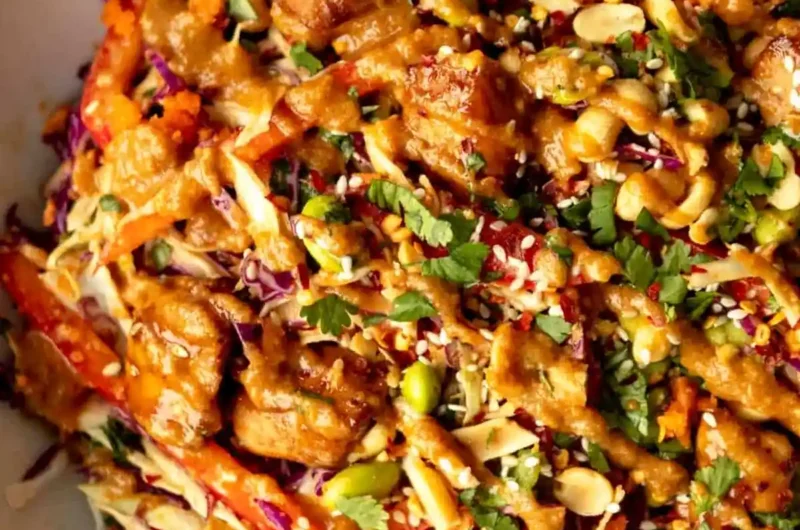
This Asian Chicken Crunch Salad is a high-protein meal prep option featuring crisp vegetables and a savory peanut dressing. It combines tender sesame chicken with edamame and cabbage for a satisfying, nutrient-dense lunch.
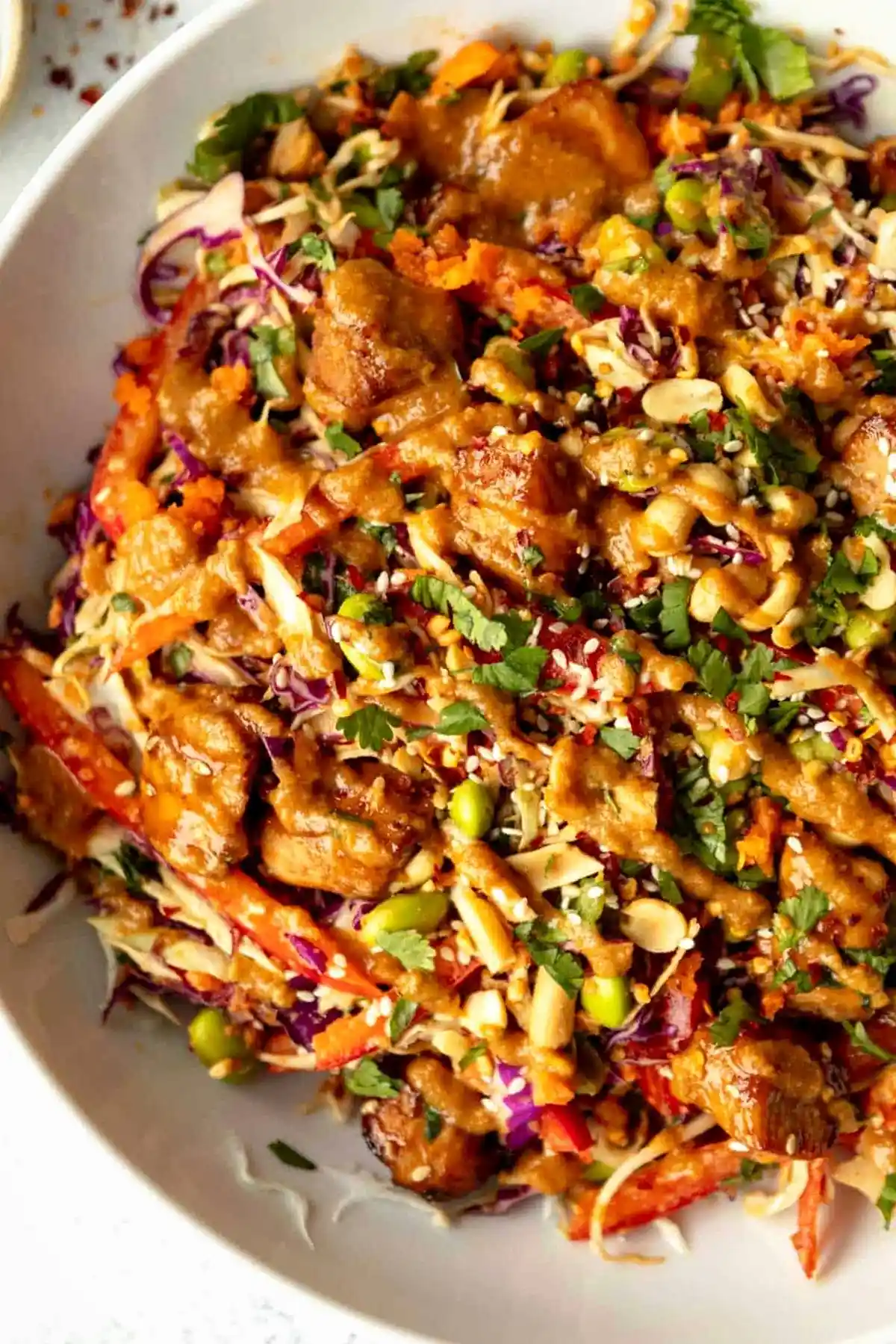
List of ingredients
- 1 pound chicken breast – cut into 1-inch cubes.
- 1/4 cup low sodium soy sauce or tamari – for the chicken marinade.
- 1 tablespoon minced garlic – added to the marinade.
- 1-2 tablespoons brown sugar – adjust based on sweetness preference.
- 1 tablespoon tahini – adds creaminess to the marinade.
- 1 tablespoon toasted sesame oil – for a nutty aroma.
- 1 tablespoon rice vinegar – provides acidity to the chicken.
- 2 teaspoons fresh grated ginger – for zingy flavor.
- 1 tablespoon sriracha – for a touch of heat.
- 1 tablespoon sesame seeds – for texture and garnish.
- 3 cups shredded purple cabbage – for color and crunch.
- 3 cups shredded green cabbage – adds volume and fiber.
- 1 cup shredded carrot – for natural sweetness.
- 1 red bell pepper – sliced into thin strips.
- 1/2 cup shelled edamame – adds plant-based protein.
- 1/2 cup diced green onion – for a sharp, fresh taste.
- 1/2 cup chopped cilantro – provides a bright herbal note.
- 1/4 cup chopped peanuts – for extra crunch.
- 3 tablespoons natural creamy peanut butter – base for the dressing.
- 2 tablespoons rice vinegar – balances the peanut butter.
- 2 tablespoons honey – for a touch of sweetness.
- 1 tablespoon toasted sesame oil – adds richness to the dressing.
- 2 tablespoons low sodium soy sauce or tamari – for salty depth.
- 1 teaspoon fresh grated ginger – fresh aromatic flavor.
- 1 teaspoon minced garlic – pungent depth.
- 2 teaspoons sriracha – adjusts the spice level.
- 2 tablespoons warm water – used to thin the dressing to the desired consistency.
step-by-step instructions
- Prep the chicken: Cut the chicken breast into small cubes, approximately 1 inch in size.
- Marinate the meat: Whisk together all chicken marinade ingredients in a shallow bowl and add the chicken cubes. Let the meat marinate while preparing the other components.
- Mix the dressing: Combine all dressing ingredients in a bowl, whisking until smooth, and set aside.
- Prepare the vegetables: Shred the purple and green cabbage using a mandoline or a sharp knife.
- Combine the base: Place all the prepared vegetables in a large mixing bowl.
- Sear the chicken: Heat a skillet with a splash of oil over medium heat. Add the chicken cubes, but keep the remaining marinade in the bowl for now.
- Brown the meat: Cook the chicken on all sides for about 3 minutes or until browned.
- Glaze the chicken: Pour in the remaining marinade and cook until the internal temperature reaches 165 degrees Fahrenheit and the sauce has thickened.
- Assemble the salad: Let the chicken cool slightly. Toss the vegetable mix with the peanut dressing, then fold in the cooked chicken.
- Final touch: Garnish the dish with additional cilantro and sesame seeds before serving.
Advanced Cooking Methods for the Chicken
Achieving a Golden Sear in the Skillet
To get a professional sear, ensure your skillet is fully preheated before adding the oil. Avoid crowding the pan, as adding too much meat at once lowers the temperature and causes the chicken to steam instead of brown. Cook in batches if necessary to maintain a high heat for a better crust.
Air Fryer Settings for Crispy Results
If you prefer using an air fryer, preheat the machine to 380 degrees Fahrenheit. Cook the marinated cubes for 14-16 minutes, shaking the basket every 5 minutes to ensure even browning. You can either toss the finished chicken in the leftover marinade in a pan or add it directly to the salad.
Managing Internal Temperatures
Use an instant-read meat thermometer to ensure the chicken reaches exactly 165 degrees Fahrenheit. Overcooking chicken breast can lead to a dry, rubbery texture that clashes with the fresh vegetables. Remove the meat from the heat as soon as the target temperature is hit.
Reducing the Marinade into a Glaze
Adding the remaining marinade at the end of the cooking process allows the sugars to caramelize. Simmer the liquid until it reduces into a thick syrup that clings to the chicken. This ensures every piece of meat is coated in a concentrated burst of flavor.
Vegetable Preparation and Texture
Shredding Cabbage with a Mandoline
Using a mandoline is the fastest way to achieve uniform, thin shreds of cabbage. Always use the safety guard provided with the tool to protect your fingers from the blade. Adjust the thickness setting to a fine slice for a more delicate salad texture.
Slicing Bell Peppers for Uniformity
To match the shred of the cabbage, slice your red bell pepper into thin julienne strips. Remove the seeds and white ribs completely to avoid any bitter taste. Consistent sizing ensures that you get a bit of every vegetable in every bite.
Preparing Edamame for Maximum Freshness
If using frozen shelled edamame, thaw them under cold running water or soak them in a bowl of water for 20 minutes. Drain them thoroughly and pat them dry with a paper towel. This prevents excess water from diluting the peanut dressing.
Shredding Carrots by Hand
If you do not have a grater, you can use a vegetable peeler to create long, thin ribbons of carrots. This method adds a different visual element to the salad and maintains a satisfying crunch. Alternatively, a box grater on the large holes works perfectly for traditional shreds.
Perfecting the Peanut Dressing
Adjusting the Viscosity with Warm Water
The thickness of natural peanut butter varies by brand, which can make the dressing too thick to pour. Add warm water one tablespoon at a time, whisking constantly until the sauce reaches a creamy, pourable consistency. Warm water helps the fats in the peanut butter emulsify more easily.
Balancing Acidity and Sweetness
The balance between rice vinegar and honey is key to the authentic taste of this salad. If the dressing feels too tart, add an extra teaspoon of honey. Conversely, if it is too sweet, a small splash of additional rice vinegar will brighten the flavor profile.
Emulsifying the Peanut Butter
For a completely smooth dressing, use a small whisk or a handheld frother to combine the ingredients. Ensure the peanut butter is at room temperature before mixing to avoid lumps. This process creates a stable emulsion that won’t separate as quickly in the fridge.
Enhancing the Heat Level
Sriracha provides a mild heat, but you can customize the spice to your liking. For a stronger kick, increase the sriracha or add a pinch of red pepper flakes. If you prefer a mild version, reduce the sriracha to a teaspoon or swap it for a small amount of paprika.
Nut-Free and Protein Substitutions
Using Sunflower Butter for Nut Allergies
Sunflower seed butter is an excellent 1:1 substitute for peanut butter for those with nut allergies. It has a similar creamy texture and a slightly earthier taste. The rest of the dressing ingredients remain the same to maintain the flavor balance.
Swapping Chicken for Extra Firm Tofu
To make a vegetarian version, use extra-firm tofu that has been pressed for 30 minutes to remove excess water. Cut the tofu into cubes and sear them in the same marinade as the chicken. Tofu absorbs the flavors well and provides a similar protein density.
Incorporating Shrimp for a Seafood Twist
Shrimp is a great alternative to chicken and cooks much faster. Sauté the shrimp in the marinade for about 2-3 minutes per side until pink and opaque. Be careful not to overcook the shrimp, as they can become tough and rubbery very quickly.
Almond Butter as a Richer Alternative
Almond butter offers a more subtle, nutty flavor than peanut butter and adds a different nutritional profile. Because almond butter is often thicker, you may need to add an extra tablespoon of warm water to achieve the right consistency. It pairs exceptionally well with the shredded carrots.
Serving Ideas and Meal Variations
Turning the Salad into a Wrap
This mixture makes an excellent filling for large flour tortillas or collard green wraps. Layer the dressed salad and warm chicken in the center of the wrap and roll it tightly. This turns a light salad into a more substantial, handheld meal.
Adding Rice Noodles for a Heartier Meal
To increase the carbohydrate content, add 6-8 ounces of cooked and cooled rice noodles. Toss the noodles with the dressing before adding the vegetables to ensure they are well-coated. This transforms the dish into a full-fledged noodle salad.
Using Quinoa as a Grain Base
Cooked quinoa adds a nutty flavor and extra fiber to the crunch salad. Mix the quinoa in with the cabbage and carrots for a more filling texture. This is especially useful for those using the salad as a primary dinner rather than a side dish.
Pairing with Fresh Spring Rolls
Use the salad ingredients as a filling for fresh Vietnamese-style spring rolls. Place a small amount of the salad mix and a piece of chicken on a damp rice paper wrapper, then roll it up. Serve the peanut dressing on the side as a dipping sauce.
Storage and Freshness Maintenance
Using Airtight Glass Containers
Glass containers are superior for storing this salad because they do not absorb odors and provide a tighter seal than some plastic options. This keeps the cabbage crisp and prevents the dressing from leaking. Divide the salad into four equal portions for easy weekday grabbing.
Timing the Dressing Application
While cabbage is heartier than lettuce, storing the dressing separately will maximize the crunch. Keep the dressing in small condiment containers and toss the salad immediately before eating. If you prefer the convenience of pre-tossing, this salad still holds up well for 3-5 days.
Maintaining Cabbage Crunch in the Fridge
To keep the vegetables from releasing too much water, ensure they are completely dry after washing and before shredding. Moisture on the surface of the vegetables can lead to a watery salad over time. A salad spinner is highly recommended for the cilantro and green onions.
Safe Reheating of Chicken
If you prefer the chicken warm, remove it from the cold salad and reheat it in a microwave for 30-60 seconds. Alternatively, flash-fry the chicken in a pan for one minute to regain some of the original crispness. Add the warm chicken back to the cold salad just before serving.
Troubleshooting Common Issues
Preventing the Salad from Becoming Watery
A watery salad usually happens when vegetables are salted too early or not dried properly. Avoid adding extra salt to the cabbage before the dressing is added. Ensure the edamame and any other frozen components are fully drained.
Fixing a Dressing that is Too Thick
If the dressing is too thick to toss evenly, do not add more oil, as this will make the salad greasy. Instead, whisk in rice vinegar or warm water one teaspoon at a time. This thins the sauce while maintaining the balance of flavor.
Avoiding Overcooked Chicken Breast
Chicken breast dries out quickly, especially when cut into small cubes. To prevent this, ensure the pan is hot and cook the meat quickly. Once the internal temperature hits 165 degrees, remove it from the heat immediately to let the juices redistribute.
Correcting an Overly Salty Flavor
If the soy sauce makes the dish too salty, increase the amount of shredded cabbage or carrots. Adding a small amount of extra honey or a squeeze of fresh lime juice can also help neutralize the saltiness. Avoid adding more salt in any other part of the recipe.
Frequently Asked Questions
Can I use peanut butter that is natural and separated?
Yes, natural peanut butter is preferred for this recipe. Simply stir the peanut butter thoroughly until the oil is fully incorporated before measuring it out for the dressing.
What is the best substitute for rice vinegar?
Apple cider vinegar is the closest substitute in terms of acidity and sweetness. You can use it in a 1:1 ratio, though it has a slightly different fruity undertone compared to rice vinegar.
Can I freeze this salad?
No, this salad cannot be frozen because the fresh cabbage, carrots, and peppers will lose their structure and become mushy upon thawing. However, you can freeze the cooked chicken and add it to a fresh salad later.
How long does the marinated chicken last?
Marinated raw chicken should be cooked within 24 to 48 hours to prevent the acid in the vinegar from breaking down the meat texture too much. Once cooked, the chicken stays fresh in the fridge for up to 4 days.
Do I have to use purple cabbage?
While purple cabbage adds a beautiful color, you can use only green cabbage if that is all you have available. The texture and flavor will remain largely the same, though you will lose some of the anthocyanin antioxidants found in the purple variety.
Print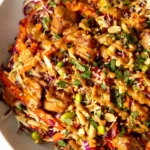
Asian Chicken Crunch Salad
- Total Time: 35 minutes
- Yield: 4 servings 1x
- Diet: Gluten-Free
Description
This Thai peanut chicken crunch salad is the perfect meal prep recipe. It’s full of fresh, crisp veggies, crispy sesame chicken and a simple peanut dressing that you’ll want to put on everything!
Ingredients
- 1 pound chicken breast
- 1/4 cup low sodium soy sauce or tamari
- 1 tablespoon minced garlic
- 1–2 tablespoons brown sugar
- 1 tablespoon tahini
- 1 tablespoon toasted sesame oil
- 1 tablespoon rice vinegar
- 2 teaspoons fresh grated ginger
- 1 tablespoon sriracha
- 1 tablespoon sesame seeds
- 3 cups shredded purple cabbage
- 3 cups shredded green cabbage
- 1 cup shredded carrot
- 1 red bell pepper (sliced into strips)
- 1/2 cup shelled edamame
- 1/2 cup diced green onion
- 1/2 cup chopped cilantro
- 1/4 cup chopped peanuts
- 3 tablespoons natural creamy peanut butter
- 2 tablespoons rice vinegar
- 2 tablespoons honey
- 1 tablespoon toasted sesame oil
- 2 tablespoons low sodium soy sauce or tamari
- 1 teaspoon fresh grated ginger
- 1 teaspoon minced garlic
- 2 teaspoons sriracha
- 2 tablespoons warm water
Instructions
- Step: Cut the chicken into small cubes. About 1 inch.
- Step: Whisk together all ingredients for the chicken marinade in a shallow bowl. Add in the chicken and let marinate while we prep everything else.
- Step: Whisk together all ingredients for the dressing and set aside.
- Step: Shred the cabbage using a mandoline or a regular knife.
- Step: Add all of the veggies to a large bowl.
- Step: Heat a skillet with a splash of oil over medium heat. Add in the chicken but leave aside the remaining marinade for now.
- Step: Cook on all sides for about 3 minutes or until browned, then add in the remaining marinade.
- Step: Cook until the internal temperature reaches 165 degrees Fahrenheit and the sauce has thickened.
- Step: Let cool slightly. Meanwhile, toss the salad with as much or as little dressing you like. Add in the chicken and toss to combine.
- Step: Garnish with more cilantro and sesame seeds and enjoy!
Notes
Feel free to swap in or out any other veggies you like. The peanut butter can be subbed for almond butter, sunflower butter or even tahini.
- Prep Time: 15 minutes
- Cook Time: 20 minutes
- Category: Salad
- Method: Pan-frying
- Cuisine: American
Nutrition
- Serving Size: 1 bowl
- Calories: 422 kcal
- Sugar: 19 g
- Sodium: 1200 mg
- Fat: 20 g
- Saturated Fat: 4 g
- Unsaturated Fat: 16 g
- Trans Fat: 0 g
- Carbohydrates: 29 g
- Fiber: 6 g
- Protein: 34 g
- Cholesterol: 90 mg
Keywords: Asian chicken crunch salad, Thai peanut chicken, meal prep salad, healthy lunch, gluten-free salad