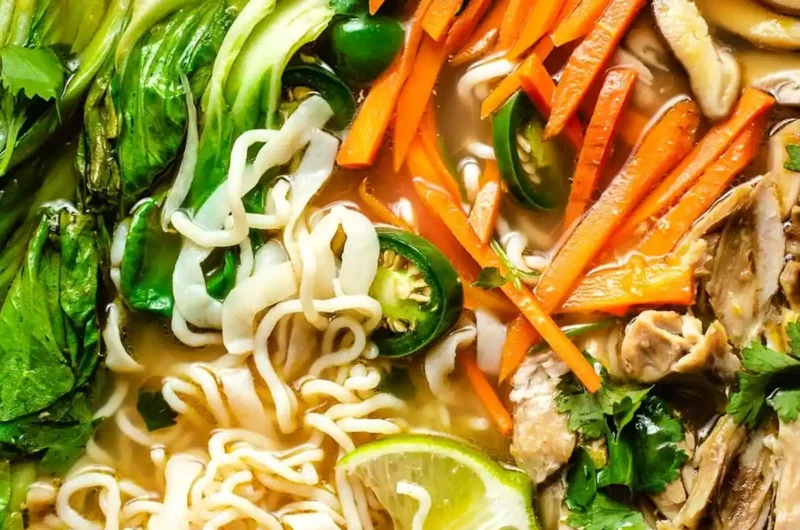
This vibrant Asian chicken noodle soup is a refreshing and wholesome meal that comes together in mere minutes. By utilizing leftover shredded chicken or turkey alongside crisp vegetables and fragrant aromatics, you can create a restaurant-quality bowl that is both nourishing and deeply satisfying. Perfect for busy weeknights or clearing out your refrigerator, this dish offers a light, savory broth infused with ginger and sesame oil that will surely become a staple in your home cooking rotation.
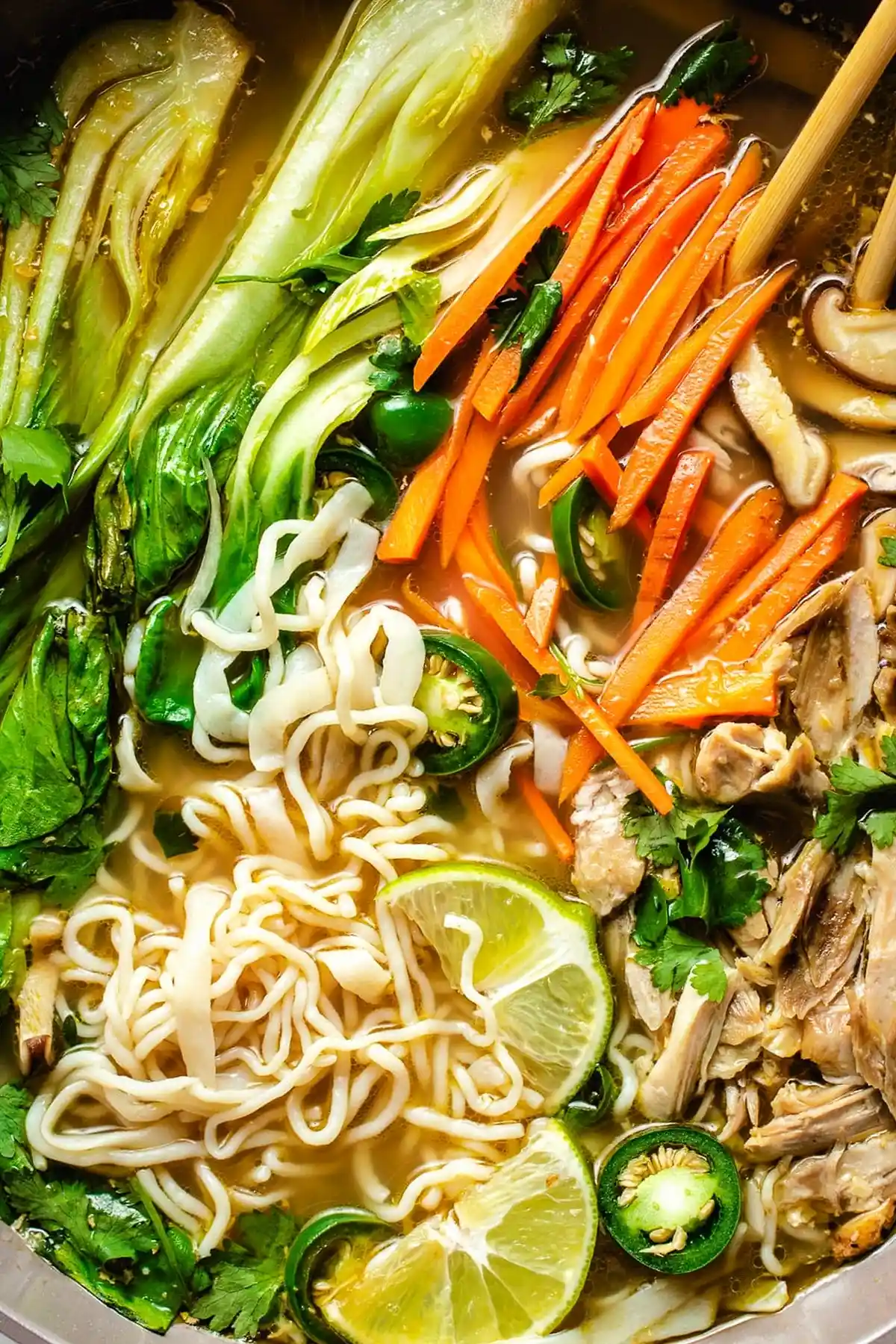
List of ingredients
- 0.5 oz garlic, minced
- 2.2 oz shallot, thinly sliced
- 0.6 oz ginger, grated
- 5 oz carrot, julienned
- 3.5 oz fresh shiitake mushrooms, sliced
- 15 oz baby bok choy, bundles
- 2-3 cups shredded cooked chicken or turkey
- 14 oz rice noodles, ramen noodles, or shirataki noodles
- 2 tbsp toasted sesame oil
- Coarse sea salt to taste
- 32 oz chicken stock
- 2 tbsp fish sauce (or coconut aminos)
- Half one whole lime, juiced
- Fresh cilantro, chopped (optional)
- 1-2 whole Jalapeno pepper, sliced (optional)
step-by-step instructions
- Prep: Prepare the garlic and shallot in one bowl; ginger, carrot, and shiitake in another. Halve or quarter the bok choy, rinse, and drain well. Shred the chicken and set aside.
- Noodles: Prepare the noodles according to package instructions. If boiling is required, cook in a separate pot, drain well, and toss with a little oil to prevent sticking.
- Sauté: Preheat a soup pot over low heat, add sesame oil, then sauté garlic and shallot with 2 small pinches of salt over medium heat for about 10 seconds.
- Vegetables: Add ginger, carrots, and shiitake with 2 small pinches of salt and sauté for about 2 minutes.
- Simmer: Pour in the stock, cover, and lower heat to medium-low to simmer for 4-5 minutes.
- Combine: Add the cooked chicken and bok choy; simmer for 1 minute until stems are tender-crisp. Stir in the prepared noodles.
- Finish: Season with fish sauce to taste. Off heat, drizzle with lime juice and garnish with jalapeno and cilantro.
Flavor Building Techniques
Building a Foundation with Aromatics
The secret to a complex soup broth lies in how you handle your aromatics. By sauteing garlic, shallots, and ginger in toasted sesame oil at the beginning, you release essential oils that would otherwise remain trapped. This step ensures that every spoonful of the final soup carries a consistent, layered flavor profile rather than just tasting like plain broth.
Achieving the Perfect Umami Balance
Fish sauce is a transformative ingredient that provides an immediate boost to the savory quality of your soup. If you find the flavor too intense, start with just one tablespoon and adjust as needed. The addition of shiitake mushrooms acts as a natural flavor enhancer, adding an earthy depth that pairs perfectly with the salinity of the fish sauce.
Noodle Variety Selection
Matching Noodles to Broth Consistency
For a light, clear Asian-style broth, thin noodles are generally the superior choice. Wheat-based ramen or wonton noodles allow the broth to coat each strand evenly, providing a satisfying texture without feeling heavy. If you prefer a lighter, gluten-free option, rice vermicelli or glass noodles are excellent because they soak up the broth efficiently while remaining delicate.
Managing Low Carb Alternatives
If you are following a keto or lower-carb lifestyle, shirataki noodles are a fantastic substitute for traditional wheat noodles. These noodles are primarily made of fiber and do not require boiling; simply rinsing them well and adding them directly to the hot broth is sufficient. They maintain their structure well in liquid and provide the necessary volume to make the meal feel substantial.
Vegetable Preparation Strategies
Maintaining Texture in Bok Choy
Baby bok choy is a fast-cooking green that can easily become waterlogged if over-simmered. By adding it to the pot only in the final minute of cooking, you preserve its refreshing crunch and vibrant green color. If you are serving the soup in multiple batches, consider blanching the bok choy separately and adding it to individual bowls before ladling the hot broth over them to keep the stems crisp.
Ensuring Uniform Vegetable Cooking
Consistency in the size of your vegetable cuts, particularly with julienned carrots, is key to an even dining experience. By slicing your carrots and mushrooms to a similar thickness, you ensure that every vegetable becomes tender at the same time. This simple step prevents the frustrating situation where some pieces remain hard while others turn to mush.
Strategic Storage and Reheating
Separating Noodles from Broth
One of the most important rules for leftover noodle soup is to never store the noodles directly in the broth. Noodles continue to absorb liquid long after the heat is turned off, which leads to soggy, bloated results within hours. For the best texture, keep your cooked noodles and soup base in separate airtight containers in the refrigerator.
Restoring Freshness During Reheating
When you are ready to enjoy your leftovers, bring the broth to a rolling simmer on the stovetop first. Only add the cold noodles and chicken at the very end, allowing them just enough time to warm through. This prevents the vegetables from overcooking and ensures that the noodles maintain their desired chewiness rather than falling apart.
Frequently Asked Questions
Can I use different types of mushrooms if shiitake are unavailable?
Yes, cremini or baby bella mushrooms make excellent alternatives if fresh shiitake are out of stock. While they lack the unique woody aroma of shiitake, they provide a very similar meaty texture and depth of flavor that works beautifully in this soup.
What is the best way to handle leftovers if I have already mixed the noodles into the broth?
If you have already combined everything, it is best to consume the soup within one day. When reheating, be prepared for the noodles to be significantly softer, and add a splash of extra chicken stock or water to adjust for the volume lost to noodle absorption.
How can I make the soup more filling without adding extra carbohydrates?
To increase the satiety of the meal without adding more noodles, you can increase the amount of shredded chicken or double the volume of baby bok choy. You might also consider adding extra shiitake mushrooms or even some sliced zucchini rounds, which add volume and fiber while keeping the dish light.
Can this soup be frozen for future use?
The broth and chicken base freeze exceptionally well for up to one month in a sealed container. However, do not freeze the noodles, as their structural integrity will be destroyed during the thawing process; it is always better to prepare fresh noodles when you are ready to serve the thawed broth.
Print
Asian Chicken Noodle Soup (Keto, Leftover Turkey or Chicken!)
- Total Time: 25 minutes
- Yield: 6 servings 1x
- Diet: Gluten-Free
Description
This Asian chicken noodle soup uses leftover turkey or chicken is an easy and healthy Chinese-style chicken noodle soup, loaded with veggies.
Ingredients
- 0.5 oz garlic, minced
- 2.2 oz shallot, thinly sliced
- 0.6 oz ginger, grated
- 5 oz carrot, julienned
- 3.5 oz fresh shiitake mushrooms, sliced
- 15 oz baby bok choy, bundles
- 2–3 cups shredded cooked chicken or turkey
- 14 oz rice noodles, ramen noodles, or shirataki noodles
- 2 tbsp toasted sesame oil
- Coarse sea salt to taste
- 32 oz chicken stock
- 2 tbsp fish sauce (or coconut aminos)
- Half one whole lime, juiced
- Fresh cilantro, chopped (optional)
- 1–2 whole Jalapeno pepper, sliced (optional)
Instructions
- Prep: Prepare the garlic and shallot in one bowl; ginger, carrot, and shiitake in another. Halve or quarter the bok choy, rinse, and drain well. Shred the chicken and set aside.
- Noodles: Prepare the noodles according to package instructions. If boiling is required, cook in a separate pot, drain well, and toss with a little oil to prevent sticking.
- Sauté: Preheat a soup pot over low heat, add sesame oil, then sauté garlic and shallot with 2 small pinches of salt over medium heat for about 10 seconds.
- Vegetables: Add ginger, carrots, and shiitake with 2 small pinches of salt and sauté for about 2 minutes.
- Simmer: Pour in the stock, cover, and lower heat to medium-low to simmer for 4-5 minutes.
- Combine: Add the cooked chicken and bok choy; simmer for 1 minute until stems are tender-crisp. Stir in the prepared noodles.
- Finish: Season with fish sauce to taste. Off heat, drizzle with lime juice and garnish with jalapeno and cilantro.
Notes
Shirataki or zucchini noodles do not need to be cooked separately; add directly to the hot soup. Store noodles and broth separately in the refrigerator for up to 3 days to maintain texture.
- Prep Time: 10 minutes
- Cook Time: 15 minutes
- Category: Soup
- Method: Stovetop
- Cuisine: American Chinese
Nutrition
- Serving Size: 1 serving
- Calories: 184 kcal
- Sugar: 4 g
- Sodium: 617 mg
- Fat: 7 g
- Saturated Fat: 1 g
- Unsaturated Fat: 6 g
- Trans Fat: 0 g
- Carbohydrates: 10 g
- Fiber: 2 g
- Protein: 20 g
- Cholesterol: 40 mg
Keywords: Asian chicken noodle soup, healthy soup, leftover chicken recipe, easy dinner, Chinese-style soup