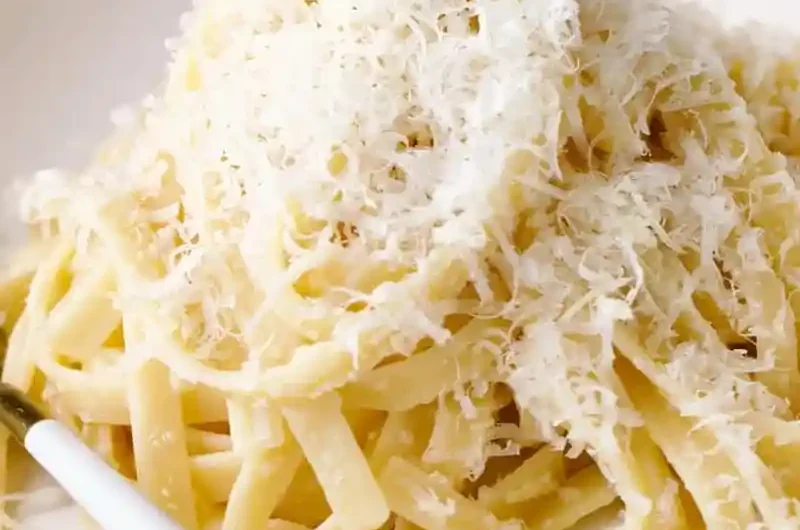
This recipe delivers a traditional Roman-style Alfredo sauce using only butter, cheese, and pasta water. It is a quick, creamy meal that avoids heavy cream for a lighter, authentic taste.
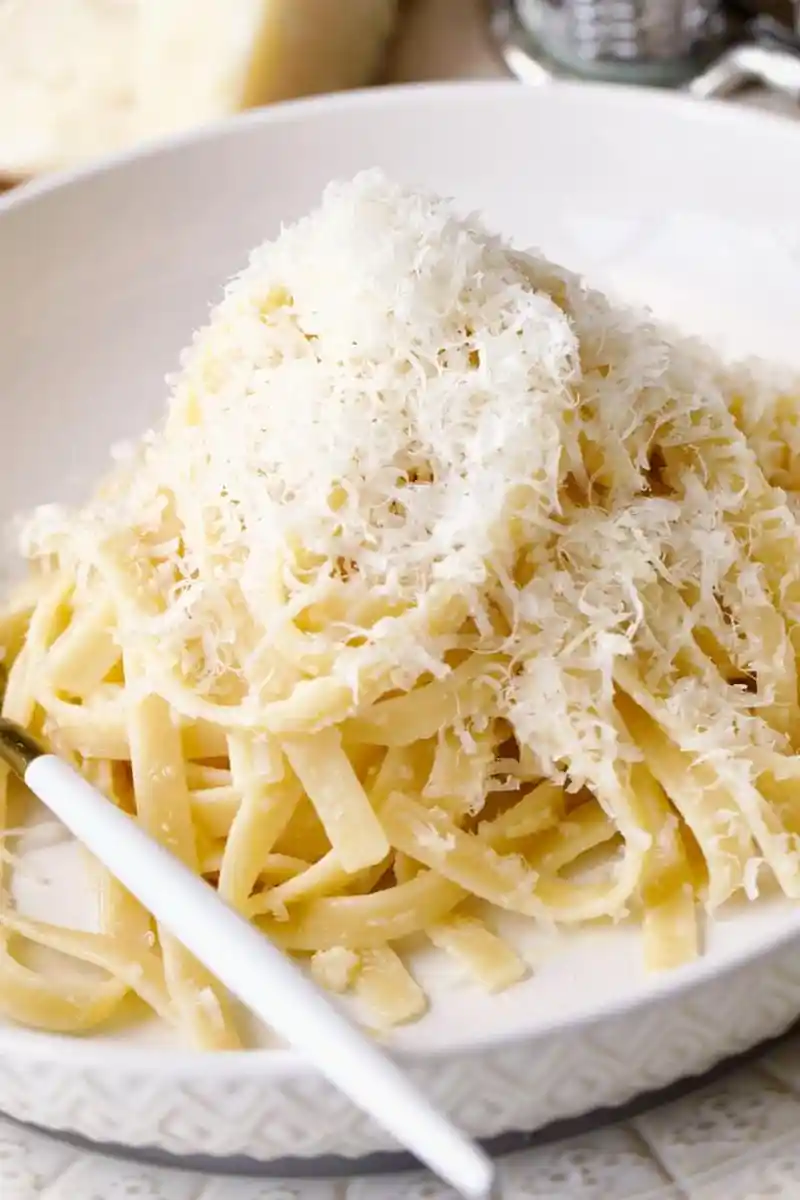
List of ingredients
- ½ cup grass fed butter (at room temperature; divided) – provides the rich, creamy base.
- 1 pound fettuccine pasta (preferably bronze cut) – the classic long noodle choice.
- 1½ cups Parmigiano-Reggiano cheese (finely grated; plus more for serving) – essential for the authentic salty flavor.
- Freshly ground black pepper (to taste; optional) – adds a subtle hint of spice.
step-by-step instructions
- Prepare the platter: Divide the butter into six equal pieces, then place half of the butter on a large serving platter.
- Boil the pasta: In a large pot of boiling salted water, cook the fettuccine until al dente according to package directions. Save 1 cup of the starchy pasta water before straining.
- Melt the base: Add half the pasta water (½ cup) to the serving platter with the butter. Stir the butter with the hot pasta water to melt the butter.
- Coat the noodles: Add the hot pasta to the serving platter. Using kitchen tongs, mix until the butter sauce coats all the strands of pasta.
- Emulsify the sauce: Add the rest of the butter and pasta water. Mix the pasta with the kitchen tongs until a smooth, creamy sauce forms, continuing until all the butter melts.
- Combine with cheese: Add the freshly grated parmigiano cheese and keep mixing until it’s fully melted and well combined.
- Final touch: Serve immediately. Top individual portions with extra parmigiano cheese and freshly grated black pepper if desired.
Pro Tips for a Perfect Emulsion
Use a Microplane for Fine Grating
Finely grated cheese melts almost instantly into the hot pasta water and butter. Using a coarse grater often results in clumps of unmelted cheese in the final sauce.
Choose Bronze-Cut Pasta
Bronze-cut pasta has a rougher, more porous surface than Teflon-cut pasta. This allows the starchy water and butter to cling much more effectively to each noodle.
Keep All Components Hot
The sauce relies on a thermal emulsion of fat and starch. If the pasta or the platter cools too much, the butter will solidify and the cheese will not incorporate.
Cook Pasta strictly Al Dente
Pasta should be slightly firm to the bite when drained. This prevents the noodles from becoming mushy during the tossing and mixing phase on the platter.
Ingredient Alternatives and Substitutions
Substituting with Pecorino Romano
Pecorino Romano is a saltier, sharper sheep’s milk cheese. You can replace half of the Parmigiano-Reggiano with Pecorino for a more pungent flavor profile.
Trying Alternative Pasta Shapes
Linguine or homemade pappardelle work exceptionally well due to their surface area. Avoid short shapes like penne, as they do not coat as evenly with this specific emulsion method.
Using Unsalted Butter
If you are using heavily salted pasta water and a very salty aged cheese, unsalted butter helps you control the overall sodium level of the dish.
Adding Heavy Cream for Stability
Adding a small amount of heavy cream creates a thicker, more stable sauce. While not traditional to the Roman version, it is a common variation in North America.
Flavor Variations and Add-ins
Incorporating Sautéed Broccoli
Steam or roast broccoli florets separately and fold them in at the very end. This adds a fresh, bitter contrast that cuts through the richness of the butter.
Adding Grilled Chicken Breast
Sauté seasoned chicken breast strips and place them on top of the plated pasta. This transforms the dish from a simple pasta into a hearty, full meal.
Integrating Sautéed Shrimp
Sear shrimp in a separate pan with garlic and butter. Toss them in just before serving to ensure they remain tender and do not overcook.
Infusing the Sauce with Garlic
Sauté minced garlic in a small amount of butter before adding it to the platter. This adds a savory aromatic depth that complements the parmesan cheese.
Serving and Pairing Suggestions
Pairing with Fresh Green Salads
A side of arugula or spinach with a lemon vinaigrette balances the richness of the butter. The acidity of the lemon refreshes the palate between bites.
Serving with Garlic Toast
Toasted baguette slices with garlic butter complement the creamy texture of the noodles. These are perfect for scooping up any remaining sauce on the plate.
Adding Fresh Chopped Parsley
Finely chopped fresh parsley adds a pop of color and a clean, herbal finish. It helps lighten the heavy feel of the cheese and butter.
Pairing with Roasted Root Vegetables
Roasted asparagus or carrots provide a sweet, earthy balance. These vegetables pair well with the salty, umami notes of the aged cheese.
Proper Storage and Reheating
Refrigerator Storage Guidelines
Store leftover pasta in an airtight container in the fridge for up to three days. Note that the sauce will thicken significantly and may appear dry upon cooling.
Reheating on the Stovetop
Warm the pasta in a pan over medium-low heat. Add a splash of milk or reserved pasta water to restore the creamy consistency and loosen the cheese.
Avoiding the Microwave for Reheating
Microwaves heat unevenly, which often causes the butter and cheese to separate. This results in an oily sauce and dry, overcooked pasta.
Troubleshooting Common Issues
Fixing a Clumpy Cheese Sauce
If the cheese clumps, whisk in a tablespoon of hot pasta water at a time. Do this quickly while the mixture is still very hot to re-emulsify the fats.
Preventing the Sauce from Breaking
A broken sauce looks oily rather than creamy. This usually happens if the heat is too high or the pasta was not hot enough when added to the butter.
Adjusting the Sauce Thickness
Add more reserved pasta water to thin the sauce if it feels too heavy. Conversely, add more finely grated cheese to increase the thickness and richness.
Frequently Asked Questions
Is this recipe really Italian?
Yes, this version originates from Rome and was created by Alfredo Di Lelio. The original focused on the emulsion of butter and cheese rather than heavy cream.
Why is there no cream in this recipe?
The creaminess comes from the emulsion of starchy pasta water, butter, and finely grated cheese. This traditional method creates a lighter but still velvety texture.
Can I use pre-grated cheese from a bottle?
No, pre-grated cheeses often contain anti-clumping agents like cellulose. These additives prevent the cheese from melting smoothly into the sauce.
How do I get the sauce to be creamy?
The secret is the starch in the reserved pasta water. When whisked with fat (butter) and protein (cheese) at the right temperature, it creates a stable creamy sauce.
Print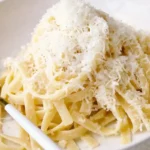
Authentic Italian Alfredo Sauce
- Total Time: 15 minutes
- Yield: 6 servings 1x
- Diet: Can be made Gluten Free
Description
This authentic alfredo sauce recipe is made with four simple ingredients: fettuccine pasta, parmigiano cheese, butter, and freshly cracked pepper. This is the original Italian recipe for fettuccine alfredo.
Ingredients
- ½ cup grass fed butter, at room temperature; divided
- 1 pound fettuccine pasta, preferably bronze cut
- 1½ cups microbial-rennet Parmigiano-Reggiano cheese, finely grated
- Freshly ground black pepper, to taste (optional)
Instructions
- Step: Divide the butter into six equal pieces, then place half of the butter on a large serving platter.
- Step: In a large pot of boiling salted water, cook the fettuccine until al dente according to package directions; save 1 cup of the starchy pasta water before straining.
- Step: Add half the pasta water (½ cup) to the serving platter with the butter and stir to melt the butter.
- Step: Add the hot pasta to the serving platter and mix using kitchen tongs until the butter sauce coats all the strands of pasta.
- Step: Add the rest of the butter and pasta water; mix with kitchen tongs until a smooth, creamy sauce forms. Add the freshly grated parmigiano cheese and keep mixing until it’s fully melted and well combined.
- Step: Serve immediately, topping individual portions with extra parmigiano cheese and freshly grated black pepper if desired.
Notes
Salt the water to flavor the pasta. Use a microplane for the finest grate to ensure the smoothest sauce. Reheat leftovers on the stovetop with a splash of milk or pasta water to loosen the sauce.
- Prep Time: 5 minutes
- Cook Time: 10 minutes
- Category: Main Course
- Method: Stovetop
- Cuisine: Italian
Nutrition
- Serving Size: 1 serving
- Calories: 524 kcal
- Sugar: 2 g
- Sodium: 538 mg
- Fat: 25 g
- Saturated Fat: 15 g
- Unsaturated Fat: 9 g
- Trans Fat: 1 g
- Carbohydrates: 55 g
- Fiber: 2 g
- Protein: 20 g
- Cholesterol: 121 mg
Keywords: Authentic Alfredo Sauce, Italian Pasta, Fettuccine Alfredo, Roman Pasta, Creamy Pasta