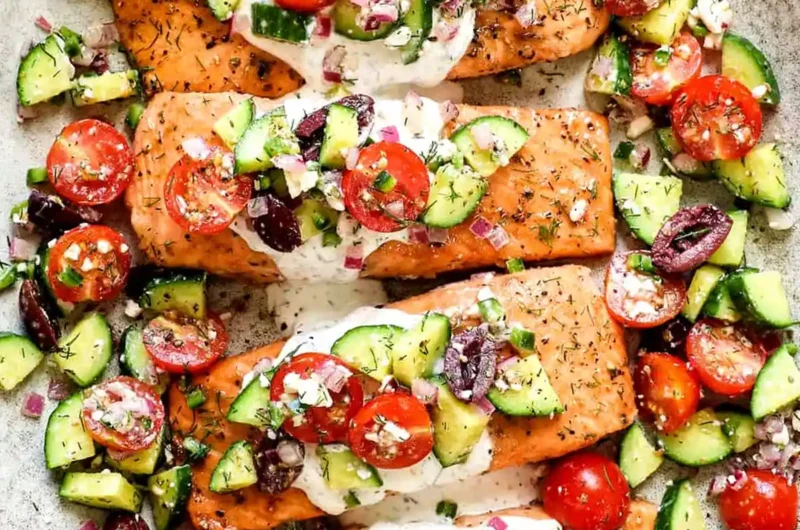
This Mediterranean-inspired baked salmon features a zesty marinade and a cooling Greek yogurt dill sauce. It is a nutrient-dense meal that comes together in under 45 minutes.
List of ingredients
- 4 (6 oz.) wild salmon fillets or 1 large Alaskan fillet – skinless is preferred for this method.
- 2 tablespoons olive oil – used for the salmon rub.
- 1 tablespoon balsamic vinegar – adds depth to the marinade.
- 1 tablespoon lemon juice – provides essential acidity.
- 1/2 tsp lemon pepper – for a citrusy kick.
- 1/2 tsp dried oregano – adds earthy Greek flavor.
- 1/2 tsp garlic powder – for savory depth.
- 1/2 tsp sugar – helps with caramelization.
- 1/2 tsp salt – enhances overall flavor.
- 1/2 cup Greek yogurt – nonfat or full-fat for the creamy base.
- 2 tablespoons mayonnaise – adds richness to the sauce.
- 1 tablespoon chopped fresh dill – the primary flavor for the sauce.
- 1 minced garlic clove or 1/4 tsp garlic powder – for a punchy taste.
- 1/2 tablespoon lemon juice – brightens the yogurt.
- 1 teaspoon red wine vinegar – provides a sharp tang.
- 1/4 tsp dried oregano – complements the dill.
- 1/4 tsp dried parsley – adds a mild herbal note.
- Salt and pepper to taste – for final seasoning.
- 1 cup cherry tomatoes, halved – for the fresh salsa.
- 1 cup chopped cucumber – provides crunch and freshness.
- 3 tablespoons kalamata olives, halved – adds salty, briny flavor.
- 1/4 cup chopped red onion – for a sharp bite.
- 2-3 tablespoons crumbled feta – adds creamy saltiness.
- 1/2 to 1 jalapeno, seeded and minced – or a pinch of red pepper flakes for heat.
- 1/2 tablespoon chopped fresh dill – for the salsa.
- 1 minced garlic clove – fresh garlic for the salsa.
- 1/2 tablespoon olive oil – dressing for the salsa.
- 1/2 tablespoon red wine vinegar – dressing for the salsa.
- 1/2 tablespoon lemon juice – dressing for the salsa.
- 1/2 teaspoon dried oregano – final herb for the salsa.
- Salt and pepper to taste – for the salsa.
step-by-step instructions
- Prepare Salmon Rub: Whisk olive oil, balsamic vinegar, lemon juice, lemon pepper, dried oregano, garlic powder, sugar, and salt in a 9×13 baking dish or on a foil-lined sheet with raised edges.
- Coat the Fish: Place salmon fillets in the dish and turn to coat thoroughly. Drag the fillets across the marinade to ensure full coverage and brush any remaining rub onto the top.
- Marinate: Let the salmon sit at room temperature for up to 30 minutes while preparing the other components. This ensures even cooking.
- Preheat Oven: Set your oven to 400 degrees F.
- Mix Dill Sauce: In a medium bowl, whisk together Greek yogurt, mayonnaise, chopped dill, garlic, lemon juice, red wine vinegar, dried oregano, and dried parsley. Season with salt and pepper, then cover and refrigerate.
- Assemble Salsa: Combine cherry tomatoes, cucumber, olives, red onion, feta, jalapeno, dill, garlic, olive oil, red wine vinegar, lemon juice, and dried oregano in a bowl. Season with salt and pepper, cover, and refrigerate.
- Bake Salmon: Place the salmon in the oven at 400 degrees F for 12-15 minutes. Cook until the fish is opaque and flakes easily with a fork.
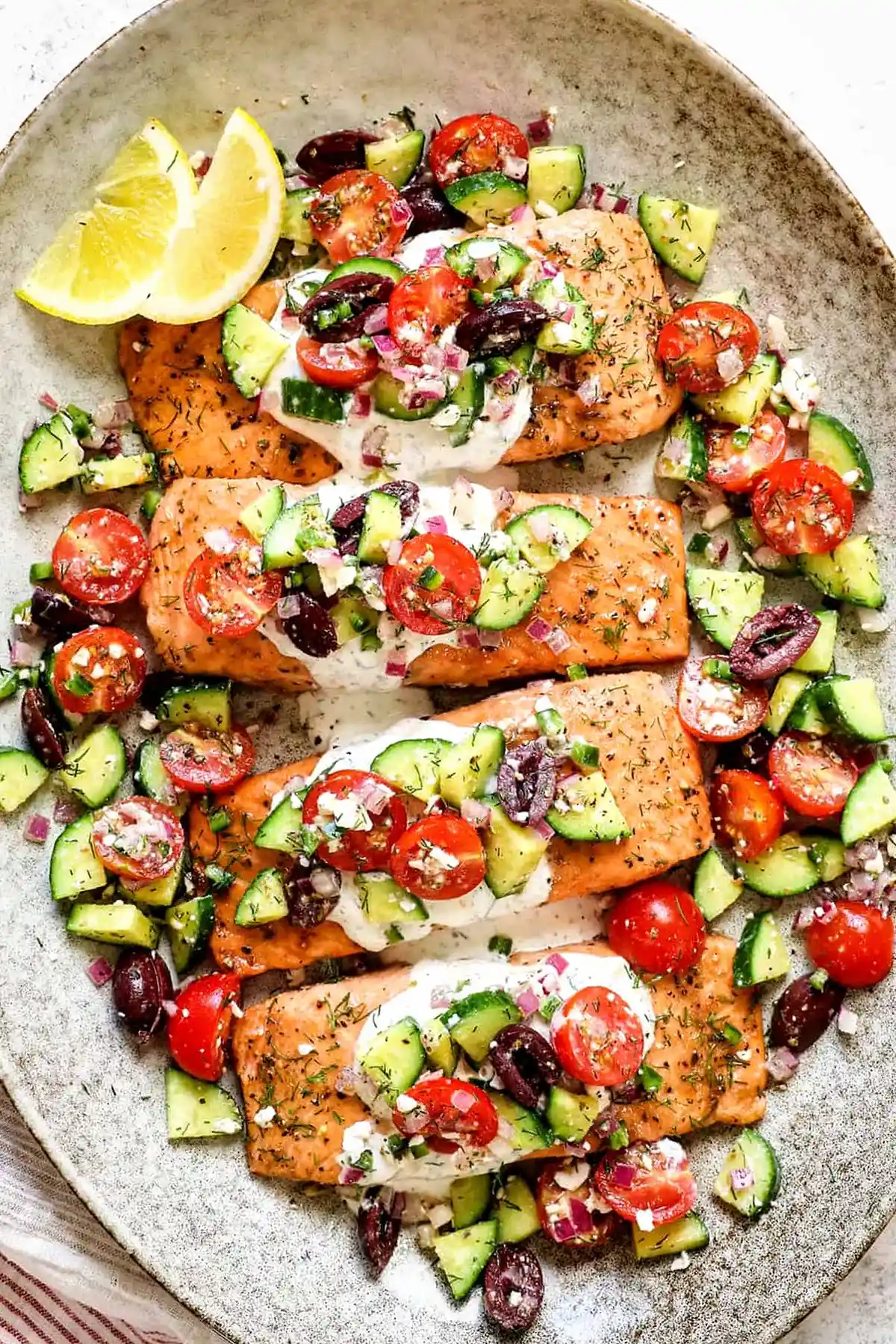
- Serve: Plate the salmon and top with a generous portion of Dill Sauce and the fresh Greek Salsa. Add a squeeze of fresh lemon juice for extra brightness.
Salmon Selection and Quality Guide
Choose Wild-Caught Salmon
Wild-caught salmon is generally more nutritious and has a firmer texture than farm-raised Atlantic salmon. Farm-raised fish can be overly fatty and sometimes develop a mushy consistency when baked. Look for labels indicating Alaskan wild salmon for the best results.
King Salmon for Maximum Richness
King salmon, also known as Chinook, is the largest species with the highest fat content. This results in a buttery, rich flavor and a more forgiving cooking process. It is often the most expensive option but provides the most indulgent taste.
Sockeye Salmon for Bold Flavor
Sockeye salmon is leaner and has a deeper red color and a more intense fish flavor. Because it is leaner than King or Coho, it can overcook more quickly. Be vigilant with your timer when using Sockeye to avoid dryness.
Coho Salmon as a Balanced Alternative
Coho, or silver salmon, offers a middle ground between King and Sockeye. It has a high fat content but is leaner than King salmon, making it a great, slightly more affordable choice that still maintains a moist texture.
Precision Cooking and Temperature Control
Using a Meat Thermometer
The most accurate way to prevent overcooking is using an instant-read thermometer. Insert the probe into the thickest part of the fillet. Aim for an internal temperature of 125 to 130 degrees F for a juicy result.
Understanding Carry-Over Cooking
While the FDA suggests an internal temperature of 145 degrees F, pulling salmon at 130 degrees F prevents it from becoming dry. The internal temperature will continue to rise by several degrees during a 5-minute rest after leaving the oven.
Visual Cues for Doneness
If you do not have a thermometer, look for the color change from bright pink to opaque pink. The center should be slightly translucent but not raw, and the meat should flake easily along the muscle fibers when pressed with a fork.
Managing Different Fillet Sizes
Salmon fillets often vary in thickness. If you are baking several fillets, check the thinnest one first and remove it from the oven early to ensure it doesn’t overcook while the thicker pieces finish.
Customizing the Greek Salsa and Toppings
Substituting the Heat
If you prefer a milder flavor, omit the jalapeno entirely or replace it with a small pinch of red pepper flakes. For a smokier heat, you can use a small amount of minced chipotle pepper in adobo sauce.
Adding Roasted Vegetables
You can bake vegetables alongside the salmon in the same 9×13 dish. Asparagus, zucchini slices, or bell pepper strips work well and will roast in the same 12-15 minute window.
Adding Artichokes and Sun-Dried Tomatoes
For a more complex flavor profile, add halved canned artichoke hearts and chopped sun-dried tomatoes to the baking dish before adding the salmon. These ingredients add a nutty and concentrated tomato sweetness to the dish.
Feta Alternatives
If you cannot use feta, try crumbled goat cheese for a creamier tang or a salty vegan feta alternative. These substitutions maintain the necessary salty contrast to the fresh cucumbers and tomatoes.
Serving Suggestions and Pairings
Building Greek Salmon Bowls
Create a customized bowl by placing the salmon over a bed of Greek lemon rice, brown rice, or couscous. Add a scoop of hummus and a side of sliced almonds for added texture and protein.
Complementary Side Dishes
This meal pairs excellently with a side of warm flatbread or naan for scooping up the extra dill sauce. A light Greek pasta salad or a fresh fruit salad can round out the Mediterranean feast.
Using the Salmon in Salads
Cold leftover salmon is perfect for a large green salad. Combine the fish with mixed greens, cherry tomatoes, olives, and a dressing made by thinning the dill sauce with a bit of olive oil.
Creating a Salmon Panini
Spread dill sauce on ciabatta bread and layer it with mozzarella, arugula, and baked salmon. Grill in a panini press or skillet until the cheese is melted for a gourmet lunch option.
Storage and Preservation Methods
Refrigeration Guidelines
Store leftover cooked salmon in an airtight container in the refrigerator for up to three days. Keep the dill sauce and Greek salsa in separate containers to prevent the salmon from becoming soggy.
Freezing the Salmon
You can freeze the baked salmon fillets for up to three months. To prevent them from sticking, flash freeze them on a baking sheet for one hour before transferring them to a freezer bag and removing the excess air.
Avoiding Freezing the Sauce
Do not freeze the dill sauce, as the yogurt and mayonnaise will break and separate upon thawing. This results in an unpleasant, grainy texture. Always make the sauce fresh or store it in the fridge.
Dill Sauce Shelf Life
The creamy dill sauce can be stored in the refrigerator for up to five days. Ensure it is kept in a tightly sealed jar to prevent it from absorbing other odors from the fridge.
Reheating and Refreshing
Gentle Oven Reheating
To maintain moisture, reheat salmon in the oven at 275 degrees F for 10-15 minutes. This low temperature warms the fish through without cooking it further or drying out the exterior.
Skillet Method for Texture
Place the salmon in a nonstick skillet over medium-low heat with a lid. The steam trapped by the lid helps reheat the fish while keeping the interior moist.
Microwave Instructions
If using a microwave, reheat the salmon in 30-second intervals at medium power. This prevents the fish from rubberizing, which often happens with high-heat microwave settings.
Thawing Frozen Salmon
Always thaw frozen salmon in the refrigerator overnight before reheating. This ensures the fish warms evenly and maintains its structural integrity.
Troubleshooting Common Issues
Preventing Mushy Salmon
Do not over-marinate the salmon. While the acids in the lemon juice and vinegar add flavor, leaving the fish in the marinade for longer than 30 minutes can break down the proteins and lead to a mushy texture.
Fixing a Split Dill Sauce
If the dill sauce separates or looks curdled, whisk in a teaspoon of Greek yogurt or a tiny splash of water to emulsify it again. Ensure the sauce is kept chilled until the moment of serving.
Avoiding a Fishy Taste
Ensure you use fresh, high-quality wild salmon and do not rinse the fillets before marinating. Using the acidic components of the marinade helps neutralize any overly strong fishy odors.
Managing Sauce Consistency
If the dill sauce is too thick, whisk in a small amount of lemon juice or olive oil until it reaches your preferred consistency. If it is too thin, add another tablespoon of Greek yogurt.
Frequently Asked Questions
Should you bake salmon covered or uncovered?
Bake salmon uncovered to allow the exterior to develop a golden crust. If you prefer a very delicate, steamed texture, you can cover it with foil, but you will lose the roasted finish.
Is salmon better in foil or no foil?
Foil keeps the fish moist and makes cleanup easier, but it prevents the edges from crisping. Baking directly in a dish or on an open sheet allows for better heat circulation and a firmer texture.
How do you keep salmon moist when cooking?
The best way to keep salmon moist is to avoid overcooking. Use a meat thermometer to pull the fish at 130 degrees F and allow it to rest, which lets the juices redistribute.
Can I use dried dill instead of fresh?
Yes, you can substitute fresh dill with dried dill, but use a smaller quantity. Generally, 1 teaspoon of dried dill is equivalent to 1 tablespoon of fresh dill.
What is the best way to prevent salmon from sticking to the pan?
Using a high-quality nonstick baking dish or lining your baking sheet with parchment paper or foil prevents sticking. The olive oil in the marinade also provides a protective barrier between the fish and the pan.
Print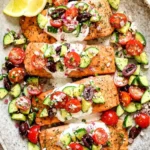
Baked Greek Salmon with Creamy Dill Sauce
- Total Time: 42 minutes
- Yield: 4 servings 1x
- Diet: Gluten-Free
Description
Baked Greek Salmon with Dill Sauce is a healthy and flavorful Mediterranean dish featuring juicy baked salmon topped with a creamy Greek yogurt dill sauce and a fresh cucumber tomato salsa.
Ingredients
- 4 (6 oz.) wild salmon fish fillets
- 2 tablespoons olive oil
- 1 tablespoon balsamic vinegar
- 1 tablespoon lemon juice
- 1/2 tsp lemon pepper
- 1/2 tsp dried oregano
- 1/2 tsp garlic powder
- 1/2 tsp sugar
- 1/2 tsp salt
- 1/2 cup Greek yogurt
- 2 tablespoons mayonnaise
- 1 tablespoon chopped dill
- 1 minced garlic clove
- 1/2 tablespoon lemon juice
- 1 teaspoon red wine vinegar
- 1/4 tsp dried oregano
- 1/4 tsp dried parsley
- Salt and pepper to taste
- 1 cup cherry tomatoes, halved
- 1 cup chopped cucumber
- 3 tablespoons kalamata olives, halved
- 1/4 cup chopped red onion
- 3 tablespoons crumbled feta (microbial-rennet)
- 1 jalapeno, seeded, deveined, minced
- 1/2 tablespoon chopped dill
- 1 minced garlic clove
- 1/2 tablespoon olive oil
- 1/2 tablespoon red wine vinegar
- 1/2 tablespoon lemon juice
- 1/2 teaspoon dried oregano
Instructions
- Step: Whisk olive oil, balsamic vinegar, lemon juice, lemon pepper, oregano, garlic powder, sugar, and salt in a 9×13 baking dish.
- Step: Add salmon fillets to the dish, coat thoroughly with the mixture, and let sit at room temperature for up to 30 minutes.
- Step: Preheat oven to 400 degrees F.
- Step: In a medium bowl, whisk together Greek yogurt, mayonnaise, 1 tablespoon dill, 1 garlic clove, 1/2 tablespoon lemon juice, 1 teaspoon red wine vinegar, oregano, parsley, salt, and pepper; cover and refrigerate.
- Step: In another medium bowl, combine cherry tomatoes, cucumber, olives, red onion, feta, jalapeno, 1/2 tablespoon dill, 1 garlic clove, olive oil, red wine vinegar, lemon juice, oregano, salt, and pepper; cover and refrigerate.
- Step: Bake salmon at 400 degrees F for 12-15 minutes or until the fish flakes easily with a fork.
- Step: Serve salmon topped with the Dill Sauce and Salsa.
Notes
Store leftover salmon in an airtight container for up to 3 days and sauce for up to 5 days. Reheat gently in a skillet, microwave, or oven at 275 degrees F. Salmon can be frozen for up to 3 months, but do not freeze the dill sauce.
- Prep Time: 30 minutes
- Cook Time: 12 minutes
- Category: Main Course
- Method: Baking
- Cuisine: Mediterranean
Nutrition
- Serving Size: 1 fillet
- Calories: 480 kcal
- Sugar: 6 g
- Sodium: 720 mg
- Fat: 28 g
- Saturated Fat: 7 g
- Unsaturated Fat: 18 g
- Trans Fat: 0 g
- Carbohydrates: 14 g
- Fiber: 3 g
- Protein: 38 g
- Cholesterol: 95 mg
Keywords: Greek salmon, baked salmon, dill sauce, Mediterranean recipes, healthy salmon