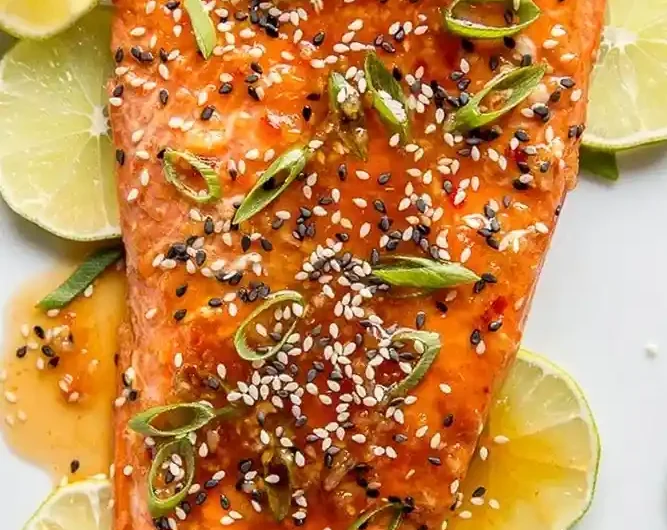
This oven-baked salmon is glazed with a blend of sweet, spicy, and savory notes for a quick dinner. The recipe focuses on high-heat roasting to caramelize the sugars in the sauce while keeping the fish moist.
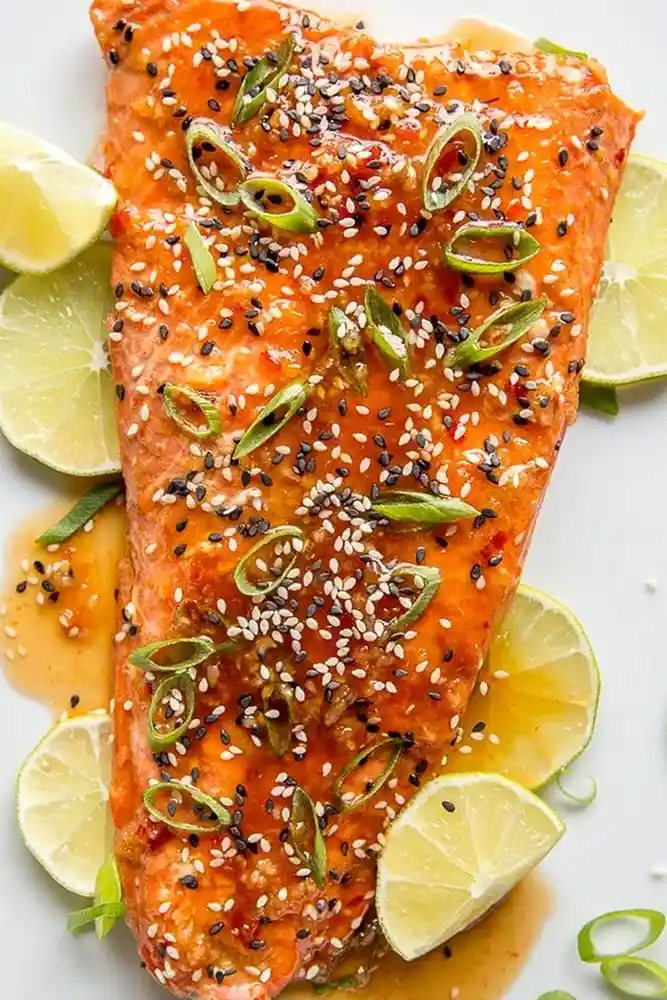
List of ingredients
- 1 pound sockeye Salmon (wild caught) – skin on or off based on preference.
- sesame seeds – used for garnish (optional).
- green onions (sliced) – used for garnish (optional).
- 1/4 cup sweet chili sauce – provides the primary sweetness and viscosity.
- 2 tablespoons soy sauce – low sodium is recommended for better salt control.
- 1 tablespoon rice vinegar – adds a tangy acidity to balance the sugars.
- 4 cloves garlic (minced) – provides a pungent, savory base.
- 1 tablespoon grated ginger root – adds a fresh, peppery warmth.
- 1 tablespoon honey – helps the sauce thicken and caramelize.
- 1 tablespoon chili garlic sauce – adds a mild spicy kick.
step-by-step instructions
- Prepare Oven and Pan: Preheat your oven to 425°F. Line a baking sheet with aluminum foil to prevent sticking and ensure quick cleanup.
- Mix Glaze: Whisk together the sweet chili sauce, soy sauce, rice vinegar, minced garlic, grated ginger, honey, and chili garlic sauce in a small bowl until smooth.
- First Coating: Place the salmon filets on the prepared baking sheet. Pour one-third of the sauce over the fish and use a brush to coat the surface evenly.
- Reserve Sauce: Keep the remaining sauce in a separate container. Ensure no raw fish juices contaminate this reserve, as it will be used again later.
- Seasoning: If you are using low-sodium soy sauce, lightly season the salmon with a pinch of salt before baking.
- Initial Bake: Place the salmon in the oven and bake for 10 minutes.
- Second Coating: Remove the tray from the oven. Pour half of the remaining reserved sauce over the fish and brush it across the surface to create a thicker layer.
- Final Bake: Return the fish to the oven for an additional 2 to 5 minutes. Bake until the salmon is cooked through.
- Check Doneness: The salmon is ready when it flakes easily with a fork or reaches an internal temperature of 145°F.
- Final Touch: Remove from the oven and pour the last of the reserved sauce over the top. Garnish with sesame seeds and sliced green onions if desired.
Technical Cooking Tips for Optimal Results
Use a Digital Meat Thermometer for Precision
Salmon can overcook in a matter of minutes, leading to a dry texture. Inserting a probe thermometer into the thickest part of the filet ensures you hit exactly 145°F.
Removing the fish slightly early, around 135-140°F, can be beneficial as carryover cooking will raise the temperature while it rests.
Pat the Salmon Dry Before Glazing
Excess moisture on the surface of the fish can dilute the sauce and prevent it from adhering properly. Use paper towels to pat the filets dry before applying the first layer of glaze.
This step encourages the sugars in the honey and chili sauce to caramelize more effectively against the protein.
Maintain Proper Spacing on the Baking Sheet
Ensure there is at least an inch of space between each salmon filet on the pan. Overcrowding can lead to steaming rather than roasting, which prevents the edges from getting a nice sear.
Proper airflow around the fish ensures the heat distributes evenly, leading to consistent cooking times across all pieces.
Selecting the Right Salmon Cut
Sockeye salmon is leaner and has a more intense flavor compared to King or Atlantic salmon. Because it is leaner, it can overcook faster, so monitor the time closely.
If using a thicker cut, you may need to extend the final baking window by 2-3 minutes to ensure the center is cooked.
Bring Salmon to Room Temperature
Cold fish placed in a hot oven can cook unevenly, often leaving the center raw while the outside overcooks. Take the salmon out of the refrigerator 15-20 minutes before baking.
This allows the internal temperature to rise slightly, promoting a more uniform heat penetration during the roasting process.
Recommended Ingredient Substitutions
Replacing Soy Sauce with Tamari
For those avoiding gluten, tamari is an excellent substitute for soy sauce. It provides the same salty, umami depth without the wheat content found in traditional soy sauce.
Tamari is often slightly richer in flavor, which complements the sweetness of the honey and chili sauce.
Using Maple Syrup as a Honey Alternative
If honey is unavailable, pure maple syrup works as a great replacement. It provides a similar viscosity and sweetness that caramelizes well under high heat.
Maple syrup adds a slightly different woody note to the glaze, but it maintains the intended flavor profile of the dish.
Swapping Rice Vinegar for Apple Cider Vinegar
Rice vinegar is prized for its mild acidity. If you lack rice vinegar, apple cider vinegar is a suitable alternative, though it has a slightly fruitier tang.
You may want to reduce the amount by a teaspoon to ensure the acidity does not overpower the ginger and garlic.
Using Ground Ginger Instead of Fresh
Fresh ginger root is preferred for its bright, zesty punch. However, if you only have ground ginger, use 1/4 teaspoon for every tablespoon of fresh ginger required.
Note that ground ginger is more concentrated and has a warmer, more dried flavor than the fresh root.
Substituting Sockeye with Atlantic Salmon
Atlantic salmon is oilier and milder than sockeye. It is more forgiving during the cooking process and less likely to dry out if left in the oven slightly longer.
The fat content in Atlantic salmon helps the glaze cling to the fish, creating a very succulent result.
Flavor Variations and Adjustments
Increasing Heat with Sriracha
For those who prefer a more aggressive spice level, add a teaspoon of Sriracha to the sauce mixture. This adds a vinegary heat that cuts through the sweetness of the honey.
Ensure you taste the sauce before applying it to the fish to balance the salt and spice levels.
Adding a Citrus Component
Fresh lime juice can be stirred into the finished sauce or squeezed over the salmon just before serving. The citric acid brightens the heavy flavors of the garlic and soy.
Lime pairs exceptionally well with the ginger and sweet chili sauce, giving the dish a more tropical feel.
Incorporating Toasted Sesame Oil
Adding a half-teaspoon of toasted sesame oil to the glaze introduces a nutty, aromatic depth. This enhances the overall Asian-inspired flavor profile of the recipe.
Because sesame oil is potent, a small amount is sufficient to provide a noticeable difference in aroma.
Using Red Pepper Flakes for Dry Heat
If you want a slow-build heat without changing the sauce consistency, sprinkle red pepper flakes on top of the salmon before the final bake.
The flakes toast in the oven, releasing oils that infuse the glaze with a subtle, spicy warmth.
Serving Ideas and Pairings
Ginger Scallion Rice
Cook jasmine rice and fold in finely chopped scallions and a teaspoon of freshly grated ginger. This aromatic side mirrors the flavors in the salmon glaze.
The neutrality of the rice helps balance the intensity of the sweet and spicy sauce.
Steamed Baby Bok Choy
Lightly steam baby bok choy and drizzle it with a small amount of the leftover salmon sauce. The crunch of the greens provides a refreshing contrast to the tender fish.
Bok choy is nutrient-dense and absorbs the garlic and ginger notes of the glaze perfectly.
Oven-Roasted Asparagus
Toss asparagus spears in olive oil, salt, and pepper, then roast them on a separate tray at 425°F for 10-12 minutes.
The earthy flavor of roasted asparagus complements the sweetness of the honey-glaze salmon.
Creamy Coconut Rice
Replace half of the cooking water for your rice with full-fat coconut milk. This creates a rich, creamy base that offsets the spicy elements of the chili garlic sauce.
The sweetness of the coconut works in harmony with the sweet chili sauce and rice vinegar.
Storage and Preservation
Refrigerating Leftovers
Place cooked salmon in an airtight glass container to prevent it from absorbing other odors in the refrigerator. Ensure the fish is completely cooled before sealing the lid.
Store the salmon in the coldest part of the fridge to maintain food safety and quality.
Safe Storage Timelines
Cooked salmon is best consumed within 3 to 4 days when refrigerated. Beyond this window, the texture can become overly firm and the flavor may degrade.
If the salmon develops a strong fishy odor or a slimy texture, it should be discarded immediately.
Freezing Cooked Salmon
While not ideal for texture, cooked salmon can be frozen. Wrap the filets tightly in plastic wrap and place them in a heavy-duty freezer bag to prevent freezer burn.
Frozen cooked salmon can be kept for up to two months, though it is best used in salads or cakes after thawing.
Reheating Instructions
The Oven Method for Best Texture
Preheat your oven to 275°F. Place the salmon on a baking sheet and cover it loosely with foil to prevent the surface from drying out.
Warm for 10-15 minutes or until the internal temperature reaches 125°F, avoiding the high heat that causes overcooking.
Using the Microwave for Speed
Place the salmon on a microwave-safe plate and cover it with a damp paper towel. Use a medium power setting (50-70%) to heat in 30-second intervals.
This method prevents the salmon from becoming rubbery, which often happens when using full power.
Air Fryer Reheating
Set the air fryer to 320°F and heat the salmon for 3-5 minutes. This is the best way to restore a slight crispness to the glazed surface.
Check the fish frequently, as the circulating air can dry out the lean sockeye salmon very quickly.
Make-Ahead and Meal Prep Advice
Preparing the Glaze in Advance
The sauce can be whisked together up to 3 days before cooking. Store it in a sealed jar in the refrigerator to allow the garlic and ginger flavors to meld.
Shake the jar well before use, as the honey and soy sauce may separate during storage.
Marinating Limits
You can marinate the salmon in a portion of the sauce for 30 minutes before baking. However, do not marinate for longer than 2 hours.
The acid in the rice vinegar can begin to break down the proteins in the fish, resulting in a mushy texture if left too long.
Pre-Portioning for the Week
If meal prepping, bake the salmon in bulk and divide it into containers with the chosen side dish. Let the fish cool completely before closing the lid to avoid condensation.
Keep the extra sauce in a separate small container to drizzle over the fish after reheating.
Troubleshooting Common Issues
Fixing a Thin Sauce
If the sauce feels too watery, simmer it in a small saucepan over medium heat for 3-5 minutes before applying it to the fish.
This reduces the water content and concentrates the sugars, resulting in a thicker, stickier glaze.
Preventing Salmon from Sticking
If you find the salmon sticking to the foil, try using parchment paper on top of the foil. This creates a non-stick barrier that is highly effective for sugary glazes.
Alternatively, ensure the foil is lightly greased with a cooking spray before adding the fish.
Managing Burnt Honey
Honey can burn if the oven temperature is too high or if the fish is left in too long. If you notice the sauce darkening too quickly, lower the heat to 400°F.
Applying the honey-based sauce in stages, as this recipe does, helps prevent the sugar from scorching during the initial bake.
Understanding White Albumin
You may see a white, opaque substance leaking from the salmon during cooking; this is albumin, a natural protein.
Albumin appears when the muscle fibers contract and push the protein out. It is completely safe to eat, though it can be gently wiped away for a cleaner appearance.
Frequently Asked Questions
Can I use frozen salmon for this recipe?
Yes, but the salmon must be completely thawed in the refrigerator before cooking. Baking frozen salmon leads to uneven cooking and an excessive release of water, which ruins the glaze.
How do I know when the salmon is perfectly cooked?
The most reliable method is using a thermometer to hit 145°F. Visually, the salmon should change from translucent pink to an opaque, lighter pink and flake easily when pressed with a fork.
Can this recipe be adapted for an air fryer?
Yes, you can cook the salmon at 380°F for 8-12 minutes depending on thickness. Follow the same brushing steps, but be mindful that the air fryer’s intense heat can burn honey faster than an oven.
What is the best way to peel fresh ginger?
Use the edge of a metal spoon to scrape the skin off the ginger root. This method removes the thin skin without wasting any of the ginger flesh, which is more efficient than using a vegetable peeler.
Print
Baked Sweet Chili Garlic Salmon
- Total Time: 20 minutes
- Yield: 4 servings 1x
- Diet: General
Description
This Baked Sweet Chili Garlic Salmon is a quick and easy dish packed with sweet, tangy, and spicy Asian flavors, perfect for a family dinner.
Ingredients
- 1 pound sockeye salmon (wild caught)
- sesame seeds for garnish (optional)
- green onions, sliced, for garnish (optional)
- 1/4 cup sweet chili sauce
- 2 tablespoons soy sauce
- 1 tablespoon rice vinegar
- 4 cloves garlic, minced
- 1 tablespoon grated ginger root
- 1 tablespoon honey
- 1 tablespoon chili garlic sauce
Instructions
- Step: Preheat oven to 425°F and cover a baking sheet with foil.
- Step: Whisk together sauce ingredients, pour 1/3 over the salmon, brush to cover, and reserve the remaining sauce.
- Step: Bake salmon for 10 minutes.
- Step: Remove from oven, brush with half of the remaining sauce, and bake for 2-5 more minutes until internal temperature reaches 145°F.
- Step: Pour the remaining sauce over the salmon and garnish with sesame seeds and green onions.
Notes
If using low sodium soy sauce, season the fish lightly with salt. The chili garlic sauce can be reduced or omitted for those with low spice tolerance.
- Prep Time: 5 minutes
- Cook Time: 15 minutes
- Category: Dinner
- Method: Baking
- Cuisine: American
Nutrition
- Serving Size: 1 fillet
- Calories: 350 kcal
- Sugar: 12 g
- Sodium: 750 mg
- Fat: 16 g
- Saturated Fat: 3 g
- Unsaturated Fat: 13 g
- Trans Fat: 0 g
- Carbohydrates: 18 g
- Fiber: 1 g
- Protein: 22 g
- Cholesterol: 65 mg
Keywords: baked salmon, sweet chili garlic salmon, quick dinner, Asian flavors, sockeye salmon