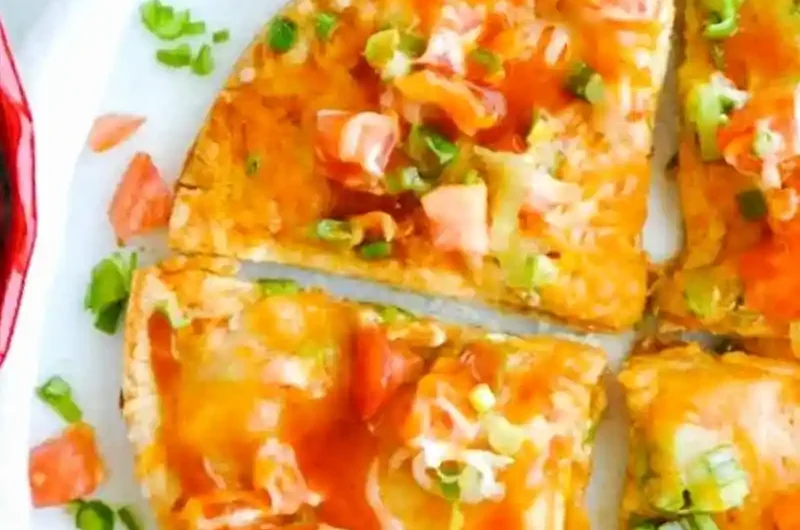
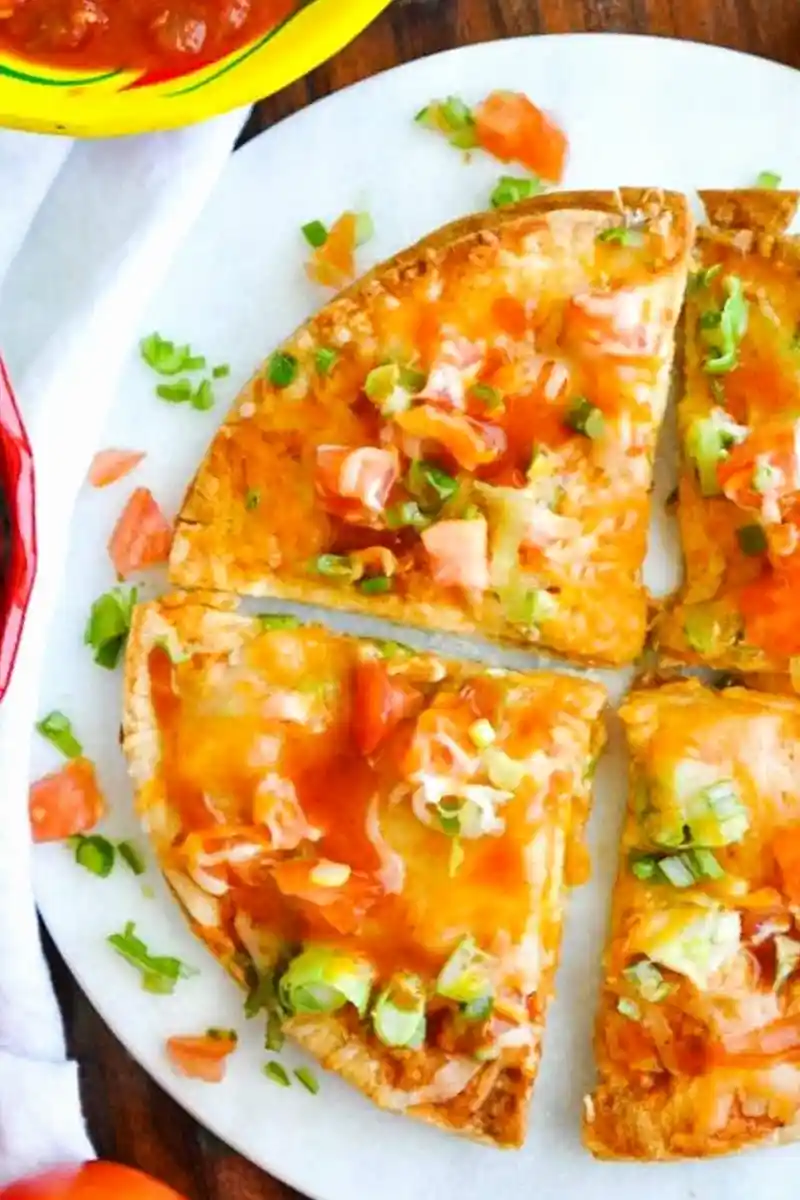
This recipe provides a baked, healthier alternative to the classic fast-food Mexican pizza. It features layers of crispy tortillas, seasoned refried beans, and fresh vegetable toppings. The result is a crunchy, cheesy main course that is entirely vegetarian.
List of ingredients
- 8 flour tortillas – use 2 per pizza; whole wheat is a healthier alternative.
- Avocado oil – used for brushing both sides of the tortillas.
- 15 ounces organic pinto refried beans (salsa style) – provides the base creamy layer.
- 1 1/2 tbsp taco seasoning – adds spice and depth to the beans.
- 1/4 cup water – used to adjust the bean consistency.
- 1/2 cup white onion – finely chopped for the bean mixture.
- 2 tomatoes – chopped for fresh topping.
- 1 jalapeno – deseeded and chopped for heat.
- 2 stalks scallions – chopped for a mild onion garnish.
- 2 cups shredded cheese – 1/2 cup per pizza, use a Mexican blend or cheddar.
- Few spoonfuls salsa or taco bell sauce – for layering and finishing.
step-by-step instructions
- Prepare the oven: Preheat your oven to 400 degrees Fahrenheit and line a baking tray with aluminum foil for easy cleanup.
- Prep the tortillas: Place 2 tortillas on the lined tray and lightly brush both sides with avocado oil.
- Prevent puffing: Use a fork to prick the surfaces of the tortillas, which stops them from bubbling up during baking.
- Bake the base: Bake the tortillas for a total of 11 minutes, flipping them halfway through (about 5.5 minutes per side).
- Check for doneness: Remove the tortillas once they are slightly golden brown and crispy.
- Heat the beans: Pour the refried beans into a pot and cook over medium heat.
- Season the beans: Stir in the taco seasoning and 1/4 to 1/2 cup of water; avoid adding extra salt as the seasoning contains enough.
- Add aromatics: Stir the chopped white onion into the bean mixture and cook until heated through, then remove from heat.
- Prep fresh toppings: Chop the tomatoes, scallions, and deseeded jalapenos, and have the shredded cheese ready.
- First layer assembly: Spread a layer of the seasoned refried beans evenly over the first crispy tortilla.
- First sauce layer: Apply a small amount of salsa or taco sauce over the beans and spread it evenly.
- Second layer assembly: Place the second crispy tortilla directly on top of the first layer.
- Second sauce layer: Spread another thin layer of salsa or taco sauce across the top tortilla.
- Add fresh vegetables: Evenly distribute the chopped scallions, tomatoes, and jalapenos over the sauce.
- Apply cheese: Top the pizza with shredded cheese, ensuring the edges are covered to help hold the structure.
- Final bake: Place the assembled pizzas back in the oven at 400 degrees for 3 to 5 minutes until the cheese is melted.
Optimizing Tortilla Crispiness
Use Avocado Oil for High-Heat Stability
Avocado oil is recommended because it has a high smoke point, preventing the oil from burning at 400 degrees. This ensures the tortillas brown evenly without developing a bitter, burnt taste. Apply a thin, even coat to avoid excess grease.
Prick Tortillas to Prevent Air Pockets
Flour tortillas tend to puff up when heated, creating large air bubbles that make layering difficult. Pricking the surface with a fork allows steam to escape, keeping the tortilla flat. This results in a more stable base for the bean and cheese layers.
Flip Halfway for Uniform Browning
Baking for 5.5 minutes per side ensures that both the top and bottom of the tortilla achieve a consistent crunch. Without flipping, the bottom may overcook while the top remains soft. Ensure the flip is done carefully to maintain the circular shape.
Avoid Over-Baking the Base
Keep a close eye on the tortillas to ensure they reach a golden brown color rather than a dark brown. Over-baked tortillas can become too hard, making the final pizza difficult to cut. Remove them immediately once the desired crispiness is achieved.
Refining the Bean Filling
Adjust Bean Consistency with Water
Canned refried beans can often be too thick to spread easily on a tortilla. Adding a small amount of water during the heating process creates a smoother, more spreadable texture. This prevents the tortilla from tearing when you apply the beans.
Balance Salt Levels with Taco Seasoning
Most commercial taco seasonings are high in sodium, which complements the salt already present in canned beans. Avoid adding additional table salt to the pot to prevent the dish from becoming overly salty. Taste the mixture after simmering before deciding if more seasoning is needed.
Integrate Fresh Onions for Texture
Adding chopped white onions directly into the beans provides a slight crunch and a sharp flavor contrast to the creamy beans. Sautéing them briefly within the bean mixture mellows the raw onion bite. Ensure the onions are finely diced for an even distribution.
Simmer on Medium Heat for Flavor Fusion
Cooking the beans on medium heat allows the taco seasoning and water to fully integrate into the bean paste. This ensures that every bite has a consistent flavor profile rather than pockets of spice. Stir frequently to prevent the beans from sticking to the bottom of the pot.
Selecting and Preparing Toppings
Remove Tomato Seeds to Prevent Sogginess
Tomatoes contain a high amount of water in their center, which can leak into the tortilla and make it soft. To prevent this, scoop out the seeds and watery pulp before chopping the flesh into small cubes. This keeps the topping fresh and the crust crunchy.
Control Heat with Jalapeno Deseeding
The heat of a jalapeno is concentrated in the seeds and the white internal membranes. Removing these components allows you to enjoy the pepper’s flavor without overwhelming the dish with spice. For a spicier version, leave a few seeds intact.
Use a High-Moisture Melting Cheese
A Mexican blend or sharp cheddar works best because they melt quickly and provide a strong flavor. Ensure the cheese is shredded finely to ensure an even melt across the entire surface. Covering the edges of the pizza with cheese helps lock the toppings in place.
Incorporate Fresh Scallions for Brightness
Scallions provide a mild, fresh onion flavor that cuts through the richness of the beans and cheese. Chop them thinly to ensure they distribute evenly across the top. Adding them fresh after the bean layer ensures they retain their vibrant green color.
Ingredient Substitutions and Variations
Gluten-Free Tortilla Alternatives
For a gluten-free version, substitute flour tortillas with corn tortillas or certified gluten-free flour tortillas. Corn tortillas may require a slightly longer baking time to reach the same level of crispiness. Be mindful that corn tortillas are smaller and may require more pieces per pizza.
Plant-Based Cheese for Vegan Options
To make this recipe vegan, use a plant-based shredded cheese alternative that is designed for melting. Ensure the refried beans used are free from lard or animal-based additives. Combine these with vegan-certified tortillas for a fully plant-based meal.
Adding Lean Proteins for More Heartiness
While the base recipe is vegetarian, you can replace the beans with sautéed ground turkey or lean ground beef. Brown the meat with garlic and onions before adding the taco seasoning. This increases the protein content while maintaining the flavor profile.
Experimenting with Different Salsas
While standard red salsa is traditional, a salsa verde can provide a tangier, more acidic contrast. Enchilada sauce is another great substitute for those who prefer a smoother, more savory sauce. Apply the sauce sparingly to avoid making the tortillas soggy.
Assembly and Baking Logic
Preventing the Sogginess Effect
The primary challenge with Mexican pizzas is preventing the tortillas from becoming limp. To avoid this, do not overload the first layer with beans or sauce. Use a thin, even spread to ensure the structural integrity of the base tortilla is maintained.
Achieving Edge-to-Edge Cheese Coverage
Spreading the cheese all the way to the edges of the tortilla creates a seal that holds the vegetables in place. This prevents the toppings from sliding off when you slice the pizza into quarters. It also adds a satisfying cheesy crust around the perimeter.
Optimizing the Final Melt Time
The final bake is only intended to melt the cheese and warm the fresh toppings, not to cook them. Monitoring the pizza after 3 minutes prevents the cheese from browning too much or the tomatoes from shriveling. Remove the pizza as soon as the cheese is bubbly.
Layering Order for Maximum Crunch
Following the specific order of beans, sauce, tortilla, sauce, and toppings is crucial. Placing the second tortilla on top of the beans protects the upper layer from absorbing too much moisture from the filling. This maintains the distinct contrast between the crunchy shells and the soft filling.
Serving and Presentation Ideas
Pairing with Creamy Garnishes
Serving the pizza with a side of sour cream or Greek yogurt adds a cool element that balances the spice of the jalapenos. A dollop of fresh guacamole provides healthy fats and a rich texture. These can be added on top or served as dips on the side.
Suggested Side Dish Combinations
Mexican rice or a simple corn salad are excellent accompaniments to this main dish. A side of shredded romaine lettuce tossed with lime juice adds a refreshing crunch. These sides turn the pizza into a complete, balanced meal.
Techniques for Clean Slicing
To avoid crushing the crispy tortillas, use a sharp pizza cutter or a serrated knife. Slice the pizza into four equal quadrants while it is still hot, but allow it to sit for one minute first. This allows the cheese to set slightly, preventing the toppings from shifting.
Customizing the Finishing Sauce
Drizzling additional taco sauce or hot sauce over the finished pizza adds a professional touch. You can use a squeeze bottle to create a zig-zag pattern for a visual appeal similar to restaurant presentations. Choose the heat level based on your guests’ preferences.
Storage and Reheating Guidance
Refrigerating Leftover Pizza
Store any leftover slices in an airtight container in the refrigerator for up to three days. To prevent the slices from sticking together, place pieces of parchment paper between them. Ensure the pizza is completely cooled before sealing the container to avoid condensation.
Avoiding the Microwave for Reheating
Microwaving leftover Mexican pizza often results in a rubbery texture and soggy tortillas. This method destroys the crispiness that makes the dish appealing. If you must use a microwave, do so for very short intervals on low power.
Restoring Crunch in the Oven
The best way to reheat this pizza is in the oven or a toaster oven at 350 degrees. Place the slices on a baking sheet and heat for 5 to 8 minutes. This restores the crunch of the tortillas and remelts the cheese without overcooking the vegetables.
Freezing Instructions for Long-Term Storage
You can freeze the baked pizzas by wrapping individual slices tightly in foil and placing them in a freezer bag. They will remain viable for up to one month. Thaw them in the refrigerator overnight before reheating in the oven.
Troubleshooting Common Issues
Solving the Problem of Puffing Tortillas
If your tortillas still puff up despite pricking, try increasing the number of holes or using a smaller fork. Ensure the oil is spread thinly, as large pools of oil can cause uneven heating. You can also gently press them down with a spatula during the first few minutes of baking.
Fixing Overly Runny Bean Mixtures
If the beans become too liquid after adding water, simmer them for a few extra minutes without a lid. This allows the excess moisture to evaporate, thickening the paste. If they are still too runny, add a tablespoon of cornstarch or more refried beans.
Preventing Cheese from Burning
If the cheese browns too quickly before the center is hot, lower the oven temperature to 375 degrees. You can also cover the pizza loosely with foil for the first two minutes of the final bake. This traps heat inside while protecting the cheese from direct radiation.
Managing Excess Moisture from Toppings
If the top of the pizza feels watery, it is likely due to the tomatoes or salsa. Ensure you are using a thick salsa rather than a thin, watery one. Pat the chopped tomatoes with a paper towel before placing them on the pizza to remove surface moisture.
Frequently Asked Questions
Can I use corn tortillas instead of flour?
Yes, you can use corn tortillas, but be aware they are smaller and more prone to cracking. You may need to use more tortillas per pizza or slightly increase the baking time to ensure they are fully crisp. Brushing them with oil is even more important for corn tortillas to prevent them from becoming too dry.
How do I make this recipe spicier?
To increase the heat, add a can of diced green chilies to the bean mixture while simmering. You can also leave the seeds in the jalapenos or use a habanero for a more intense spice level. Finishing the dish with a high-heat hot sauce is another effective method.
What is the best substitute for taco seasoning?
If you do not have a pre-made mix, combine chili powder, cumin, garlic powder, onion powder, and paprika. Use a pinch of salt and black pepper to taste. This homemade blend allows you to control the sodium and spice levels precisely.
Can I make these in an air fryer?
Yes, you can air fry the tortillas at 375 degrees for about 3-5 minutes per side until crisp. Assemble the pizza as directed and then air fry the complete assembly for 2-3 minutes to melt the cheese. Monitor closely as air fryers can brown cheese very quickly.
Print
Baked Vegetarian Mexican Pizza Copycat
- Total Time: 40 minutes
- Yield: 4 servings 1x
- Diet: Vegetarian
Description
A copycat vegetarian version of the Taco Bell Mexican Pizza recipe that is baked instead of fried, making it a healthier and crunchier alternative to the original.
Ingredients
- 8 flour tortillas
- Avocado oil for brushing
- 15 ounces organic pinto refried beans salsa style
- 1 1/2 tbsp taco seasoning
- 1/4 cup water
- 1/2 cup white onion, chopped
- 2 tomatoes, chopped
- 1 jalapeno, deseeded and chopped
- 2 stalks scallions, chopped
- 2 cups shredded cheese
- Few spoonfuls salsa or taco bell sauce
Instructions
- Bake Tortillas: Preheat oven to 400 degrees, line a tray with foil, brush tortillas with avocado oil, prick them with a fork, and bake for 11 minutes, flipping halfway.
- Flavor Beans and Chop Veggies: Heat refried beans in a pot over medium heat, stir in water, taco seasoning, and chopped onion; chop tomatoes, scallions, and jalapenos.
- Assemble and Final Bake: Layer the first tortilla, refried beans, and salsa; add the second tortilla, more salsa, scallions, tomatoes, jalapenos, and cheese; bake at 400 degrees for about 5 minutes.
Notes
For a gluten-free option, use gluten-free or corn tortillas. For a vegan version, use non-dairy cheese and vegan tortillas. To increase spice, add green chilies or cayenne pepper to the beans.
- Prep Time: 15 minutes
- Cook Time: 25 minutes
- Category: Main Course
- Method: Baking
- Cuisine: Mexican
Nutrition
- Serving Size: 1 pizza
- Calories: 495 kcal
- Sugar: 7 g
- Sodium: 1473 mg
- Fat: 23 g
- Saturated Fat: 12 g
- Unsaturated Fat: 11 g
- Trans Fat: 0 g
- Carbohydrates: 47 g
- Fiber: 10 g
- Protein: 22 g
- Cholesterol: 60 mg
Keywords: copycat, Taco Bell, Mexican Pizza, vegetarian, baked, easy dinner, Mexican cuisine