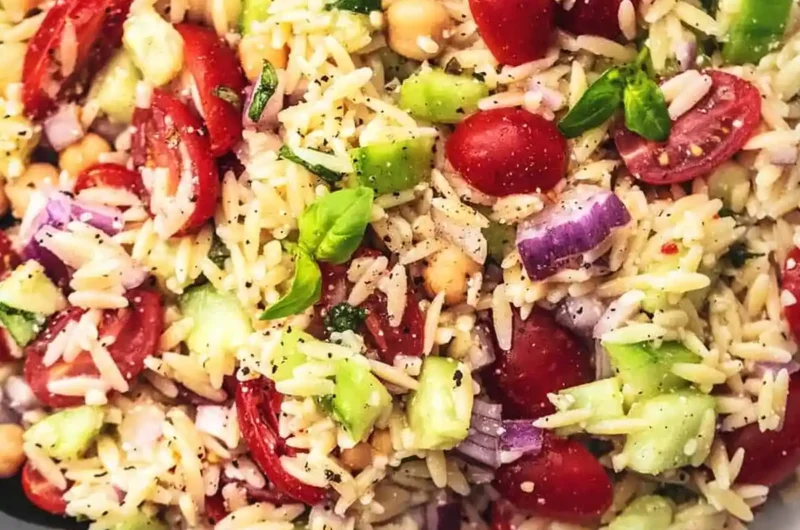
This vibrant Greek-inspired orzo salad is the perfect balance of fresh garden produce and tender, bite-sized pasta. Featuring a colorful blend of crisp cucumbers, juicy cherry tomatoes, and protein-rich chickpeas, it is tied together by a zesty, homemade dressing that creates an unforgettable side dish. Whether you are hosting a summer picnic or simply need a refreshing lunch, this versatile recipe is sure to satisfy.
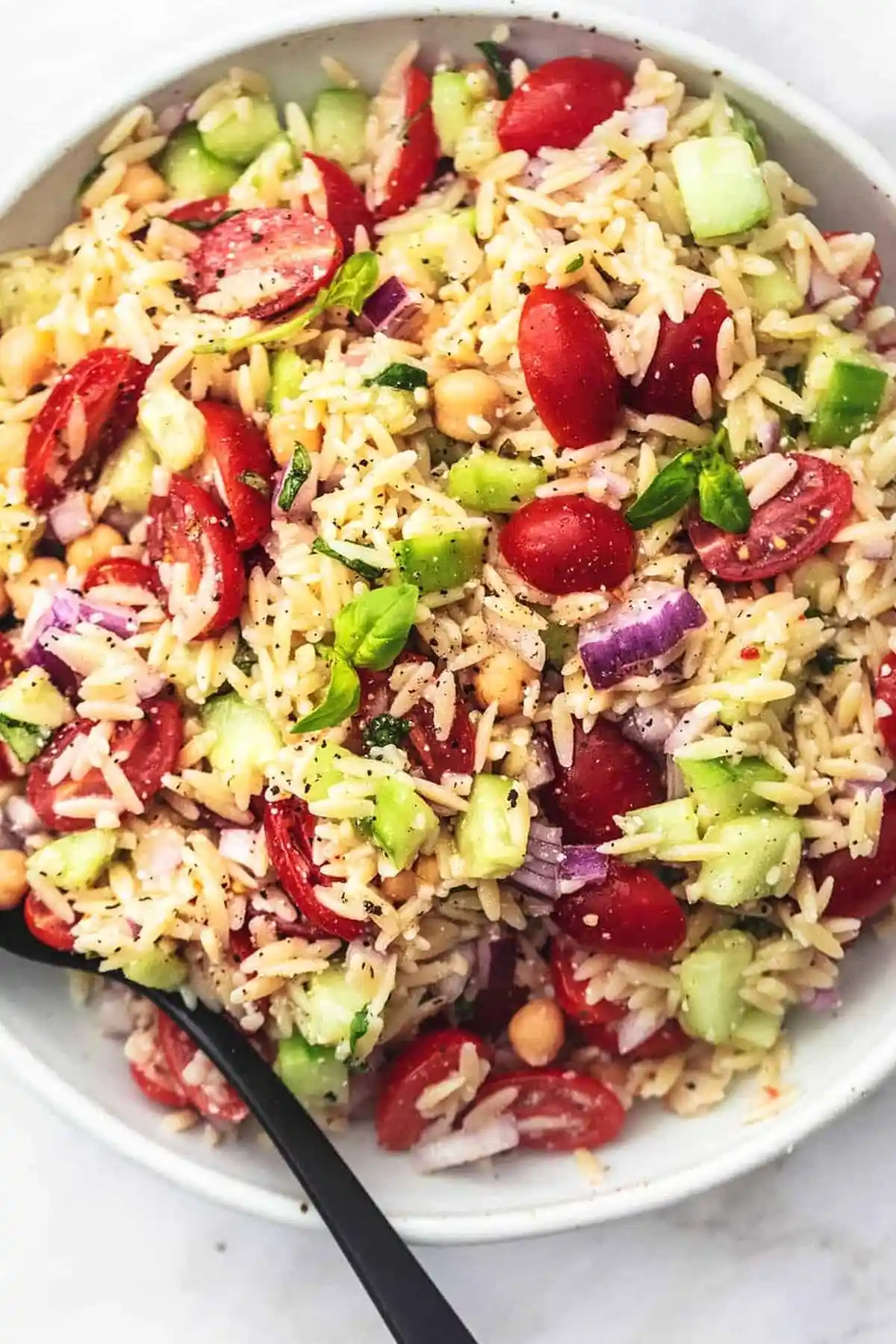
List of ingredients
- 12 ounces dry orzo
- ½ cup cherry tomatoes, halved
- ⅔ cup chickpeas, drained and rinsed
- 1 medium cucumber, peeled and chopped
- 1 tablespoon freshly chopped basil
- ¼ red onion, chopped
- ½ cup packed baby spinach (optional)
- ⅓ cup crumbled feta cheese
- 1 cup Italian salad dressing (store-bought or homemade)
- ½ cup olive oil
- 4 tablespoons grape juice-based vinegar
- 2 tablespoons water
- 3 teaspoons honey
- 1 tablespoon fresh-squeezed lemon juice
- 3 tablespoons grated parmesan cheese
- ¾ teaspoon salt
- ½ teaspoon garlic powder
- ½ teaspoon cracked black pepper
- 3 teaspoons Italian blend dried herb seasoning
step-by-step instructions
- Step: Place orzo in a pot, cover with water. Stir in 1/2 teaspoon salt, and bring to a boil. Cook 8-9 minutes until tender, drain and rinse with cold water.
- Step: In a large bowl combine orzo, tomatoes, chickpeas, cucumbers, basil, onions and spinach (if using) and toss.
- Step: Toss with the dressing to serve immediately, OR cover tightly and chill until ready to serve, then toss with dressing just before serving.
- Step: To make the dressing, combine all ingredients in a jar. Screw the lid on tightly, shake vigorously until well blended, then chill until ready to use or pour immediately over salad and toss.
Refining your salad technique
Maintaining ideal pasta texture
When cooking orzo for cold dishes, it is important to avoid overcooking the grains. Aim for the shorter end of the package instructions, as the pasta will soften slightly once it absorbs the moisture from the dressing and vegetable juices. Rinsing the pasta thoroughly with cold water is essential to remove excess surface starch, which keeps the grains separate rather than clumping together.
Achieving professional dressing consistency
Using a jar to shake your dressing is more than just a convenience; it is the best way to force the oil and vinegar to emulsify properly. If you prefer a thicker, creamier dressing, consider adding a teaspoon of Dijon mustard to the jar before shaking. The mustard acts as an emulsifier and helps the dressing cling to the tiny orzo grains much better than oil alone.
Customization and ingredient swaps
Substituting the vegetable medley
If you find yourself without certain vegetables, you can easily adapt this salad to what is in your pantry. Diced bell peppers, such as red or orange, add a lovely crunch that mimics cucumbers, while sun-dried tomatoes provide an intense umami punch that pairs perfectly with the feta cheese. For a different texture profile, try adding thinly sliced celery or even blanched green beans.
Protein additions for a main course
To transform this side dish into a substantial main meal, consider stirring in shredded rotisserie chicken or canned cannellini beans. If you prefer seafood, grilled shrimp or even canned flaked tuna can be tossed in just before serving. These additions provide extra protein and make the bowl much more filling without overpowering the delicate flavor of the dressing.
Storing and preparing ahead
Managing texture in the refrigerator
Orzo salad is excellent for meal prep, but the pasta can soak up the dressing if left for too long. If you plan on keeping leftovers for more than one day, store the dressing in a separate airtight container and combine it with the salad shortly before you intend to eat. This simple step preserves the crispness of the cucumbers and prevents the orzo from becoming overly saturated.
Optimal storage containers
Use wide, shallow containers rather than deep bowls to store your finished salad in the refrigerator. A shallow container prevents the weight of the salad from crushing the ingredients at the bottom and helps the dish chill more evenly. Keep the salad stored in the coldest part of your refrigerator, typically near the back, for the best longevity.
Frequently asked questions
Can I use a different type of pasta if I do not have orzo?
Yes, you can substitute other small pasta shapes like ditalini, acini di pepe, or even tiny pasta shells. These varieties have a similar surface area and cooking time to orzo, ensuring they will hold the dressing and combine well with the chopped vegetables.
Why is my salad becoming watery after sitting?
Vegetables like cucumbers and tomatoes have high water content that naturally releases into the salad over time. To minimize this, salt your cucumber pieces and let them drain in a colander for ten minutes before adding them to the bowl, and be sure to remove the seeds from the center of the cucumbers before chopping.
Is it possible to freeze the leftovers?
Freezing is not recommended for this dish because the texture of both the pasta and the fresh vegetables changes drastically once thawed. The pasta will lose its firmness and become mushy, and the vegetables will lose their crisp, refreshing bite. It is best to prepare only as much as you can eat within a three-day window.
Can I serve this salad warm?
While this dish is traditionally enjoyed chilled or at room temperature, you can absolutely serve it warm if preferred. If you choose to serve it warm, omit the spinach so it does not wilt excessively, and toss everything together right after the orzo has been drained but is still steaming. This will cause the feta to soften slightly and meld into the dressing, creating a different but equally delicious experience.
How can I make this salad more vibrant for guests?
If you are serving this for a special occasion, sprinkle fresh herbs like chopped parsley or even a few torn mint leaves over the top just before serving. A final drizzle of high-quality extra virgin olive oil and a squeeze of fresh lemon zest can also give the finished dish a professional, restaurant-quality appearance.
Print
Best Greek Orzo Salad with Feta
- Total Time: 25 minutes
- Yield: 6 servings 1x
- Diet: Vegetarian
Description
This Best Greek Orzo Salad with feta cheese features everything good about one-dish pasta salad: orzo, cherry tomatoes, chickpeas, cucumber, basil, and a tangy, sweet Italian dressing to tie it all together.
Ingredients
- 12 ounces dry orzo
- ½ cup cherry tomatoes, halved
- ⅔ cup chickpeas, drained and rinsed
- 1 medium cucumber, peeled and chopped
- 1 tablespoon freshly chopped basil
- ¼ red onion, chopped
- ½ cup packed baby spinach (optional)
- ⅓ cup crumbled feta cheese
- 1 cup Italian salad dressing (store-bought or homemade)
- ½ cup olive oil
- 4 tablespoons grape juice-based vinegar
- 2 tablespoons water
- 3 teaspoons honey
- 1 tablespoon fresh-squeezed lemon juice
- 3 tablespoons grated parmesan cheese
- ¾ teaspoon salt
- ½ teaspoon garlic powder
- ½ teaspoon cracked black pepper
- 3 teaspoons Italian blend dried herb seasoning
Instructions
- Step: Place orzo in a pot, cover with water. Stir in 1/2 teaspoon salt, and bring to a boil. Cook 8-9 minutes until tender, drain and rinse with cold water.
- Step: In a large bowl combine orzo, tomatoes, chickpeas, cucumbers, basil, onions and spinach (if using) and toss.
- Step: Toss with the dressing to serve immediately, OR cover tightly and chill until ready to serve, then toss with dressing just before serving.
- Step: To make the dressing, combine all ingredients in a jar. Screw the lid on tightly, shake vigorously until well blended, then chill until ready to use or pour immediately over salad and toss.
Notes
Flavor tip: add sliced avocado and kalamata olives. Use grape juice-based vinegar as a substitute for acidity in the dressing.
- Prep Time: 15 minutes
- Cook Time: 10 minutes
- Category: Side Dish
- Method: Boiling
- Cuisine: American, Italian
Nutrition
- Serving Size: 1 serving
- Calories: 529 kcal
- Sugar: 11 g
- Sodium: 729 mg
- Fat: 28 g
- Saturated Fat: 4 g
- Unsaturated Fat: 23 g
- Trans Fat: 0 g
- Carbohydrates: 58 g
- Fiber: 4 g
- Protein: 11 g
- Cholesterol: 2 mg
Keywords: orzo salad, greek salad, pasta salad, side dish, vegetarian