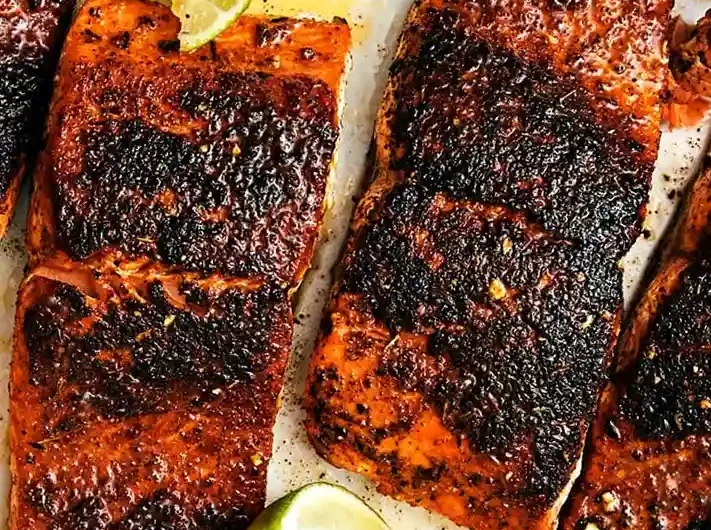
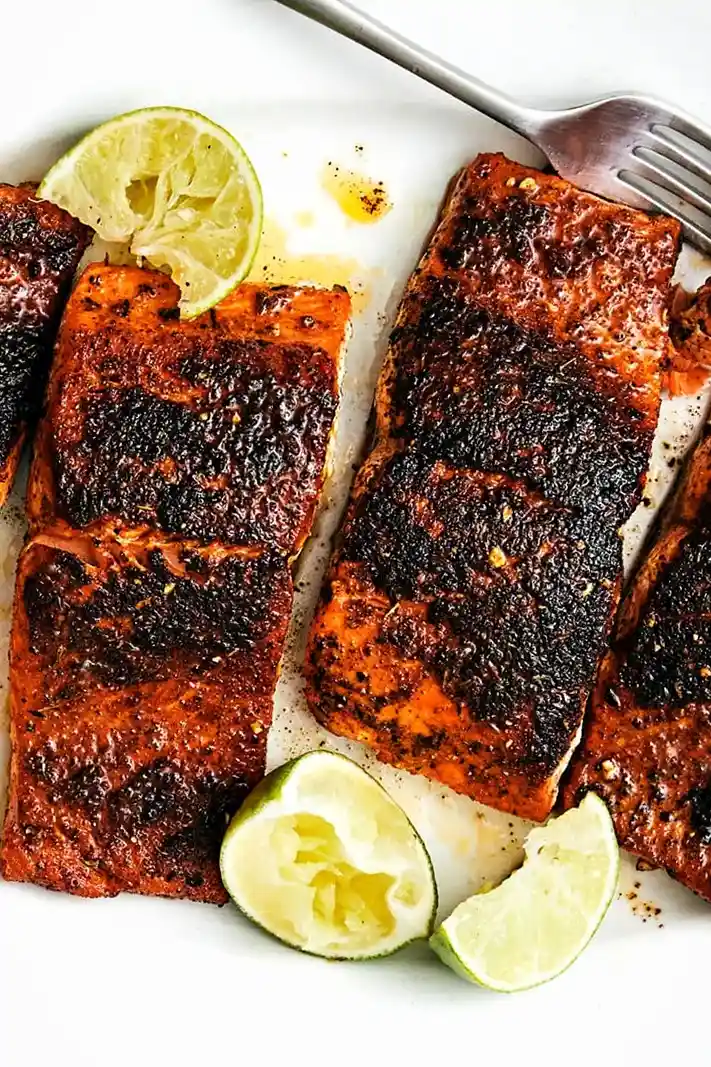
This blackened salmon recipe brings bold, savory Cajun and Creole flavors to your dinner table in under fifteen minutes. By using a cast iron skillet, you can achieve that signature charred crust while keeping the inside of the fish incredibly tender and juicy. It is a reliable, high-protein meal that feels sophisticated enough for guests but is simple enough for a busy weeknight.
List of ingredients
- 1 teaspoon sweet paprika
- ½ teaspoon kosher salt
- ½ teaspoon garlic powder
- ¼ teaspoon onion powder
- ¼ teaspoon dried oregano
- ¼ teaspoon dried thyme
- ¼ teaspoon cayenne pepper
- ¼ teaspoon freshly ground black pepper
- 4 (6-ounce) salmon filets
- 3 tablespoons extra-virgin olive oil
step-by-step instructions
- Step: Mix the seasoning. In a small bowl, stir together the paprika, salt, garlic powder, onion powder, oregano, thyme, cayenne pepper, and black pepper.
- Step: Season the salmon. Drizzle one tablespoon of oil on top of the salmon and rub it in. Sprinkle the seasoning on top and rub that in to evenly coat.
- Step: Cook the salmon. Heat the remaining two tablespoons of oil in a large skillet over medium-high heat. Add the salmon, and cook it top side down for 2 to 3 minutes, until the top is blackened. Flip and cook another 2 to 3 minutes, until cooked through.
- Step: To serve. A fresh squeeze of lemon or lime before serving balances the spice flavor beautifully.
Practical cooking advice
Achieving the perfect sear
The secret to a true blackened finish is starting with an extremely hot skillet. Before adding the oil, ensure your pan has reached the correct temperature by dropping a small bead of water onto the surface; it should evaporate with a loud hiss instantly. A cold pan will result in the spices steaming rather than forming that characteristic, savory crust.
Selecting the right skillet
Cast iron is the preferred tool for this technique because it retains high heat efficiently and distributes it evenly across the surface. While a heavy-bottomed stainless steel pan can be used in a pinch, cast iron naturally improves over time as it builds a seasoned surface, which helps prevent delicate fish from sticking during the quick, high-heat searing process.
Handling delicate fish
Using a flexible, thin-edged fish spatula is highly recommended when flipping your filets to maintain their integrity. The elongated design allows you to slide under the entire surface of the filet, minimizing the risk of the fish breaking apart when you turn it. Ensure you lift the salmon gently to protect the crust you have carefully created.
Refining flavors and substitutions
Adjusting spice intensity
If you find that the standard cayenne measurement provides too much heat for your palate, you can easily reduce the amount or substitute it with smoked paprika for a milder profile. The other ingredients, such as garlic and onion powder, act as flavor buffers, so keep those amounts consistent to maintain the depth of the crust. You can always increase the heat by adding a tiny pinch of red chili flakes if you prefer a spicier result.
Replacing olive oil
If you prefer a richer flavor profile, you can swap the extra-virgin olive oil with ghee or clarified butter for the searing process. Since clarified butter has a higher smoke point than regular butter, it handles the high heat of the skillet without burning prematurely, providing a luxurious finish to the salmon. Avoid using plain butter, as the milk solids will burn rapidly and impart a bitter taste to the spice crust.
Adding fresh aromatics
For those who love extra brightness, consider finely grating fresh garlic or ginger into your oil before rubbing it onto the salmon. This adds a layer of fresh aromatic intensity that complements the dried herbs beautifully. Just be mindful not to add too much moisture to the exterior, as a dry surface is critical for that initial sear.
Serving and pairing ideas
Choosing nutritious sides
Because the salmon carries a robust, intense spice crust, it pairs wonderfully with neutral, light vegetable dishes that cleanse the palate. Garlic-roasted potatoes, steamed asparagus with a drizzle of lemon oil, or sautéed spinach are excellent choices. The goal is to balance the richness of the fish with earthy, crisp vegetables that don’t compete with the Cajun spices.
Creating salmon tacos
Transform your leftover blackened salmon into an easy lunch by flaking it into corn tortillas. Top the fish with a simple slaw made of shredded cabbage, cilantro, and a drizzle of creamy avocado lime sauce. This variation is a fantastic way to enjoy the leftovers while changing the texture and presentation entirely.
Building a vibrant salad
A blackened salmon salad is a satisfying main course that combines cold, crisp greens with warm, spicy fish. Start with a bed of massaged kale or romaine lettuce, then add sliced cucumbers, cherry tomatoes, and black beans. The contrast between the cool vegetables and the hot, charred salmon makes for a refreshing yet filling meal experience.
Storage and reheating strategy
Managing leftover storage
If you have extra cooked salmon, store it in an airtight container in the refrigerator as soon as it cools to room temperature. It will remain at its best quality for up to three days, provided the container is sealed properly to prevent the fish from absorbing other scents in the fridge. Labeling the container with the date helps ensure you use the leftovers promptly.
Reheating without drying out
Reheating salmon can often lead to a dry texture, so the trick is to use a gentle approach. Place the filets in an oven-safe dish with a tablespoon of water or broth, cover it tightly with foil, and warm it in a low-temperature oven at 275°F until just heated through. This method creates a steam environment that keeps the meat succulent even after it has been fully cooked previously.
Freezing for future meals
To freeze your blackened salmon, ensure the filets are completely cooled before wrapping them tightly in plastic wrap or placing them in a freezer-safe bag. Adding a piece of parchment paper between filets prevents them from sticking together during the freezing process. When you are ready to eat, thaw the salmon in the refrigerator overnight to maintain the best quality and texture.
Common cooking inquiries
Can I make this with other types of fish?
Yes, this blackened seasoning works beautifully on firm-fleshed fish like tilapia, snapper, or cod. Because these varieties are leaner than salmon, you may need to reduce the cook time slightly to ensure they stay moist, but the high-heat searing technique remains largely the same for all firm white fish.
How can I tell when the salmon is finished?
The easiest way to check for doneness is to use a fork to gently press down on the thickest part of the filet. If the fish flakes easily and the color has changed from translucent to opaque, it is ready to be removed from the heat. Avoid overcooking, as the residual heat will continue to cook the fish for a minute or two after you take it out of the pan.
Why did my spices burn quickly?
If the spices charred too quickly and turned bitter, your pan was likely too hot or the oil reached its smoke point immediately. While the goal is a blackened crust, it should be a deep brown color, not jet-black. Ensure you move the pan slightly if a specific spot becomes too hot, or reduce the heat to medium once the salmon has been placed in the skillet to allow the center to cook through without scorching the exterior.
Print
Blackened Salmon Made Easy
- Total Time: 15 minutes
- Yield: 4 servings 1x
- Diet: Pescatarian
Description
Buttery, crispy, and brimming with Cajun and Creole flavors, this blackened salmon recipe is the perfect bite of Southern comfort food.
Ingredients
- 1 teaspoon sweet paprika
- ½ teaspoon kosher salt
- ½ teaspoon garlic powder
- ¼ teaspoon onion powder
- ¼ teaspoon dried oregano
- ¼ teaspoon dried thyme
- ¼ teaspoon cayenne pepper
- ¼ teaspoon freshly ground black pepper
- 4 (6-ounce) salmon filets
- 3 tablespoons extra-virgin olive oil
Instructions
- Step: Mix the seasoning. In a small bowl, stir together the paprika, salt, garlic powder, onion powder, oregano, thyme, cayenne pepper, and black pepper.
- Step: Season the salmon. Drizzle one tablespoon of oil on top of the salmon and rub it in. Sprinkle the seasoning on top and rub that in to evenly coat.
- Step: Cook the salmon. Heat the remaining two tablespoons of oil in a large skillet over medium-high heat. Add the salmon, and cook it top side down for 2 to 3 minutes, until the top is blackened. Flip and cook another 2 to 3 minutes, until cooked through.
- Step: To serve. A fresh squeeze of lemon or lime before serving balances the spice flavor beautifully.
Notes
Store leftovers in a sealed container in the fridge for up to 3 days. To freeze, ensure the salmon is completely cool, then place on parchment paper in a storage container. Reheat leftovers low and slow in the microwave or oven to prevent drying.
- Prep Time: 5 minutes
- Cook Time: 10 minutes
- Category: Dinner
- Method: Pan-seared
- Cuisine: Cajun
Nutrition
- Serving Size: 1 filet
- Calories: 339 kcal
- Sugar: 0.1 g
- Sodium: 366 mg
- Fat: 21 g
- Saturated Fat: 3 g
- Unsaturated Fat: 16 g
- Trans Fat: 0 g
- Carbohydrates: 1 g
- Fiber: 0.4 g
- Protein: 34 g
- Cholesterol: 94 mg
Keywords: blackened salmon, cajun salmon, healthy salmon recipe, southern dinner