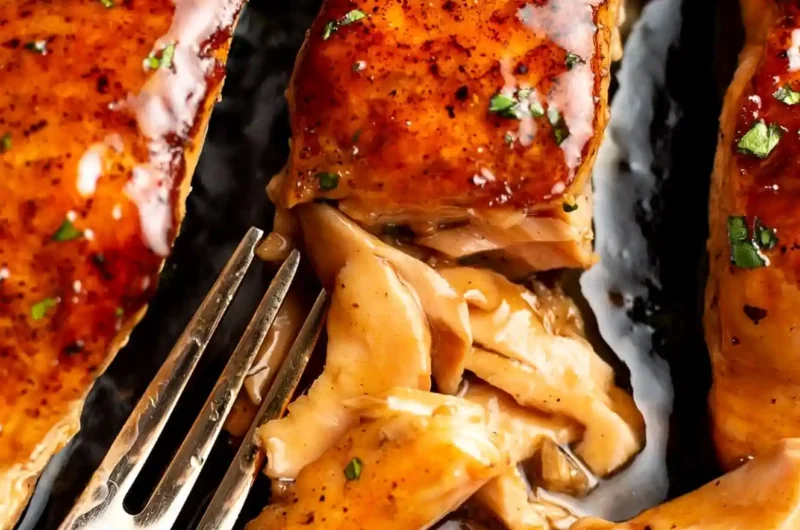
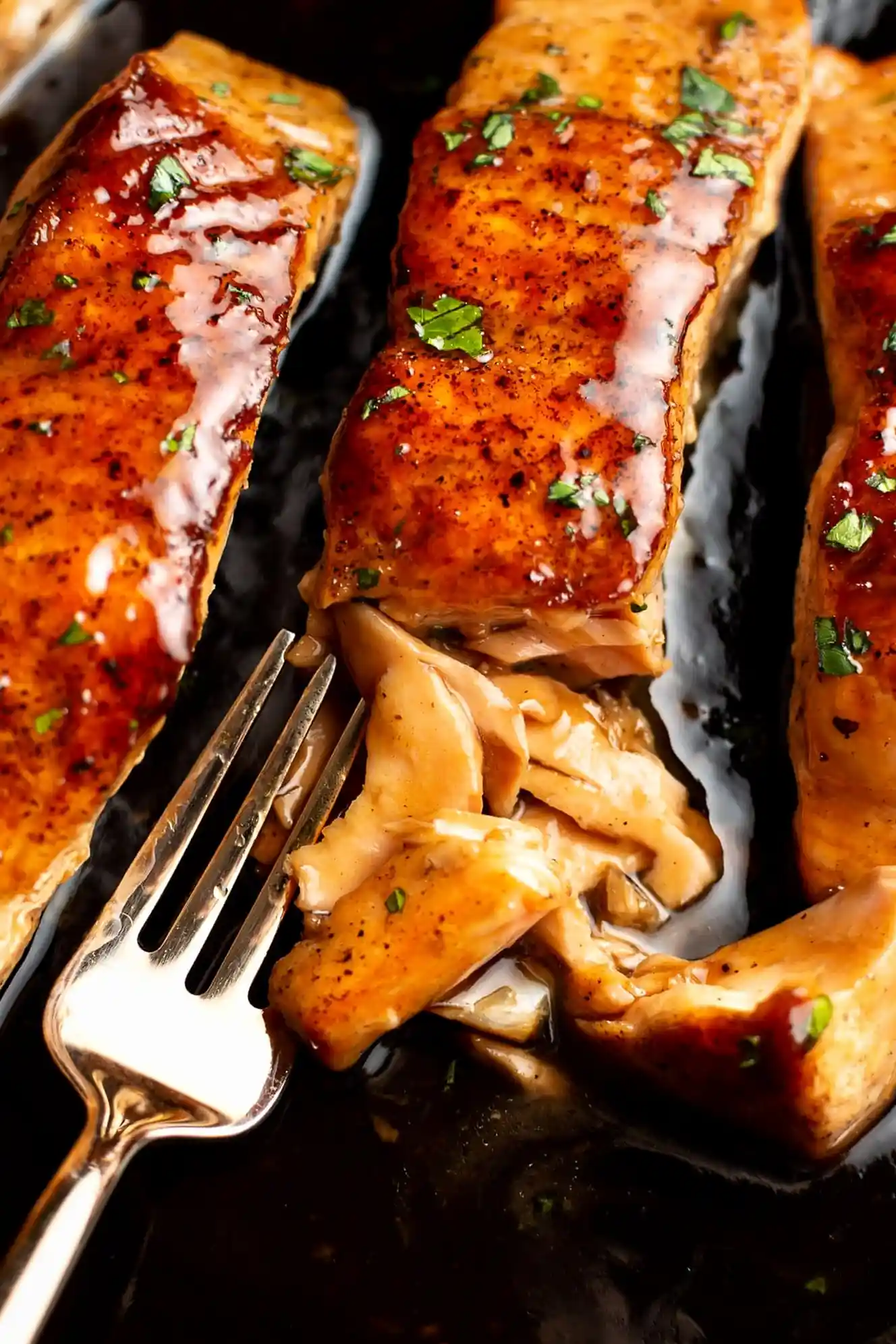
This quick salmon dinner features a sticky, sweet glaze that is perfect for those who prefer a savory-sweet flavor profile. It takes about 30 minutes from start to finish and uses simple pantry staples to create a restaurant-quality meal.
List of ingredients
- 1 pound fresh salmon – ideally about 1 inch thick for consistent cooking.
- Salt and pepper – to taste for basic seasoning.
- 1 tablespoon olive oil – used to prevent sticking during the initial sear.
- 2 tablespoons butter (divided) – adds richness to both the searing process and the final glaze.
- 3 tablespoons brown sugar – provides the primary sweetness and aids in caramelization.
- 1 tablespoon soy sauce – adds a salty, savory depth to the glaze.
- 1/4 teaspoon garlic powder – introduces a subtle aromatic flavor.
- 1 tablespoon lemon juice – provides necessary acidity to balance the sugar.
- 1/2 teaspoon fresh ginger, grated – adds a zesty and bright note.
- 1 teaspoon Worcestershire sauce – enhances the savory complexity of the sauce.
- 2 tablespoons chicken broth or water – thins the sauce for easier whisking.
- 1 teaspoon cornstarch – acts as a thickener to help the glaze cling to the fish.
step-by-step instructions
- Prepare the fish: Remove the salmon from the refrigerator 15 to 20 minutes before cooking to ensure it cooks evenly. Cut the fillet into four equal portions, pat the surface dry with paper towels, and season both sides with salt and pepper.
- Whisk the glaze: In a small mixing bowl, combine the brown sugar, soy sauce, garlic powder, lemon juice, grated ginger, Worcestershire sauce, chicken broth, and cornstarch. Whisk the ingredients together until the sugar and cornstarch are fully dissolved.
- Heat the skillet: Place a skillet over medium-high heat and add the olive oil and one tablespoon of the butter. Allow the pan to heat for several minutes until the butter is bubbling and the pan is hot.
- Sear the salmon: Place the salmon pieces in the pan skin-side down. Cook undisturbed for 5 minutes to achieve a crispy skin, then reduce the heat to medium, flip the pieces, and cook for another 2-3 minutes until the fish is nearly cooked through.
- Add the glaze: Stir the remaining tablespoon of butter into the skillet. Pour the prepared sauce mixture into the open spaces between the salmon pieces and let it bubble and thicken for 20 to 30 seconds.
- Finish and coat: Remove the pan from the heat immediately to prevent the sugar in the sauce from burning. Flip the salmon pieces over once more and spoon the thickened glaze generously over the top of each piece.
- Serve: Plate the salmon immediately while the skin remains crisp and the glaze is glossy.
Professional Searing Techniques
Ensure Salmon Reaches Room Temperature for Even Cooking
Taking the salmon out of the fridge 20 minutes before cooking prevents the center from remaining raw while the outside overcooks. This temperature equalization allows the heat to penetrate the fish more consistently. It reduces the risk of the salmon curling or sticking to the pan.
Use a Fish Turner for Gentle Flipping
A wide, thin fish turner is the best tool for flipping salmon without breaking the delicate flesh. Standard spatulas are often too thick or too narrow, which can cause the fillet to flake apart. Using a dedicated turner ensures the seared crust remains intact.
Prevent Pan Crowding for a Better Sear
Avoid filling the skillet to the edges with salmon pieces. If the pan is too crowded, the temperature drops rapidly and the fish will steam in its own juices rather than sear. If you have more than four portions, cook the fish in two separate batches to maintain high heat.
Monitor the Color Change for Perfect Doneness
Watch the side of the salmon fillets as they cook; the color will change from translucent pink to an opaque light pink. When the opacity reaches about three-quarters of the way up the fillet, it is usually time to flip. This visual cue is more reliable than a timer since fillet thickness varies.
Ingredient Substitutions and Alternatives
Use Coconut Aminos for a Soy-Free Option
If you need to avoid soy, replace the soy sauce with an equal amount of coconut aminos. Coconut aminos provide a similar salty-sweet profile but are slightly less salty than traditional soy sauce. You may need a pinch more salt on the fillets to compensate for the difference.
Replace Brown Sugar with Honey or Maple Syrup
For a different type of sweetness, you can use honey or maple syrup instead of brown sugar. These liquid sweeteners will make the glaze slightly thinner, so you may need to increase the cornstarch by a small pinch. Honey adds a floral note, while maple syrup provides a woody sweetness.
Swap Chicken Broth for Vegetable Broth
Vegetable broth is an excellent substitute for chicken broth and provides a very similar flavor profile in this recipe. You can also use water if you prefer a cleaner taste that lets the ginger and lemon stand out. The broth primarily serves to dissolve the cornstarch and sugar.
Use Fresh Lemon Zest for Extra Brightness
If you have a fresh lemon on hand, add a teaspoon of lemon zest to the sauce mixture. The zest contains essential oils that provide a more intense citrus aroma than the juice alone. This helps cut through the richness of the butter and salmon fats.
Flavor Variations
Add Red Pepper Flakes for a Spicy Kick
To introduce some heat, whisk in a quarter teaspoon of crushed red pepper flakes to the glaze. The spice pairs well with the sweetness of the brown sugar and the tang of the lemon. This creates a sweet-and-spicy profile similar to some Asian-inspired glazes.
Incorporate Fresh Parsley for a Fresh Finish
Garnish the finished salmon with finely chopped fresh parsley. The herbal notes provide a visual contrast and a fresh taste that balances the sticky sauce. This is best added just before serving to keep the leaves bright green.
Use Orange Juice for a Citrus Twist
Substitute half of the lemon juice with fresh orange juice for a more complex citrus flavor. Orange and brown sugar combine to create a glaze reminiscent of orange chicken. This version works particularly well if you are serving the salmon with steamed bok choy.
Increase Ginger for a Zestier Profile
If you enjoy a strong ginger flavor, double the amount of grated ginger to one full teaspoon. Ginger adds a warming, peppery quality that complements the fatty oils of the salmon. Ensure the ginger is finely grated to avoid large woody chunks in the sauce.
Serving Suggestions
Pair with Jasmine Rice or Quinoa
The sticky glaze from the salmon is perfect for soaking into a bed of fluffy jasmine rice. Quinoa is another great option for those seeking a nuttier flavor and higher protein content. Both grains act as a neutral base that balances the intensity of the sauce.
Serve with Garlic Mashed Potatoes
Creamy garlic mashed potatoes provide a rich contrast to the acidity of the lemon in the glaze. The potatoes help absorb any excess sauce left on the plate. Ensure the potatoes are well-salted to complement the savory notes of the Worcestershire sauce.
Add Steamed Asparagus or Broccoli
Green vegetables like asparagus or broccoli provide a necessary crunch and nutritional balance to the meal. Steaming them briefly preserves their color and nutrients. The sweetness of the glaze pairs exceptionally well with the slightly bitter taste of charred broccoli.
Create a Light Lunch with an Arugula Salad
For a lighter meal, serve the glazed salmon over a bed of fresh arugula with a simple lemon vinaigrette. The peppery nature of arugula cuts through the sweetness of the brown sugar. Add some shaved parmesan or toasted almonds for extra texture.
Storage and Reheating Guidelines
Store in Airtight Containers for Freshness
Leftover salmon should be stored in an airtight container in the refrigerator for 2 to 3 days. To prevent the fish from drying out, ensure the container is sealed tightly. Keep the remaining glaze poured over the fish to help maintain moisture.
Reheat Slowly in a Saucepan
The best way to reheat glazed salmon is in a saucepan over low heat with a tablespoon of water or broth. Cover the pan with a lid to create a steaming effect, which prevents the fish from becoming rubbery. Heat just until warmed through to avoid overcooking.
Avoid Using the Microwave for Reheating
Microwaving salmon often leads to uneven heating and an unpleasant fishy aroma. The high heat can also cause the sugar in the glaze to bubble and separate. If you must use a microwave, use the lowest power setting and heat in short intervals.
Serve Cold Over a Salad
Glazed salmon is delicious when served chilled the next day. Flake the cold salmon over a garden salad with a creamy dressing. The sweetness of the cold glaze acts as a complement to fresh greens and crisp cucumbers.
Make-Ahead Advice
Prepare the Glaze in Advance
The sauce mixture can be whisked together up to 24 hours before cooking and stored in the fridge. When you are ready to cook, give the sauce a quick whisk to re-incorporate the cornstarch. This saves time during the actual cooking process.
Pre-portion the Salmon Fillets
You can cut the salmon into four portions and pat them dry a few hours before dinner. Store them on a plate covered with plastic wrap in the refrigerator. This ensures you can start the searing process immediately when you begin cooking.
Avoid Pre-seasoning Too Early
Do not apply salt to the salmon until just before it goes into the pan. Salt draws moisture out of the fish, which can create a layer of water on the surface. A wet surface prevents the salmon from getting a proper, crispy sear.
Troubleshooting Common Issues
Fixing a Sauce That Is Too Thin
If the sauce does not thicken enough in the pan, it may be due to the pan not being hot enough. You can whisk a tiny bit more cornstarch with a teaspoon of water and stir it into the bubbling sauce. Keep it on the heat for an additional 30 seconds.
Preventing the Sauce from Burning
Because of the high sugar content, the glaze can burn quickly. The key is to remove the pan from the heat source the moment the sauce bubbles and thickens. The residual heat of the skillet will continue to cook the sauce without scorching it.
Dealing with Salmon That Sticks to the Pan
If the salmon doesn’t release easily when you try to flip it, it likely hasn’t formed a proper crust yet. Give it another 30 to 60 seconds of cooking time. Once the sear is complete, the fish will naturally release from the pan surface.
Correcting Overcooked Salmon
If the salmon is slightly overcooked, serve it with an extra spoonful of the glaze or a squeeze of fresh lemon. The added moisture and acidity can help mask the dryness. In the future, reduce the searing time by 30 seconds.
Frequently Asked Questions
Can I use frozen salmon for this recipe?
Yes, but you must thaw it completely in the refrigerator overnight before cooking. Pat the thawed salmon very dry with paper towels, as frozen fish tends to release more moisture, which can interfere with the searing process.
Do I have to keep the skin on the salmon?
The skin is optional. Keeping the skin on protects the flesh from direct heat and provides a crispy texture. If you prefer, you can remove the skin before seasoning, though you may need to reduce the initial searing time slightly.
Is there a way to make this recipe in the oven?
While this is a pan-sear recipe, you can bake the salmon at 400°F (200°C). Sear the fish in a pan for 2 minutes per side, then brush on the glaze and finish in the oven for 8-10 minutes. This ensures a consistent internal temperature.
Which type of salmon is best for glazing?
Atlantic salmon is often preferred for glazing because its higher fat content keeps the fish moist under the sugar-based sauce. However, wild-caught Sockeye or King salmon also work well, though they cook faster and should be monitored closely to avoid overcooking.
} Print
Brown Sugar Glazed Salmon
- Total Time: 30 minutes
- Yield: 4 servings 1x
- Diet: General
Description
This brown sugar glazed salmon recipe is pan-seared to perfection with a mouthwatering sweet and savory sticky sauce. It’s an easy 30-minute meal that picky eaters love!
Ingredients
- 1 pound fresh salmon
- Salt & pepper (to taste)
- 1 tablespoon olive oil
- 2 tablespoons butter (divided)
- 3 tablespoons brown sugar
- 1 tablespoon soy sauce
- 1/4 teaspoon garlic powder
- 1 tablespoon lemon juice
- 1/2 teaspoon fresh ginger (grated)
- 1 teaspoon Worcestershire sauce
- 2 tablespoons chicken broth or water
- 1 teaspoon cornstarch
Instructions
- Step 1: Take the salmon out of the fridge 15-20 minutes prior to starting the recipe if possible. Cut the salmon into 4 equal pieces and pat it dry with paper towel. Season with salt & pepper.
- Step 2: Add the sauce ingredients to a bowl and whisk together.
- Step 3: Add the olive oil and 1 tablespoon of the butter to a skillet over medium-high heat. Heat the pan for a few minutes.
- Step 4: Cook the salmon (skin-side down) for 5 minutes, then reduce the heat to medium and flip the salmon over and cook for another 2-3 minutes (should be almost cooked through).
- Step 5: Add the remaining 1 tablespoon of butter to the skillet and let it melt, then pour in the sauce (just pour it in between the salmon pieces). Let it bubble/thicken for 20-30 seconds or so, and then take the pan off the heat (the pan will still be hot and the sauce will continue to thicken, but this avoids burning it). Flip the salmon over & spoon the sauce over top.
- Step 6: Serve immediately.
Notes
The salmon used was approximately 1 inch thick; adjust cooking time if thickness varies. Do not crowd the pan to ensure a proper sear. Frozen ginger is easier to grate using a Microplane grater.
- Prep Time: 10 minutes
- Cook Time: 20 minutes
- Category: Main Course
- Method: Pan-Searing
- Cuisine: American
Nutrition
- Serving Size: 1 fillet
- Calories: 284 kcal
- Sugar: 9 g
- Sodium: 396 mg
- Fat: 16 g
- Saturated Fat: 5 g
- Unsaturated Fat: 9 g
- Trans Fat: 1 g
- Carbohydrates: 10 g
- Fiber: 1 g
- Protein: 23 g
- Cholesterol: 77 mg
Keywords: brown sugar glazed salmon, pan-seared salmon, sticky salmon sauce, easy dinner, 30-minute meal