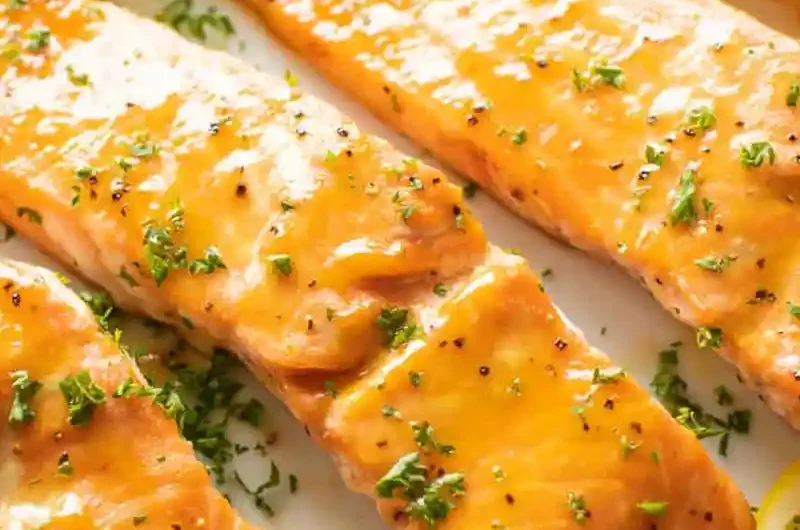
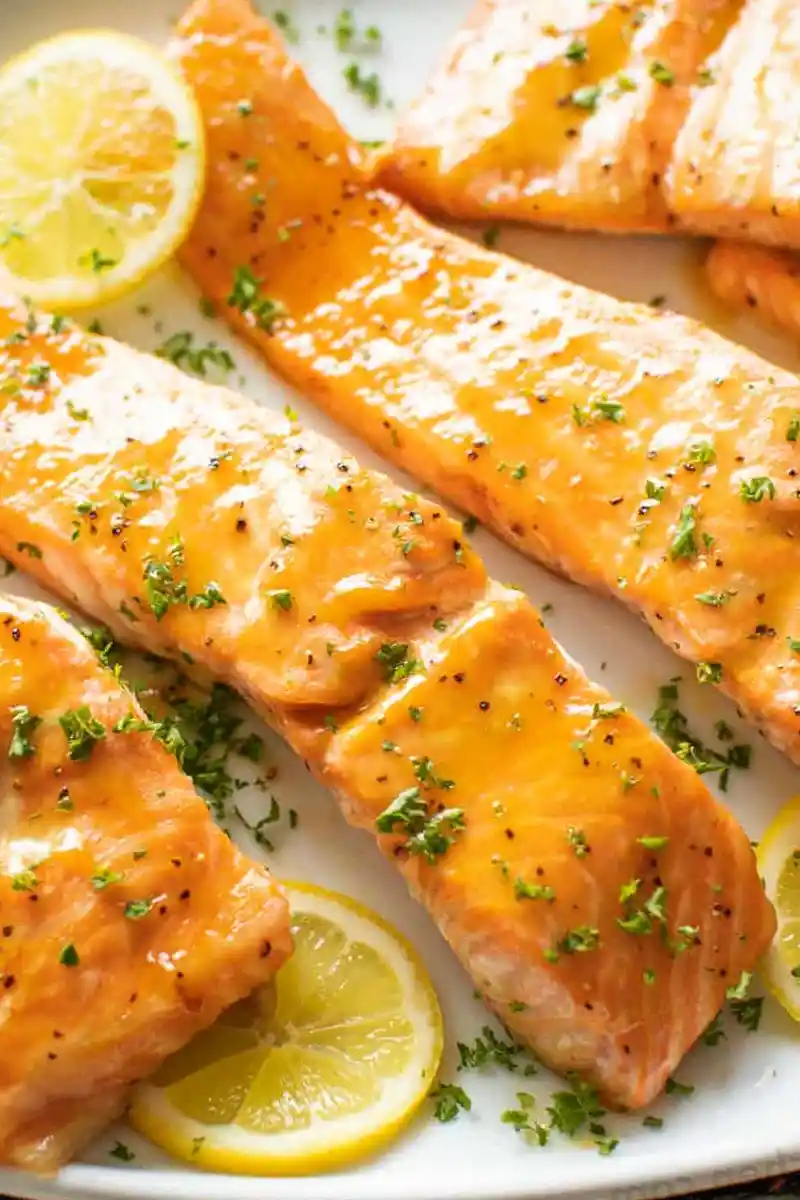
This roasted salmon features a sweet and savory glaze that caramelizes quickly in the oven. It is a fast dinner option that takes under 20 minutes from prep to plate.
List of ingredients
- 1/4 cup packed light brown sugar – provides sweetness and creates a sticky caramelization.
- 2 Tbsp Dijon mustard – adds a sharp, savory depth to the glaze.
- 1 Tbsp fresh lemon juice – provides acidity to balance the sugar.
- 1 Tbsp extra-virgin olive oil – helps the glaze adhere and adds moisture.
- 1/2 tsp fine sea salt – enhances the natural flavor of the fish.
- 1/4 tsp freshly ground black pepper – adds a mild spice.
- 2 lbs salmon – cut into six 5.5-ounce boneless filets, skin-on or skinless.
- 1/2 lemon – sliced into rounds for garnish.
- 1 Tbsp parsley – finely chopped for a fresh garnish.
step-by-step instructions
- Prepare Oven and Pan: Preheat your oven to 400°F and place the rack in the top third position. Line a rimmed baking sheet with parchment paper to prevent the glaze from sticking.
- Whisk the Glaze: In a small mixing bowl, combine the light brown sugar, Dijon mustard, lemon juice, olive oil, salt, and pepper. Stir well until the sugar is fully incorporated and the mixture is smooth.
- Arrange the Fish: Place the salmon fillets on the lined baking sheet. If using skin-on fillets, place them skin-side down and leave about 1 inch of space between each piece.
- Apply the Glaze: Use a spoon or brush to generously spread the glaze over the top and sides of each salmon fillet. Ensure an even coating for consistent caramelization.
- Bake: Roast for 10 to 15 minutes. Use an instant-read thermometer to check that the thickest part of the fish reaches 145°F. The fish should flake easily with a fork.
Selecting the Best Salmon
Wild-Caught vs Farmed Salmon
Wild-caught salmon typically has a deeper color and a more robust flavor. Farmed salmon is often fattier, which makes the fillets more forgiving and juicy if you cook them slightly longer.
Choosing the Right Fillet Thickness
Opt for thicker fillets to ensure the center remains moist while the glaze caramelizes on top. Thinner fillets cook much faster and are more prone to overcooking, so adjust your timing carefully.
Checking for Freshness
Fresh salmon should have a mild scent and firm flesh that springs back when touched. Avoid any fish that has a strong fishy odor or a slimy surface texture.
Skin-On vs Skinless Options
Skin-on salmon is recommended because the skin acts as a barrier between the heat and the flesh. This helps keep the fish moist and provides a better structure during the roasting process.
Glaze Customizations and Variations
Using Whole Grain Mustard
Substituting Dijon mustard with whole grain mustard adds a rustic texture and a slightly milder flavor. The mustard seeds create small pops of acidity throughout the sweet glaze.
Adjusting the Sweetness Level
If you prefer a less sweet dish, reduce the brown sugar to 3 tablespoons. This will make the mustard and lemon flavors more prominent while still allowing the glaze to thicken.
Adding Garlic for Depth
Stir in one teaspoon of garlic powder or two cloves of minced fresh garlic into the glaze. This adds a savory, aromatic layer that complements the sweetness of the brown sugar.
Introducing Smoked Paprika
Add a pinch of smoked paprika to the glaze mixture for a woody, charred flavor profile. This mimics the taste of grilled salmon while using a standard oven roasting method.
Optimal Cooking Techniques
The Importance of Parchment Paper
Brown sugar caramelizes and sticks aggressively to metal baking sheets. Using parchment paper or silicone mats ensures a clean release and eliminates the need for heavy scrubbing after dinner.
Using an Instant-Read Thermometer
Relying on time alone can lead to dry fish because oven temperatures vary. Checking the internal temperature at the thickest part is the only way to guarantee the salmon is cooked to exactly 145°F.
Strategic Oven Rack Placement
Placing the rack in the top third of the oven exposes the glaze to more direct heat from above. This promotes the bubbling and browning of the sugar without overcooking the bottom of the fish.
Handling Different Fish Types
Leaner wild-caught fillets should be baked for 10 to 12 minutes. Thicker king salmon or farmed fillets may require 12 to 15 minutes to reach the safe internal temperature.
Recommended Side Dish Pairings
Grains and Starches
Serve the salmon over a bed of fluffy white rice, quinoa, or wild rice. The grains absorb the extra glaze that drips off the fish during plating.
Roasted Green Vegetables
Pair the fish with roasted asparagus, broccolini, or Brussels sprouts. Since the oven is already at 400°F, these vegetables can be roasted on a separate tray at the same time.
Creamy Potato Options
Mashed potatoes or boiled new potatoes with butter and parsley provide a creamy contrast to the acidic glaze. This makes the meal feel more substantial and filling.
Fresh Salads
A crisp green salad with a light lemon vinaigrette helps cut through the richness of the salmon. Use mixed greens, cucumber, and thinly sliced radishes for added crunch.
Storage and Preservation
Refrigeration Guidelines
Store leftover glazed salmon in an airtight container in the refrigerator. Ensure the fish is completely cooled before sealing the lid to prevent excess moisture from forming.
Freezing Considerations
While you can freeze cooked salmon, the texture may become slightly softer upon thawing. Wrap the fillets tightly in foil and place them in a freezer-safe bag to prevent freezer burn.
Maximum Storage Duration
Cooked salmon is best consumed within three to four days when kept refrigerated. Beyond this window, the flavor and texture of the fish begin to degrade.
Reheating Instructions
The Oven Method
Preheat the oven to 275°F and place the salmon on a baking sheet. Heat for 10 to 15 minutes until warmed through, which prevents the fish from drying out.
The Microwave Method
Place the salmon on a microwave-safe plate and cover it with a damp paper towel. Heat on medium power in 30-second intervals to avoid rubbery texture.
Maintaining Moisture During Reheat
Add a teaspoon of water or a small pat of butter to the fillet before reheating. This adds moisture back into the fish and refreshes the glaze.
Make-Ahead Strategies
Preparing the Glaze in Advance
The glaze can be made up to three days ahead of time and stored in a small jar. Keep it refrigerated and give it a quick stir before applying it to the fish.
Pre-portioning the Salmon
Cut your salmon into fillets and arrange them on the parchment-lined tray a few hours before cooking. Cover the tray with plastic wrap and keep it chilled.
Refrigerated Marination
You can apply the glaze and refrigerate the fish for up to 4 hours before baking. This allows the flavors to penetrate deeper into the flesh, though it is not strictly necessary.
Troubleshooting Common Issues
Dealing with Burnt Glaze
If the sugar burns before the fish is cooked, lower the oven temperature to 375°F. You can also cover the fillets loosely with a piece of foil to shield the top from direct heat.
Preventing Dry Salmon
Dryness occurs when the internal temperature exceeds 145°F. Pull the salmon out of the oven when it hits 140°F, as carry-over cooking will raise the temperature as it rests.
Stopping the Glaze from Running
Ensure the brown sugar is packed tightly when measuring to keep the glaze thick. If the glaze is too runny, stir in an extra teaspoon of Dijon mustard to thicken the consistency.
Frequently Asked Questions
Can I substitute honey for brown sugar?
Yes, honey works as a substitute, but the glaze will be thinner and more likely to run off the sides of the fillets. You may need to apply the glaze in multiple layers.
Should I broil the salmon?
Broiling is not recommended for this recipe. The high heat can cause the sugar in the glaze to burn quickly, creating smoke and a bitter taste before the fish is cooked.
How do I know when the salmon is fully cooked?
The flesh will change from a translucent red to an opaque pink. The most accurate method is using a thermometer to ensure the center reaches 145°F.
Can I use frozen salmon fillets?
Yes, but you must thaw them completely in the refrigerator before applying the glaze. Baking frozen fillets will result in uneven cooking and a watery glaze.
Print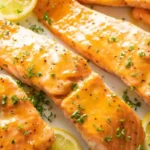
Brown Sugar Glazed Salmon Recipe
- Total Time: 19 minutes
- Yield: 6 servings 1x
- Diet: General
Description
Roasted Glazed Salmon with a sweet brown sugar and dijon glaze. This recipe is so easy and bakes up so juicy, tender and flaky.
Ingredients
- ¼ cup packed light brown sugar
- 2 Tbsp Dijon mustard
- 1 Tbsp fresh lemon juice
- 1 Tbsp extra-virgin olive oil
- ½ tsp fine sea salt
- ¼ tsp freshly ground black pepper
- 2 lbs salmon (cut into six, 5 ½-ounce filets)
- 1/2 lemon (sliced for garnish, optional)
- 1 Tbsp parsley (finely chopped to garnish, optional)
Instructions
- Step: Preheat the oven to 400˚F with one rack positioned in the top third of your oven. Line a rimmed baking sheet with parchment paper and set it aside.
- Step: In a small bowl, combine the sugar, mustard, lemon juice, oil, salt, and pepper. Mix well to combine.
- Step: Lay the fillets on the prepared baking sheet skin-side-down (if your fillets have skin) and spaced about 1 inch apart.
- Step: Generously spread the glaze over the top and sides of the fish. Bake for 10-15 minutes, or until the internal temperature at the thickest part reaches 145˚F on an instant-read thermometer, and the flesh flakes easily with a fork.
Notes
For leaner or thinner wild-caught fillets, bake for 10 to 12 minutes. For thicker, fattier farmed fillets or king salmon, bake for 12 to 15 minutes.
- Prep Time: 7 minutes
- Cook Time: 12 minutes
- Category: Main Course
- Method: Baking
- Cuisine: American
Nutrition
- Serving Size: 1 fillet
- Calories: 274 kcal
- Sugar: 9 g
- Sodium: 318 mg
- Fat: 12 g
- Saturated Fat: 2 g
- Unsaturated Fat: 9 g
- Trans Fat: 0 g
- Carbohydrates: 9 g
- Fiber: 1 g
- Protein: 30 g
- Cholesterol: 83 mg
Keywords: brown sugar glazed salmon, roasted salmon