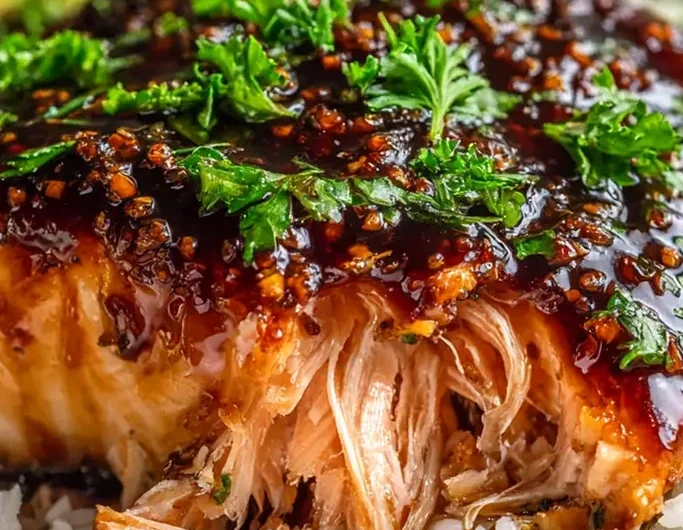
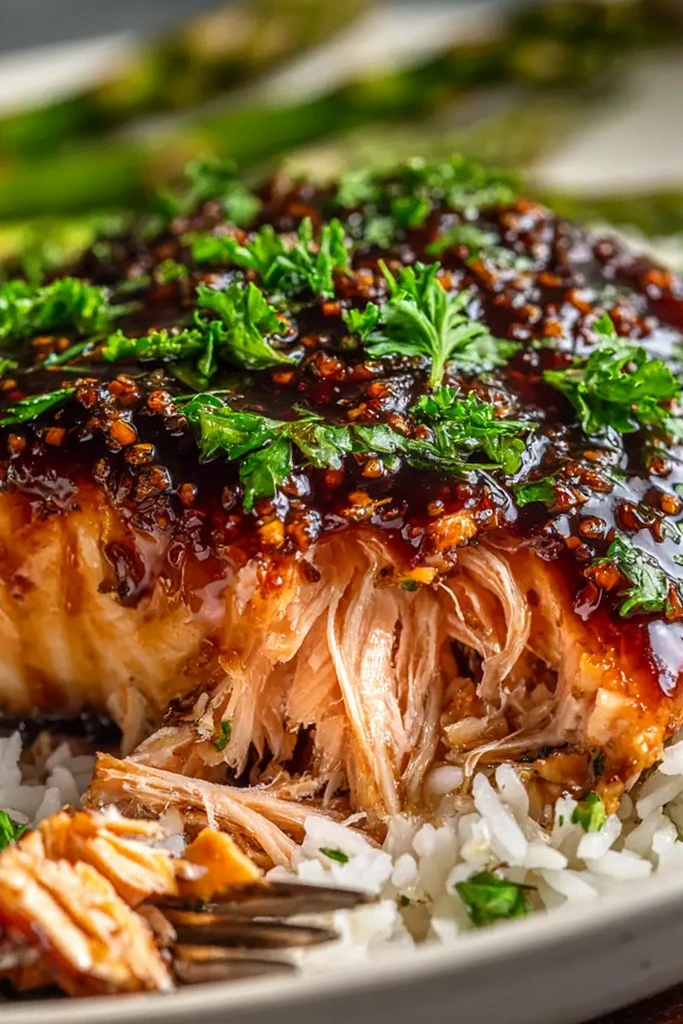
Transform your standard dinner routine with this effortless brown sugar glazed salmon that delivers deep, savory flavors in under twenty minutes. This dish relies on a simple yet effective technique of broiling to create a caramelized, sticky crust that keeps the fish tender and flaky on the inside. It is a fantastic option for busy weeknights when you want a meal that feels polished and restaurant-quality without requiring hours in the kitchen.
List of ingredients
- 4 (6 oz) salmon fillets
- 1/4 cup dark brown sugar (packed)
- 2 tbsp low-sodium soy sauce
- 1 tbsp olive oil
- 2 cloves garlic (minced)
- Salt and freshly ground black pepper (to taste)
step-by-step instructions
- Step: Set your oven’s broiler to high. Line a baking sheet with parchment paper. Pat the salmon fillets dry with a paper towel and season lightly with salt and pepper.
- Step: In a small bowl, whisk together the packed brown sugar, soy sauce, olive oil, and minced garlic until well combined.
- Step: Arrange the salmon fillets, skin-side down, on the prepared baking sheet. Spoon the glaze over the top of each fillet, spreading it evenly to cover the surface.
- Step: Place the baking sheet under the broiler for 7-10 minutes. The exact time will depend on the thickness of your salmon. Keep a close eye on it to prevent the glaze from burning.
- Step: The salmon is done when it flakes easily with a fork or reaches an internal temperature of 125-130°F. Let it rest for a minute before serving.
Refining Your Broiling Technique
Monitoring the Glaze for Perfect Caramelization
Because brown sugar has a high sugar content, it can transition from perfectly caramelized to burnt very quickly. It is essential to keep the oven light on and watch the salmon constantly during the final few minutes of broiling. If you notice edges starting to blacken too quickly, move the rack one level lower in the oven to diffuse the direct heat.
Achieving Even Doneness Across All Fillets
Salmon fillets often vary in thickness from the head end to the tail end, which can cause uneven cooking. To solve this, tuck the thin tail portion of the fillet underneath itself to create a uniform thickness across the entire piece. This keeps the thinner parts of the fish from becoming dry and tough before the thicker middle section is cooked through.
Flavor Enhancements and Substitutions
Incorporating Tangy or Spicy Elements
If you prefer a more complex flavor profile, you can add half a teaspoon of Dijon mustard to the glaze for a tangy edge that cuts through the richness of the fish. For those who enjoy a bit of heat, stirring in a half teaspoon of crushed red pepper flakes or a dash of hot sauce provides a nice contrast to the sweetness of the sugar.
Substituting Garlic for Aromatics
If fresh garlic is unavailable, you can substitute it with half a teaspoon of garlic powder. Alternatively, using a small amount of fresh grated ginger can provide a bright, spicy warmth that pairs wonderfully with the soy sauce and salmon. Keep in mind that dried powders may concentrate flavor differently, so start with smaller amounts and adjust to your preference.
Creative Serving Suggestions
Pairing with Hearty Grains and Greens
This dish is incredibly versatile when it comes to side dishes. For a classic pairing, serve the glazed salmon over a bed of fluffy jasmine rice, which acts as a perfect vessel for any extra glaze left on the baking sheet. Steamed baby bok choy or sautéed spinach with a splash of sesame oil complements the Asian-inspired flavor profile of the soy glaze beautifully.
Adding Roasted Vegetables for Texture
For a complete meal, roast vegetables like asparagus, carrots, or broccoli on the same pan as the salmon. Because these vegetables take roughly 10 minutes to roast at high heat, they can be added to the baking sheet at the same time as the fish. The glaze will naturally drip onto the vegetables, infusing them with savory, caramelized flavor as they cook.
Expert Storage and Reheating Protocols
Managing Leftovers Properly
If you have leftover salmon, allow it to cool to room temperature before placing it into an airtight container. It will stay fresh in the refrigerator for up to two days. Avoid storing the fish near items with strong odors, as the delicate flavor of the salmon can absorb surrounding scents.
Reheating Without Drying the Fish
The biggest challenge when reheating salmon is preventing it from becoming dry. The most reliable method is to place the salmon in a baking dish with a splash of water, cover it tightly with foil, and warm it in a low oven set to 275°F for about 10 to 12 minutes. This creates a gentle steam environment that helps the fish regain moisture and tenderness without toughening the proteins.
Common Queries Addressed
How can I determine the exact level of doneness for salmon?
The most precise way to ensure perfection is by using an instant-read meat thermometer inserted into the thickest part of the fillet. You are looking for a reading of 125°F to 130°F, which results in a moist, buttery texture. If you do not have a thermometer, simply press the thickest part of the fillet with a fork; it should flake away easily in distinct layers.
Can I prepare the glaze in advance?
Yes, the glaze can be whisked together and stored in the refrigerator in a sealed jar for up to 24 hours before you plan to cook. Simply give it a good stir or shake before applying it to the fish, as the sugar may settle at the bottom of the container. Preparing the sauce ahead of time is a great way to save a few minutes during a busy evening.
Is it necessary to remove the skin before broiling?
It is generally recommended to keep the skin on during the broiling process. The skin acts as a protective barrier that helps prevent the delicate bottom of the salmon from drying out or scorching against the hot baking sheet. Once cooked, the skin can be easily removed before eating, or left on if you prefer to crisp it up slightly by broiling it for an additional minute after flipping.
Why did my glaze burn before the fish was cooked?
If your glaze burns too quickly, your oven rack might be positioned too close to the heating element at the top of the oven. Try moving your oven rack to a lower position, which will still provide enough heat to caramelize the sugar while allowing the salmon to cook through more evenly. Additionally, ensure you are using low-sodium soy sauce as specified, as higher salt content can sometimes accelerate darkening.
Print
Brown Sugar Glazed Salmon (The Only Recipe You’ll Ever Need)
- Total Time: PT15M
- Yield: 4 servings 1x
- Diet: Pescatarian
Description
This Brown Sugar Glazed Salmon is the perfect weeknight dinner! Ready in under 20 minutes, this easy recipe features a sweet and savory glaze that caramelizes into a delicious crust, keeping the salmon incredibly moist and flaky.
Ingredients
- 4 (6 oz) salmon fillets
- 1/4 cup dark brown sugar (packed)
- 2 tbsp low-sodium soy sauce
- 1 tbsp olive oil
- 2 cloves garlic (minced)
- Salt and freshly ground black pepper (to taste)
Instructions
- Step: Set your oven’s broiler to high. Line a baking sheet with parchment paper. Pat the salmon fillets dry with a paper towel and season lightly with salt and pepper.
- Step: In a small bowl, whisk together the packed brown sugar, soy sauce, olive oil, and minced garlic until well combined.
- Step: Arrange the salmon fillets, skin-side down, on the prepared baking sheet. Spoon the glaze over the top of each fillet, spreading it evenly to cover the surface.
- Step: Place the baking sheet under the broiler for 7-10 minutes. The exact time will depend on the thickness of your salmon. Keep a close eye on it to prevent the glaze from burning.
- Step: The salmon is done when it flakes easily with a fork or reaches an internal temperature of 125-130°F. Let it rest for a minute before serving.
Notes
For an extra layer of flavor, add a pinch of red pepper flakes to the glaze. Serve immediately with your favorite sides like roasted asparagus or rice pilaf.
- Prep Time: PT5M
- Cook Time: PT10M
- Category: Dinner
- Method: Broiling
- Cuisine: American
Nutrition
- Serving Size: 1 fillet
- Calories: 380 kcal
- Sugar: 14 g
- Sodium: 450 mg
- Fat: 18 g
- Saturated Fat: 3 g
- Unsaturated Fat: 13 g
- Trans Fat: 0 g
- Carbohydrates: 15 g
- Fiber: 0 g
- Protein: 34 g
- Cholesterol: 95 mg
Keywords: salmon, dinner, glazed, brown sugar, quick meal, fish