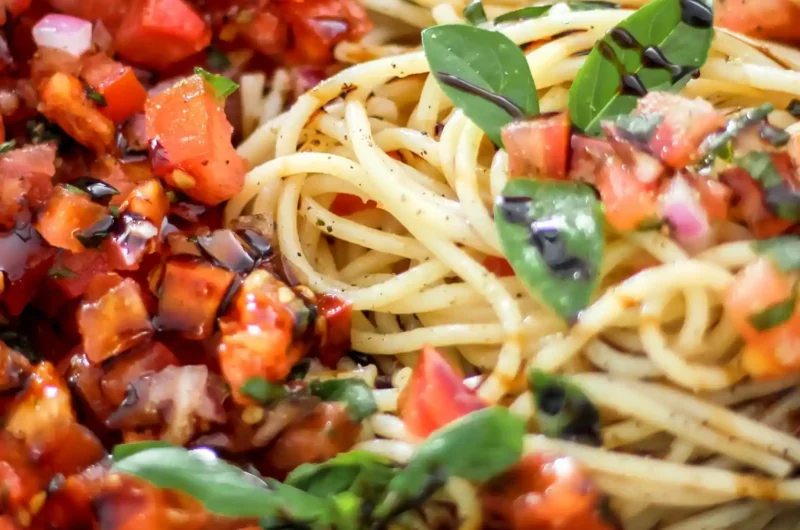
This light and refreshing summer dish combines the bold flavors of traditional bruschetta with tender spaghetti. It is a quick, plant-based meal that works perfectly as a standalone lunch or a side dish for grilled proteins.
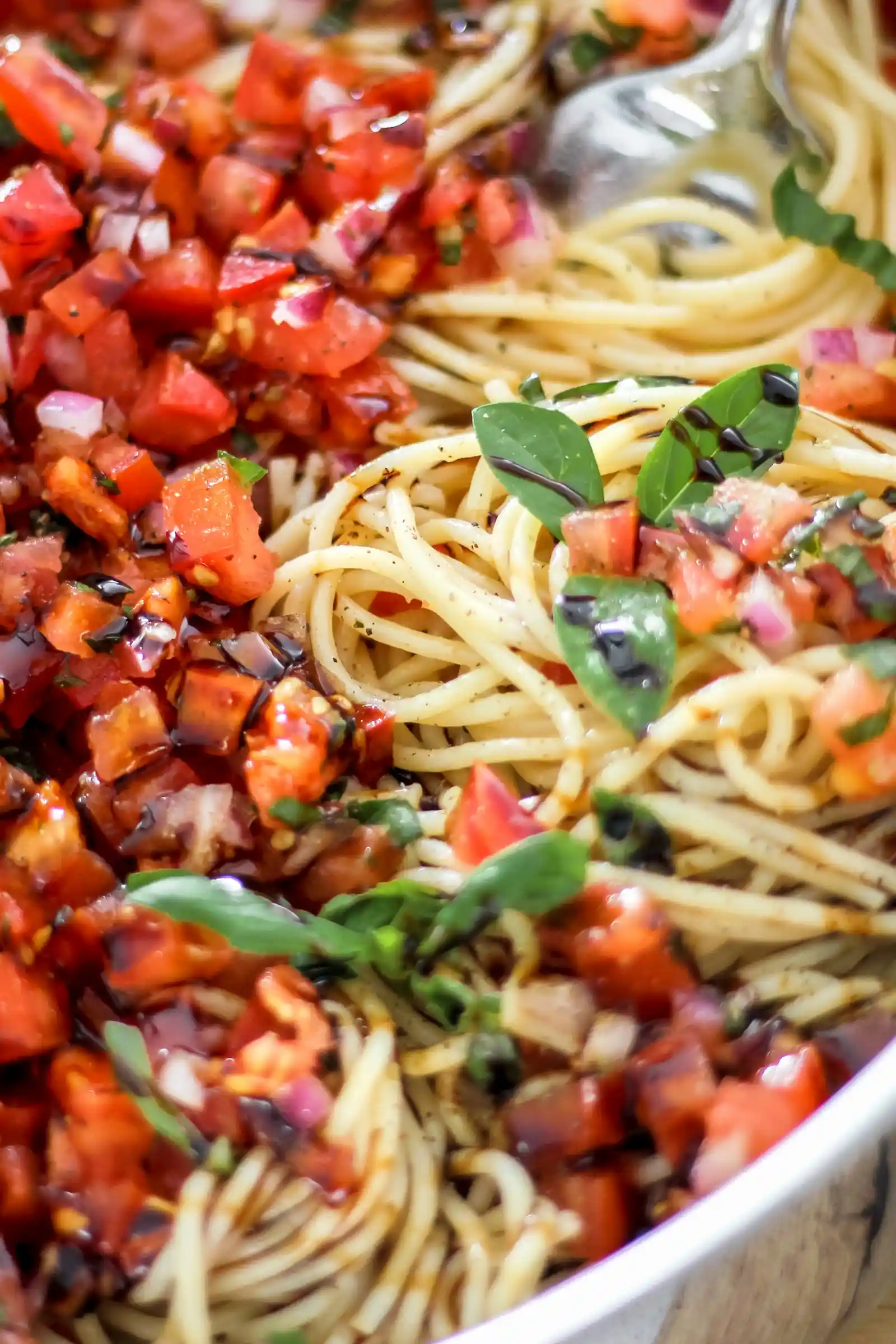
List of ingredients
- 4 vine-ripened tomatoes (or any variety), diced – provides the fresh base.
- 1/2 small red onion, diced – adds a sharp, savory contrast.
- 2 tbsp fresh basil, chopped (plus more for garnish) – essential for authentic herbal flavor.
- 1 clove garlic, minced – gives the dish a pungent depth.
- 1/2 tsp oregano – adds a classic Mediterranean aroma.
- 1/4 tsp fine sea salt – enhances all the natural flavors.
- 1/4 tsp black pepper – provides a subtle heat.
- 5 tbsp extra-virgin olive oil, divided – used for both the marinade and the pasta.
- Parmesan, burrata, crumbled feta, or goat cheese, as desired (optional) – adds creaminess.
- 3 tbsp balsamic vinegar glaze, as desired – brings a sweet and tangy finish.
- 500 g spaghetti pasta (or pasta of choice) – the hearty base of the salad.
step-by-step instructions
- Cook the Pasta: Bring a large pot of salted water to a boil. Add 500g of pasta and cook according to the package directions or until it reaches an al dente texture.
- Prepare the Bruschetta: While the pasta is boiling, dice the tomatoes and red onion and place them in a medium bowl.
- Marinate the Vegetables: Add the chopped fresh basil, minced garlic, oregano, salt, pepper, and 3 tbsp of olive oil to the serving bowl. Stir everything together and let the mixture marinate for 10 to 15 minutes.
- Prepare the Pasta Base: Once the pasta is al dente, drain it thoroughly. Drizzle with 2 tbsp of olive oil and transfer it to a large heatproof serving bowl or skillet.
- Combine Ingredients: Add the marinated bruschetta mixture to the cooked pasta. Toss the components together until they are well combined, seasoning with more salt or pepper if needed.
- Final Garnish: Drizzle the balsamic glaze over the top. Garnish with extra fresh basil, your choice of cheese, and additional black pepper before serving immediately.
Expert Tips for Better Results
Use Ripe Tomatoes for Maximum Juiciness
Select vine-ripened or Roma tomatoes that are firm but deeply colored. Ripe tomatoes provide the necessary acidity and sweetness that define the bruschetta flavor. Avoid overly soft tomatoes to prevent the salad from becoming too watery.
Prevent Pasta From Sticking
Tossing the drained pasta with olive oil immediately is a crucial step. This creates a thin barrier on the noodles that prevents them from clumping together as they cool. It also adds a layer of richness that helps the bruschetta flavors adhere to the pasta.
Allow Sufficient Marination Time
Letting the tomato and onion mixture sit for 10 to 15 minutes is not optional. This time allows the salt to draw out the juices and the garlic and basil to infuse the oil. This process creates a natural dressing that flavors the pasta more deeply.
Achieve the Perfect Al Dente Texture
Cook the pasta for one minute less than the package suggests for ‘al dente’. Since the pasta will continue to absorb the juices from the tomatoes after mixing, slightly undercooking it prevents the noodles from becoming mushy.
Ingredient Substitutions
Alternative Pasta Shapes
While spaghetti is traditional, short pasta shapes like penne, farfalle, or fusilli work exceptionally well. These shapes have ridges and holes that trap the diced tomatoes and basil more effectively than long noodles. Use the same cooking method regardless of the shape chosen.
Diverse Cheese Options
For a creamy texture, use fresh burrata or small mozzarella balls (bocconcini). For a saltier, tangier profile, crumbled feta or goat cheese are excellent choices. Vegan diners can omit the cheese or use a plant-based parmesan alternative.
Different Tomato Varieties
If vine-ripened tomatoes are unavailable, cherry or grape tomatoes halved lengthwise are a great substitute. They often have a higher sugar content and hold their shape better during mixing. Ensure they are diced small enough to distribute evenly.
Substituting Fresh Garlic
If you prefer a milder flavor, you can use garlic powder, although fresh minced garlic is recommended for authenticity. Use 1/8 teaspoon of garlic powder for every clove of fresh garlic. This provides a more uniform, less pungent taste.
Flavor Variations
Adding Grilled Proteins
Transform this side dish into a main meal by adding sliced grilled chicken breast or steak strips. Sautéed shrimp also pairs perfectly with the balsamic and basil combination. Ensure the protein is cooked and sliced before tossing it in with the pasta.
Incorporating Roasted Vegetables
Add grilled zucchini, red bell peppers, or eggplant to increase the nutritional value. Roasting these vegetables first brings out their natural sweetness, which complements the tangy balsamic glaze. Toss them in during the final combination step.
Introducing a Spicy Element
For those who enjoy heat, add a pinch of red pepper flakes to the bruschetta marinade. Alternatively, finely dice a jalapeño or serrano pepper and mix it with the red onion. This creates a spicy contrast to the sweet balsamic reduction.
Zesty Citrus Addition
Squeeze a fresh lemon half over the pasta just before serving. The acidity of the lemon brightens the flavors of the fresh basil and tomatoes. This is particularly effective if you are using a heavier cheese like burrata.
Guide to Homemade Balsamic Glaze
The Simmering Process
Combine 2 cups of high-quality balsamic vinegar in a small saucepan. Bring the liquid to a low boil, then immediately reduce the heat to a simmer. Let it cook undisturbed for 12 to 15 minutes until the volume is reduced by half.
Adding Sweeteners for Balance
To achieve a thicker, syrupy consistency, stir in 1/2 cup of brown sugar or honey during the simmering process. The sugar helps the glaze thicken more quickly and balances the sharp acidity of the vinegar. Adjust the amount of sweetener based on your preference.
Testing for Correct Thickness
The glaze is ready when it lightly coats the back of a metal spoon. If you run your finger through the glaze on the spoon, the line should remain clear. Remember that the glaze will continue to thicken significantly as it cools to room temperature.
Storage and Make-Ahead Advice
Refrigerating Leftovers
Store any remaining pasta salad in an airtight container in the refrigerator for up to three days. Keep in mind that the pasta will continue to absorb the dressing over time. This may result in a drier salad the next day.
Keeping Components Separate
If preparing the meal in advance, store the cooked pasta and the bruschetta mixture in separate containers. Combine them only right before serving to maintain the freshness of the vegetables. This prevents the pasta from absorbing too much liquid.
Refreshing the Salad Before Serving
When serving chilled leftovers, the pasta may seem dry. Stir in an extra tablespoon of olive oil or a splash of balsamic vinegar to restore the moisture. Toss gently to avoid breaking the pasta noodles.
Why Freezing is Not Recommended
Do not freeze this recipe, as the fresh tomatoes and basil will lose their texture and flavor. The tomatoes will become mushy upon thawing, and the fresh herbs will turn brown. This dish is designed to be enjoyed fresh or chilled.
Serving Suggestions
Pairing with Garlic Bread
Serve this pasta salad alongside toasted rustic bread rubbed with a raw garlic clove. The crunch of the toast complements the softness of the pasta. This makes the meal feel more like a complete Italian feast.
Using as a Side Dish
This recipe works excellently as a side for grilled fish or baked salmon. The acidity of the balsamic glaze cuts through the richness of the fish. It can also replace a traditional green salad for a more filling option.
Combining with Grilled Chicken
Place a grilled chicken breast directly on top of a bed of bruschetta pasta. The juices from the chicken mingle with the olive oil and tomato base. Garnish the chicken with an extra drizzle of balsamic glaze for visual appeal.
Plating for Guests
For a more elegant presentation, use a wide, shallow bowl. Place the pasta in the center and carefully arrange the larger tomato chunks on top. Finish with a swirl of balsamic glaze and a sprig of whole basil.
Troubleshooting Common Issues
Fixing a Watery Salad
If your salad has too much liquid at the bottom, it is usually due to overly ripe tomatoes. You can strain some of the excess juice before mixing the bruschetta with the pasta. Alternatively, add a small amount of grated parmesan to help bind the liquids.
Balancing Strong Onion Flavor
If the red onion is too overpowering, soak the diced pieces in cold water for 10 minutes before adding them to the bowl. This removes the harsh sulfur compounds while keeping the crunch. Pat the onions dry before mixing with the oil.
Adjusting the Acidity
If the balsamic glaze makes the dish too tart, add a tiny pinch of sugar to the pasta mixture. You can also add more olive oil to mellow out the acidity. Balancing fat and acid is key to a professional-tasting salad.
Preventing Garlic Bitterness
Ensure the garlic is minced finely but not crushed into a paste, which can sometimes release bitter oils. If you are sensitive to raw garlic, you can sauté the minced garlic in the olive oil for 30 seconds before adding it to the tomatoes.
Frequently Asked Questions
Can I use dried basil instead of fresh?
It is not recommended, as dried basil has a completely different, more muted flavor profile. Fresh basil provides the bright, peppery taste essential for bruschetta. If you must use dried, use only 1 teaspoon for every 2 tablespoons of fresh.
How long does this salad last in the fridge?
The salad is best consumed within 48 to 72 hours. Beyond this time, the tomatoes will break down and the pasta may become overly soft. Store it in a glass container for the best preservation of flavor.
What is the best way to reheat this dish?
This salad is intended to be served cold or at room temperature. Reheating it in a microwave will cause the fresh tomatoes to cook and the basil to wilt. If you prefer it warm, gently toss the pasta in a pan and add the fresh bruschetta at the very end.
Can I make this recipe vegan?
Yes, the recipe is naturally vegan if you omit the optional cheese. All other ingredients, including the balsamic glaze and olive oil, are plant-based. You can use a vegan feta alternative to maintain the salty element.
Is there a substitute for balsamic glaze?
You can use a mixture of balsamic vinegar and a small amount of maple syrup or honey. Simmer them together for a few minutes to thicken. Regular balsamic vinegar can be used, but the salad will be much thinner and more acidic.
Can I use a different oil?
Extra-virgin olive oil is the standard for this flavor profile, but a light olive oil or avocado oil can work. Avoid using vegetable or canola oils, as they lack the fruity notes that complement the tomatoes and basil.
Print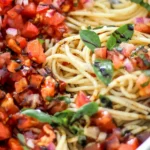
Bruschetta Pasta Salad
- Total Time: 30 minutes
- Yield: 4 servings 1x
- Diet: Vegan, Vegetarian
Description
Bruschetta Pasta Salad is a light and fresh summer pasta dish combining fresh bruschetta ingredients with spaghetti for a quick and satisfying meal.
Ingredients
- 4 vine ripen tomatoes, diced
- 1/2 small red onion, diced
- 2 tbsp fresh basil, chopped, plus more for garnish
- 1 clove garlic, minced
- 1/2 tsp oregano
- 1/4 tsp fine sea salt
- 1/4 tsp black pepper
- 5 tbsp extra-virgin olive oil, divided
- Parmesan, Burrata, Feta or Goat cheese (microbial-rennet), optional
- 3 tbsp balsamic vinegar glaze
- 500 g spaghetti pasta
Instructions
- Step: Bring a large pot of salted water to a boil, add the pasta and cook according to package directions or until al dente.
- Step: Dice tomatoes and onion in a medium bowl, then add fresh basil, minced garlic, oregano, salt, pepper and 3 tbsp olive oil; stir and marinate for 10 to 15 minutes.
- Step: Drain the cooked pasta, drizzle with 2 tbsp olive oil and transfer to a large heatproof serving bowl or skillet.
- Step: Add the marinated bruschetta to the pasta and toss until well combined; season to taste, then drizzle with balsamic glaze and top with extra basil and optional cheese.
Notes
Allow the bruschetta mixture to marinate for at least 10-15 minutes to let the flavors meld. If making ahead, keep the pasta and bruschetta separate until serving.
- Prep Time: 20 minutes
- Cook Time: 10 minutes
- Category: Main Dishes & Entrees
- Method: Boiling
- Cuisine: Italian
Nutrition
- Serving Size: 1 serving
- Calories: 494 kcal
- Sugar: 7 g
- Sodium: 160 mg
- Fat: 2 g
- Saturated Fat: 1 g
- Unsaturated Fat: 1 g
- Trans Fat: 0 g
- Carbohydrates: 100 g
- Fiber: 6 g
- Protein: 18 g
- Cholesterol: 0 mg
Keywords: bruschetta pasta salad, summer pasta, Italian pasta salad, vegan pasta, fresh tomato pasta