
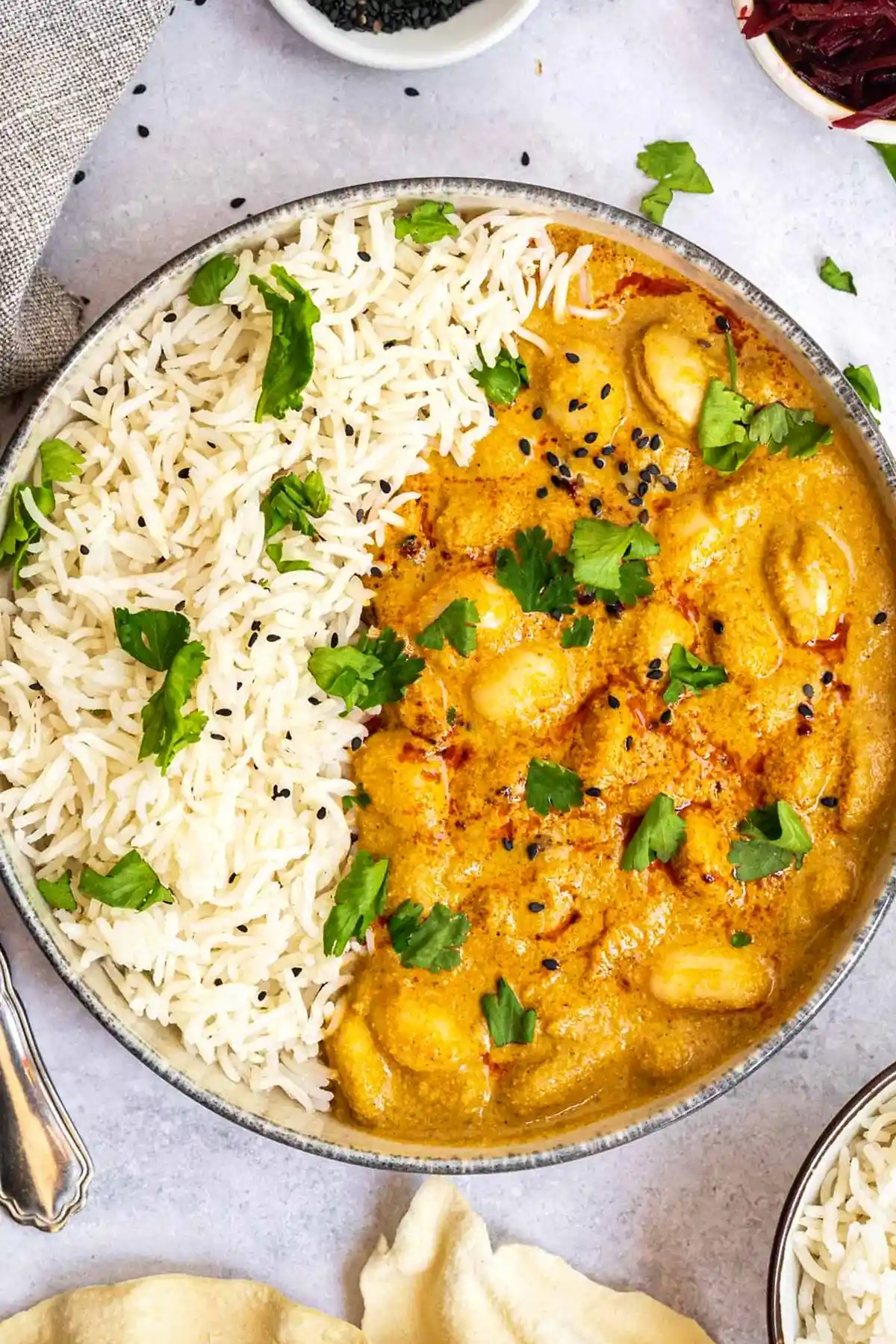
This butter bean curry is a masterpiece of comfort, blending savory spices with a luxuriously smooth cashew-based cream. It is a protein-packed, plant-based meal that brings warmth and richness to your table in just half an hour, making it an ideal choice for busy evenings. With its deep, layered flavors and satisfying texture, this dish proves that simple pantry staples can be transformed into something truly special.
List of ingredients
- 5 oz cashews
- 1 yellow onion
- 1 thumb-size ginger piece
- 1-2 garlic cloves
- 2 teaspoon garam masala
- 1/4 teaspoon turmeric
- 1 teaspoon coriander
- 1 teaspoon cumin
- 1 teaspoon curry
- 1/4 teaspoon cinnamon
- 2 tomatoes
- 1 teaspoon tomato paste
- 1 1/4 cup vegetable stock
- 14 oz butter beans
- Salt and pepper to taste
step-by-step instructions
- Step: Leave the cashews soaking in hot water while you prepare the rest of the ingredients.
- Step: Heat some vegetable oil in a non-stick pan or pot to medium heat. Add chopped onion and leave cooking for a couple of minutes.
- Step: Add pressed or finely chopped ginger and garlic, stir, and add the spices.
- Step: When fragrant, add the fresh tomatoes roughly chopped, cook for a couple of minutes. At this point, also add the tomato paste.
- Step: Add the vegetable stock and leave simmering for about 12 minutes.
- Step: Drain the cashews, and add into a blender jug. Transfer the sauce to the same jug and blend together until the sauce is smooth and has no lumps.
- Step: If you are using canned beans, put them through a colander to remove the aquafaba and rinse with fresh water.
- Step: Pour the blended sauce into the pot, and add the butter beans. Combine.
- Step: Adjust with salt, pepper, and optionally some sweetener such as maple syrup or sugar, and your curry will be ready to be served and enjoyed.
Practical Cooking Advice
Maintaining the Ideal Texture
Achieving a smooth, restaurant-quality sauce depends entirely on how well you blend the cashew cream. Ensure your cashews are sufficiently softened in hot water, as hard nuts will leave a gritty texture that detracts from the velvety mouthfeel this dish is famous for.
Developing the Aromatic Base
Never rush the initial stage of sautéing the onions, ginger, and garlic, as this is where the backbone of the flavor is built. Giving these aromatics enough time to sweat and mellow ensures that the raw bite of the garlic and onion disappears, allowing the spices to shine without any harsh competition.
Managing Tomato Acidity
Fresh tomatoes vary in their natural sugar content, which can sometimes result in a sauce that leans too far toward the acidic side. Taste your curry before serving, and if it feels too sharp, a tiny pinch of brown sugar or maple syrup will instantly round out the flavors and create a more harmonious, savory experience.
Substitutions and Adjustments
Alternative Creamy Bases
While the cashew cream is the preferred method for this recipe due to its nutty profile, you can easily substitute it if you have dietary restrictions. Full-fat canned coconut milk is an excellent alternative that adds a distinct tropical aroma, while soy cream or even a small amount of silken tofu can provide a neutral, silky base that lets the spices take center stage.
Legume Variations
Butter beans are chosen for their large size and buttery texture, but they are not the only option for this dish. Cannellini beans, chickpeas, or even great northern beans work remarkably well as direct replacements, as they are sturdy enough to simmer in the sauce without falling apart.
Adding Extra Nutritional Value
To turn this dish into a more robust meal, consider tossing in handfuls of fresh spinach or kale during the final two minutes of heating. These greens wilt quickly into the hot sauce and provide an additional boost of iron and vitamins, along with a pleasant color contrast.
Serving Suggestions
Accompaniments for the Curry
A classic Indian-style curry thrives on the presence of bread for scooping, and nothing beats warm naan or toasted pita. If you prefer to serve the curry over grains, basmati rice is the standard choice for its light, fluffy texture that pairs perfectly with the weight of the bean sauce.
Flavorful Garnishes
The visual and textural finish of your bowl can elevate the entire meal. Sprinkle a handful of fresh cilantro (coriander) over the top just before serving, along with a squeeze of fresh lime juice, which cuts through the richness of the cashew sauce and brightens every bite.
Side Dishes to Consider
If you are hosting a dinner and want to provide a wider variety of textures, consider serving a crisp cucumber salad with yogurt or a simple onion and tomato relish. These refreshing sides provide a cooling contrast to the warmth of the spices and help cleanse the palate between bites of the creamy curry.
Storage and Reheating
Proper Refrigeration Techniques
This curry stores exceptionally well, often tasting better the following day as the spices continue to permeate the beans. Transfer any leftovers to an airtight glass container once the dish has cooled to room temperature to prevent condensation and maintain the integrity of the sauce.
Reviving Leftovers
When reheating on the stovetop, the sauce may thicken significantly as the starch from the beans and the cashews sets while cold. Add a tablespoon of water or vegetable broth to the pot before heating to restore the original, pourable consistency and ensure even warming without scorching the bottom of the pan.
Frequently Asked Questions
Can I freeze this curry for long-term storage?
While the curry can be frozen for up to one month, it is best to freeze it without the added beans if possible, as legumes can become slightly soft upon thawing. If you do freeze the complete dish, ensure you reheat it gently over low heat, stirring frequently to maintain the emulsion of the cashew cream.
How fine should I chop the aromatics before blending?
Since you are blending the entire sauce mixture, there is no need to spend time mincing the onion, ginger, or garlic into tiny pieces. A rough chop is perfectly fine, as the blender will handle the breakdown process efficiently, saving you significant preparation time.
Is it necessary to use a non-stick pan?
A non-stick pan is highly recommended because it allows you to sauté the aromatics and spices with minimal oil while preventing the sugars in the onion and tomato paste from sticking and burning. If you use a stainless steel pan, ensure you keep the heat at a steady, moderate level and stir more frequently to prevent any charring at the bottom of the vessel.
Why does the color of my curry look different?
The variation in color is usually due to the specific type of tomatoes used or the intensity of the turmeric powder. Ripe, red tomatoes will produce a deeper, warmer color, while paler tomatoes might result in a more muted yellow hue, but the flavor profile will remain consistently delicious regardless of the exact shade.
Print
Butter Bean Curry
- Total Time: PT30M
- Yield: 4 1x
- Diet: Vegan, Gluten-free
Description
Our Butter Bean Curry is all about rich flavors and cozy vibes. This meal is packed with protein, satisfyingly creamy, and absolutely delicious.
Ingredients
- 5 oz cashews
- 1 yellow onion
- 1 thumb-size ginger piece
- 1–2 garlic cloves
- 2 teaspoon garam masala
- 1/4 teaspoon turmeric
- 1 teaspoon coriander
- 1 teaspoon cumin
- 1 teaspoon curry
- 1/4 teaspoon cinnamon
- 2 tomatoes
- 1 teaspoon tomato paste
- 1 1/4 cup vegetable stock
- 14 oz butter beans
- Salt and pepper to taste
Instructions
- Step: Leave the cashews soaking in hot water while you prepare the rest of the ingredients.
- Step: Heat some vegetable oil in a non-stick pan or pot to medium heat. Add chopped onion and leave cooking for a couple of minutes.
- Step: Add pressed or finely chopped ginger and garlic, stir, and add the spices.
- Step: When fragrant, add the fresh tomatoes roughly chopped, cook for a couple of minutes. At this point, also add the tomato paste.
- Step: Add the vegetable stock and leave simmering for about 12 minutes.
- Step: Drain the cashews, and add into a blender jug. Transfer the sauce to the same jug and blend together until the sauce is smooth and has no lumps.
- Step: If you are using canned beans, put them through a colander to remove the aquafaba and rinse with fresh water.
- Step: Pour the blended sauce into the pot, and add the butter beans. Combine.
- Step: Adjust with salt, pepper, and optionally some sweetener such as maple syrup or sugar, and your curry will be ready to be served and enjoyed.
Notes
If you want to use dry beans, leave the dry butter beans soaking in water overnight and then cook them in fresh water until fork tender. You will need to adjust the amount of butter beans from our recipe card.
- Prep Time: PT10M
- Cook Time: PT20M
- Category: Main Course
- Method: Stovetop
- Cuisine: Indian
Nutrition
- Serving Size: 1 serving
- Calories: 363 kcal
- Sugar: 10 g
- Sodium: 322 mg
- Fat: 17 g
- Saturated Fat: 3 g
- Unsaturated Fat: 14 g
- Trans Fat: 0 g
- Carbohydrates: 41 g
- Fiber: 10 g
- Protein: 16 g
- Cholesterol: 0 mg
Keywords: Butter Bean Curry, Vegan, Gluten-free, Indian