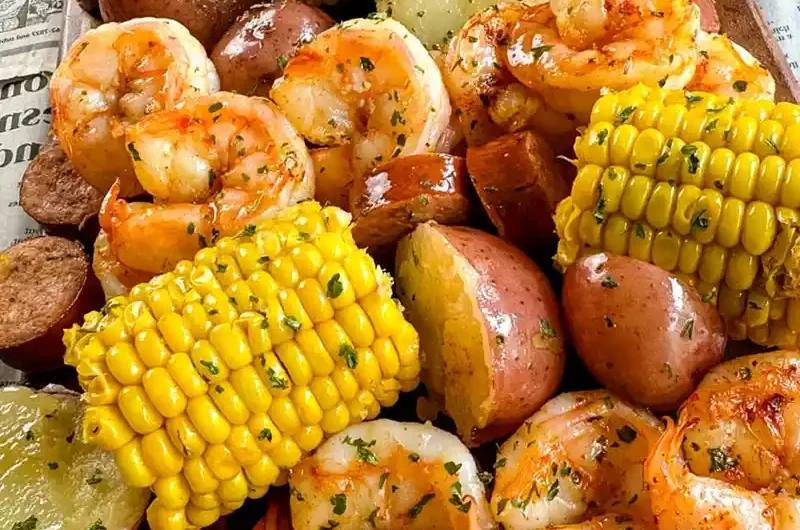
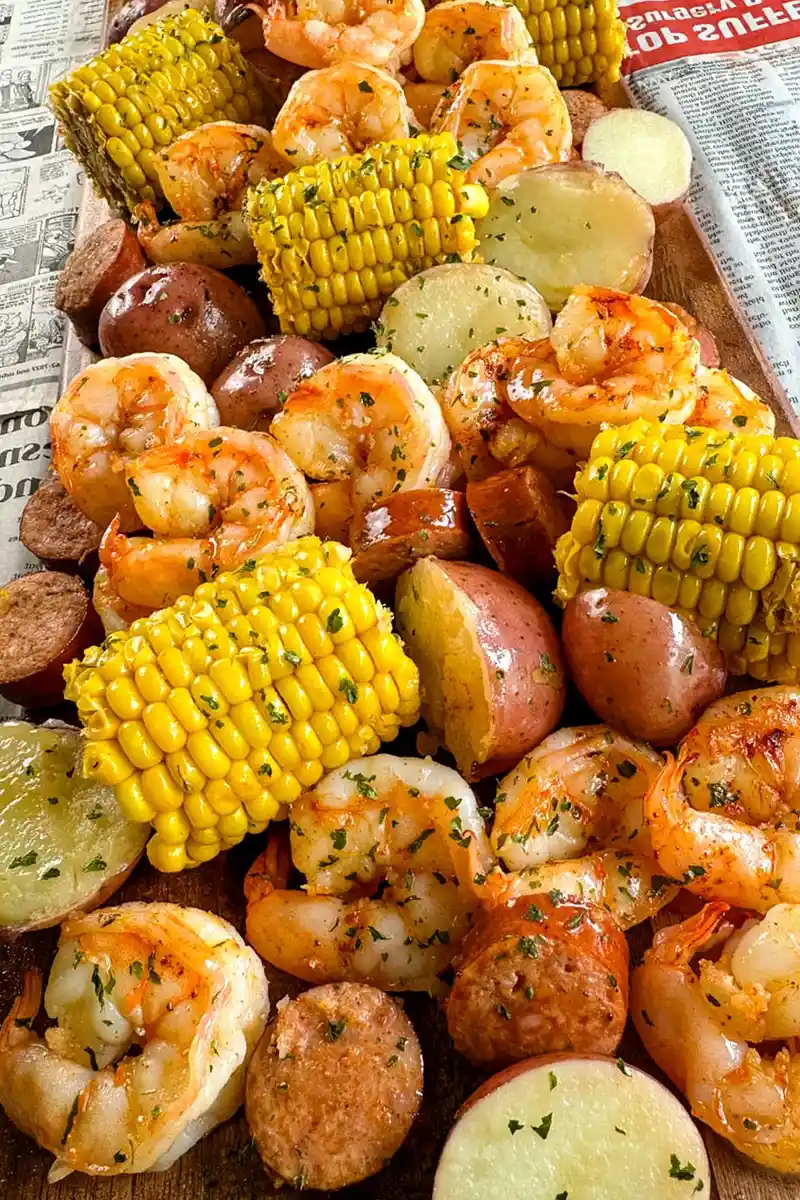
A classic Cajun-inspired boil is all about precise timing and building layers of flavor through the seasoned poaching liquid. This recipe ensures that your potatoes reach perfect tenderness while the shrimp remain succulent and flavorful rather than rubbery. It is a fantastic choice for casual gatherings where you want a festive, centerpiece meal that feeds a crowd easily.
List of ingredients
- 2 pounds raw shrimp
- 1 pound red potatoes
- 6 oz smoked plant-based savory links
- 6 ears mini corn on the cob
- 1 lemon
- 1 teaspoon smoked paprika
- 1/2 teaspoon Old Bay Seasoning
- 1/2-1 teaspoon cayenne pepper
- 1/2 teaspoon garlic powder
- 1/2 teaspoon onion powder
- 2 bay leaves
- salt and pepper to taste
step-by-step instructions
- Step: Bring a large pot to boil with water. Add enough water to cover the shrimp and vegetables.
- Step: Add the spices, halved lemons, and bay leaves, to the pot. Stir well to combine.
- Step: Add the halved corn on the cob, halved red potatoes, and savory links to the pot. Stir well to ensure that everything is submerged in the water. Taste the water repeatedly and add additional spices to suit your taste.
- Step: Cook for 10-15 minutes or until the potatoes are fork-tender.
- Step: Add the shrimp to the pot and stir well to ensure that they are evenly distributed.
- Step: Cook for 2-4 minutes or until the shrimp is pink and opaque.
- Step: Use a strainer to remove the shrimp, corn, potatoes, and savory links from the pot and drain the excess water.
- Step: Serve hot and enjoy!
Refining Your Technique
Achieving Optimal Potato Texture
To ensure your potatoes are perfectly cooked, start them in cold water if you have extra time, though boiling them from the start of the water heating process works well here. Uniformly cutting your red potatoes into equal halves ensures they finish cooking at the same time as the corn. Test the largest piece with a knife; if it offers no resistance, the batch is ready for the shrimp.
Selecting the Right Seafood Size
Using large or jumbo shrimp is highly recommended for a boil as they hold up better to the heat. Smaller shrimp tend to cook through almost instantly and can become rubbery or tough if left in the water for even a minute too long. Always aim for shrimp that are deveined and clean to ensure a pleasant eating experience for your guests.
Mastering the Poaching Liquid
The water serves as your primary seasoning vehicle, so it should taste slightly saltier than a standard soup. Since the vegetables are boiling in this liquid, they will absorb the spices directly into their centers. Don’t be afraid to taste the water once the potatoes have softened; this is your final opportunity to adjust the heat or salt levels before the shrimp go in.
Practical Adjustments and Modifications
Tailoring the Heat Profile
If you have guests who prefer mild flavors, you can substitute the cayenne pepper with a pinch of smoked paprika for color without the intense spice. Conversely, for those who crave heat, feel free to add a splash of hot sauce or extra crushed red pepper flakes directly into the pot. Always start with a smaller amount of spice, as you can easily increase the intensity later but cannot remove it once added.
Alternative Additions for Variety
You can easily turn this into a more expansive seafood feast by adding other ingredients like snow crab legs or mussels. These items should be added at the beginning of the process along with the potatoes to ensure they are fully cooked. Just be mindful of the total water volume in your pot to ensure everything remains submerged and cooks evenly throughout the boil.
Handling Frozen Shrimp
If you only have access to frozen shrimp, there is no need to worry as most commercial shrimp are flash-frozen at the source. Simply thaw them in a bowl of cold water, pat them dry with a clean paper towel, and incorporate them into the recipe exactly as you would with fresh ones. This makes the meal accessible regardless of the season or local market availability.
Serving and Preservation
Casual Platter Presentation
A traditional boil is best served directly on a large platter or a table lined with butcher paper. This encourages a communal dining style where everyone can grab what they want directly. Keep extra lemon wedges and melted butter on the side for guests to customize their portions to their exact liking.
Managing Leftover Seafood
To keep the seafood at its best, remove it from the cooking liquid immediately after draining and store it separately from the vegetables. Refrigerate in airtight containers to prevent the shrimp from absorbing too much moisture from the potatoes. Consume leftovers within 3 to 4 days to maintain the freshest possible quality and texture.
Reheating for Quality
Avoid using the microwave for leftovers, as it tends to overcook the shrimp and makes them tough. Instead, gently warm the components in a steamer basket over a pot of boiling water for just a minute or two. This restores the moisture without subjecting the delicate shrimp to harsh direct heat, preserving their tender bite.
Freezing Recommendations
If you find yourself with more than you can eat, you can freeze the cooked leftovers for up to 2 months. Ensure they are placed in a freezer-safe bag with as much air removed as possible to prevent frost. Allow the items to thaw slowly in the refrigerator overnight before reheating them gently on the stovetop.
Addressing Common Cooking Concerns
How do I know when shrimp are finished?
Shrimp are finished the moment they turn opaque and form a gentle ‘C’ shape. If they curl into a tight ‘O’ shape, they have been overcooked and will likely have a rubbery, unpleasant texture. Keep a close eye on the pot during those final three minutes of cooking to ensure you pull them at the exact right moment.
Is it necessary to use shell-on shrimp?
While shell-on shrimp are often cited for adding extra flavor to the poaching liquid, it is entirely a matter of preference. Peeled and deveined shrimp are significantly easier for your guests to eat, making for a more relaxed dining experience. The seasonings in the pot are potent enough to penetrate the shrimp regardless of whether the shell is present.
Can this dish be made for large parties?
This recipe is highly scalable for larger groups; simply increase the volume of your pot and the amount of water accordingly. Ensure you have a large enough strainer or colander to handle the weight of the ingredients once they are cooked. If hosting a large crowd, keep batches of the poaching liquid consistent by using a measured spice ratio based on the total volume of water used.
Print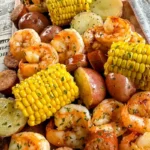
Cajun Shrimp Boil
- Total Time: PT30M
- Yield: 5 servings 1x
- Diet: Pescatarian
Description
A proper Cajun shrimp boil is all about timing and seasoning. This version ensures tender shrimp, perfectly seasoned potatoes, and a flavorful garlic-lemon butter sauce that ties everything together beautifully without being overwhelming.
Ingredients
- 2 pounds raw shrimp
- 1 pound red potatoes
- 6 oz smoked plant-based savory links
- 6 ears mini corn on the cob
- 1 lemon
- 1 teaspoon smoked paprika
- 1/2 teaspoon Old Bay Seasoning
- 1/2–1 teaspoon cayenne pepper
- 1/2 teaspoon garlic powder
- 1/2 teaspoon onion powder
- 2 bay leaves
- salt and pepper to taste
Instructions
- Step: Bring a large pot to boil with water. Add enough water to cover the shrimp and vegetables.
- Step: Add the spices, halved lemons, and bay leaves, to the pot. Stir well to combine.
- Step: Add the halved corn on the cob, halved red potatoes, and savory links to the pot. Stir well to ensure that everything is submerged in the water. Taste the water repeatedly and add additional spices to suit your taste.
- Step: Cook for 10-15 minutes or until the potatoes are fork-tender.
- Step: Add the shrimp to the pot and stir well to ensure that they are evenly distributed.
- Step: Cook for 2-4 minutes or until the shrimp is pink and opaque.
- Step: Use a strainer to remove the shrimp, corn, potatoes, and savory links from the pot and drain the excess water.
- Step: Serve hot and enjoy!
Notes
Omit the cayenne pepper if you prefer a milder flavor. Tasting the cooking liquid is essential for ensuring the vegetables and shrimp are seasoned to your liking. Shell-on shrimp can provide additional flavor, while peeled shrimp offer convenience.
- Prep Time: PT15M
- Cook Time: PT15M
- Category: Dinner, Lunch
- Method: Boiling
- Cuisine: Louisiana, Southern
Nutrition
- Serving Size: 1 serving
- Calories: 379 kcal
- Sugar: 3 g
- Sodium: 850 mg
- Fat: 11 g
- Saturated Fat: 2 g
- Unsaturated Fat: 7 g
- Trans Fat: 0 g
- Carbohydrates: 39 g
- Fiber: 5 g
- Protein: 33 g
- Cholesterol: 220 mg
Keywords: Cajun seafood boil, Cajun shrimp boil, Louisiana shrimp boil, shrimp boil recipe