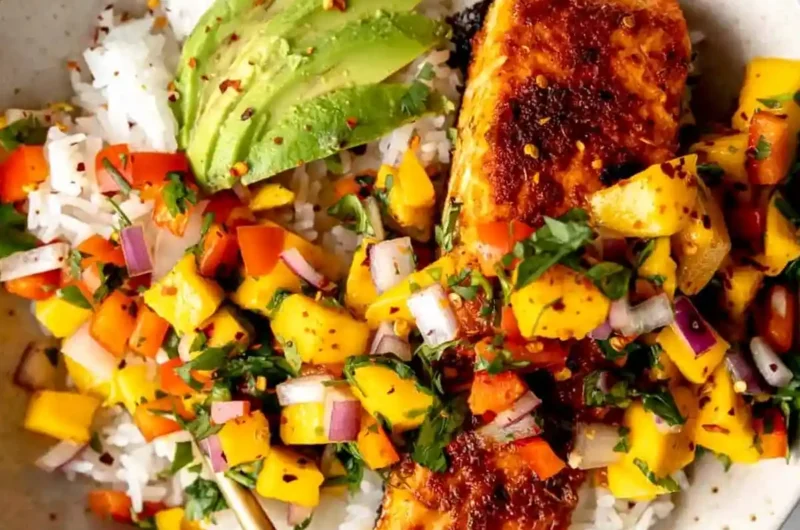
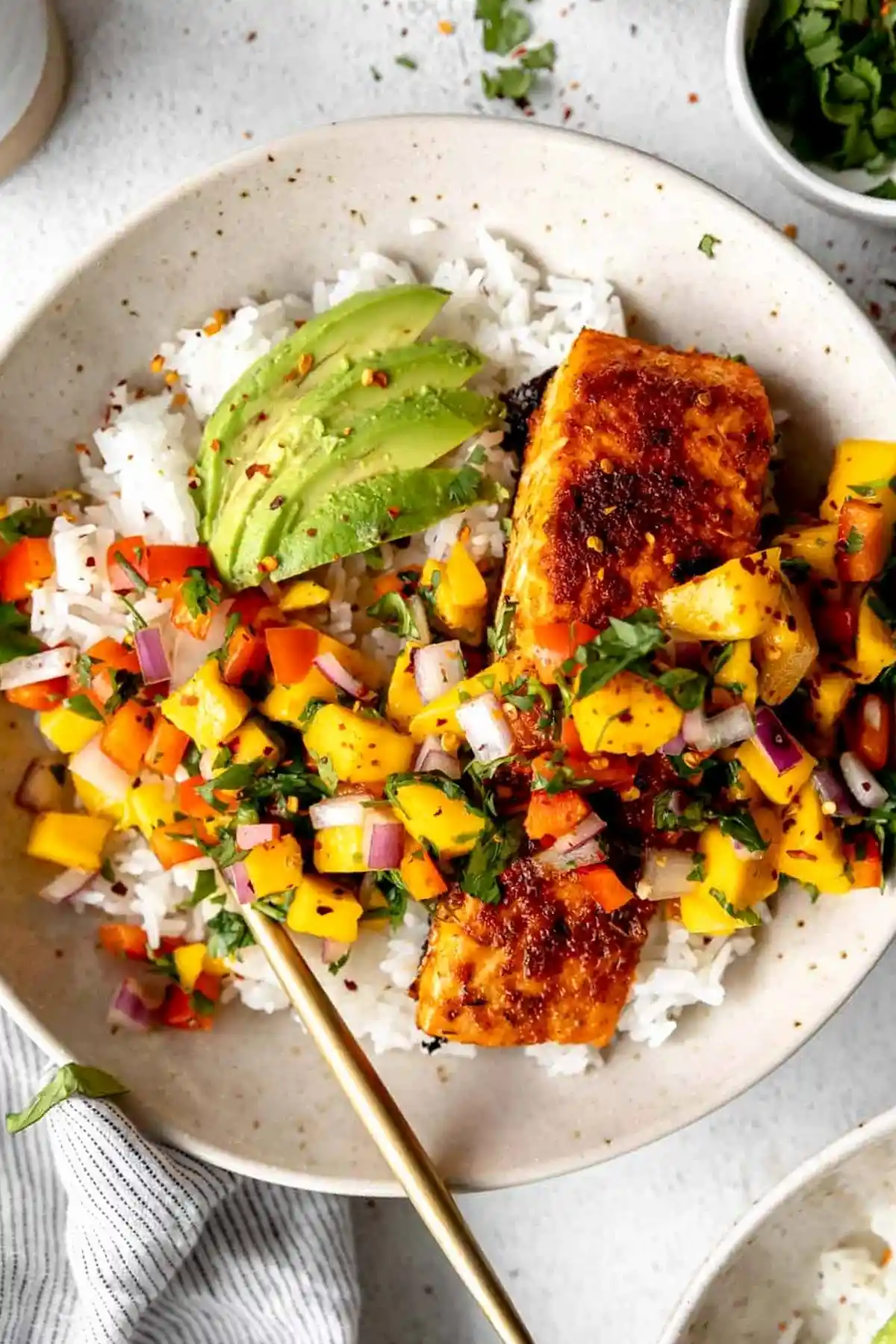
Enjoy a vibrant and healthy meal with this perfectly spiced salmon paired with a sweet and tangy mango salsa. This dish is ideal for those seeking a high-protein dinner that is both fresh and easy to prepare for the week.
List of ingredients
- 2 salmon filets (4-6 ounces each) – use skin-on for better moisture.
- 1 1/2 teaspoons brown sugar – adds a hint of sweetness and aids caramelization.
- 3/4 teaspoon paprika – provides a deep red color and earthy flavor.
- 3/4 teaspoon garlic powder – for a savory, pungent base.
- 3/4 teaspoon onion powder – adds a subtle sweetness.
- 1/2 teaspoon dried oregano – brings a Mediterranean herbal note.
- 1/2 teaspoon dried thyme – adds a woody, lemon-like aroma.
- 1/4 teaspoon ginger – provides a slight zesty warmth.
- 1/8 teaspoon cayenne pepper – adds a touch of Cajun heat.
- 1/4 teaspoon salt – enhances all the other spice flavors.
- 1 tablespoon olive oil – for searing in the skillet.
- 1 tablespoon olive oil – for the marinade mixture.
- 1 tablespoon orange juice – adds citrus sweetness to the marinade.
- 1 tablespoon lime juice – adds acidity to balance the fats.
- 2 teaspoons of the prepared spice blend – specifically for the marinade.
- 2 yellow mangoes – diced small for the fresh salsa.
- 1 small red bell pepper – finely diced for crunch and color.
- 1/4 cup diced red onion – provides a sharp, savory contrast.
- 4 tablespoons cilantro – freshly chopped for a bright finish.
- 1-2 tablespoons fresh lime juice – to brighten the mango salsa.
- 1 cup cooked white rice – such as jasmine, for serving.
- 1/2 avocado – sliced for added creaminess.
- 1/4 cup chipotle aioli – optional spicy sauce for drizzling.
step-by-step instructions
- Prepare the spice blend: In a small dish, whisk together the brown sugar, paprika, garlic powder, onion powder, dried oregano, dried thyme, ginger, cayenne pepper, and salt.
- Mix the marinade: In a separate container, combine the 1 tablespoon of olive oil, 1 tablespoon of orange juice, 1 tablespoon of lime juice, and 2 teaspoons of the previously made spice blend.
- Marinate the fish: Pour the marinade over the salmon filets and let them sit for at least 30 minutes to absorb the flavors.
- Assemble the salsa: While the salmon marinates, dice the mangoes and red bell peppers. Combine them in a bowl with the diced red onion, chopped cilantro, and lime juice, then set aside.
- Season the skin: Once the marinating time is complete, sprinkle the remaining spice blend onto the salmon and pat it firmly into the skin.
- Sear the salmon: Heat 1 tablespoon of oil in a non-stick skillet over medium-high heat. Place the salmon in the pan skin side up, cooking for 4-6 minutes.
- Finish cooking: Flip the filets and cook for an additional 4-6 minutes until the center is cooked through. The fish should flake easily off the skin.
- Optional blackening: If you prefer a charred finish, flip the salmon back to skin side down for a minute to achieve a crispy, blackened effect.
- Plate and serve: Serve the salmon over jasmine rice with a generous scoop of mango salsa and a fresh squeeze of lime juice. Add chipotle aioli or sliced avocado as desired.
Alternative Cooking Methods
Baking in the Oven
To bake this dish, follow the marinating and seasoning steps as usual. Place the salmon in a greased baking dish and bake at 400 degrees Fahrenheit for approximately 12 minutes. You can broil the fish for the last 2-3 minutes to get a crispier top.
Using an Air Fryer
Air frying provides a very crispy exterior while keeping the inside moist. After marinating and seasoning, place the filets in a greased air fryer basket. Cook at 380 degrees Fahrenheit for 8-12 minutes depending on the thickness of the filets.
Grilling for a Smoky Flavor
For a charred, outdoor taste, preheat your grill to medium-high heat. Lightly oil the grates and grill the salmon for about 5 minutes per side. This method works best if you keep the skin on to protect the meat from the direct flame.
Ingredient Selection Tips
Choosing Fresh Salmon Filets
Select salmon with a vibrant, consistent color and no dull gray patches on the flesh. The meat should be firm to the touch and spring back immediately when pressed. Avoid any fish that has a strong, overly fishy odor, as fresh salmon should smell clean and mild.
Properly Thawing Frozen Salmon
If using frozen filets, thaw them slowly in the refrigerator for 12-24 hours. Avoid thawing in warm water, as this can damage the texture of the fish and encourage bacterial growth. Pat the fish dry with paper towels before marinating to ensure the spices adhere well.
Picking the Best Mangoes
Choose yellow mangoes that give slightly when gently squeezed, similar to a ripe avocado. The skin should be colorful, and the stem end should smell sweet and fragrant. If you cannot find yellow mangoes, red varieties are an acceptable substitute, though the flavor may be slightly different.
Using Fresh versus Dried Herbs
This recipe calls for dried oregano and thyme for a concentrated flavor profile. If you prefer fresh herbs, use a ratio of three times the amount of fresh herbs to replace the dried versions. Fresh cilantro must be used in the salsa for the best aromatic result.
Flavor Modifications and Variations
Adjusting the Heat Level
To increase the spiciness, add an extra 1/8 teaspoon of cayenne pepper to the spice blend. If you prefer a milder flavor, you can omit the cayenne entirely without affecting the overall structure of the dish. Adding a pinch of crushed red pepper flakes to the salsa is another way to add heat.
Low Sugar Alternatives
For a low-carb or sugar-free version, replace the brown sugar with a suitable granulated sweetener like monk fruit or erythritol. Alternatively, you can omit the sugar entirely, although the salmon will not caramelize as deeply during the searing process.
Substituting the Citrus Base
While orange and lime juice provide a classic tropical balance, you can substitute orange juice with pineapple juice for a different sweetness. Lemon juice can replace lime juice if you prefer a sharper, more traditional citrus acidity.
Adding Smoky Undertones
Replace the standard paprika with smoked paprika to give the salmon a deep, wood-fired flavor. This complements the blackened style of the Cajun seasoning and pairs exceptionally well with the sweetness of the mango.
Smart Ingredient Substitutions
Alternative Grains for Rice
Substitute white jasmine rice with brown rice or quinoa for added fiber and nutrients. For a low-calorie or keto-friendly option, serve the salmon over a bed of steamed cauliflower rice. These alternatives all pair well with the acidity of the mango salsa.
Different Protein Options
While salmon is the star, this spice blend and salsa work well with other firm fish like mahi-mahi or trout. If using a thinner fish, reduce the cooking time on the skillet to prevent overcooking. Ensure the fish is patted dry before adding the spices.
Mango Salsa Substitutes
If mangoes are out of season, use diced fresh pineapple or papaya as a base for the salsa. Both fruits provide the necessary sweetness and acidity. Keep the red bell pepper and onion for the essential crunch and savory balance.
Aioli and Sauce Replacements
Replace chipotle aioli with a mixture of Greek yogurt, lime juice, and a dash of paprika for a lighter option. A drizzle of honey-lime glaze or a simple squeeze of fresh lemon juice also complements the flavors of the dish.
Serving and Pairing Ideas
Pairing with Leafy Greens
Serve the salmon and rice alongside a simple arugula salad tossed with lemon and olive oil. The peppery notes of the arugula cut through the richness of the salmon. Sautéed spinach with garlic is another nutrient-dense addition to the plate.
Complementary Roasted Vegetables
Roasted asparagus or broccolini makes an excellent side dish for this meal. Toss the vegetables in olive oil and salt, then roast at 400 degrees Fahrenheit for 10-12 minutes. The charred vegetables mirror the blackened flavor of the Cajun salmon.
Creating a Nourish Bowl
Arrange the cooked rice as a base in a wide bowl and place the salmon filet on top. Surround the fish with the mango salsa, sliced avocado, and a side of steamed edamame. Drizzle the chipotle aioli over everything for a cafe-style presentation.
Storage and Freshness Guidelines
Refrigerating Cooked Salmon
Store leftover cooked salmon in an airtight container in the refrigerator for up to two days. Keep the salmon separate from the mango salsa to prevent the fish from becoming soggy. Ensure the container is sealed tightly to prevent the fish from absorbing other fridge odors.
Storing the Fresh Mango Salsa
The mango salsa can be stored in a sealed jar for 3-4 days. Note that the flavors will meld and the mangoes will soften over time due to the lime juice. Stir the salsa well before serving to redistribute the juices.
Avoiding the Freezer
It is not recommended to freeze the mango salsa, as the texture of the fresh fruit will break down and become mushy upon thawing. While the cooked salmon can be frozen, the quality and texture are significantly better when eaten fresh or refrigerated.
Reheating Best Practices
Stovetop Reheating
To reheat salmon without drying it out, place it in a skillet over low heat with a teaspoon of butter or olive oil. Cover the pan with a lid for 2-3 minutes to trap steam, which helps keep the fish moist. Avoid high heat, as this will overcook the center.
Oven Reheating Method
Preheat your oven to 275 degrees Fahrenheit and place the salmon on a baking sheet. Cover the filet loosely with aluminum foil to prevent moisture loss. Heat for about 10 minutes or until the fish is warmed through.
Microwave Instructions
If using a microwave, use a low power setting and heat the salmon in short 30-second bursts. Place a damp paper towel over the fish to create a steam chamber. This method is the fastest but carries the highest risk of overcooking the fish.
Troubleshooting Common Issues
Preventing Salmon from Sticking
Ensure your non-stick skillet is fully heated before adding the oil and the fish. You should hear a distinct sizzle the moment the salmon hits the pan. Do not move the fish too early; let a crust form before attempting to flip it.
Identifying Overcooked Salmon
Salmon is overcooked when it becomes opaque and dry, often releasing a white substance called albumin. The ideal internal temperature is about 145 degrees Fahrenheit, but many prefer it slightly lower for more moisture. Use a fork to check if the fish flakes easily.
Managing Excess Salsa Moisture
If your mango salsa becomes too watery, use a slotted spoon to serve it or strain some of the excess liquid. This often happens if the mangoes are extremely juicy or if the salsa sits for too long. Adding a bit more diced onion can help absorb some of the liquid.
Fixing a Burnt Spice Crust
If the brown sugar in the spice blend burns too quickly, lower the heat of your skillet immediately. If the crust is already too dark, you can gently scrape off the burnt parts with a knife. Next time, ensure you are using medium-high heat rather than maximum heat.
Frequently Asked Questions
Can I eat the salmon skin?
Yes, the skin is edible and contains high levels of omega-3 fatty acids. When cooked correctly in a skillet, the skin becomes crispy and flavorful. Even if you do not plan to eat it, keeping it on during cooking helps the fish stay moist.
How do I know when the salmon is perfectly done?
The salmon is done when the flesh changes from translucent to an opaque pink and flakes easily with a fork. The center should still be slightly moist. If the fish resists flaking or looks dry, it may be overcooked.
Can I make the marinade in advance?
Yes, you can prepare the marinade up to 24 hours in advance and store it in the refrigerator. However, do not marinate the salmon for more than 24 hours, as the acid in the lime and orange juice can begin to break down the proteins and make the fish mushy.
Is this recipe suitable for meal prep?
This recipe is excellent for meal prep because it tastes great cold or reheated. Divide the rice, salmon, and salsa into separate compartments in your meal prep containers. Keep the avocado and aioli separate until the moment of consumption to maintain freshness.
Print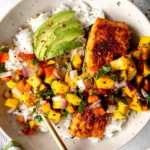
Cajun Spiced Salmon with Fresh Mango Salsa
- Total Time: 50 minutes
- Yield: 2 servings 1x
- Diet: Gluten Free
Description
This easy gluten free cajun salmon is perfectly spiced and served alongside a 4 ingredient mango salsa. It’s fresh, healthy and perfect for meal prep.
Ingredients
- 2, 4-6 ounce salmon filets
- 1 1/2 teaspoons brown sugar
- 3/4 teaspoon paprika
- 3/4 teaspoon garlic powder
- 3/4 teaspoon onion powder
- 1/2 teaspoon dried oregano
- 1/2 teaspoon dried thyme
- 1/4 teaspoon ginger
- 1/8 teaspoon cayenne pepper
- 1/4 teaspoon salt
- 1 tablespoon olive oil
- 1 tablespoon olive oil
- 1 tablespoon orange juice
- 1 tablespoon lime juice
- 2 teaspoons spice blend (from above)
- 2 yellow mangoes
- 1 small red bell pepper
- 1/4 cup diced red onion
- 4 tablespoons cilantro
- 1–2 tablespoons fresh lime juice
- 1 cup cooked white rice
- 1/2 avocado
- 1/4 cup chipotle aioli (or other sauce, optional)
Instructions
- Step: Whisk together the brown sugar and all spices for the salmon in a small dish.
- Step: In another dish, whisk together the orange juice, olive oil and lime juice along with 2 teaspoons of the spice blend.
- Step: Pour on top of the salmon and marinate for at least 30 minutes.
- Step: Meanwhile, dice the mangoes and peppers and add to a bowl with the onion, cilantro and lime juice. Set aside.
- Step: When the salmon is done marinating, sprinkle on top the rest of the spice blend and pat into the skin.
- Step: Heat 1 tablespoon of oil in a non-stick skillet. Once warm, add the salmon, skin side up and cook for 4-6 minutes, then flip and cook an additional 4-6 minutes or until cooked through the center.
- Step: It should easily flake off the skin when it is done. You can flip it back to be face down to get it nice and crispy and blackened if desired.
- Step: Serve with jasmine rice, mango salsa and a fresh squeeze of lime juice. Also delicious with my chipotle aioli or other spicy sauce.
Notes
I recommend yellow mangoes for this recipe, but you can sub for the red variety if that’s all you have access to.
- Prep Time: 10 minutes
- Cook Time: 10 minutes
- Category: Main Course
- Method: Pan-searing
- Cuisine: Cajun
Nutrition
- Serving Size: 1 filet with salsa
- Calories: 208 kcal
- Sugar: 10 g
- Sodium: 450 mg
- Fat: 10 g
- Saturated Fat: 2 g
- Unsaturated Fat: 8 g
- Trans Fat: 0 g
- Carbohydrates: 37 g
- Fiber: 4 g
- Protein: 26 g
- Cholesterol: 1 mg
Keywords: gluten free, cajun salmon, mango salsa, healthy dinner, meal prep