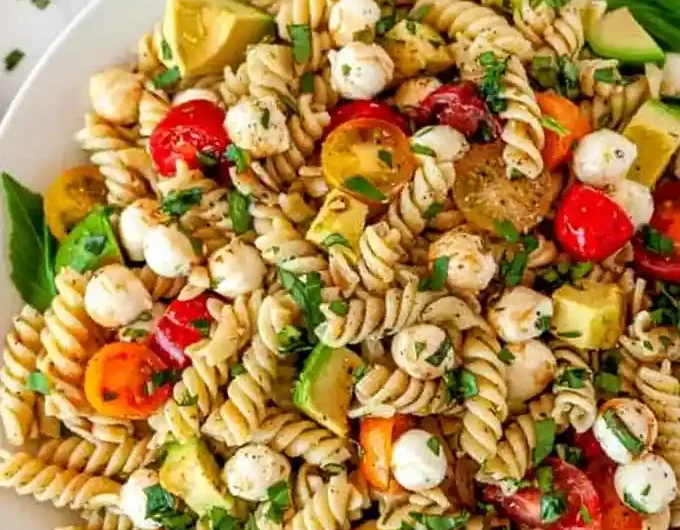
This vibrant caprese pesto pasta salad brings the essence of summer to your table in just twenty minutes. By combining the creamy texture of fresh mozzarella and avocado with a punchy, homemade basil pesto, you create a dish that is both refreshing and satisfying. It is the ideal companion for outdoor meals or a light main course during warm afternoons.
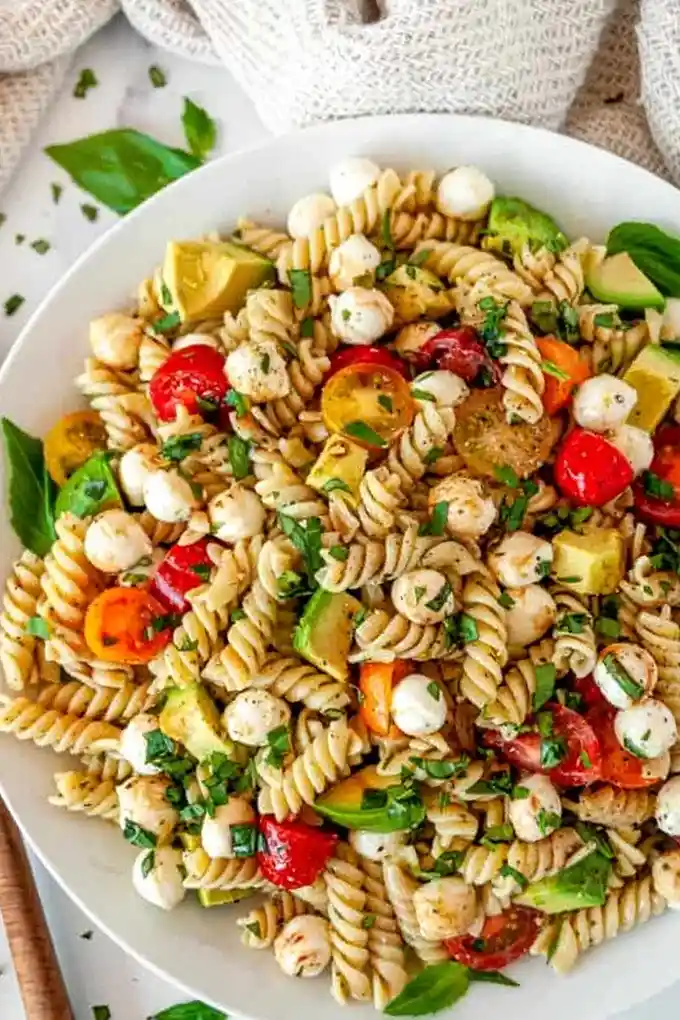
List of ingredients
- 1 lb rotini pasta
- 1 cup cherry tomatoes, halved
- 8 ounces mozzarella pearls or balls
- 1/4 cup fresh basil, roughly chopped
- 1 small, ripe avocado, diced
- 1 tablespoon balsamic vinegar
- Coarse salt, ground black pepper to taste
- 1 cup packed fresh basil leaves
- 1/4 cup shredded Parmesan cheese
- 2 1/2 tablespoons raw pine nuts
- 2 garlic cloves, minced
- 1/4 cup extra virgin olive oil
step-by-step instructions
- Step: Cook pasta according to box instructions. Drain, rinse under cold water, and chill until ready to use.
- Step: While pasta is chilling, make the pesto sauce. In a food processor or blender, pulse pine nuts and basil leaves together several times.
- Step: While processor is on, slowly pour in olive oil until fully combined. Add parmesan and garlic and pulse until completely mixed.
- Step: In a large salad bowl, toss pasta together with pesto, tomatoes, mozzarella cheese, avocado and fresh basil.
- Step: Drizzle with balsamic vinegar and add salt and pepper to taste. Garnish with any extra fresh basil.
Flavor balance and preparation strategies
Choosing the right pasta shape
While this recipe calls for rotini, you can use any short, sturdy pasta shape that features ridges. Shapes like fusilli, gemelli, or cavatappi are specifically designed to capture and hold onto the oil-based pesto, ensuring that every forkful is as flavorful as the first. Avoid long, thin noodles like spaghetti, as they tend to tangle and do not carry the mozzarella pearls or diced vegetables as efficiently as these shorter options.
The importance of cold rinsing
Rinsing your pasta under cold water is a vital step for any pasta salad. This process stops the cooking immediately, preventing the noodles from becoming mushy as they sit in the refrigerator or at room temperature. Furthermore, it washes away the starchy surface layer that can sometimes make the pasta sticky or cause it to clump together, allowing the pesto sauce to coat each noodle evenly and cleanly.
Refining the pesto components
Adjusting the garlic intensity
Garlic potency can vary significantly depending on the size and age of the cloves used. To ensure the pesto does not become overpowering, start with one clove, taste the sauce, and add the second only if you prefer a sharper kick. If you find the raw garlic taste is too intense, you can lightly toast the garlic cloves in a pan for one minute before blending, which mellows the sharp, biting notes into a sweeter, more subtle flavor.
Substituting pine nuts for texture
Pine nuts provide a signature buttery richness, but if they are unavailable, raw walnuts or blanched almonds make excellent substitutes. Walnuts offer a slightly earthier profile, while almonds contribute a clean, crisp finish. Always ensure that the nuts are raw rather than roasted, as the oil content in raw nuts emulsifies better with the olive oil to create a classic, silky pesto texture.
Optimizing avocado freshness
Preventing oxidation during storage
Avocado is a beautiful addition, but it can brown quickly once exposed to air. To maintain the bright green color of the avocado in your salad, ensure you toss it gently with the balsamic vinegar and pesto immediately after dicing. The acidity in the balsamic vinegar helps inhibit the enzyme responsible for browning, keeping the avocado looking fresh and vibrant even if the salad sits for a few hours before service.
Selecting the right stage of ripeness
When selecting an avocado for a pasta salad, choose a fruit that is firm yet gives slightly under gentle pressure. An overly soft or mushy avocado will dissolve into the pesto, becoming a creamy sauce rather than identifiable, delicious chunks. If your avocado is very ripe, add it to the bowl as the final step and use a very light folding motion to incorporate it without breaking the cubes apart.
Ensuring food safety and storage longevity
Effective refrigeration techniques
Because this dish contains fresh mozzarella and avocado, it is best kept in an airtight container in the coldest part of your refrigerator. Stored properly, the salad will remain fresh for up to two days. However, for the best texture, avoid freezing the dish, as the moisture from the tomatoes and the structural integrity of the avocado will degrade significantly upon thawing.
Managing temperature for outdoor serving
When serving this salad at outdoor gatherings, it is important to keep the bowl out of direct sunlight. A great trick is to place the serving bowl inside a larger bowl filled with ice, which keeps the mozzarella cool and the pasta refreshing. Never leave dairy-based ingredients like mozzarella out in the heat for longer than two hours to ensure the quality and safety of your meal.
Addressing common kitchen questions
Can I make the pesto a day in advance?
Yes, you can prepare the pesto up to 24 hours in advance if you store it correctly. Place the pesto in a jar and cover the surface with a thin layer of olive oil before sealing the lid, which prevents the basil from oxidizing and turning brown. Just give it a quick stir before folding it into the cooked pasta.
What is the best way to handle mozzarella pearls?
Mozzarella pearls are often packaged in a brine that keeps them moist. Be sure to drain the pearls thoroughly using a fine-mesh sieve or colander before adding them to the pasta bowl. If they remain wet, the excess liquid can dilute your pesto sauce, making it lose its rich, clinging consistency on the pasta noodles.
Is there a way to make this ahead of time for a party?
You can certainly prepare the components ahead of time to save stress on the day of your event. Cook the pasta and store it in a container with a tablespoon of olive oil to prevent sticking, and prepare the pesto separately in a jar. Wait to chop the tomatoes and avocado until just before you are ready to serve, then toss everything together with the pesto for the freshest results.
Print
Caprese Pesto Pasta Salad
- Total Time: 20 minutes
- Yield: 4 servings 1x
- Diet: Vegetarian
Description
Simply delicious caprese inspired pasta salad tossed in a homemade basil pesto. Done in just 20 minutes!
Ingredients
- 1 lb rotini pasta
- 1 cup cherry tomatoes, halved
- 8 ounces mozzarella pearls or balls
- 1/4 cup fresh basil, roughly chopped
- 1 small, ripe avocado, diced
- 1 tablespoon balsamic vinegar
- Coarse salt, ground black pepper to taste
- 1 cup packed fresh basil leaves
- 1/4 cup shredded Parmesan cheese
- 2 1/2 tablespoons raw pine nuts
- 2 garlic cloves, minced
- 1/4 cup extra virgin olive oil
Instructions
- Step: Cook pasta according to box instructions. Drain, rinse under cold water, and chill until ready to use.
- Step: While pasta is chilling, make the pesto sauce. In a food processor or blender, pulse pine nuts and basil leaves together several times.
- Step: While processor is on, slowly pour in olive oil until fully combined. Add parmesan and garlic and pulse until completely mixed.
- Step: In a large salad bowl, toss pasta together with pesto, tomatoes, mozzarella cheese, avocado and fresh basil.
- Step: Drizzle with balsamic vinegar and add salt and pepper to taste. Garnish with any extra fresh basil.
Notes
Serve chilled as a refreshing main dish or a side for your next meal. Store in the refrigerator for up to 2 days.
- Prep Time: 10 minutes
- Cook Time: 10 minutes
- Category: Salad
- Method: Boiling and Blending
- Cuisine: Italian-Inspired
Nutrition
- Serving Size: 1.5 cups
- Calories: 480 kcal
- Sugar: 3 g
- Sodium: 350 mg
- Fat: 28 g
- Saturated Fat: 7 g
- Unsaturated Fat: 21 g
- Trans Fat: 0 g
- Carbohydrates: 45 g
- Fiber: 5 g
- Protein: 14 g
- Cholesterol: 25 mg
Keywords: pasta salad, caprese, pesto, vegetarian, quick meal, summer salad