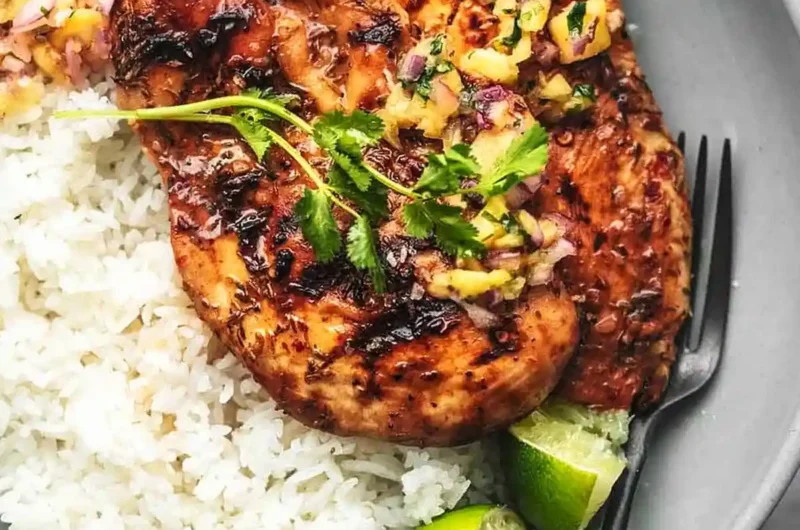
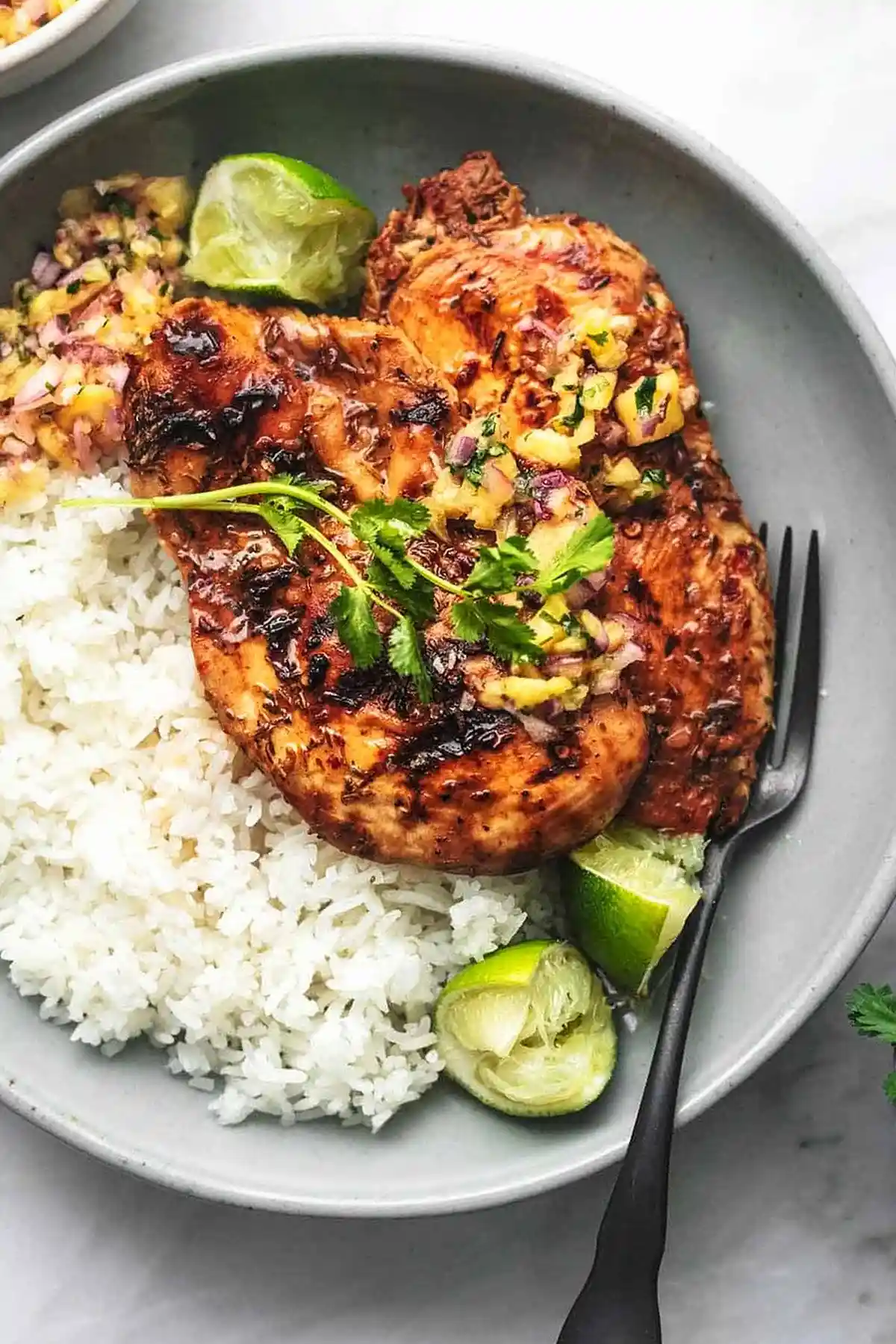
This vibrant dish combines spicy, aromatic jerk-seasoned chicken with a refreshing, sweet pineapple salsa. It is a quick-cooking meal that brings tropical flavors to your kitchen using simple pantry staples. Serve it over a bed of fluffy rice for a complete and satisfying dinner.
List of ingredients
- 4 boneless skinless chicken breasts – pounded to even 1/2 inch thickness for consistent cooking.
- steamed white rice – optional for serving.
- 1/3 cup olive oil – base for the marinade.
- juice of 2 limes (2-3 tablespoons) – adds essential acidity.
- 2 teaspoons minced garlic – for pungent aromatic flavor.
- 2 tablespoons soy sauce – provides salt and depth.
- 1 teaspoon onion powder – adds savory notes.
- 1/2 teaspoon nutmeg – contributes warm, spicy undertones.
- 3 teaspoons allspice – the signature flavor of Caribbean jerk.
- 1/2 teaspoon crushed red pepper flakes – for adjustable heat.
- 1 tablespoon honey – balances the spice with sweetness.
- 1 cup diced pineapple – the star of the fresh salsa.
- 1/2 onion – diced finely.
- handful cilantro – roughly chopped for freshness.
- 1 jalapeno – diced, optional for extra kick.
- juice of 1 lime – to brighten the salsa.
- 2 teaspoons honey – to sweeten the salsa.
- salt – to taste.
step-by-step instructions
- Prepare the marinade: In a medium bowl, stir together olive oil, lime juice, minced garlic, soy sauce, onion powder, nutmeg, allspice, red pepper flakes, and honey. Add the chicken breasts, toss to coat thoroughly, cover, and chill in the refrigerator for 30 minutes.
- Create the pineapple salsa: Combine diced pineapple, diced onion, chopped cilantro, diced jalapeno (if using), lime juice, honey, and salt in a bowl and toss to combine. For a smoother texture, you can pulse the ingredients in a blender or food processor. Chill until ready to serve.
- Cook the chicken: Use tongs to transfer the chicken from the marinade to a preheated grill or skillet over medium heat. Discard any unused marinade. Cook for 6-8 minutes per side until the chicken is cooked through and reaches an internal temperature of 165°F.
- Assemble and serve: Place the grilled chicken on top of steamed rice if desired. Spoon a generous amount of the chilled pineapple salsa over the warm chicken and serve immediately.
Meat Preparation Guide
Pound Chicken to Even Thickness for Uniform Cooking
Place chicken breasts between two sheets of plastic wrap or in a heavy-duty freezer bag. Use a meat mallet or a heavy skillet to gently flatten the thickest part of the breast until the entire piece is 1/2 inch thick. This prevents the edges from overcooking while the center remains raw.
Slice Breasts for Faster Cooking
If you prefer not to pound the meat, slice larger chicken breasts in half lengthwise to create two thinner cutlets. This method ensures the chicken cooks quickly and absorbs the marinade more efficiently. Ensure the cuts are as even as possible to maintain consistent searing.
Temper the Meat Before Cooking
Remove the marinated chicken from the refrigerator about 15 minutes before it hits the heat. Bringing the meat closer to room temperature helps it cook more evenly. This prevents the outside from charring before the interior reaches the safe temperature.
Marinade Mastery
Balancing Acidity and Sweetness
The combination of lime juice and honey creates a chemical balance that tenderizes the meat while providing flavor contrast. The acid breaks down muscle fibers, while the honey helps create a caramelized crust during grilling. Avoid adding more lime juice than called for, as too much acid can make the chicken mushy if marinated too long.
Soy Sauce Adjustments for Sodium Control
Use a low-sodium soy sauce if you are monitoring your salt intake. Since soy sauce provides the primary salt for the marinade, you typically do not need additional salt on the chicken itself. If you prefer a salt-free alternative, coconut aminos can be substituted in a 1:1 ratio.
Honey and Sugar Caramelization
Honey contains natural sugars that caramelize quickly over medium heat. To prevent the chicken from burning, ensure your grill or skillet is at a steady medium temperature rather than high. If the chicken browns too quickly, lower the heat slightly to allow the interior to cook through.
Optimizing Marinating Duration
While 30 minutes is the minimum requirement, marinating for up to 4 hours can deepen the flavor profile. Avoid marinating for more than 24 hours, as the lime juice will begin to cure the meat, changing the texture. For the best results, keep the chicken in an airtight Ziploc bag to ensure full coverage.
Tropical Salsa Customization
Fresh versus Canned Pineapple
Fresh pineapple provides a bright, tart flavor and a firmer texture that holds up well in a salsa. Canned pineapple is sweeter and softer, often coming in a syrup that can make the salsa too sugary. If using canned, drain the fruit thoroughly and rinse it before dicing.
Incorporating Mango or Kiwi
You can swap half of the pineapple for diced mango or kiwi to add different layers of sweetness. Mango adds a creamy texture, while kiwi adds a slight tanginess. Ensure the fruit is ripe but still firm so it does not turn into a puree when tossed.
Managing Jalapeno Heat
To control the spice level, remove the seeds and white membranes from the jalapeno before dicing. If fresh jalapenos are too hot, use jarred pickled jalapenos for a milder, tangier flavor. You can also substitute red chili flakes if fresh peppers are unavailable.
Utilizing Red Onions for Color
While yellow or white onions work, red onion adds a pop of color and a sharper bite. To mellow the flavor of raw red onion, soak the diced pieces in cold water for 10 minutes before adding them to the salsa. Pat them dry before mixing with the other ingredients.
Cooking and Searing Methods
Outdoor Grilling Tips
Clean and oil your grill grates to prevent the honey-based marinade from sticking. Grill the chicken over direct medium heat to achieve distinct char marks. Use a meat thermometer to check for a safe internal temperature of 165°F.
Indoor Skillet Searing
Use a cast-iron skillet or a non-stick pan for the best results indoors. Heat the pan until a drop of water sizzles and evaporates instantly before adding the chicken. Avoid crowding the pan, as this lowers the temperature and causes the chicken to steam rather than sear.
Monitoring Internal Temperature
Avoid relying solely on the color of the juices to determine doneness. Use a digital meat thermometer inserted into the thickest part of the breast. Remove the chicken from the heat once it reaches 160°F, as carryover cooking will bring it to the safe 165°F mark.
Resting the Chicken
Allow the chicken to rest on a plate or cutting board for 5 minutes before topping with salsa. Resting allows the juices to redistribute throughout the meat. This ensures the chicken remains moist and prevents the salsa from sliding off the surface.
Complementary Side Dishes
Brown Rice Nutritional Benefits
Brown rice is a nutrient-dense alternative to white rice, containing more fiber, antioxidants, and protein. Its nutty flavor complements the smoky notes of the jerk seasoning. Cook it in vegetable broth instead of water for additional depth of flavor.
White Rice Preparations
For a traditional pairing, use long-grain jasmine or basmati rice. Steam the rice until fluffy and fold in a small amount of butter or coconut milk for richness. This provides a neutral base that balances the intensity of the spicy chicken.
Adding Steamed Vegetables
Serve the dish with a side of steamed bok choy, broccoli, or snap peas. The crisp texture and mild flavor of green vegetables cut through the sweetness of the pineapple salsa. Lightly season the vegetables with salt and lime to match the theme of the meal.
Storage and Freshness
Refrigerating Chicken and Salsa
Store leftover grilled chicken and pineapple salsa in separate airtight containers. Keeping them separate prevents the salsa from making the chicken soggy. Both components will stay fresh in the refrigerator for up to 3 to 4 days.
Airtight Container Selection
Use glass containers for the salsa to prevent the lime juice from reacting with plastic. Glass also keeps the ingredients colder and fresher. Ensure the lids are sealed tightly to prevent the aromatic jerk scents from transferring to other foods in the fridge.
Freezing Guidelines
Grilled chicken can be frozen for up to 3 months, but the pineapple salsa does not freeze well. The freezing process breaks down the cell walls of the fresh fruit and onion, resulting in a mushy texture upon thawing. Only freeze the cooked meat.
Reheating Instructions
Oven Reheating
Place the chicken in an oven-safe dish and add a tablespoon of water or broth to maintain moisture. Cover with foil and heat at 325°F for 10-15 minutes. This method preserves the texture of the meat better than a microwave.
Microwave Reheating
Heat the chicken in short 30-second intervals on medium power. Cover the dish with a damp paper towel to create steam, which prevents the breasts from drying out. Avoid overheating, as this can make the chicken rubbery.
Fresh Salsa Addition
Always reheat the chicken first and then add the chilled salsa on top. Heating the salsa destroys the fresh flavor of the cilantro and the crispness of the onion. The contrast between the warm chicken and cold salsa is a key part of the dish.
Make-Ahead Planning
Pre-marinating in Bags
You can prepare the marinade and chicken up to 24 hours in advance. Place the breasts and marinade in a heavy-duty freezer bag, squeeze out the air, and refrigerate. This saves time on the day of cooking and allows the flavors to penetrate deeply.
Salsa Preparation Timing
The salsa can be made several hours before the meal. In fact, allowing the salsa to sit for an hour helps the flavors meld together. However, add the fresh cilantro just before serving to ensure it remains bright green and fragrant.
Troubleshooting Common Problems
Preventing Burnt Honey
If you notice the chicken is darkening too quickly, it is likely the honey caramelizing. Move the chicken to a cooler part of the grill or lower the skillet heat. You can also add a tiny bit more olive oil to the pan to create a barrier.
Fixing Bland Salsa
If the salsa tastes flat, it usually needs more acid or salt. Add an extra squeeze of fresh lime juice or a pinch of salt to brighten the flavors. Taste again and adjust incrementally until the sweetness of the pineapple is balanced.
Avoiding Dry Chicken Breasts
Dryness is usually caused by overcooking or failing to pound the meat. Ensure you are using a thermometer and removing the meat at 160°F. If the meat is already dry, serve it with extra salsa or a side of avocado to add moisture.
Frequently Asked Questions
Which is the best rice to serve with this dish?
Brown rice is the best choice for health and nutrition due to its higher fiber and protein content. However, jasmine rice is the most traditional choice for a tropical flavor profile and a softer texture.
Can I use chicken thighs instead of breasts?
Yes, boneless skinless chicken thighs are an excellent substitute. They are more forgiving and remain juicy even if slightly overcooked. Adjust the cooking time to about 7-9 minutes per side as thighs are generally denser than breasts.
How do I make the salsa less chunky?
You can use a blender or food processor to pulse the salsa ingredients a few times. Be careful not to over-process, or you will end up with a puree rather than a chunky salsa. A few short pulses are sufficient to achieve a finer dice.
What can I use if I don’t have allspice?
Allspice is a combination of cinnamon, cloves, and nutmeg flavors. You can substitute it with a mixture of 1/2 teaspoon cinnamon and 1/2 teaspoon cloves, though the flavor will be slightly different. Always taste as you go when using substitutes.
Print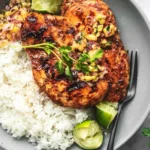
Caribbean Jerk Chicken with Pineapple Salsa
- Total Time: 55 minutes
- Yield: 4 servings 1x
- Diet: General
Description
Caribbean Jerk Chicken and Pineapple Salsa is just the dish you need to transport you to somewhere tropical even if you can’t quite yet get there in real life. Starting with a sweet/spicy/tangy marinade and ending with a delicious, slightly spicy pineapple salsa, this dish is delish start to finish!
Ingredients
- 4 boneless skinless chicken breasts, pounded to even 1/2 inch thickness
- steamed white rice for serving (optional)
- 1/3 cup olive oil
- juice of 2 limes
- 2 teaspoons minced garlic
- 2 tablespoons soy sauce
- 1 teaspoon onion powder
- 1/2 teaspoon nutmeg
- 3 teaspoons allspice
- 1/2 teaspoon crushed red pepper flakes
- 1 tablespoon honey
- 1 cup diced pineapple
- 1/2 onion, diced
- handful cilantro, roughly chopped
- 1 jalapeno, diced (optional)
- juice of 1 lime
- 2 teaspoons honey
- salt to taste
Instructions
- Step: In a medium bowl stir together all marinade ingredients. Add the chicken, toss to coat. Cover and chill for 30 minutes.
- Step: While the chicken is marinating, combine all salsa ingredients in a bowl and toss to combine. Optional: combine in a blender or food processor and give it a few pulses. Chill until ready to use.
- Step: Use tongs to transfer chicken to a preheated grill or skillet over medium heat (discard marinade) and cook for 6-8 minutes on each side until cooked through.
- Step: Serve chicken with pineapple salsa.
Notes
If you have large chicken breasts, rather than pounded them to 1/2-inch thickness, you can slice them in half lengthwise.
- Prep Time: 10 minutes
- Cook Time: 15 minutes
- Category: Main Course
- Method: Grilling
- Cuisine: Caribbean
Nutrition
- Serving Size: 1 serving
- Calories: 356 kcal
- Sugar: 12 g
- Sodium: 641 mg
- Fat: 21 g
- Saturated Fat: 3 g
- Unsaturated Fat: 17 g
- Trans Fat: 1 g
- Carbohydrates: 17 g
- Fiber: 1 g
- Protein: 26 g
- Cholesterol: 72 mg
Keywords: Caribbean jerk chicken, pineapple salsa, grilled chicken, tropical dinner