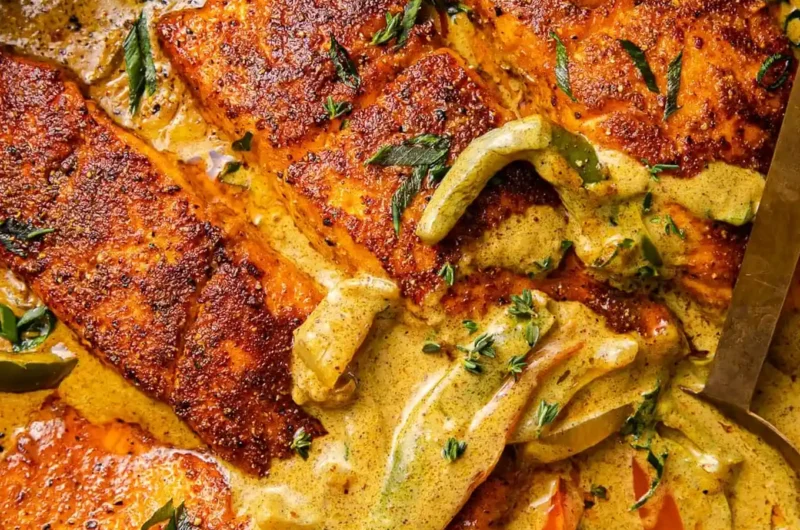
This dish combines pan-seared salmon fillets with a rich and aromatic coconut curry sauce. It is a nutritious and fast-acting meal that brings bold West Indian flavors to any dinner table.
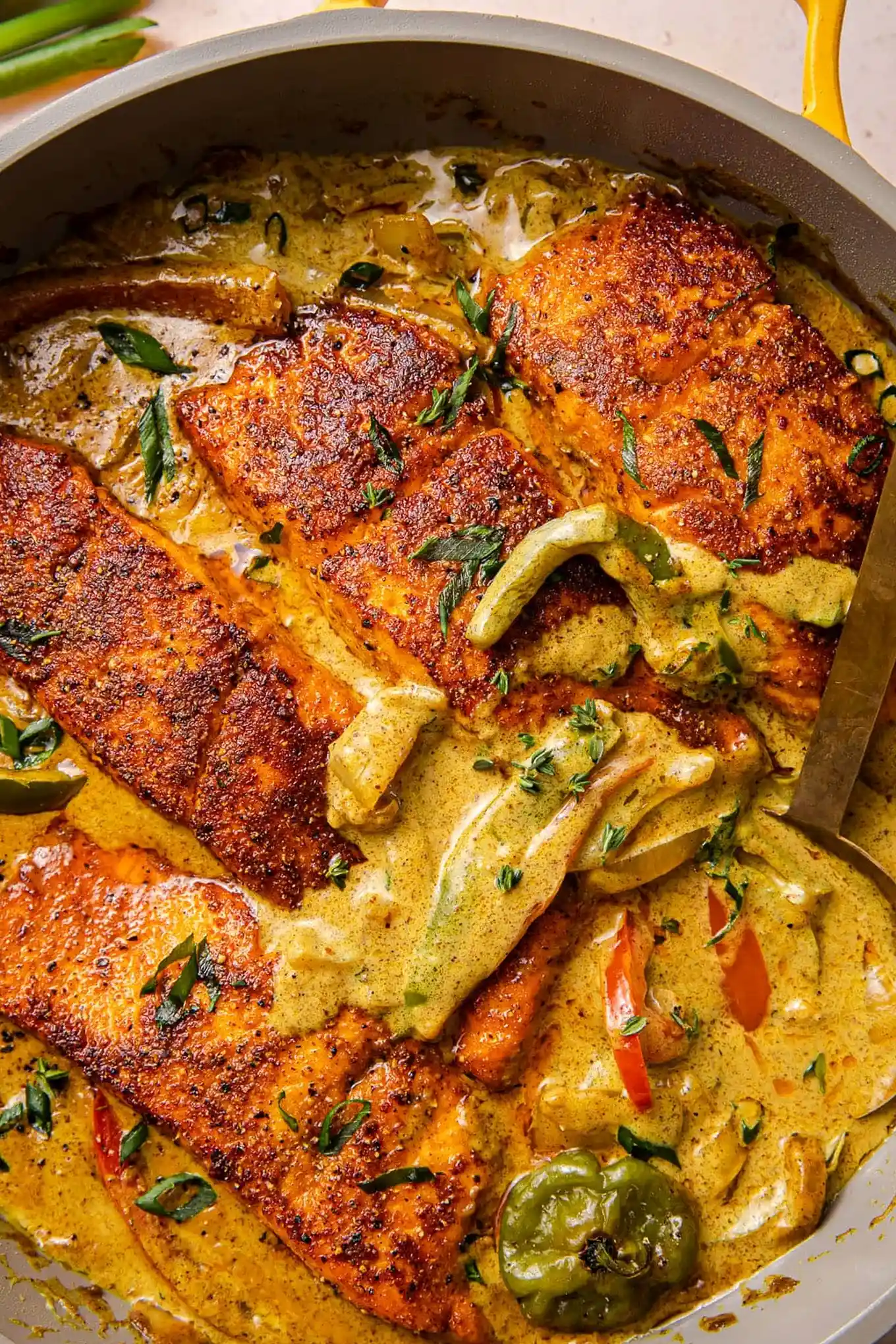
List of ingredients
- 4 salmon fillets (5-6 ounces each, skin-off) – Use fresh, high-quality fillets for the best texture.
- Kosher salt and freshly ground black pepper – Used to taste for seasoning both the fish and the sauce.
- 1 tablespoon + 2 teaspoons Caribbean-style curry powder (divided) – Essential for the authentic regional flavor profile.
- 1 teaspoon garlic powder – Adds a concentrated savory depth to the salmon rub.
- 1/2 teaspoon smoked paprika – Provides a subtle earthiness and rich color.
- 3 tablespoons olive oil (divided) – Used for searing the salmon and blooming the spices.
- 2 tablespoons unsalted butter – Adds richness and a glossy finish to the sauce.
- 1 red bell pepper (thinly sliced) – Adds sweetness and vibrant color.
- 1 green bell pepper (thinly sliced) – Contributes a slight bitterness to balance the coconut milk.
- 1 small white onion (thinly sliced into half-moons) – Provides a savory base for the aromatics.
- 6 cloves of garlic (finely minced or pressed) – Essential for a pungent, aromatic flavor.
- 1 teaspoon fresh grated ginger – Adds a zesty and warm note to the curry.
- 6 sprigs fresh thyme (de-stemmed) – Brings a fresh, herbal quality to the sauce.
- 1/2 teaspoon ground Jamaican allspice – A signature Caribbean spice for warm, complex notes.
- 1 (14 ounce/400ml) can full-fat coconut milk – Creates the creamy, rich base of the sauce.
- 1 scotch bonnet pepper (left whole, do not cut) – Optional, used for aromatic heat without overwhelming spice.
step-by-step instructions
- Prepare and season: Pat the salmon fillets completely dry with a paper towel. In a small bowl, mix salt, pepper, 2 teaspoons of curry powder, garlic powder, and smoked paprika. Drizzle 1 tablespoon of olive oil over the salmon, sprinkle the spice mixture on top, and rub it in by hand until evenly coated.
- Sear the salmon: Heat 1 tablespoon of olive oil in a large nonstick skillet over medium-high heat. Once shimmering, add the salmon and sear undisturbed for 2-3 minutes until golden brown. Flip the fillets and sear for another 1-2 minutes until they reach your desired doneness, then remove them to a clean plate.
- Bloom the curry: Reduce the skillet heat to medium or medium-low. Add the remaining 1 tablespoon of olive oil, then stir in the remaining 1 tablespoon of curry powder. Stir frequently for about 30 seconds until the spice is fragrant and deep golden brown.
- Sauté aromatics: Add the butter, sliced bell peppers, and onions to the skillet. Sauté for 3-4 minutes until the vegetables are softened and translucent. Stir in the minced garlic, grated ginger, fresh thyme, and Jamaican allspice, cooking for another 1-2 minutes until fragrant.
- Simmer the sauce: Pour in the full-fat coconut milk and add the whole scotch bonnet pepper if using. Bring the sauce to a gentle simmer over the lowest heat setting. Stir and season with additional salt and pepper as needed.
- Final combine: Place the seared salmon fillets and any accumulated juices back into the skillet. Spoon the coconut curry sauce over the fish and cook for 1-2 more minutes. Remove the skillet from the heat.
- Serve: Discard the whole scotch bonnet pepper. Serve the salmon immediately alongside your choice of side dishes.
Techniques for Searing Salmon
The Importance of Drying the Surface
Moisture on the surface of the fish creates steam, which prevents a proper crust from forming. Using paper towels to thoroughly pat the salmon dry ensures the Maillard reaction occurs quickly. This results in a golden-brown exterior and a more flavorful fillet.
Managing Skillet Temperature
The oil must be shimmering but not smoking before the fish hits the pan. If the pan is too cool, the salmon will stick and won’t sear. If it is too hot, the spices in the rub may burn before the fish is cooked through.
Avoiding Overcooking
Salmon continues to cook for a few minutes after being removed from the heat due to carryover cooking. Remove the fillets from the pan when they are slightly under your target doneness. This prevents the fish from becoming dry and chalky during the final simmering stage.
Understanding the Caribbean Flavor Profile
Blooming the Curry Powder
Burning or blooming the curry powder in hot oil releases fat-soluble flavor compounds. This process transforms the raw taste of the spices into a deeper, more complex aroma. It ensures the curry flavor is integrated into the entire sauce rather than just floating on top.
The Role of Jamaican Allspice
Allspice is a cornerstone of Caribbean cuisine, providing a flavor reminiscent of cinnamon, cloves, and nutmeg. In this recipe, it adds a warm, woody undertone that complements the richness of the coconut milk. It helps bridge the gap between the savory garlic and the sweet peppers.
Balancing Heat with Scotch Bonnet
Adding the scotch bonnet pepper whole allows the sauce to absorb the fruit’s floral aroma without the intense heat of the seeds. This method provides a subtle glow to the dish rather than a sharp burn. Always avoid cutting the pepper if you prefer a mild heat level.
Using Fresh Aromatics
Fresh ginger and garlic provide a punchy, bright contrast to the heavy coconut cream. Grating the ginger finely ensures it distributes evenly throughout the sauce. The fresh thyme adds a necessary herbal layer that cuts through the richness of the butter and coconut milk.
Ingredient Substitutions and Adjustments
Alternative Fish Choices
While salmon is the primary choice, this sauce works well with other firm white fish. Cod, halibut, or mahi-mahi can be used as substitutes. Adjust the searing time based on the thickness of the fillet to avoid overcooking.
Adjusting Coconut Milk Density
Full-fat coconut milk provides the most luxurious texture and flavor. If using light coconut milk, the sauce will be thinner and less creamy. You can thicken a thinner sauce by simmering it for a few extra minutes before adding the fish back in.
Vegetable Modifications
Red and green bell peppers can be replaced with yellow peppers or diced carrots for a different sweetness profile. Adding a handful of spinach or kale at the end of the simmering process adds nutritional value and a pop of color. These greens should be stirred in just until wilted.
Curry Powder Variations
Caribbean curry powders often rely more heavily on turmeric and fenugreek than Indian blends. If using a standard yellow curry powder, you may want to add a pinch more allspice to maintain the Caribbean character. Ensure the powder is fresh for the most potent flavor.
Recommended Side Pairings
Jasmine Rice Accompaniments
Fragrant jasmine rice is the ideal base for this dish because it absorbs the creamy curry sauce. The light floral notes of the rice complement the coconut milk perfectly. Serve the salmon directly on top of a mound of steamed rice for a classic presentation.
Traditional Rice and Peas
For a more authentic West Indian experience, pair the salmon with rice and peas. This side dish, typically made with kidney beans and coconut milk, mirrors the flavors in the main sauce. It adds extra protein and a hearty texture to the meal.
Steamed Green Vegetables
Broccoli, cauliflower, or snap peas provide a crisp texture and a fresh contrast to the rich sauce. Lightly steaming these vegetables preserves their nutrients and bright colors. A squeeze of fresh lime juice over the vegetables can further brighten the entire plate.
Roasted Sweet Plantains
Fried or roasted sweet plantains offer a caramelized sweetness that pairs well with the savory curry. The contrast between the sweet fruit and the spicy salmon creates a balanced flavor profile. Slice the plantains into rounds and pan-fry them in a small amount of oil.
Storage and Preservation
Refrigeration Guidelines
Store leftover salmon and sauce in a clean, airtight container. Ensure the fish is fully submerged in the sauce to prevent the surface from drying out. These leftovers can be kept in the refrigerator for 3 to 4 days.
Managing Sauce Separation
Coconut milk can sometimes separate or thicken significantly when chilled. This is a natural occurrence and does not mean the sauce has spoiled. A quick stir or a splash of water during reheating will restore the smooth consistency.
Freezing Considerations
Freezing cooked salmon can alter the texture, often making it softer or more watery. While the sauce freezes well, the fish may not maintain its quality. For the best results, it is recommended to consume this dish within the refrigeration window.
Reheating Instructions
Microwave Reheating
Place the salmon and sauce in a microwave-safe dish. Heat on medium power in 30-second intervals, stirring the sauce gently between sessions. Adding a tablespoon of water or vegetable broth helps loosen the sauce and keeps the fish moist.
Stovetop Reheating
Transfer the leftovers to a small skillet over low to medium-low heat. Cover the pan with a lid to trap steam, which gently warms the salmon without overcooking it. Stir the sauce occasionally until it reaches a simmer.
Oven Warming Technique
Preheat the oven to 275 degrees Fahrenheit. Place the salmon and sauce in a baking dish and cover tightly with foil. Warm for 10-15 minutes, which prevents the fish from drying out as it would under a direct broiler.
Frequently Asked Questions
Can I make this recipe without butter?
Yes, you can replace the butter with an equal amount of olive oil or a plant-based butter substitute. The butter adds richness and a slight creaminess, but the coconut milk provides enough fat to keep the sauce flavorful.
What is the best way to peel fresh ginger?
Use the edge of a metal spoon to scrape the skin off the ginger root. This method removes the thin skin without wasting any of the flavorful flesh. It is much more efficient than using a vegetable peeler or knife.
How do I know when the salmon is perfectly cooked?
The salmon is done when it flakes easily with a fork and the center is opaque. If using a meat thermometer, aim for an internal temperature of 135 to 145 degrees Fahrenheit. Avoid cooking it until it is completely firm to maintain juiciness.
Is the scotch bonnet pepper too spicy for kids?
Since the pepper is left whole and not cut, the heat remains mild. However, if children are very sensitive to spice, you can omit the pepper entirely. The aromatic flavor will be slightly reduced, but the dish will remain delicious.
Can I use frozen salmon fillets?
Yes, but they must be completely thawed and patted dry before seasoning. Frozen fillets often release more water during cooking, which can hinder the searing process. Thawing them in the refrigerator overnight is the best approach.
Print
Caribbean-Style Coconut Curry Salmon
- Total Time: 35 minutes
- Yield: 4 servings 1x
- Diet: Low-Carb
Description
Perfectly seasoned salmon fillets pan-seared and combined with a robust, flavorful coconut curry sauce for a meal full of Caribbean flair.
Ingredients
- 4 salmon fillets, about 5–6 ounces each, skin-off
- Kosher salt, to taste
- Freshly ground black pepper, to taste
- 1 tablespoon + 2 teaspoons Caribbean-style curry powder, divided
- 1 teaspoon garlic powder
- 1/2 teaspoon smoked paprika
- 3 tablespoons olive oil, divided
- 2 tablespoons unsalted butter
- 1 red bell pepper, thinly sliced
- 1 green bell pepper, thinly sliced
- 1 small white onion, thinly sliced into half-moons
- 6 cloves of garlic, finely minced or pressed
- 1 teaspoon fresh grated ginger
- 6 sprigs fresh thyme, de-stemmed
- 1/2 teaspoon ground Jamaican allspice
- 1 (14 ounce) can full-fat coconut milk
- 1 scotch bonnet pepper, left whole (optional)
Instructions
- Prep & season: Pat salmon dry. Combine salt, pepper, 2 teaspoons curry powder, garlic powder, and smoked paprika. Drizzle 1 tablespoon olive oil over salmon and rub in the spice blend.
- Sear the salmon: Heat 1 tablespoon olive oil in a large nonstick skillet over medium-high heat. Sear salmon for 2-3 minutes per side until golden, then set aside.
- Burn curry: Heat remaining 1 tablespoon olive oil in the pan. Stir in 1 tablespoon curry powder for about 30 seconds until fragrant and golden brown.
- Sauté aromatics: Add butter, bell peppers, and onion; sauté 3-4 minutes. Stir in garlic, ginger, fresh thyme, and allspice; cook for 1-2 minutes.
- Simmer sauce: Stir in coconut milk and scotch bonnet pepper. Simmer, reduce heat to lowest, then add salmon and juices back in. Spoon sauce over salmon and cook 1-2 minutes.
- Serve: Discard the scotch bonnet pepper and serve immediately.
Notes
Use a traditional Jamaican or Trinidad & Tobago curry powder for authentic flavor. Pairs well with jasmine rice or steamed vegetables.
- Prep Time: 15 minutes
- Cook Time: 20 minutes
- Category: Main Dishes
- Method: Stovetop
- Cuisine: Caribbean
Nutrition
- Serving Size: 1 fillet
- Calories: 660 kcal
- Sugar: 8 g
- Sodium: 680 mg
- Fat: 48 g
- Saturated Fat: 26 g
- Unsaturated Fat: 22 g
- Trans Fat: 0 g
- Carbohydrates: 16 g
- Fiber: 4 g
- Protein: 38 g
- Cholesterol: 110 mg
Keywords: Caribbean salmon, coconut curry, one-pan meal, seafood, coconut milk