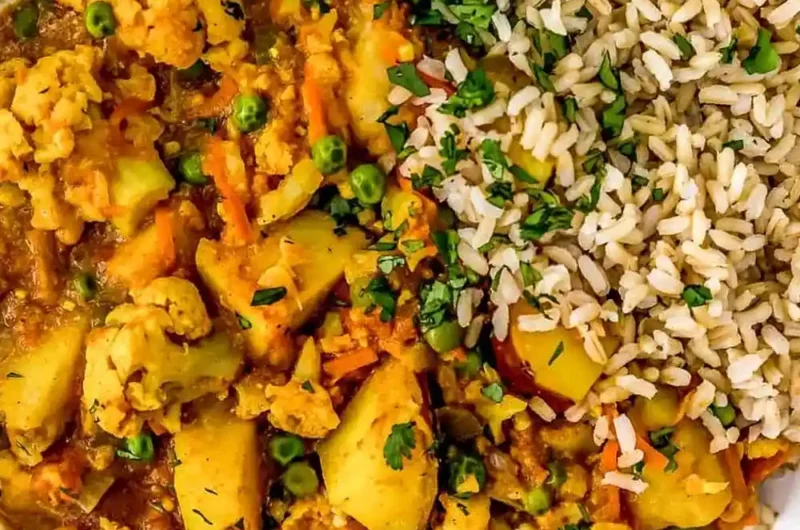
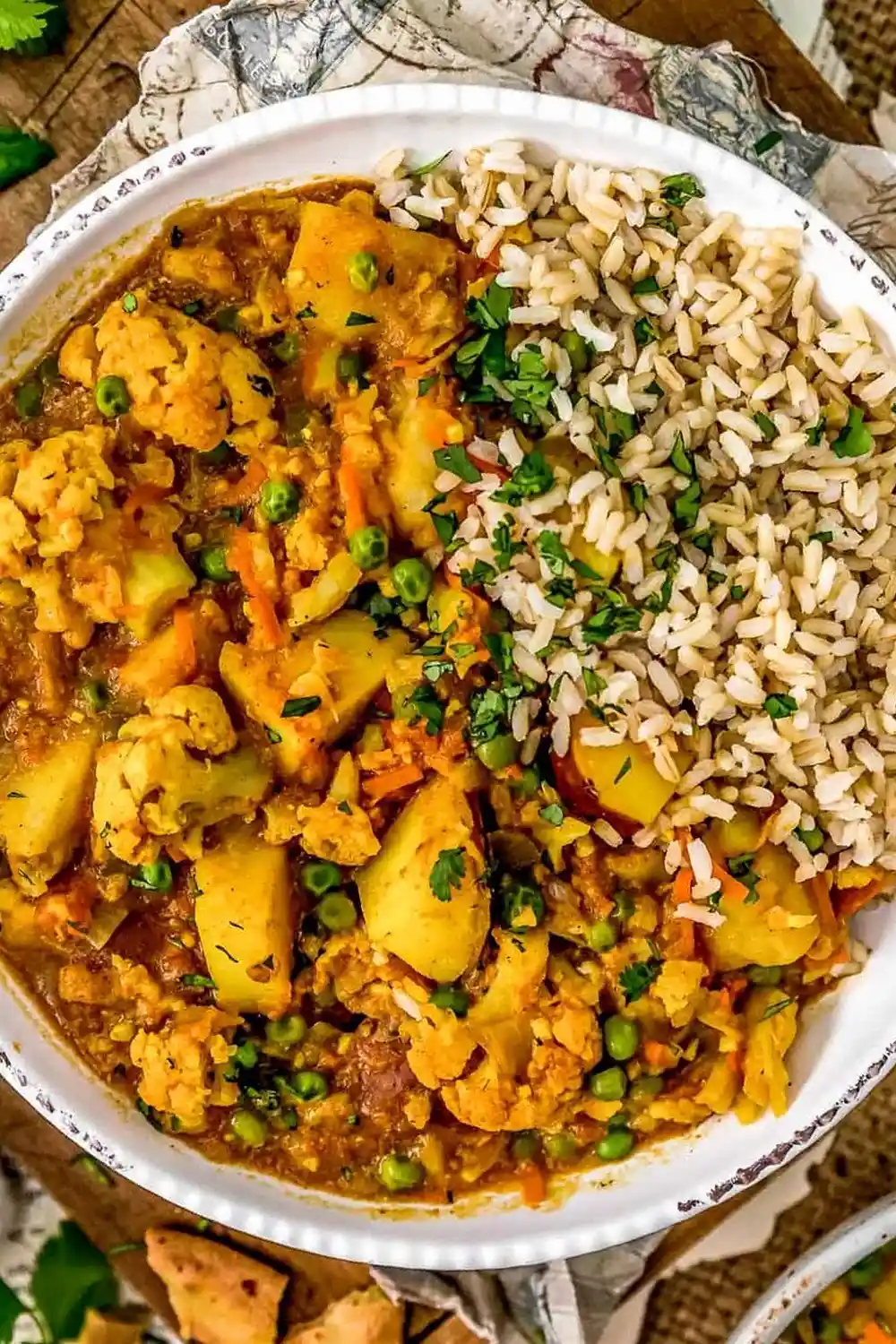
This Cauliflower Potato Curry is a nutrient-dense, aromatic dish that combines hearty vegetables with traditional Indian spices. It is designed for flexibility, allowing for preparation in either a pressure cooker or on a standard stovetop.
List of ingredients
- 1 cup yellow onion, small dice – provides a savory base.
- 1 carrot, cut into matchsticks – adds subtle sweetness and color.
- 1 small serrano pepper or jalapeño pepper, seeded and small diced – adds adjustable heat.
- 2 Tablespoons minced garlic – enhances the aromatic profile.
- 2 teaspoons fresh minced ginger – adds a zesty, sharp flavor.
- 1 can (14.5 oz) petite diced tomatoes, pureed – creates a smooth sauce base.
- 1 lb cauliflower florets (about 4 cups) – the primary cruciferous component.
- 4 cups unpeeled potatoes, cut into small cubes – provides heartiness and thickness.
- 1/2 cup vegetable broth – used for simmering and flavor.
- 1/2 cup water or additional vegetable broth – ensures enough liquid for pressure cooking.
- 1 teaspoon garlic powder – adds depth to the spice blend.
- 1 teaspoon onion powder – complements the fresh onions.
- 2 Tablespoons dried minced onion flakes – intensifies the onion flavor.
- 1 Tablespoon + 1 teaspoon curry powder – the primary seasoning blend.
- 1 teaspoon garam masala – adds warmth and complexity.
- 1 teaspoon sea salt – adjust according to dietary needs.
- Pinch to 1/4 teaspoon cayenne pepper – controls the level of spice.
- 1 cup lite coconut milk (from can) – adds creaminess and richness.
- 1 1/4 cup frozen peas – adds pops of color and sweetness.
- Steamed brown rice – suggested for serving.
- Chopped fresh cilantro – used as a fresh garnish.
- WFPB Flatbread or Quinoa Flatbread – suggested for serving.
step-by-step instructions
- Prepare Spice Blend: Combine the garlic powder, onion powder, dried minced onion flakes, curry powder, garam masala, sea salt, and cayenne pepper in a small bowl and mix well.
- Prep Vegetables: Dice the onion, slice the carrots, seed and dice the pepper, and cube the potatoes and cauliflower to ensure they are ready for the fast cooking process.
- Sauté Aromatics (Instant Pot): Set the Instant Pot to Sauté high mode. Add the minced onion, carrot, and serrano pepper, cooking for 3 to 5 minutes until softened. Add a tablespoon of water if sticking occurs to prevent burning.
- Bloom Spices (Instant Pot): Stir in the minced garlic, ginger, and the prepared spice blend, sautéing for one minute to release the oils.
- Coat Vegetables (Instant Pot): Add the cauliflower florets and cubed potatoes, stirring constantly for one minute to coat them thoroughly in the seasoning.
- Pressure Cook (Instant Pot): Add all remaining ingredients except for the lite coconut milk and frozen peas. Press Cancel, set to Manual Pressure High for 5 minutes, and once finished, let sit for 4 minutes before performing a Quick Release.
- Final Stir (Instant Pot): Carefully remove the lid and stir in the lite coconut milk and frozen peas. Allow a few minutes for the flavors to merge and taste for additional seasoning.
- Sauté Aromatics (Stovetop): In a large ceramic or enamel-lined Dutch oven, sauté the onion, carrot, and serrano pepper for 3 to 5 minutes. Use a tablespoon of water if necessary to prevent sticking.
- Bloom Spices (Stovetop): Stir in the minced garlic, ginger, and spice blend, cooking for one minute.
- Coat Vegetables (Stovetop): Add the cauliflower florets and cubed potatoes, stirring for one minute to ensure all pieces are seasoned.
- Simmer (Stovetop): Add all ingredients except for the coconut milk and peas. Cover the pot and simmer on a low boil for 20 to 30 minutes until the vegetables are tender.
- Finish (Stovetop): Once tender, stir in the lite coconut milk and frozen peas. Cook for a few more minutes to marry the flavors before serving.
- Serve: Plate the curry with steamed brown rice, a garnish of chopped cilantro, and a side of flatbread.
Vegetable Preparation Techniques
Preventing Cauliflower Disintegration
Cut the cauliflower florets into medium-sized pieces rather than very small bits. This ensures they maintain their structure during the high-pressure cooking process and do not turn into mush.
Consistent Potato Cubing
Dice the unpeeled potatoes into uniform small cubes. Consistent sizing ensures that every piece cooks through at the same rate, preventing some pieces from being raw while others overcook.
Pureeing the Diced Tomatoes
Puree the canned petite diced tomatoes before adding them to the pot. This creates a smooth liquid consistency that helps prevent the ‘Burn’ warning in pressure cookers and yields a more cohesive sauce.
Properly Seeding the Peppers
Remove the seeds and membranes from the serrano or jalapeño pepper before dicing. This allows you to control the heat level and prevents the dish from becoming overly spicy for some diners.
Spice Management and Flavor Profiles
Selecting Your Curry Powder
Different brands of curry powder vary between sweet, earthy, or hot profiles. Choose a blend that matches your preference, as this is the dominant flavor of the entire dish.
Adjusting Heat with Cayenne
Use a small pinch of cayenne pepper for a mild warmth. If you prefer a spicier curry, increase the amount to a full quarter teaspoon or add more at the very end of the cooking process.
The Role of Garam Masala
Garam masala is added to provide a warm, aromatic finish. It differs from curry powder by focusing more on cinnamon, cloves, and cardamom, which adds depth to the vegetable base.
Balancing Sea Salt
Add salt incrementally and taste the sauce before the final simmer. Adjust the amount based on the sodium content of your vegetable broth to avoid over-salting the finished curry.
Cooking Equipment Options
Efficiency of the Pressure Cooker
Using an Instant Pot significantly reduces the active cooking time for the potatoes and cauliflower. This method is ideal for weeknight meals when time is limited but depth of flavor is still desired.
Texture Gains from Stovetop Simmering
Simmering in a Dutch oven allows for a slower reduction of the sauce. This can result in a slightly thicker consistency and allows you to monitor the tenderness of the vegetables more closely.
Maintaining Heat in Ceramic Pots
When using a stovetop, an enamel-lined or ceramic pot is recommended for even heat distribution. This prevents the spices from scorching at the bottom of the pot during the initial sauté phase.
Quick Release vs. Natural Release
The 4-minute natural release period prevents the vegetables from experiencing a sudden pressure drop. This helps maintain the integrity of the cauliflower florets.
Ingredient Alternatives
Substituting Broccoli for Cauliflower
If cauliflower is unavailable, broccoli florets can be used as a substitute. Be mindful that broccoli may cook slightly faster, so check for tenderness a minute or two early.
Using Different Potato Varieties
Yukon Gold potatoes are excellent for a creamier texture due to their waxier nature. Russet potatoes will break down more, which can help thicken the sauce further.
Creamy Base Substitutions
If you prefer not to use coconut milk, cashew cream or a blended mixture of soaked cashews and water can provide a similar richness. This maintains the plant-based nature of the recipe.
Alternative Liquid Bases
While vegetable broth is recommended, water can be used if you increase the salt and spice amounts slightly. Low-sodium versions are preferred to keep the flavor balanced.
Serving and Pairing Suggestions
Choosing the Right Grain
Steamed brown rice provides a nutty flavor and extra fiber that complements the creamy sauce. For a lower-carb option, cauliflower rice or quinoa are suitable alternatives.
Pairing with Flatbreads
Serve the curry with whole-grain or quinoa-based flatbreads to scoop up the sauce. This adds a textural contrast to the soft cooked vegetables.
Fresh Garnish Applications
Freshly chopped cilantro adds a bright, citrusy note that cuts through the richness of the coconut milk. Squeeze a wedge of fresh lime over the top for additional acidity.
Adding Protein Boosts
For extra protein, stir in cooked chickpeas or cubes of firm tofu during the final heating phase. These additions make the dish even more filling without altering the flavor profile.
Preservation and Reheating
Refrigeration Guidelines
Store leftover curry in an airtight container in the refrigerator for up to five days. The flavors often intensify and improve after a day of resting.
Freezing the Curry
This curry freezes well for up to three months. Place it in freezer-safe containers, leaving a small amount of space at the top for expansion as the liquid freezes.
Optimal Reheating Methods
Reheat the curry on the stovetop over medium-low heat, adding a splash of water or broth if the sauce has thickened too much. Avoid overheating to prevent the cauliflower from breaking down.
Preventing Separation during Reheating
Stir the curry gently while reheating to reintegrate the coconut milk. If the sauce appears separated, a quick whisking motion will restore the creamy emulsion.
Common Cooking Challenges
Preventing the Burn Warning
Ensure that the pureed tomatoes and broth are stirred well and that the bottom of the pot is scraped. Thick chunks of tomato sitting on the bottom are the most common cause of burn warnings.
Fixing a Watery Sauce
If the curry is too thin after cooking, simmer it uncovered on the stovetop for a few extra minutes. Alternatively, mash a few of the cooked potato cubes into the sauce to naturally thicken it.
Correcting Over-Salted Sauce
If the dish is too salty, add an extra tablespoon of coconut milk or a squeeze of lemon juice. The fat and acidity help neutralize the perception of excess salt.
Managing Spice Levels
If the curry is too hot, increasing the amount of coconut milk or adding a small amount of maple syrup can balance the heat. This mellows the cayenne and serrano peppers.
Frequently Asked Questions
Can I use frozen cauliflower?
Yes, you can use frozen cauliflower, but avoid sautéing it initially. Add it directly during the pressure cooking or simmering stage to prevent it from becoming too soft.
Is this recipe gluten-free?
The curry itself is naturally gluten-free. Ensure that your chosen curry powder and flatbread are certified gluten-free to maintain this dietary requirement.
How do I make it spicier?
Increase the amount of cayenne pepper to a full quarter teaspoon or add chopped fresh chilies during the sauté phase. You can also add red pepper flakes at the end.
Can I add other vegetables?
Yes, diced carrots, bell peppers, or spinach can be added. Add spinach at the very end with the peas so it wilts but stays vibrant green.
Do I have to peel the potatoes?
No, the recipe uses unpeeled potatoes for added nutrients and texture. Just ensure they are scrubbed clean before dicing them into cubes.
Can I use a regular slow cooker?
Yes, you can adapt this for a slow cooker by sautéing the aromatics first and then cooking on low for 6-8 hours. Add the coconut milk and peas in the final 30 minutes.
Print
Cauliflower Potato Curry
- Total Time: 19 minutes
- Yield: 4–5 servings 1x
- Diet: Vegan, Gluten-Free
Description
An ultra-flavorful, comforting Cauliflower Potato Curry packed with aromatic spices and powerhouse veggies. This hearty dish is Whole Food Plant Based, vegan, oil-free, refined sugar-free, and gluten-free, making it a soul-warming meal for the whole family.
Ingredients
- 1 cup yellow onion, small dice
- 1 carrot, cut into matchsticks
- 1 small serrano pepper or jalapeño pepper, seeded, small dice
- 2 Tablespoons minced garlic
- 2 teaspoons fresh minced ginger
- 1 [ 14.5 oz. can ] petite diced tomatoes (pureed)
- 1 lb. cauliflower florets (about 4 cups)
- 4 cups unpeeled potatoes, cut into small cubes
- ½ cup vegetable broth
- ½ cup water (or broth)
- 1 teaspoon garlic powder
- 1 teaspoon onion powder
- 2 Tablespoons dried minced onion flakes
- 1 Tablespoon + 1 teaspoon curry powder
- 1 teaspoon garam masala
- 1 teaspoon sea salt
- Pinch to ¼ teaspoon cayenne pepper
- 1 cup lite coconut milk (from can)
- 1 ¼ cup frozen peas
Instructions
- Step: Place the Spice/Herb Ingredients in a small bowl, mix well, set aside.
- Step: Prepare all the veggies as the recipe comes together fast.
- Step: Set the Instant Pot to Sauté (high) mode, then add the minced onion, carrot and serrano pepper, sauté for 3 to 5 minutes until the onion, carrot, and pepper start to soften.
- Step: Add the garlic, ginger, and Spice/Herb mix, sauté for one minute.
- Step: Add the cauliflower florets and cubed potatoes and sauté for one minute constantly stirring to coat the potatoes and cauliflower in the seasoning.
- Step: Add all the remaining ingredients except for the lite coconut milk and peas. Press Cancel, then set the Instant Pot to Manual Pressure High for 5 minutes.
- Step: When finished, press Cancel and allow to sit for 4 minutes, then do a Quick Release.
- Step: Carefully remove the lid, add in the lite coconut milk and peas. Stir well to combine, taste test the flavors, and serve with your favorite rice, chopped cilantro, and flatbread.
Notes
Do not cut the cauliflower and potatoes too small as they could disintegrate in the Instant Pot. Pureeing the petite diced tomatoes helps create a nice liquid and prevents the Instant Pot ‘Burn’ warning. Adjust sea salt and cayenne pepper based on personal preference.
- Prep Time: 10 minutes
- Cook Time: 5 minutes
- Category: Dinner
- Method: Instant Pot, Stovetop
- Cuisine: Indian
Nutrition
- Serving Size: 1 serving
- Calories: 285 kcal
- Sugar: 9 g
- Sodium: 720 mg
- Fat: 12 g
- Saturated Fat: 8 g
- Unsaturated Fat: 4 g
- Trans Fat: 0 g
- Carbohydrates: 38 g
- Fiber: 10 g
- Protein: 11 g
- Cholesterol: 0 mg
Keywords: Cauliflower Potato Curry, Vegan, Oil Free, WFPB, Indian Curry, Instant Pot, Gluten Free