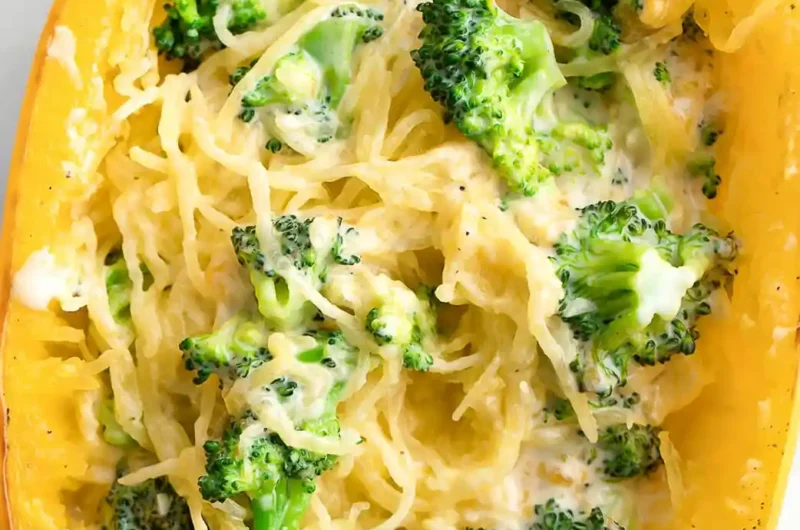
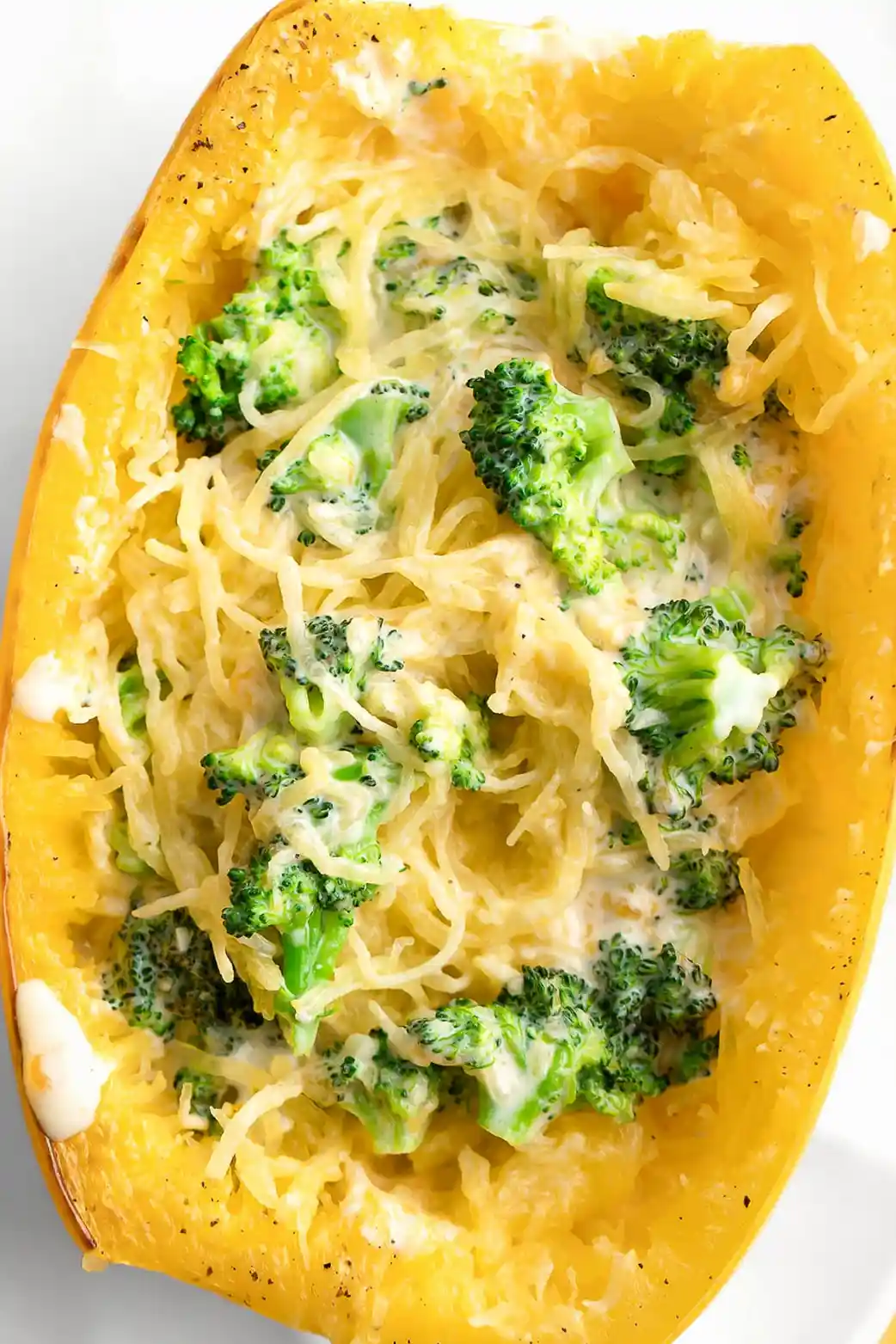
This nutrient-dense meal combines the tender strands of roasted spaghetti squash with a rich, creamy broccoli and cheese sauce. It serves as a satisfying low-carb alternative to traditional pasta while providing a significant dose of vitamins and minerals.
List of ingredients
- 3 lb spaghetti squash (one medium squash) – provides the base pasta-like texture.
- 1/2 tsp olive oil or avocado oil – used for roasting the squash.
- salt and pepper to taste – for basic seasoning.
- 2 cups chopped fresh broccoli – chopped into very small pieces.
- 2-3 cloves garlic – peeled and minced finely.
- 1/2 cup heavy cream – creates the creamy sauce base.
- 1 TBSP cream cheese (optional) – adds extra richness and thickness.
- 1/4 tsp garlic powder – adds a second layer of garlic flavor.
- 1/2 cup freshly grated parmesan cheese – provides a salty, sharp kick.
- 1/4 cup freshly grated cheddar cheese (medium or sharp) – plus extra for topping.
step-by-step instructions
- Prepare the oven and squash: Preheat your oven to 400°F. To make the squash easier to cut, pierce the skin several times with a knife and microwave it for 3-5 minutes (3 minutes for smaller squash, 4-5 for larger ones).
- Cut and prep the squash: Trim the ends of the squash to create flat surfaces for stability. Carefully slice the squash in half lengthwise with a sharp chef’s knife and scoop out all the seeds.
- Season and roast: Rub the cut side of each squash half with oil and season with salt and pepper. Place them cut side down on a rimmed baking sheet and roast for 35-40 minutes, or until the flesh is tender and easily pierced with a fork.
- Fluff the strands: Remove the squash from the oven and let it cool slightly. Flip the halves over and use a fork to scrape the interior, separating the flesh into spaghetti-like strands.
- Sauté the vegetables: While the squash is roasting, heat a drizzle of oil in a medium pot or skillet over medium-high heat. Sauté the chopped broccoli and minced garlic until the broccoli is bright green and tender.
- Build the cream sauce: Pour in the heavy cream and stir in the cream cheese if using. Continue to cook until the mixture begins to bubble.
- Finish the cheese sauce: Remove the pot from the heat and whisk in the grated parmesan cheese. Stir in the garlic powder, salt, and pepper to taste.
- Assemble and serve: Pour the broccoli cheese sauce directly into the fluffed squash boats and stir to combine. Top with extra cheddar cheese and place back in the warm oven for a few minutes until the cheese is melted.
Advanced Roasting Techniques
Selecting the Ideal Spaghetti Squash
Choose a squash that feels heavy for its size, as this indicates a higher moisture content and a denser interior. The skin should be a consistent yellow-gold color without any soft spots, bruises, or deep cracks. A medium squash weighing approximately 3 pounds is the best size for consistent roasting times.
Optimizing the Cutting Process
Cutting into a raw squash can be dangerous due to its hard skin. Trimming the ends first creates a stable base, preventing the squash from rolling while you slice lengthwise. Using a heavy-duty chef’s knife with a sharp edge ensures a clean cut through the dense rind.
Managing Roast Times
Check the squash starting at the 30-minute mark if the fruit is smaller than 3 pounds. Overcooking leads to soggy, mushy strands that lose their signature pasta-like texture. The ideal state is when the flesh is tender but still holds its structural integrity.
Using the Microwave Shortcut
Microwaving the squash for a few minutes before slicing softens the outer rind significantly. This reduces the physical effort required to cut the squash in half and decreases the risk of the knife slipping. Ensure the skin is pierced to allow steam to escape and prevent bursting.
Sauce Consistency and Flavor
Achieving the Right Broccoli Texture
Chop the broccoli into very small, uniform pieces to ensure they cook quickly and integrate well with the squash strands. Sautéing them until they are bright green ensures they remain vibrant and slightly crisp, preventing the dish from becoming overly soft.
Emulsifying the Cream Base
The combination of heavy cream and cream cheese creates a stable emulsion that clings to the squash. Cream cheese acts as a thickener and adds a slight tang that balances the richness of the heavy cream. If omitting cream cheese, you may need to simmer the cream slightly longer to reduce it.
Incorporating Hard Cheeses
Freshly grated parmesan is superior to pre-shredded versions because it melts more smoothly without the clumping caused by anti-caking agents. Stirring the cheese in after removing the sauce from the heat prevents the proteins from seizing, resulting in a velvety texture.
Layering Garlic Flavors
Using both fresh minced garlic and garlic powder provides a complex flavor profile. The fresh garlic offers a pungent, aromatic bite during the sauté process, while the powder distributes a consistent, savory background note throughout the entire sauce.
Customizations and Variations
Adding Lean Proteins
To turn this into a more filling meal, you can mix in cooked shredded chicken breast or sautéed shrimp. Adding these proteins directly into the cheese sauce before pouring it over the squash ensures they are evenly coated and heated through.
Experimenting with Green Vegetables
While broccoli is the primary vegetable, you can substitute it with chopped kale, spinach, or cauliflower florets. Spinach should be added at the very end of the sauté process, as it wilts much faster than broccoli and can become overcooked if simmered too long.
Modifying the Cheese Blend
For a sharper taste, replace the medium cheddar with an extra-sharp white cheddar or Gruyère. Pepper jack cheese can be used as a substitute for cheddar if you prefer a mild spicy kick integrated directly into the sauce.
Adding a Spicy Element
A pinch of crushed red pepper flakes added during the sauté step provides a subtle heat that cuts through the richness of the cream and cheese. For a more intense flavor, a small amount of smoked paprika can be stirred into the sauce for a woody, charred note.
Storage and Meal Prep
Meal Prepping Roasted Squash
You can roast several spaghetti squashes in advance and store them in the refrigerator for up to 3-4 days. Store the roasted halves or the scooped strands in airtight containers to prevent them from absorbing other odors from the fridge.
Cold Storage Guidelines
If storing the completed dish, it is best to transfer it from the squash boats into a glass casserole dish. This allows for more uniform cooling and makes it easier to portion out and reheat without damaging the squash shell.
Best Reheating Methods
Reheat the dish in the oven at 350°F until the sauce is bubbling and the cheese is melted again. If using a microwave, add a tablespoon of water or cream to the dish and cover it with a lid to steam the squash and prevent the sauce from breaking.
Troubleshooting Common Issues
Managing Excess Moisture
If the roasted squash releases too much water after fluffing, drain the liquid before adding the sauce. You can also pat the strands dry with a paper towel to ensure the cheese sauce adheres to the squash rather than sliding off.
Fixing a Grainy Sauce
A grainy texture in the cheese sauce usually occurs if the cheese is boiled at too high a temperature. To fix this, remove the pan from the heat and whisk vigorously, or add a tiny splash of warm cream to help re-emulsify the fats.
Handling Tough Squash Strands
If the strands feel tough or woody, the squash was likely undercooked. Return the squash to the oven for another 5-10 minutes, or microwave the fluffed strands for 60 seconds to soften the fibers.
Frequently Asked Questions
Can I use frozen broccoli instead of fresh?
Yes, you can use frozen broccoli, but you must thaw it and pat it dry first. Frozen broccoli contains more water, which can dilute the cheese sauce if not properly drained before sautéing.
What is the best substitute for heavy cream?
Full-fat coconut milk is a suitable alternative for a dairy-free version, though the flavor will be slightly different. Alternatively, you can use half-and-half thickened with a small cornstarch slurry.
How do I prevent the squash from becoming mushy?
Avoid over-roasting the squash and be gentle when fluffing the strands with your fork. Once the squash is tender enough to be pierced easily, remove it from the oven immediately.
Can I use a different type of squash?
While butternut squash can be used, it does not separate into strands. You would need to cube or mash the butternut squash, which would change the texture of the dish from a pasta alternative to a casserole.
Print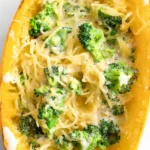
Cheesy Broccoli Spaghetti Squash
- Total Time: 50 minutes
- Yield: 2 servings 1x
- Diet: Vegetarian
Description
Get your veggie fix with this crave-worthy Cheesy Broccoli Spaghetti Squash recipe! Recipe yields 2 vegetarian main dish sized servings or can be portioned into 4 servings as a veggie side dish.
Ingredients
- 3 lb spaghetti squash
- ½ tsp olive oil
- salt and pepper to taste
- 2 cups chopped fresh broccoli
- 2–3 cloves garlic
- ½ cup heavy cream
- 1 TBSP cream cheese
- ¼ tsp garlic powder
- ½ cup freshly grated parmesan cheese
- ¼ cup freshly grated cheddar cheese
Instructions
- Preheat: Preheat oven to 400°F.
- Prepare Squash: Cut the squash in half lengthwise, scoop out the seeds, rub the cut side with oil, and season with salt and pepper.
- Roast: Place squash cut side down on a rimmed baking dish and roast for 35-40 minutes or until tender.
- Fluff: Remove from oven, flip the squash over, and use a fork to separate the squash into strands.
- Sauté: Sauté chopped broccoli and minced garlic in oil over medium-high heat until tender.
- Simmer: Add heavy cream and cream cheese, mix well, and once bubbling, remove from heat.
- Whisk: Whisk in parmesan cheese and season with garlic powder, salt, and pepper.
- Combine: Pour broccoli cheese sauce over each fluffed squash boat, stir to mix, and top with extra cheese if desired.
Notes
Spaghetti squash can be roasted and stored in the fridge for 3-4 days. For meal prep, serve casserole-style in a baking dish.
- Prep Time: 10 minutes
- Cook Time: 40 minutes
- Category: Main Dish
- Method: Roasting
- Cuisine: American
Nutrition
- Serving Size: 1 serving
- Calories: 579 kcal
- Sugar: 17 g
- Sodium: 645 mg
- Fat: 39 g
- Saturated Fat: 23 g
- Unsaturated Fat: 13 g
- Trans Fat: 0.01 g
- Carbohydrates: 44 g
- Fiber: 10 g
- Protein: 20 g
- Cholesterol: 106 mg
Keywords: Broccoli Cheese Stuffed Spaghetti Squash, Cheesy Broccoli Spaghetti Squash