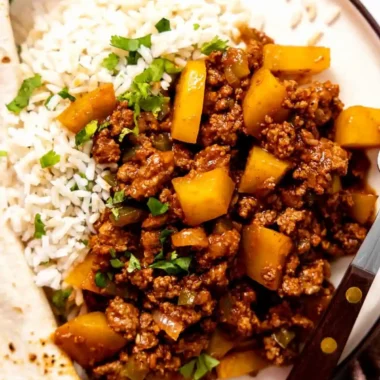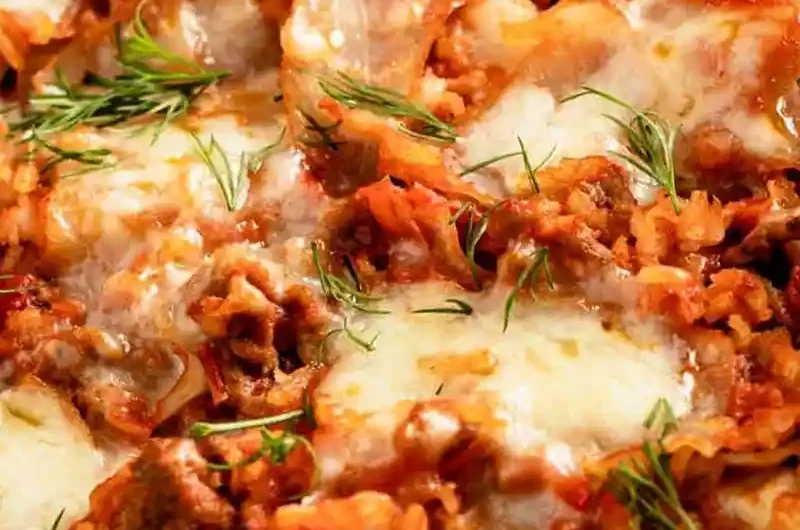
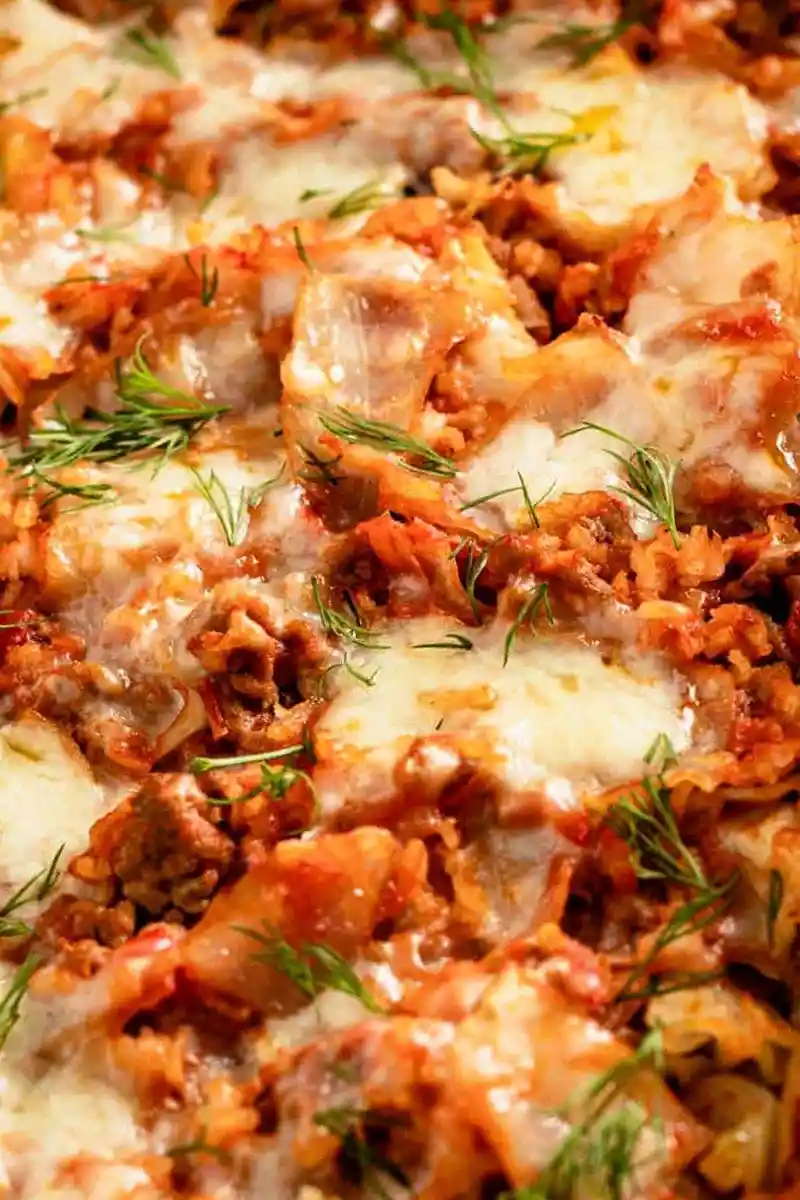
This hearty casserole provides all the flavors of traditional stuffed cabbage rolls without the labor of rolling individual leaves. It combines savory ground beef, tender cabbage, and melted mozzarella for a satisfying family meal. This budget-friendly dish is ideal for those seeking a comforting dinner with minimal effort.
List of ingredients
- 1 pound ground beef (or mixed ground meat) – use lean beef for less fat.
- 1 medium yellow onion, diced – provides a savory aromatic base.
- 1 ½ teaspoons fresh garlic, minced – adds a pungent, depth of flavor.
- ¼ teaspoon cajun spice – adds a zesty, peppery kick.
- 1 teaspoon sweet paprika – gives a mild, sweet earthy tone.
- 1 tablespoon white sugar (or brown sugar, or ½ tablespoon liquid sweetener) – balances the acidity of the tomatoes.
- 1 can (15 oz) tomato sauce or puree (or tomato soup) – creates a thick, rich sauce.
- 1 can (15 oz) chopped tomatoes in liquid – adds texture and moisture.
- 1 ½ cup cooked brown rice (or white rice) – acts as a binder and filler.
- 3 tablespoon olive oil, divided – used for sautéing vegetables and meat.
- 6 cups green cabbage, cut into 1 or 1 ½ inch cubes – the main vegetable component.
- ¼ cup water – helps steam the cabbage during sautéing.
- 1 cup carrot, medium grated – adds natural sweetness and color.
- 1 cup microbial-rennet mozzarella, grated – creates a bubbly, cheesy topping.
- 1 teaspoon salt – adjust to your taste preference.
- ½ teaspoon black pepper – adds a subtle heat.
- Dill or parsley – for fresh garnish before serving.
step-by-step instructions
- Sauté Aromatics: Heat olive oil in a medium-sized skillet or Dutch oven over medium-high heat. Once shimmering, cook the diced onion until softened (about one minute), then stir in the grated carrots and cook for one more minute.
- Brown the Beef: Add the ground beef to the vegetables. Use a spatula to break the meat apart and cook until it is no longer pink, but do not cook it through entirely as it will finish in the oven. Stir in the minced garlic and sauté for another minute, then drain any excess liquid.
- Simmer the Sauce: Stir in the black pepper, sugar, salt, sweet paprika, and Cajun seasoning. Pour in the tomato sauce and chopped tomatoes, stirring well to combine. Reduce heat to medium-low and simmer for 10 minutes, adjusting salt and pepper if needed.
- Prepare Oven and Dish: Preheat your oven to 350 degrees Fahrenheit. Lightly spray an 8×11-inch or 2-quart baking dish with cooking oil to prevent sticking.
- Combine with Rice: Remove the beef mixture from the heat and transfer it to a deep pot or Dutch oven. Fold in the cooked rice and perform a final seasoning check with salt and pepper.
- Prepare the Cabbage: Clean your skillet and heat the remaining tablespoon of olive oil over medium heat. Add the cubed cabbage and ¼ cup of water, simmering until the cabbage softens and the water evaporates completely.
- Layer the Casserole: Spread half of the softened cabbage into the bottom of the prepared baking dish. Layer half of the beef and rice mixture over the cabbage, then repeat with the remaining cabbage and meat.
- Add Cheese and Bake: Even out the top layer and sprinkle with grated mozzarella. Cover the dish with foil and bake for 20 minutes.
- Final Browning: Remove the foil and bake for an additional 20 minutes until the cheese is bubbly and melted. For a golden brown finish, broil for 1-2 minutes.
- Garnish and Serve: Top the hot casserole with fresh dill or parsley and a dollop of sour cream.
Optimizing Your Cabbage Choice
Using Green Cabbage for Structure
Green cabbage is the traditional choice for this casserole because its dense leaves hold their shape well during the baking process. It provides a satisfying crunch and a classic flavor profile that complements the beef. Ensure you cut it into consistent cubes to ensure even cooking.
Choosing Savoy Cabbage for Tenderness
Savoy cabbage has a crinkled texture and thinner leaves, which makes it more tender than green cabbage. It absorbs the tomato sauce more efficiently, resulting in a juicier bite. If you prefer a softer texture in your casserole, this is the best alternative.
Incorporating Napa Cabbage for Sweetness
Napa cabbage is milder and sweeter, providing a different flavor dynamic to the dish. Because it has a higher water content, it will soften much faster during the sautéing phase. Be careful not to overcook it to avoid a mushy consistency.
Managing the Color of Red Cabbage
Red cabbage adds a vibrant color but can bleed purple hues into the beef and rice mixture. While the taste remains delicious, the visual appeal changes significantly. If using red cabbage, be aware that the entire dish may take on a darker, purplish tint.
Meat and Protein Variations
Selecting Lean Ground Beef
Using a lean ground beef (such as 90% lean) reduces the amount of saturated fat in the final dish. This prevents the casserole from having an oily layer on top after baking. If using fattier beef, ensure you drain the pan thoroughly after browning.
Using Ground Turkey for a Lighter Meal
Ground turkey is an excellent substitute for those seeking a lower-calorie protein option. Since turkey is leaner, you may need to add a small amount of extra olive oil to prevent the meat from drying out. It pairs very well with the paprika and Cajun spices.
Preparing Ground Chicken for Mild Flavor
Ground chicken offers a very mild taste that allows the sweetness of the carrots and tomatoes to shine. Like turkey, it can dry out quickly, so avoid overcooking it during the initial browning stage. Keep it slightly underdone before layering.
Managing Meat Moisture
To keep the meat tender, avoid cooking the beef until it is completely browned and dry in the skillet. The residual moisture helps the meat stay juicy as it simmers in the oven. Draining only the excess grease while leaving some natural juices is key.
Grain and Base Alternatives
Cooking Brown Rice for Hearty Texture
Brown rice adds a nutty flavor and a chewy texture that stands up well to the heavy tomato sauce. It also increases the fiber content of the meal. Ensure the rice is fully cooked and cooled slightly before mixing it with the beef.
Using White Rice for a Softer Feel
White rice is a faster alternative and creates a more cohesive, softer filling. It absorbs the flavors of the sauce more readily than brown rice. If using white rice, be careful not to overcook it initially, as it may become too soft after baking.
Switching to Quinoa for Extra Protein
Quinoa is a gluten-free alternative that adds a boost of complete protein and a slight crunch. It works well in this recipe and maintains its structure during the baking process. Use a 1:1 replacement ratio for the cooked rice.
Using Cauliflower Rice for Low-Carb Needs
For a ketogenic or low-carb version, substitute the grains with steamed cauliflower rice. Since cauliflower releases more water, sauté it briefly to remove excess moisture before adding it to the beef. This prevents the casserole from becoming too watery.
Flavor and Spice Adjustments
Balancing Tomato Acidity with Sugar
The addition of white or brown sugar is a professional technique used to neutralize the sharp acidity of canned tomatoes. This creates a more rounded, savory flavor. If you prefer no added sugar, a small amount of honey or maple syrup can provide the same balance.
Adding Depth with Smoked Paprika
While sweet paprika is traditional, substituting it with smoked paprika adds a woody, campfire-like depth. This mimics the flavor of smoked meats and adds complexity to the ground beef. Use it sparingly to avoid overpowering the cabbage.
Customizing the Cajun Spice Level
Cajun seasoning provides a unique heat and herbal profile that differentiates this from standard cabbage rolls. If you are sensitive to spice, reduce the amount to a pinch. For those who love heat, adding a pinch of cayenne pepper can enhance the zest.
Enhancing the Dish with Fresh Herbs
Fresh dill is the most traditional garnish for Ukrainian-style cabbage dishes, offering a bright, citrusy contrast. Parsley is a great alternative for a clean, grassy finish. Always add these herbs after baking to preserve their color and aroma.
Assembly and Baking Techniques
Proper Cabbage Slicing for Consistency
Cutting cabbage into 1 to 1.5 inch cubes ensures that the vegetable maintains some bite after 40 minutes of baking. If the cabbage is sliced too thinly, it may disintegrate into the sauce. Consistent sizing ensures every bite has a balance of meat and veg.
Layering the Mixture for Best Consistency
Layering the cabbage and beef mixture prevents the ingredients from separating. By splitting the cabbage into two layers, you ensure that the top and bottom of the casserole are equally tender. This method distributes the moisture evenly throughout the dish.
Managing the Baking Foil for Moisture Control
Covering the dish with foil for the first 20 minutes traps steam, which helps soften the cabbage and cook the meat through. Removing the foil for the final 20 minutes allows excess moisture to evaporate and the cheese to brown. This two-step process is essential for the right texture.
Achieving the Perfect Cheese Crust
To get a professional golden-brown top, use the broiler setting for the last two minutes of cooking. Keep a close eye on the oven, as cheese can go from melted to burnt very quickly. The high heat caramelizes the mozzarella for a savory crust.
Preservation and Storage Methods
Proper Refrigeration for Leftovers
Allow the casserole to cool to room temperature before transferring it to an airtight glass container. This prevents condensation from forming inside the lid, which can make the cabbage soggy. It will remain fresh and tasty in the refrigerator for 3 to 4 days.
Freezing the Casserole Before Baking
You can assemble the casserole completely, excluding the cheese, and freeze it in a foil-covered dish for up to 3 months. This is an excellent meal-prep strategy. When ready to eat, thaw it in the refrigerator for 24 hours before baking.
Freezing the Casserole After Cooking
Cooked casserole can be frozen for up to one month. Portion the leftovers into smaller containers to make reheating easier. Ensure the containers are airtight to prevent freezer burn from affecting the flavor of the cabbage.
Thawing Process for Frozen Casseroles
Always thaw frozen casserole in the refrigerator rather than on the counter to maintain food safety. For unbaked dishes, add the cheese only after the dish has thawed. This ensures the cheese melts evenly without burning while the center heats up.
Reheating and Serving Suggestions
Reheating in the Oven for Best Texture
To maintain the structure of the cabbage and the crispness of the cheese, reheat leftovers in the oven at 350 degrees Fahrenheit. Cover with foil to keep the moisture in, then uncover for the last 5 minutes. This prevents the dish from becoming mushy.
Using the Microwave for Quick Warm-ups
While the microwave is faster, it can lead to soggy cabbage due to the way steam is trapped. If using a microwave, heat in short 30-second bursts and stir gently. Using a microwave-safe lid that allows some steam to escape is recommended.
Serving with Fresh Cucumber Salad
A chilled cucumber salad with vinegar and dill provides a sharp, refreshing contrast to the rich, cheesy casserole. The acidity of the salad cuts through the heaviness of the beef and cheese. This is the most traditional pairing for this meal.
Pairing with Roasted Green Vegetables
Roasted asparagus or air-fryer Brussels sprouts add an earthy element to the plate. These sides provide additional nutrients and a different texture than the softened cabbage in the casserole. Keep the seasoning simple with just olive oil and salt.
Common Troubleshooting Tips
Managing Excess Liquid at the Bottom
It is normal for some liquid to accumulate at the bottom of the dish due to the cabbage and tomatoes. If there is too much, you can carefully tilt the baking dish over the sink to drain the excess. Alternatively, serve the casserole in shallow bowls to enjoy the sauce.
Preventing Soggy Rice in the Filling
Over-cooking the rice before adding it to the beef can lead to a mushy texture. Cook the rice to al dente (firm to the bite) because it will continue to absorb liquid and soften in the oven. Using brown rice generally helps prevent this issue.
Fixing Overcooked or Mushy Cabbage
If your cabbage becomes too soft, you may have sautéed it for too long before layering. To fix this in future batches, reduce the initial simmering time. Ensure the water has completely evaporated before adding the cabbage to the baking dish.
Preventing the Cheese from Burning
If the mozzarella browns too quickly before the center is hot, lower the oven temperature by 25 degrees. You can also keep the foil on for an extra 5-10 minutes. Using a mix of mozzarella and a harder cheese can also create a more heat-resistant crust.
Frequently Asked Questions
How do you cut cabbage for a casserole?
First, cut the cabbage in half, then quarters, and remove the core. Lay the quarters flat and slice them into strips, then cut those strips into 1 to 1.5 inch squares. This size ensures the cabbage stays chunky and doesn’t disappear into the sauce.
Can you freeze cabbage roll casserole?
Yes, you can freeze it both before and after baking. Wrap the dish tightly in aluminum foil or use an airtight container to prevent freezer burn. Unbaked casserole lasts 3 months, while cooked leftovers last about one month.
What to serve with cabbage roll casserole?
This dish pairs best with light, acidic sides like a Greek salad or a cucumber salad. For a more filling meal, serve it with warm garlic bread or a side of roasted carrots. Avoid heavy starches like mashed potatoes since the dish already contains rice.
How long to bake cabbage roll casserole?
The total baking time is 40 minutes at 350 degrees Fahrenheit. The first 20 minutes are spent covered with foil to steam the ingredients. The final 20 minutes are uncovered to melt and brown the cheese topping.
How many calories in cabbage roll casserole?
This recipe yields approximately 6 servings, with each serving containing about 319 calories. This varies depending on the lean percentage of the beef used and the amount of cheese added to the top.
Should you wash cabbage?
Yes, you should always wash your vegetables. Remove the outermost leaves of the cabbage, chop it into the required size, and rinse it under cool running water. Do not chop the cabbage until you are ready to cook it to maintain freshness.
How long do you cook ground beef?
Browning a pound of ground beef typically takes 7 to 10 minutes. For this specific recipe, stop cooking once the meat is no longer pink, as it will finish cooking during the baking process, ensuring it stays tender.
How do you cook ground beef without drying it out?
Avoid draining every drop of fat from the pan; leave about a tablespoon of grease to keep the meat moist. Additionally, do not overcook the beef during the browning stage, as the oven’s heat will complete the process gently.
Print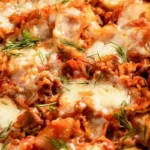
Cheesy Ground Beef and Cabbage Casserole
- Total Time: 60 minutes
- Yield: 6 servings 1x
- Diet: General
Description
This easy and budget-friendly lazy cabbage roll casserole has layers of ground beef, making it cheesy and satisfying, offering all the flavors of traditional cabbage rolls without the effort of rolling.
Ingredients
- 1 pound ground beef
- 1 medium yellow onion, diced
- 1 ½ teaspoons fresh garlic, minced
- ¼ teaspoon cajun spice
- 1 teaspoon sweet paprika
- 1 tablespoon white sugar
- 1 can (15 oz) tomato sauce or puree
- 1 can (15 oz) chopped tomatoes in liquid
- 1 ½ cup cooked brown rice
- 3 tablespoon olive oil, divided
- 6 cups green cabbage, cut into 1 or 1 ½ inch cubes
- 1/4 cup water
- 1 cup carrot, medium grated
- 1 cup mozzarella, grated
- 1 teaspoon salt
- ½ teaspoon black pepper
- Dill or parsley for serving
Instructions
- Step: Heat olive oil in a medium-sized skillet or Dutch oven over medium-high heat; cook the onion until softened and add the carrot, cooking for an additional minute.
- Step: Add the beef to the veggie mixture, brown using a spatula to break it apart until no longer pink, then stir in minced garlic and sauté for another minute; drain excess liquid if necessary.
- Step: Stir in black pepper, sugar, salt, sweet paprika, Cajun seasoning, tomato sauce, and chopped tomatoes.
- Step: Reduce heat to medium-low and simmer the mixture for 10 minutes.
- Step: Preheat oven to 350 degrees Fahrenheit and spray an 8×11-inch or 2-quart casserole dish with cooking oil.
- Step: Transfer the beef mixture to a deep pot, mix in the cooked rice, and adjust seasoning with salt and black pepper.
- Step: Heat the remaining tablespoon of oil in the skillet, add chopped cabbage with ¼ cup of water, and simmer until cabbage softens and water evaporates.
- Step: Transfer half of the cabbage to the baking dish, layer with the beef and rice mixture, repeat the process for a second layer, and sprinkle with mozzarella cheese.
- Step: Cover with foil and bake for 20 minutes, then remove foil and bake for another 20 minutes until the cheese is melted and bubbly.
- Step: Garnish with dill, parsley, and a dollop of sour cream before serving.
Notes
Cutting cabbage into larger 1.5-inch cubes makes the dish juicier. Some liquid at the bottom of the dish after baking is normal and can be drained if preferred.
- Prep Time: 20 minutes
- Cook Time: 40 minutes
- Category: Main Course
- Method: Baking
- Cuisine: Ukrainian
Nutrition
- Serving Size: 1 serving
- Calories: 319 kcal
- Sugar: 7 g
- Sodium: 200 mg
- Fat: 14 g
- Saturated Fat: 5 g
- Unsaturated Fat: 8 g
- Trans Fat: 0.3 g
- Carbohydrates: 24 g
- Fiber: 4 g
- Protein: 23 g
- Cholesterol: 62 mg
Keywords: cabbage roll casserole, lazy cabbage rolls, ground beef casserole, Ukrainian dinner, easy family meal