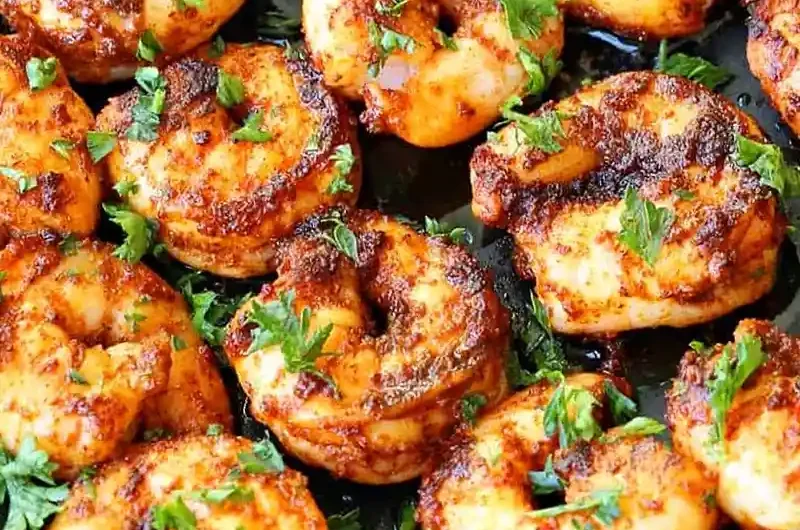
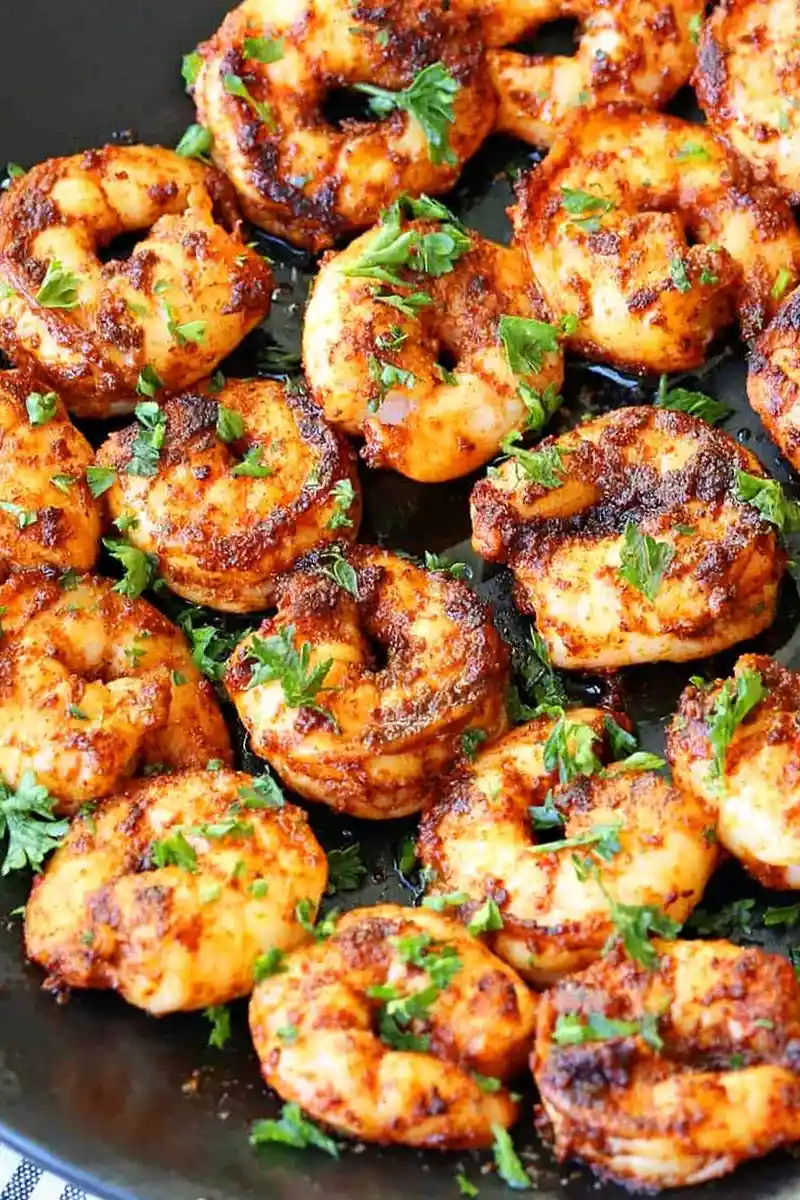
This fast-acting recipe delivers a punch of bold, spicy flavor in only 15 minutes. It is a versatile protein option that works perfectly as a healthy main course or a zesty appetizer.
List of ingredients
- 2 tablespoons olive oil – used for sautéing the shrimp.
- 1 pound raw shrimp – extra-large size, 21-25 per pound, peeled and deveined.
- 1/2 teaspoon Diamond Crystal kosher salt – adjust to 1/4 teaspoon if using table salt.
- 1 tablespoon chili powder – provides the base earthy heat.
- 1 teaspoon garlic powder – adds a concentrated savory depth.
- 1 teaspoon smoked paprika – contributes a woody, charred flavor.
- 1/4 teaspoon cayenne pepper – controls the level of spicy kick.
- 2 tablespoons chopped parsley – used for fresh garnish.
step-by-step instructions
- Heat the Oil: Place a large 12-inch skillet over medium-high heat and add the olive oil.
- Season the Shrimp: Add the raw shrimp to the pan along with the kosher salt, chili powder, garlic powder, smoked paprika, and cayenne pepper.
- Cook Until Opaque: Sauté the shrimp until they are cooked through and opaque, which typically takes about 5 minutes. If using extra-large shrimp, arrange them in a single layer and cook for 2-3 minutes per side. For smaller shrimp, stir frequently for a total of 5 minutes.
- Finish and Serve: Garnish the cooked shrimp with chopped parsley and serve over cauliflower rice, mashed cauliflower, or a bed of fresh spinach or arugula.
Advanced Cooking Techniques for Shrimp
Optimizing Pan Space for Better Searing
Using a wide 12-inch skillet is critical to avoid overcrowding the pan. When shrimp are packed too closely, they release moisture and steam instead of searing, which prevents the spices from caramelizing. A single layer ensures every piece makes direct contact with the hot oil.
Precise Timing for Extra-Large Shrimp
Extra-large shrimp require a different approach than small ones to avoid a rubbery texture. Instead of constant stirring, let them sear undisturbed for 2 to 3 minutes on one side. This creates a flavorful crust before you flip them to finish the other side.
Managing Small Shrimp Texture
Smaller shrimp cook much faster and can overcook in seconds. Use a frequent stirring motion to ensure they cook evenly and don’t stick to the pan. Total cooking time should stay around 5 minutes to maintain a tender snap.
Mitigating Airborne Spice Fumes
Heating chili powder and cayenne pepper over medium-high heat can release capsaicin into the air. To prevent respiratory irritation, always turn on your range hood fan or open a nearby window. This ensures a comfortable cooking environment while the spices bloom in the oil.
Identifying the Perfect Doneness
Shrimp are finished when they turn from translucent gray to an opaque pinkish-white color. They should curl into a ‘C’ shape; if they curl tightly into an ‘O’ shape, they are likely overcooked. Remove them from the heat immediately once the opacity is reached.
Ingredient Substitutions and Variations
Alternative Cooking Fats
While olive oil is standard, you can use ghee or avocado oil for a higher smoke point. Avocado oil is particularly useful if you prefer to use higher heat for a deeper sear without the oil smoking. Ghee adds a rich, buttery flavor that complements the garlic powder.
Swapping the Fresh Garnish
If parsley is unavailable, fresh cilantro is an excellent substitute that pairs well with the chili and paprika. You can also use sliced green onions for a sharper, more pungent finish. These herbs provide a necessary brightness to cut through the heat.
Customizing the Heat Level
The amount of cayenne pepper directly controls the spiciness of the dish. For a very mild flavor, use just a pinch of cayenne. For a significant kick, increase the amount to 1/2 teaspoon or more depending on your heat tolerance.
Salt Calibration Across Brands
Different salt brands have different densities; Diamond Crystal kosher salt is coarser and less salty by volume than table salt. If you are using Morton kosher salt or standard table salt, reduce the measurement to 1/4 teaspoon to avoid over-seasoning.
Substituting Garlic Powder
If you prefer fresh garlic, use 3 cloves of minced garlic instead of powder. Add the fresh garlic to the oil for 30 seconds before adding the shrimp to prevent the garlic from burning. Fresh garlic offers a more pungent, sharp taste compared to the mellow depth of powder.
Serving and Pairing Ideas
Low-Carb Base Options
Serving these shrimp over cauliflower rice is a great way to keep the meal low-carb and gluten-free. You can make cauliflower rice by pulsing raw florets in a food processor until they reach a grain-like consistency. Sauté them briefly in a separate pan before plating.
Using Creamy Cauliflower Puree
For a more elegant presentation, serve the spicy shrimp over mashed cauliflower. Steam cauliflower until very tender, then blend it with a touch of butter or olive oil and salt. The creamy texture provides a cooling contrast to the spicy shrimp seasoning.
Fresh Green Bed Pairings
A bed of fresh baby spinach or arugula adds a refreshing element to the dish. Arugula, in particular, has a peppery flavor that complements the smoked paprika. Toss the greens in a light lemon vinaigrette before topping them with the hot shrimp.
Taco and Wrap Applications
These shrimp are ideal for tacos using corn or flour tortillas. Add shredded cabbage, sliced avocado, and a squeeze of fresh lime juice to balance the heat. For a healthier wrap, use large collard green leaves or lettuce cups.
Complementary Vegetable Sides
Steamed broccoli or roasted asparagus are excellent sides that don’t compete with the bold spices. The natural bitterness of broccoli helps cleanse the palate between bites of spicy shrimp. For extra flavor, toss the vegetables in a bit of lemon juice.
Storage and Reheating Guidelines
Airtight Refrigeration Methods
Store leftover shrimp in a shallow, airtight container to prevent them from being crushed. Keep the container in the coldest part of the refrigerator, away from the door. This preserves the texture and prevents the spices from degrading.
Safe Storage Duration
Cooked shrimp should be consumed within three days when stored in the refrigerator. After this period, the quality of the protein declines and the risk of spoilage increases. Always check for a fresh scent before consuming leftovers.
Gentle Microwave Reheating
To prevent the shrimp from becoming rubbery, reheat them on a low setting. Use 50% power in the microwave and cover the container with a damp paper towel. Heat in short 30-second bursts, stirring in between, until just warmed through.
Utilizing Cold Leftovers
Spicy shrimp are delicious when served cold in a shrimp salad. Mix the chilled shrimp with diced celery, red onion, and a dollop of Greek yogurt or mayonnaise. This transforms the hot meal into a refreshing lunch option.
Troubleshooting Common Issues
Preventing Rubberiness
The most common issue with shrimp is overcooking, which leads to a tough, rubbery texture. Always use a timer and watch for the color change. Remember that shrimp continue to cook for a minute after being removed from the pan due to residual heat.
Solving Spice Clumping
If your chili powder or garlic powder has clumped, sift it through a fine-mesh strainer before adding it to the pan. This ensures the shrimp are coated evenly rather than having pockets of concentrated spice. Alternatively, whisk the spices into the oil before adding the shrimp.
Managing Excess Moisture
If the shrimp release too much water in the pan, they will boil rather than sear. To prevent this, pat the raw shrimp completely dry with paper towels before adding them to the oil. This ensures an immediate sear and better spice adherence.
Balancing Over-Salted Shrimp
If the dish tastes too salty, add a splash of fresh lemon juice or a teaspoon of apple cider vinegar. The acidity helps neutralize the perception of salt on the tongue. You can also serve them with a side of unsalted avocado to balance the flavor.
Frequently Asked Questions
Can I use frozen shrimp for this recipe?
Yes, you can use frozen shrimp, but they must be completely thawed before cooking. Thaw them overnight in the refrigerator or place them in a sealed bag under cold running water. Cooking frozen shrimp directly will lead to uneven cooking and excessive water release.
Can I use pre-cooked shrimp?
No, pre-cooked shrimp should not be used in this recipe. They are already fully cooked, and the 5 minutes of sautéing required to bloom the spices would make the shrimp extremely tough and rubbery. If using pre-cooked shrimp, simply toss them in the heated oil and spices for 1 minute just to warm through.
Should the tails be left on the shrimp?
This is a matter of preference. Leaving the tails on provides a better visual presentation and makes the shrimp easier to handle as finger food. Removing the tails makes the shrimp easier to eat, especially when served over rice or in a salad.
Can I use a non-stick skillet?
Yes, a non-stick skillet works well for this recipe and makes cleanup easier. However, a stainless steel or cast iron skillet is superior for achieving a deeper sear and better caramelization of the spices.
How do I store the leftover spice mix?
If you make a large batch of the seasoning blend in advance, store it in a small glass jar with a tight lid. Keep it in a cool, dry place away from direct sunlight. The blend will stay fresh for several months if kept dry.
Print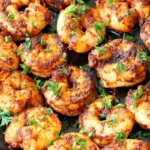
Chili Garlic Spicy Shrimp
- Total Time: 15 minutes
- Yield: 2 servings 1x
- Diet: Low Carb, Gluten-Free
Description
Bursting with flavor, these spicy shrimp are so easy to make. They’re ready in 15 minutes! Serve them on cauliflower rice or use them in salads and tacos.
Ingredients
- 2 tablespoons olive oil
- 1 pound raw shrimp (Extra-large, 21–25 per pound, peeled and deveined)
- 1/2 teaspoon Diamond Crystal kosher salt
- 1 tablespoon chili powder
- 1 teaspoon garlic powder
- 1 teaspoon smoked paprika
- 1/4 teaspoon cayenne pepper
- 2 tablespoons chopped parsley
Instructions
- Heat: Heat the olive oil in a large (12-inch) skillet over medium-high heat.
- Season: Add the shrimp, kosher salt, chili powder, garlic powder, smoked paprika, and cayenne pepper.
- Cook: Cook until the shrimp are cooked through and opaque, about 5 minutes. If using extra-large shrimp, place them on the skillet in a single layer and cook for 2-3 minutes per side. Cook smaller shrimp for a total of about 5 minutes, stirring often.
- Serve: Garnish with parsley and serve on cauliflower rice, mashed cauliflower, or a bed of green leaves such as spinach or arugula.
Notes
Cooking chili powder over medium-high heat may create fumes; use a range hood or open a window. Adjust cayenne pepper to control the heat level. Leftovers can be stored in an airtight container in the fridge for up to three days.
- Prep Time: 10 minutes
- Cook Time: 5 minutes
- Category: Main Course
- Method: Sautéing
- Cuisine: American
Nutrition
- Serving Size: 1 serving
- Calories: 306 kcal
- Sugar: 1 g
- Sodium: 1633 mg
- Fat: 17 g
- Saturated Fat: 2 g
- Unsaturated Fat: 15 g
- Trans Fat: 0 g
- Carbohydrates: 6 g
- Fiber: 2 g
- Protein: 32 g
- Cholesterol: 185 mg
Keywords: spicy shrimp, chili garlic shrimp, low carb, quick shrimp recipe