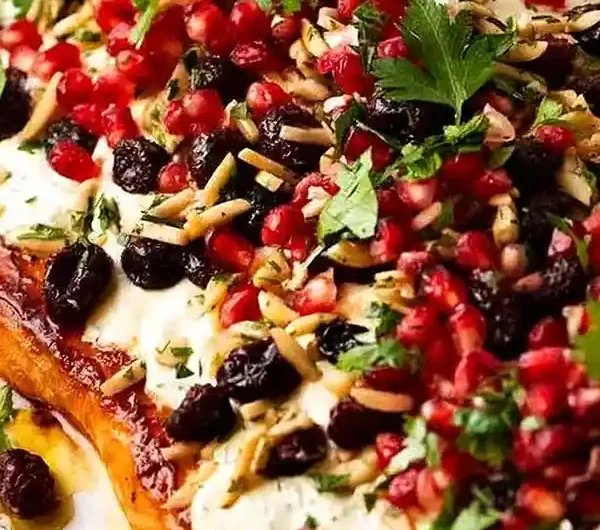
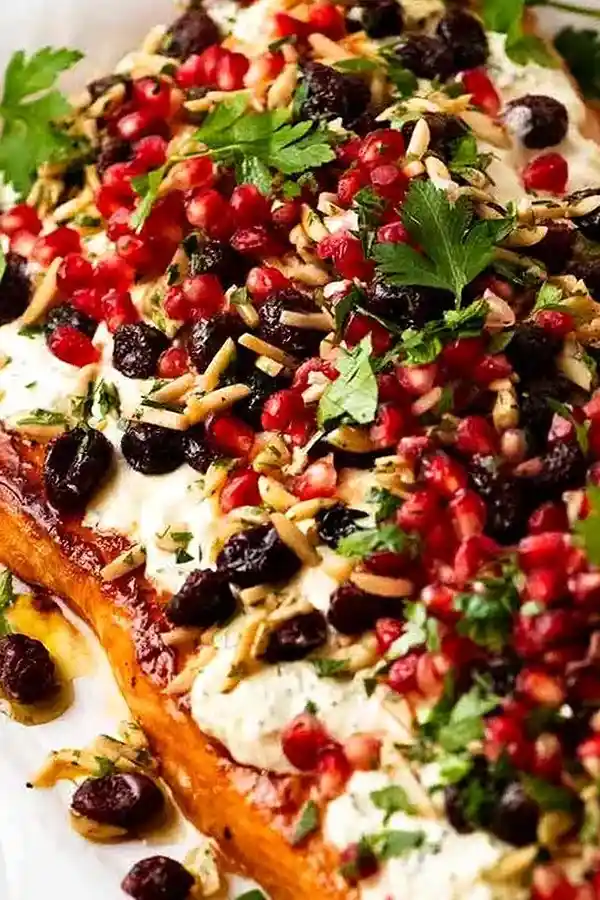
This festive baked salmon features a sweet honey-butter glaze and a refreshing creamy dill topping. It is an impressive center-piece dish that can be prepared in advance for a stress-free holiday meal.
List of ingredients
- 1.2 – 1.5 kg (2.4 – 3lb) salmon side – skin on, bones removed for easier handling.
- 2 1/4 tsp cooking/kosher salt – used for seasoning the fish.
- 1 tsp black pepper – for basic seasoning.
- 150g (5oz) unsalted butter – base for the honey glaze.
- 1/2 cup honey – provides sweetness and caramelization.
- 3 garlic cloves – finely minced using a press or knife.
- 1 1/2 cups full-fat sour cream – creates a thick, stable sauce base.
- 1/2 cup fresh dill – finely chopped and lightly packed.
- 1/2 eschallot (French onion) – finely grated.
- 1 1/2 tbsp lemon zest – adds citrus brightness to the sauce.
- 1/2 tsp cooking/kosher salt – for seasoning the dill sauce.
- 1 cup dried cranberries – for a tart and sweet topping.
- 1 cup orange juice – used to plump the dried cranberries.
- 1 cup slivered almonds – toasted for extra nuttiness.
- 1/3 cup parsley – roughly chopped for freshness.
- 1/4 tsp salt – for the tapenade seasoning.
- 1/4 tsp black pepper – for the tapenade seasoning.
- 1 tbsp extra virgin olive oil – binds the tapenade ingredients.
- 1 pomegranate – seeds only, for festive color.
- 1/4 cup parsley – roughly chopped for garnish.
- 3 tbsp lemon juice – drizzled over the final dish.
- 2 lemons – cut into 6 wedges each for serving.
step-by-step instructions
- Prepare Creamy Dill Sauce: Combine the sour cream, chopped dill, grated eschallot, lemon zest, and salt in a bowl. Mix until smooth and keep refrigerated until assembly.
- Plump the Cranberries: Heat orange juice in a saucepan over high heat until hot. Remove from heat, add dried cranberries, cover, and let stand for 15 minutes. Drain in a colander and discard the liquid.
- Mix Holiday Tapenade: In a bowl, combine the plumped cranberries, toasted slivered almonds, 1/3 cup chopped parsley, salt, pepper, and olive oil. Keep at room temperature.
- Prepare the Oven and Tray: Preheat your oven to 180°C/350°F. Line a baking tray with a double layer of foil and top with parchment paper, folding the foil edges slightly to create a cup for the glaze.
- Create Honey Glaze: Place butter, honey, and minced garlic in a saucepan over medium-high heat. Once it starts foaming, reduce heat to medium and simmer for 2 minutes before removing from heat.
- Season and Glaze Salmon: Place the salmon side on the parchment paper. Pour the hot honey glaze over the fish. Sprinkle with salt and black pepper, concentrating more salt on the thicker part of the fillet.
- Bake in Foil: Cover the salmon with a smaller piece of parchment paper and then a layer of foil. Seal the edges to form a loose parcel. Bake for 15 minutes.
- Broil for Color: Remove the salmon from the oven. Uncover the fish and fold down the foil and paper edges to expose the surface. Switch the oven to the high broiler/grill setting.
- Final Browning: Place the salmon on the middle shelf and broil for 7 to 10 minutes until the edges are caramelized. Ensure it is not too close to the heat element to avoid burning the paper.
- Cool the Salmon: Use the foil overhang to transfer the salmon to a serving platter immediately. Loosely cover with foil and let it cool for 15 to 60 minutes.
- Assemble the Dish: Spread a thick layer (about 0.8cm) of the creamy dill sauce over the cooled salmon. Pile the holiday tapenade on top, then scatter pomegranate seeds and remaining parsley.
- Final Touch: Squeeze the lemon juice over the assembled salmon and serve with extra lemon wedges on the platter.
Pro Tips for Choosing Your Salmon
Why a Whole Side is Preferred
Using a whole side of salmon ensures a stunning presentation for a centerpiece dish. It also allows for more even cooking across the fillet compared to individual pieces. If the side is too large for your tray, place it diagonally and allow a small amount of overhang on the thinner end.
The Importance of Skin-On Fish
Keeping the skin on is crucial for structural integrity. The skin prevents the flesh from flaking apart when you transfer the fish from the baking tray to the serving platter. It also acts as a moisture barrier, preventing the bottom of the fish from drying out during the baking process.
Checking for Pin Bones
Even when salmon is sold as boneless, pin bones may remain along the midline and belly. Run your fingers across the surface to locate any sharp points. Use fish boning tweezers or clean grooming tweezers to pinch and pull the bones out with conviction before seasoning.
Ingredient Alternatives and Substitutions
Using Rainbow Trout as a Salmon Alternative
Rainbow trout is an excellent substitute as it has a similar oily texture and mild flavor. Because trout sides are typically smaller, you may need to use multiple pieces or scale the ingredients down. The cooking times generally remain the same, though thinner fillets may cook faster.
Substituting Honey with Maple Syrup
Maple syrup can be used in place of honey for a different depth of sweetness. Because maple syrup is thinner, simmer it for an additional minute when making the glaze to ensure it reduces and thickens sufficiently. This prevents the glaze from becoming too watery on the platter.
Creating a Dairy-Free Creamy Base
To make this recipe dairy-free, replace the sour cream with a thick, high-quality hummus. Hummus provides the necessary thickness to act as a glue for the tapenade. For a better flavor match with hummus, substitute the parsley in the tapenade with fresh coriander or cilantro.
Substituting Almonds for Nut-Free Options
If you need a nut-free version, replace the slivered almonds with toasted pepitas or sunflower seeds. These seeds provide the same crunch and nutty profile without the allergens. Toast them in a dry skillet over medium heat for 2-3 minutes before adding them to the mix.
Alternative Dried Fruits for Cranberries
Dried sour cherries, golden raisins, or sultanas are great alternatives to dried cranberries. If using raisins or sultanas, add 2 tablespoons of lemon juice to the plumping water. This adds the tartness required to balance the richness of the honey-butter glaze.
Guide to Precise Cooking Temperatures
Targeting a Rare Internal Temperature
For those who prefer rare salmon, aim for an internal temperature of 43°C (110°F). At this stage, the center remains translucent and very moist. Be careful not to over-broil the top, as the residual heat will continue to cook the fish after it is removed from the oven.
Targeting a Medium-Rare Internal Temperature
Medium-rare salmon is reached at an internal temperature of 49°C (120°F). This is widely considered the ideal temperature for salmon, as it is opaque on the outside while remaining succulent and tender in the center.
Targeting a Medium Internal Temperature
For a fully cooked, medium texture, aim for 54°C (130°F). The fish will be opaque throughout and flake easily with a fork. If you prefer your salmon well-done, you can leave it under the broiler for a few extra minutes or move it to a lower shelf to cook through without burning.
Advanced Make-Ahead Strategies
Preparing the Holiday Tapenade in Advance
The tapenade can be assembled up to 24 hours before serving and stored in the refrigerator. However, keep the toasted almonds in a separate airtight container in the pantry. Stir the almonds into the tapenade just before serving to ensure they remain crunchy.
Making the Creamy Dill Sauce Early
The dill sauce can be made 24 hours in advance and kept chilled in the fridge. Cold sauce is actually preferred for assembly, as it creates a better contrast with the warm fish. Ensure it is stirred well before spreading to redistribute any settled ingredients.
Preparing the Honey Butter Glaze Ahead of Time
You can simmer the honey, butter, and garlic a day early and store the mixture in the refrigerator. Since the butter will solidify when cold, you will need to gently reheat the glaze until it is liquid again before pouring it over the salmon.
Storage and Proper Reheating Methods
Safe Refrigeration and Storage Limits
Leftover baked salmon with the dill sauce and toppings will keep in the refrigerator for 3 to 4 days. Store the fish in an airtight container to prevent it from absorbing other odors from the fridge. For the best quality, allow leftovers to come naturally to room temperature before eating.
Why You Should Avoid Microwaving the Sauce
Avoid reheating this dish in the microwave or oven once the sour cream sauce has been applied. High heat causes the emulsion in the sour cream to break, resulting in a melted, watery mess. It is best to eat the leftovers cold or at room temperature.
Serving the Salmon at Room Temperature
This dish is designed to be served warm or at room temperature rather than piping hot. This flexibility removes the stress of timing the meal perfectly. If the honey-butter juices have solidified, a very low oven (50°C/120°F) for 2 minutes can liquify them without melting the sauce.
Common Troubleshooting Solutions
Preventing the Dill Sauce from Melting
If you apply the sour cream sauce to salmon that is still piping hot, the sauce will liquefy and slide off the fish. To prevent this, let the salmon cool for at least 15 to 60 minutes. This ensures the sauce stays as a thick, spreadable layer that can support the tapenade.
Avoiding Burnt Parchment and Foil
The broiler produces intense direct heat, which can easily scorch parchment paper. To prevent fire hazards, fold the paper and foil sides down to expose only the salmon surface. Additionally, always keep the tray on the middle rack rather than the top rack.
How to Handle Overcooked Salmon
Salmon is an oily fish, making it more forgiving than lean meats. If you overcook it slightly, the honey-butter glaze and creamy dill sauce will help mask the dryness. For future batches, use a digital meat thermometer to pull the fish out a few degrees before your target temperature.
Frequently Asked Questions
Can You Use Frozen Salmon for This Recipe?
Yes, frozen salmon works well as long as it is thawed completely in the refrigerator overnight. After thawing, pat the fish very dry with paper towels. Frozen fish tends to release more moisture, and drying the surface is essential for the glaze to adhere properly.
How to Ensure the Salmon Stays Moist?
Baking the salmon in a foil parcel is the primary way to lock in moisture. The steam created inside the parcel keeps the flesh succulent. Using the broiler only at the very end ensures you get a golden crust without drying out the interior of the fillet.
The Best Method for Removing Skin Before Serving?
The skin should remain on during cooking to protect the fish. To remove it for guests, use a thin cake server or a sharp knife to slide between the skin and the flesh on the serving platter. This provides a clean presentation while maintaining the moisture of the fish.
What if I Cannot Find Eschallots?
If eschallots are unavailable, you can use a small shallot or a very small piece of a red onion. Grate the onion finely to avoid large, pungent chunks of raw onion in the sauce. A shallot is the closest match in terms of mildness and flavor.
Can This Dish be Served as an Appetizer?
Yes, this can be served as an appetizer by scaling down the salmon to a smaller piece or using individual fillets. Simply follow the same glazing and topping process. Serve smaller portions on individual plates with a side of toasted baguette to scoop up the sauce.
Print
Christmas Baked Salmon with Honey Butter and Creamy Dill Sauce
- Total Time: 50 minutes
- Yield: 12 servings 1x
- Diet: General
Description
A festive, honey butter-glazed side of salmon baked in foil, slathered with a creamy dill sauce and topped with a holiday ‘tapenade’ of cranberries, almonds, and pomegranate seeds.
Ingredients
- 1.2 – 1.5 kg salmon side (skin on, bones removed)
- 2 1/4 tsp salt
- 1 tsp black pepper
- 150g unsalted butter
- 1/2 cup honey
- 3 garlic cloves, finely minced
- 1 1/2 cups full fat sour cream
- 1/2 cup fresh dill, finely chopped
- 1/2 eschallot, finely grated
- 1 1/2 tbsp lemon zest
- 1/2 tsp salt
- 1 cup dried cranberries
- 1 cup orange juice
- 1 cup toasted slivered almonds
- 1/3 cup parsley, roughly chopped
- 1/4 tsp salt
- 1/4 tsp pepper
- 1 tbsp extra virgin olive oil
- 1 pomegranate (seeds only)
- 1/4 cup parsley, roughly chopped
- 3 tbsp lemon juice
- 2 lemons, cut into 6 pieces each
Instructions
- Step: Mix sour cream, dill, grated eschallot, lemon zest, and salt in a bowl until smooth and refrigerate.
- Step: Heat orange juice, add cranberries, cover and steep for 15 minutes, then drain and cool.
- Step: Mix the plumped cranberries, toasted almonds, parsley, salt, and olive oil in a bowl.
- Step: Preheat oven to 180°C/350°F and line a tray with double-layered foil and parchment paper.
- Step: Simmer butter, honey, and garlic in a saucepan for 2 minutes, then pour the hot glaze over the salmon.
- Step: Season salmon with salt and pepper, wrap in parchment and foil, and bake for 15 minutes.
- Step: Uncover the salmon and broil on the middle shelf for 7 to 10 minutes until caramelized.
- Step: Transfer salmon to a serving platter and cool for 15 to 60 minutes.
- Step: Spread the salmon with a thick layer of creamy dill sauce, pile on the cranberry tapenade, scatter pomegranate seeds and parsley, and drizzle with lemon juice.
Notes
Best served warm or at room temperature. For doneness, internal temperatures should be 43°C/110°F for rare, 49°C/120°F for medium-rare, or 54°C/130°F for medium.
- Prep Time: 20 minutes
- Cook Time: 30 minutes
- Category: Christmas Main Course
- Method: Baking
- Cuisine: Western
Nutrition
- Serving Size: 1 serving
- Calories: 492 kcal
- Sugar: 24 g
- Sodium: 899 mg
- Fat: 30 g
- Saturated Fat: 12 g
- Unsaturated Fat: 18 g
- Trans Fat: 0 g
- Carbohydrates: 30 g
- Fiber: 3 g
- Protein: 28 g
- Cholesterol: 111 mg
Keywords: baked salmon, Christmas main, seafood main